
One of my preferred subjects for winter photography is churches. I find them to be inspiring and they always spark some kind of interest in my photographic work. I will elaborate this somewhat in this entry.
On a recent outing, I visited two very beautiful and different churches along with my new acquisition, the Canon T70 and a roll of Fujifilm C200. This film is a consumer level colour film that I tended to prefer using back in the day, around 2004 when I was given my first SLR camera, an Nikon F60. This combination, the F60 and the Fujifilm C200 (or its equivalent at the time) was what sparked my interest in photography. Sadly, out of pure vanity and neglectance, I haven’t used this for a very long time, but when I saw a three-pack of C200 at a discontinuation sale at a “everything shop”, I bought it and suddenly remembered why I loved using this film. It really has some “zing” to it that I really like.
The most spectacular of the churches I visited on this outing, was Skute kirke, near Hov in Søndre Land. Finished in 1915, it sought to be a “modern” take on the Norwegian Stave churches, and the architect Ole Stein was clearly both inspired by Art Nouveau and Stave churches when drawing this church. It was named after one of the neighbouring farmers, Peder Skute, who gave land for the construction under two conditions. All locals should be given the right to a free burial, and the graves should never be removed. This promise has been kept alive until this day.
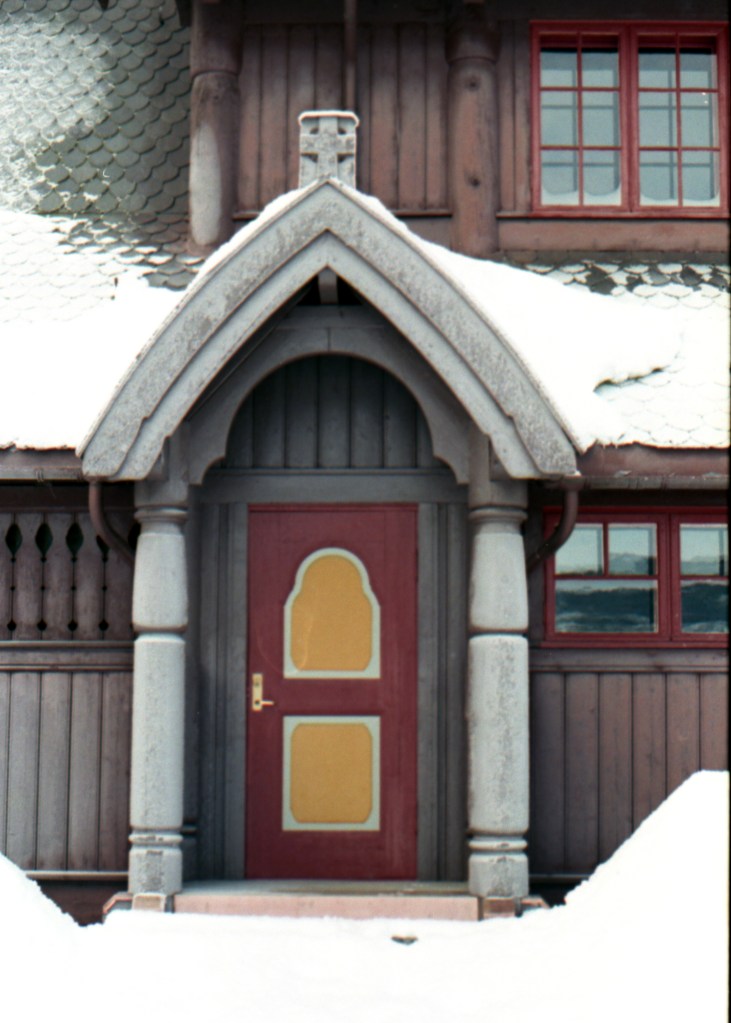
To me, Skute is one of the locations I always return to for church photography. It is such a beautiful and special building that I find to inspire my photography because of its beautiful lobster red colour and its colourful details in doors and ornaments. This is the first time I have been here in winter time, and if possible, the snow made it even more striking.
Their prominence and “standing out” of the environment is one of the reasons I like shooting churches. They are built to be proper landmarks and people tend to be very proud of their church and something they talk proudly of when asked. Often, when I am working around churches with my cameras, I get to speak to locals and employees and am often granted access to the inside as well. Sadly, I didn’t meet anyone at this trip to Skute, and was not able to photograph the incredible Neo-Baroque and Art Nouveau inspired interior, but I met a local lighting a candle on a grave, who welcomed me and was very happy to see someone photographing the church he was so proud of.
Another reason why I tend to shoot churches in winter time is accessibility. In the Norwegian winter, the amount of snow makes your options for locations limited to where it is in some way prepared for people to move about. The area around a church is always plowed and there are always some paths around the graveyards to walk on while taking your photos. Churches also provide some contrast and colour in an otherwise quite uninspiring and monochromatic winter landscape. Making them ideal for photography.


Earlier on the day I visited the much older and more traditional Fluberg Kirke. About 25 minutes away from Skute, this is another church that I tend to revisit. Working around Fluberg is great for detail shots and the lovely aerial view over the lake Randsfjorden with its closest settlements Fluberg and Odnes. This is also just a few minutes walk from Meierilandet, where I did my Expired roll of Mitsubishi MX-III 400, and to get to Skute, you cross the bridge you see in that entry,
Fluberg Kirke was built consecrated in 1703, but its wind flag says 1699 indicating the year it the land was consecrated. At its time, Fluberg was built to be the main church of its are, and hence in the most exquisite way imaginably at the time including three galleries seating in total 450 people for a sermon.

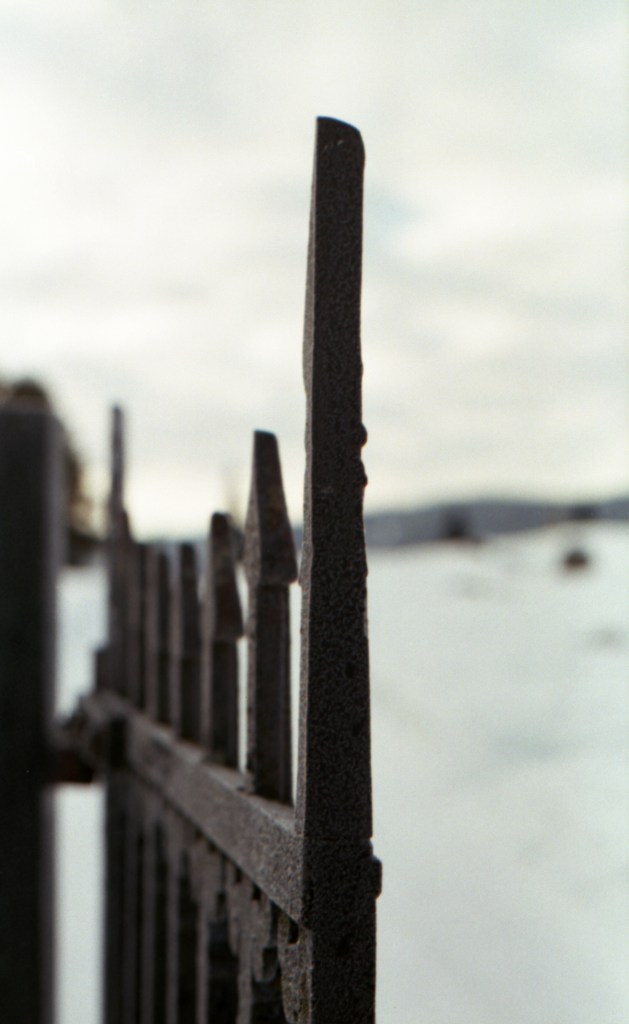
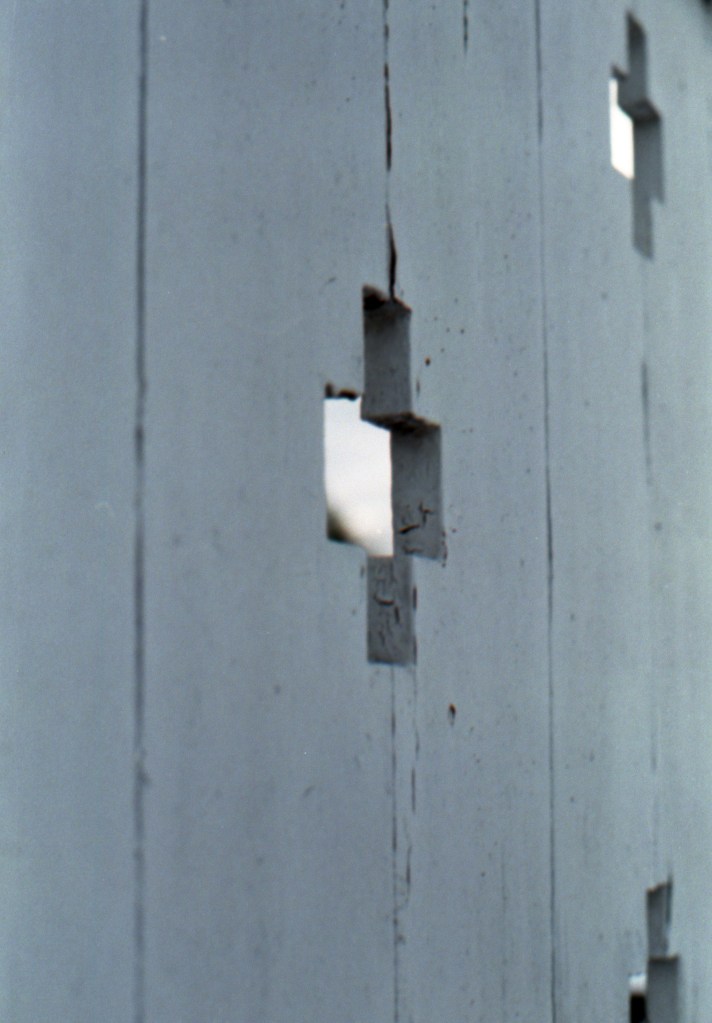
On this outing, I looked at shooting details around the church rather than aerial shots of a white church in white snow, and I must say that I am becoming very fond of the Canon T70 camera. This is definitely a camera I will be using more in the future. I will probably extend my collection of lenses suiting it to contain a wide-angle and a short tele-foto lens in addition to the 50mm.
Also, using the C200 again was a fun experience. This time I chose to set the camera light meter to ISO160, on third of a stop over exposure, to make sure the camera would bias that way if hesitating. I find that this works very well for what I wanted to achieve with this shoot. Even though there are better, sharper, finer grained and in general more flexible, but for its price, C200 is a very good choice and alternative.

 Cheap Camera Adventures