
A few days ago I went out very early in the morning. The forecast showed slightly cloudy weather and I figured that a sunrise in these conditions would be lovely and colourful with smooth yellows and subtle peachy oranges. I only had one roll of Kodak Ektar 100 left and it was a 35mm roll. I tend to shy somewhat away from the high saturation of Ektar in 35mm format, as I have had difficulties scanning and processing it in the past. This time I went for a different approach where I converted manually rather than using scan-software or NegativeLabPro plugin, and I must say that I had more success this time.
I chose to use the Olympus OM-1 for this outing. The main reason for that being that it has a stable function with cable-release and that it has the option of “mirror lock up” that I figured would be very handy when shooting a 100 ISO film in the early morning. My shutter times went up to a second and I did not experience any camera shake at all for any of the images except the one where I forgot to lock up the mirror which is strictly not the camera’s fault.

My location for this outing was Steinsodden in Ringsaker, and I also went to the very interesting little islet named “Steinsborga”. This little islet is only accessible in springtime when the water-level in the lake is regulated down over the winter and before the snow-melt in the mountains hit the lake in mid-may. I did not take any images out on the islet, but it would definitely make for a separate trip if the old medieval castle ruins were not blocked off with “LOVELY” barrier tape.
As always, the Olympus performed beautifully and the images were sharp and well exposed. All functions on the camera worked as they should, and the shutter-speeds are fairly accurate. If I was asked to recommend a fully manual and mechanical camera to anyone wanting to buy one, I would without any doubt say Olympus OM-1. The large and bright viewfinder makes composing easy, it is smooth and easy to use, and the build-quality is superb. I would also say, that for my eyes, it is one of the most beautiful camera designs I know. It is small and light, has a really nice shape all around and feels sturdy and reliable even in 2021, at around 50 years of age. I don’t know if my OM-1 has ever been serviced.

For my experience with Ektar this time. I absolutely love using Ektar for medium format, but as I wrote earlier, I have found it very difficult to scan and process in 35mm. I have tried both using scanning software for conversion as well as using Negative Lab Pro and Grain2Pixel, but every time I have ended up with either insane grain, garish colours or over-saturated contrasts. This time, however, I went with a different approach.
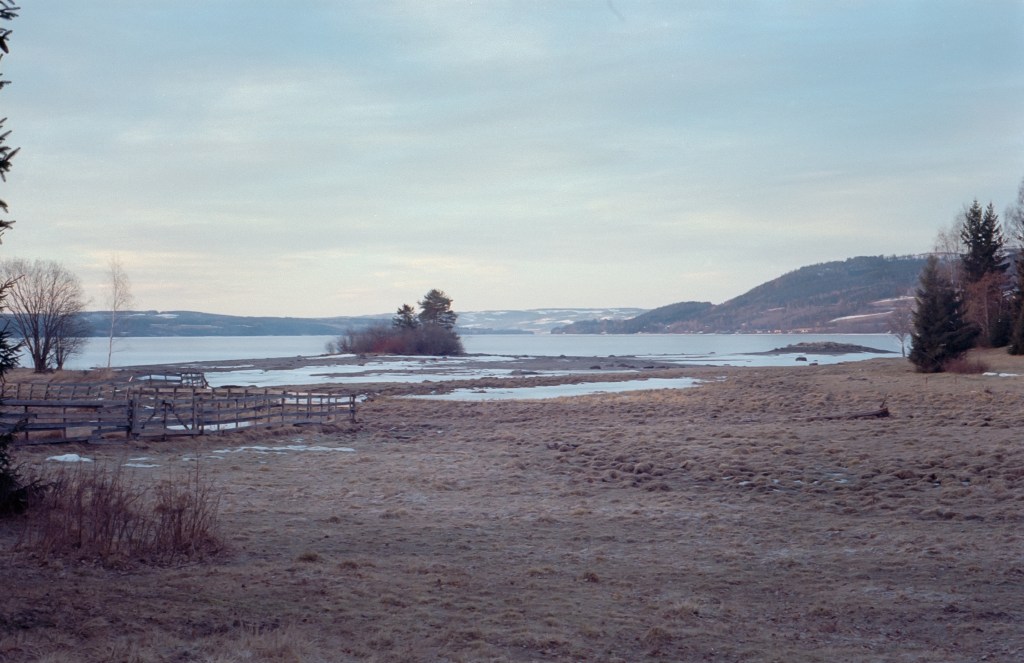
I scanned the negatives as RAW-files with my Epson V600 using Silverfast, and manually converted them in Photoshop. I then compressed the histogram using the different colour channels on “levels” to hold more control over the process. For the first time, I can say that I am getting towards being happy with my Kodak Ektar 100 results for 35mm format. There is still some practise needed, but I think the “full manual” could be my way to master the art of the Ektar 35mm.

 Cheap Camera Adventures