Experimenting with depth of field

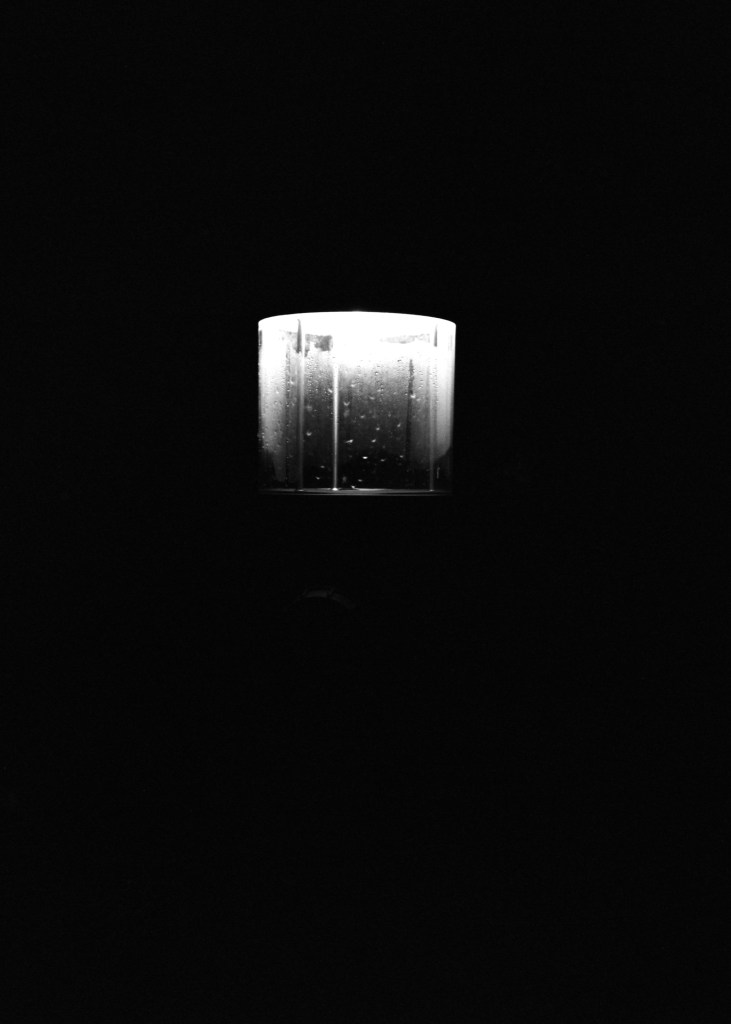
Playing with the Christmas decorations is not an activity reserved for cats. When I tested the Petri 7s for the first time in the beginning of December, I noticed how good the lens seemed to be. Even though my test then showed that the camera had seen better days, the f1,8 lens turned out to give very nice, details and I decided to shoot some frames to test it out. I decided to go with the Christmas, or actually Advent, decorations. I lit a candle in a glass candle holder, and let that work as a foreground, and I placed the rest of the decoration approximately 80cm away from the lens, which would be the closest focus length for this camera.
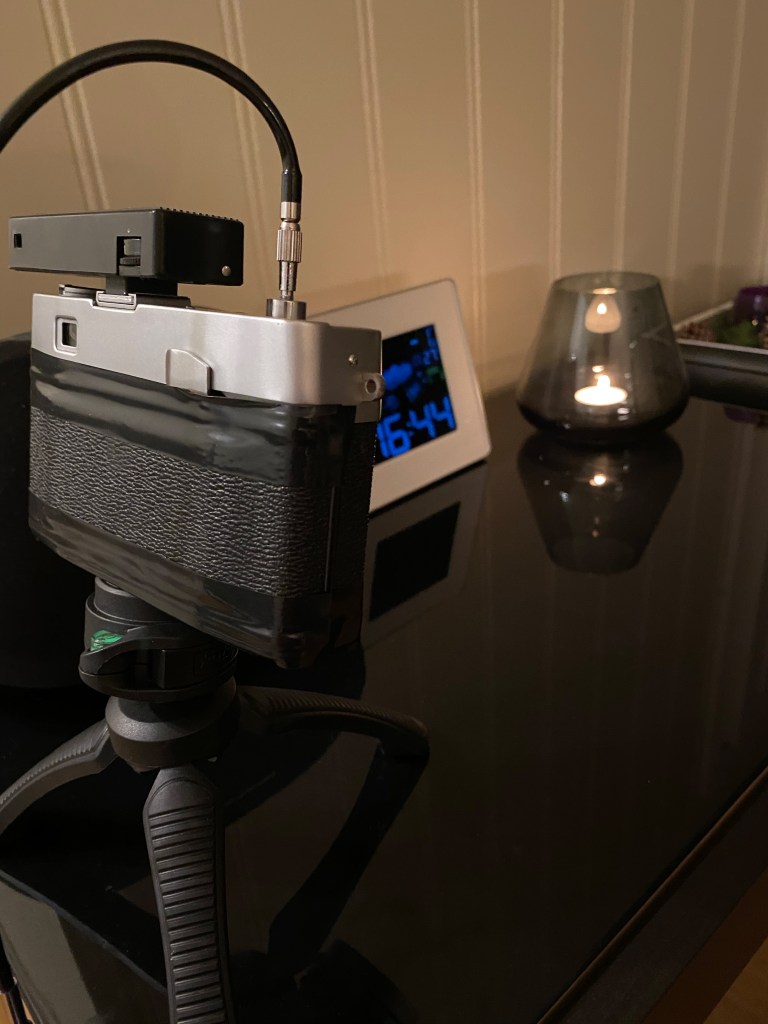
My setup. Petri 7s on a black glass plate with the decorations. I have taped the camera because the back has a tendency to «pop open» at any point.

I went with shots at f1,8, f4 and f16 to see how much difference there would be in sharpness and how they would turn out. I did not change the lighting conditions, but I adjusted my shutter speeds to compensate for the smaller aperture. for the f16 image, that was two and ha half minutes with compensation for the Schwarzschild effect.

All in all I think the lens gave me the results I anticipated. The f1,8 gives me a very nice bokeh, but the focus is a little bit off, so maybe the focus ring isn’t as accurate as I would hope for. The f4 image gives more sharpness and retains the nice bokeh feel, and the f16 gives a very sharp image.

The mood changes a lot between the images, and I am not sure which one is my favorite. You can make a judgement yourself, and I hope the images are to your liking.

Capturing the mood

Some days ago, I was tidying up my darkroom, and I found what I assume to be a previous test-roll. I assumed that the roll was around half, but it turned out to be around 24 exposures of HP5 plus. I then got the Idea of trying to capture the miserable weather we have had in the area lately. I figured HP5 plus would be brilliant at that, it has grain, but not too much and coarse. I also chose to go with Ilford’s Perceptol developer, to reduce the grain in the whites a bit, but not eradicate it. 

My aim was not to get razor sharp images, but rather to capture the feeling and mood of this time of year. I am thinking more in the direction of a charcoal drawing than a crystal clear image of the mood. I know some photographers would have gone with a Holga or something similar to that on an outing like this, but I have never really befriended my Holga camera, and I prefer the effect the Petri Racer gives.

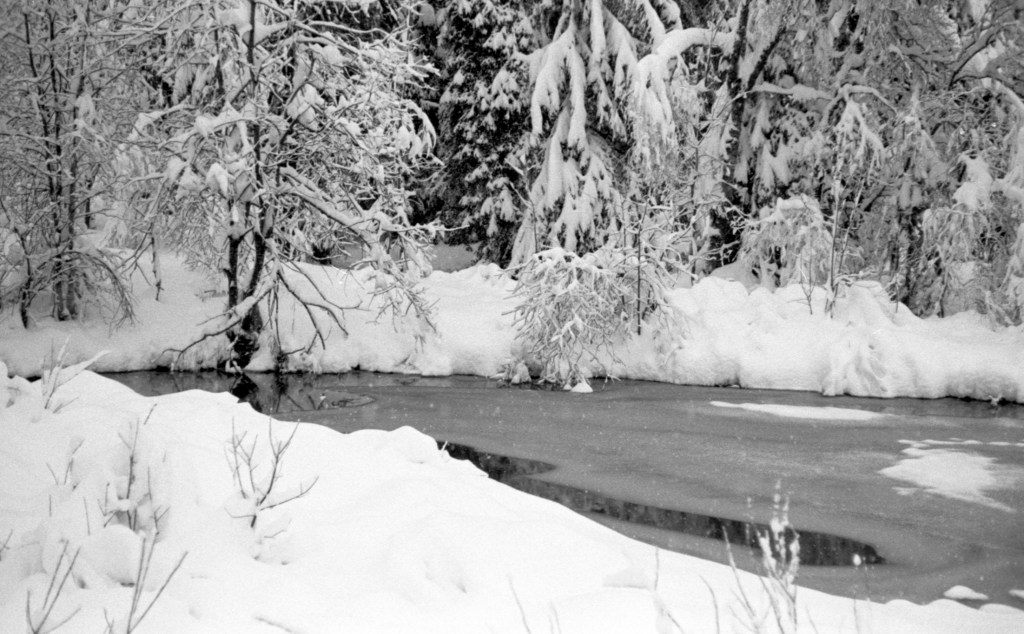
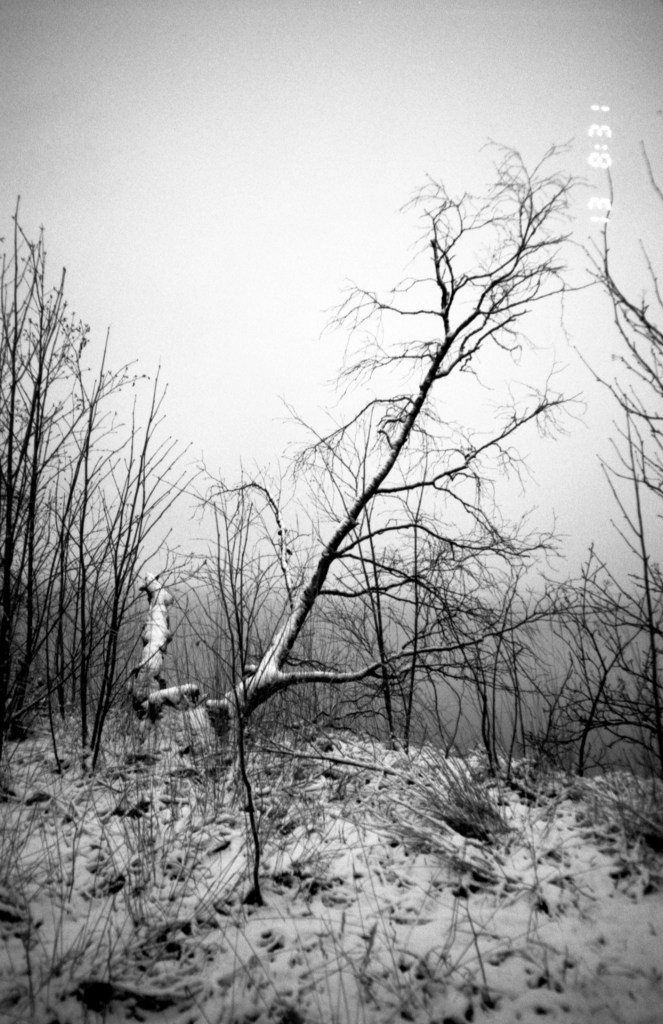
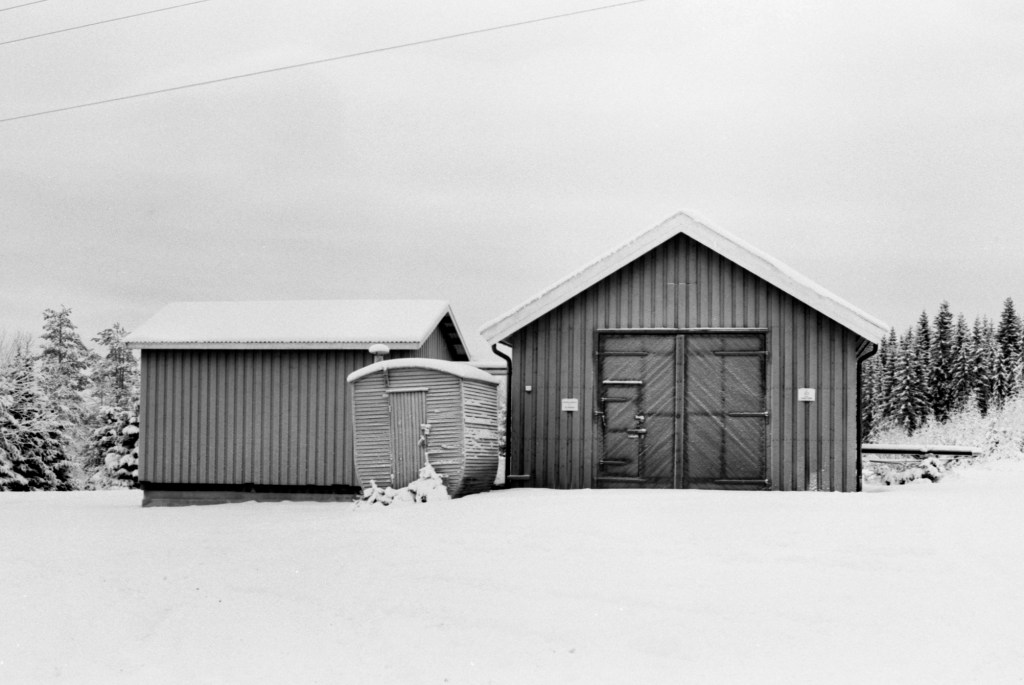
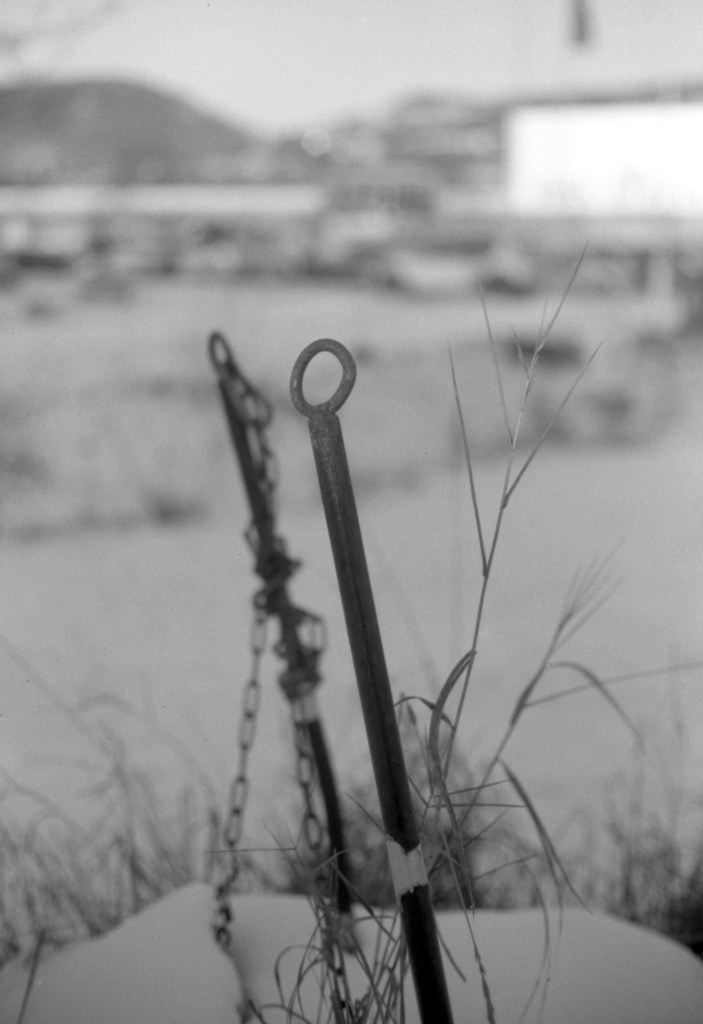
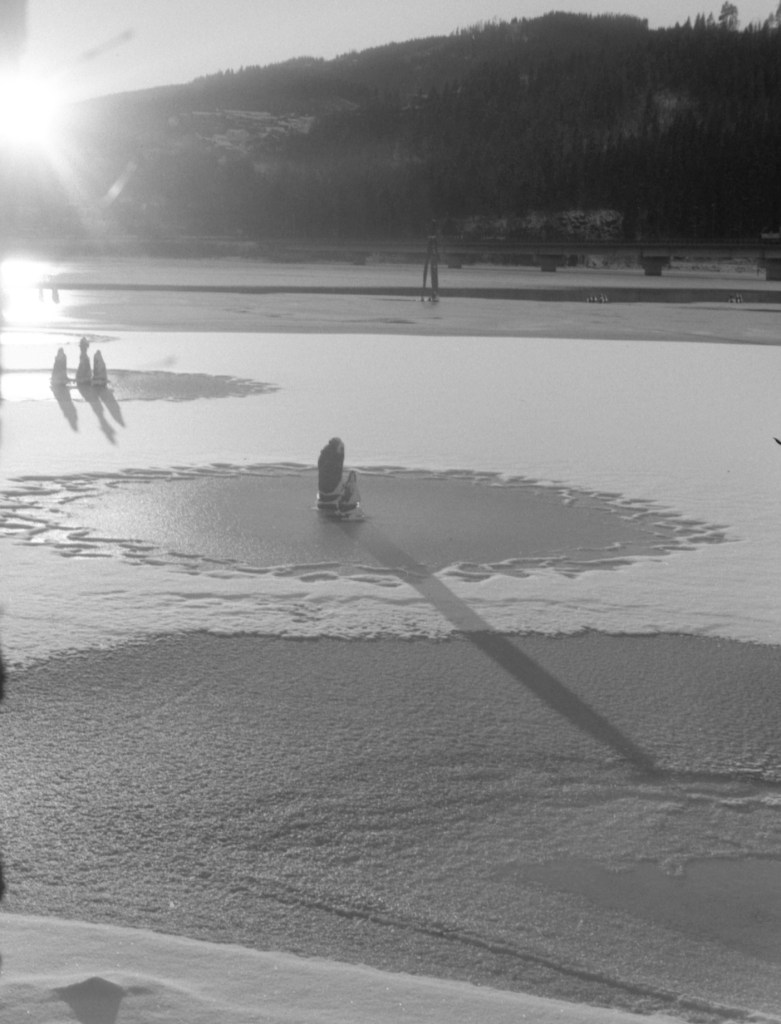
Snowy and wet December day – Petri Racer w Ilford HP5 plus@250. F8 1/60s – Ilford Perceptol stock

For that reason, I chose to bring along the Petri Racer. For long term readers of this blog, you know the Petri Racer camera very well. It was the first camera I bought for this blog, and the camera that inspired me to make a blog about cheap cameras, hence CCadventures – Cheap Camera Adventures. Not that all cameras featured on this blog is «Cheap», but they are reasonable and affordable alternatives that in some way sparks my interest.

Reklamer

The day was very snowy and it was unpleasant walking around in the snowy weather. I also had to wipe and dry the Petri a few times during the outing, to make sure it was not soaking or that the lens got fogged up. The camera had been in the car for a few hours before the shoot to «climatize» somewhat, but the wet snow and humidity made it fog up slightly anyway. I therefore let the film reach room-temperature before developing it. I often do this when the weather is cold to avoid swift temperature changes during the process. Not that the weather this day was very cold, only around -2 degrees, but it never hurts to be on the safe side.

Even capturing the snow falling – Petri Racer w Ilford HP5 plus@250 f8, 1/4 sec – Ilford Perceptol stock

The whole outing took me around half an hour, and I was soaked afterwards after wading in deep snow to reach a dam with view over the little lake Skumsjøen close to Gjøvik.

For the images, I am quite satisfied with the images as I find that they convey the mood and feeling I was aiming at conveying. These are not my strongest photographic moment by any means, but in terms of conveying the unpleasant Norwegian December-wet snow, I think I did a decent job.

Playing with a Point and Shoot

The market for film cameras has changed substantially over the last two-three decades. In the 90s there were a range of very simple easy cameras that you could use to get some pictures without knowing anything about photography nor wanting to learn about it. They were simple, fully automatic and would give you acceptable images with minimum effort. These were the fully automatic point and shoot cameras. They’d set the film speed through DX coding on the cassette, they would set the aperture and shutter speed accordingly. The small catch, you had to press the shutter release button yourself. The bigger catch, you had no idea what the images would look like.

This morning, I played around with one of these cameras. I haven’t used one of them for a long time, and I was curious about what it would «bring to the table» of images and quality. The camera was bought cheaply online and arrived by Norwegian snail mail two weeks after it was posted from a town reasonably nearby. Well done Snail Mail. After this wait, I was the confused owner of a Chinon Pocket Zoom AF.

The Chinon Pocket-Zoom AF – 38-60mm lens (probably f8 or something like that as widest aperture)

I was eager to test it out, and I gave it a roll of Rollei Retro 400s. The electronic and automatic wind-on mechanism did its job and rolled on a few frames that could have been used, and the display on the back showed «1». The Chinon was ready. I went out in very dull weather and the Chinon did not seem to be too fond of dull and «boring» light. It constantly set off the flash, and I had to manually reset it to «flash off» every time I changed compositions, as it would have reverted to flash mode automatically. It is a bit like an overbearing parent, the security net is always there.

Reklamer

Shooting the Chinon was like shooting with your phone. You aim vaguely in the direction of what you want to photograph, you press the shutter button and wait for a while while the small elves inside the camera gets to work setting up your exposure. This takes a while, and you would probably not use this camera to photograph running animals or people in action. If you used it to photograph someone playing football, they would be done with their game and home for dinner before the camera takes a shot. After a while, when you hear the reassuring sound of the shutter and the winding mechanism, you are ready for your next shot.

Chinon Pocket Zoom AF – Rollei Retro 400s – Xtol Stock

When looking at the final images, they are not that sharp and crisp as you would hope. But since I have not had any control in the making of there images other than pressing the shutter release button, I don’t really feel it is my fault.

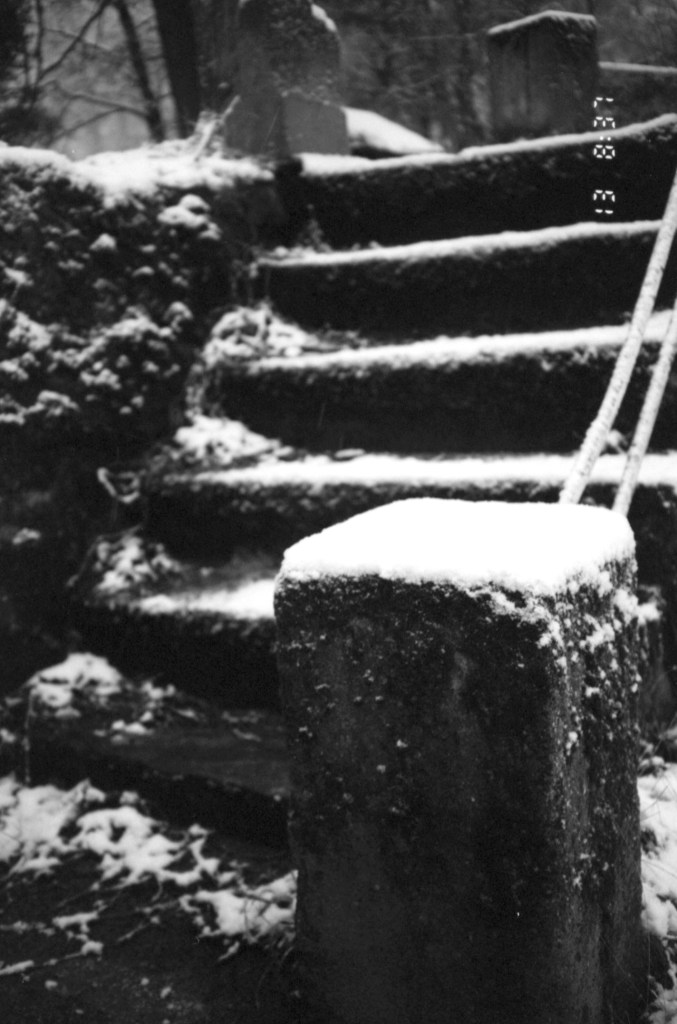
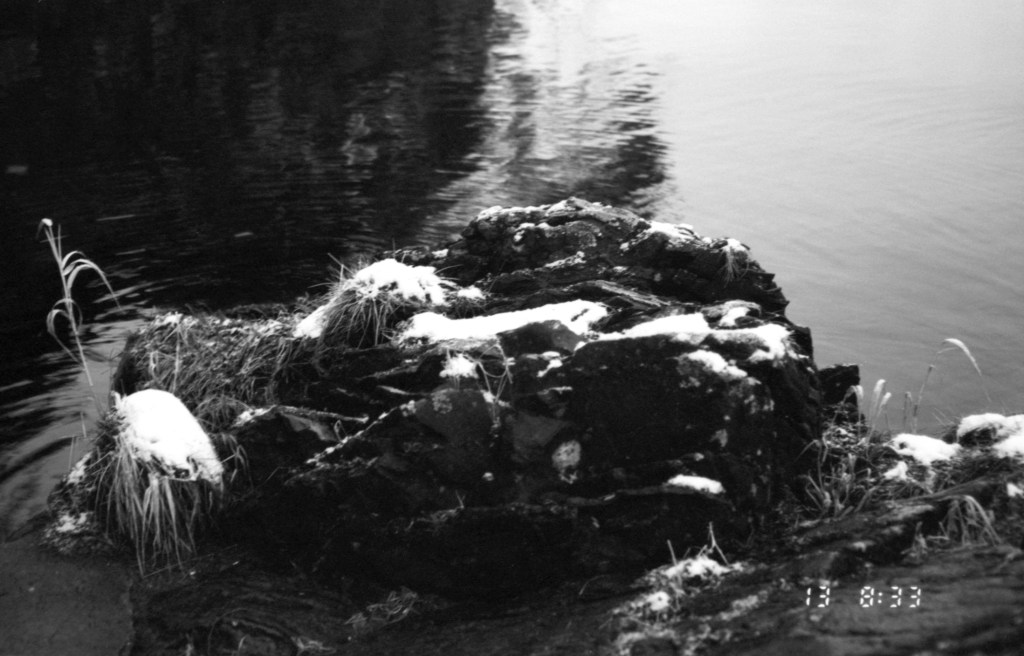
Some issues I see. The lens is probably not that bright and certainly not very sharp, and the images seem all slightly under exposed. They have a strange vignetting, much like the one you get while shooting a Holga camera, and the lens perfomance isn’t that much better on this Chinon. Also, you get these imprinted numbers on all your frames, and I was not aware that it would be printing numbers on my frames. I have left them here in all their atrociousness.

My conclusion. I will sell this camera to someone who will use it. I will certainly not use this camera again and if anyone wants it, please contact me.

I like this image because of the mood, and that it is evenly blurry all the way over.
Chinon Pocket Zoom AF – Rollei Retro 400s – Xtol Stock

Did I choose the wrong film?

When I drove home from work today, I noticed that the contrast between the December darkness and the artificial light from lamp-posts, lit buildings and petrol stations actually would make very nice images indeed. I thought about going for long exposures with either Tri-X or HP5 plus, and I composed some nice images in my head. My chosen subject, Skibladnerhuset.

Skibladner is an old paddle steamer the people who lives around the lake Mjøsa are very proud of. It is currently the oldest paddle steamer in scheduled traffic, and it will sail on the lake in the summer months. When the winter comes, it will be parked on display in its own, specifically designed house. A special building with I find to look incredible with its triangles and diagonal pillars and poles. The house was drawn by the architects at Kontur in Gjøvik and was built in 2001. It has become a landmark for Gjøvik and is visible from RV4 as you drive through the town.

I chose to roll up the Zenza Bronica ETR with a roll of JCH Streetpan 400, and test out how an extremely contrasty film would deal with the lighting conditions in a Norwegian December afternoon. In retrospect, this might have been the wrong film for this outing, I should have gone for Tri-X og HP5 plus.

Reklamer

First of all, I could not find any information about the reciprocity features and long exposure compensation anywhere. Therefore, I went for combining the information from the Ilford HP5 plus and Kodak Tri-X. This means compensation from 1 second and more. My logic became – If the meter gives me 1 second, I’ll shoot 2 seconds, if it gives me 2s, I’ll go for 4. It could seem; however, that this was not anywhere near enough compensation.

Marina light – Zenza Bronica ETR w 50mm Zenzanon f2,8 – JCH Streetpan 400@400 1 second at f8

My negatives got very thin, so thin, that I wouldn’t imagine printing them in the darkroom. Three negatives came out reasonably OK, and showed the contrast level I was aiming for, however, the other 12, not so much.

I developed the film in Xtol stock, both because I have a batch of Xtol that is about to go out and I want to use it, and because I just did not «love» the prospect of doing development for 17 minutes with 30s agitation frequency. Call me lazy, but this is who I am.

I also considered using Rodinal 1+100 and do Semi-Stand development, but I wanted a more specific development cycle that I knew would give me the correct film-speed. And with Rodinal at that dilution and development times of an hour plus, I don’t really get that level of control.

This was just an experiment and a shot in the dark (pun intended), but I learnt quite a bit about the Streetpan 400, and when not to use it. I might do a reshoot of this outing with a roll of Tri-X at some point, to pay the amazing architecture the respect it deserves.

Please enjoy the images.

Emptying the roll of RPX25

In my last entry, and video, I tried out the very slow Rollei RPX25 film. I shot it with my Olympus OM-1 and I used a yellow filter because of the lightning conditions that I found to be ideal for yellow filter. Also, I must say that I got images that I am very pleased with. I only shot half a roll of the film, and cut it out of the camera, much because I was not sure what to expect in terms of contrast and metering.

Today, I rolled up the rest of the RPX25 in the OM-1, and went for a little outing to shoot the rest of the roll. The weather was absolutely horrendously nasty, with snow/rain blend and temperatures around 0. A typical nasty early winter day in Norway, and I went to a location I know very well. A little lake close to where I live, Skumsjøen, and looked for something that would allow me to shoot wide-open, at f1,8 with the 50mm Zuiko lens.

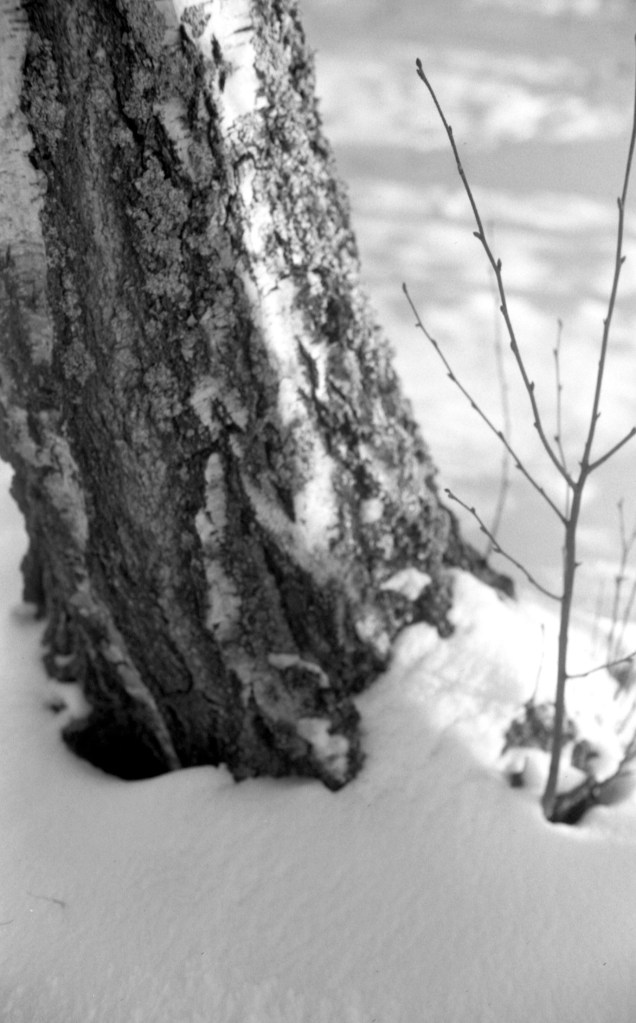
Tree root abstraction – Olympus OM-1 w Olympus Zuiko 50mm f1,8. Shot wide open f1,8 with Rollei RPX25. Semi-stand development Rodinal 1+100 70 minutes, agitated beginning and midle of cycle.

I went for some very abstract close-ups of tree roots near the frozen water. I even took the risk of walking on the newly formed ice, as it felt safe, to get the best angles. Luckily I did not fall through.

From my last outing with this film, I remembered that I got very hard contrasts in the negatives, and I gave it a whole stop of over exposure to retain more grey-tones in the details. Another measure I chose to reduce some of the contrast while retaining the sharpness, was a cycle of stand-development with Rodnial 1+100. This is not a type of process I often use, but for slower films, I have found it to work well with my style. It also gives a certain «character» to the shots, that I find to suit my eye.

Reklamer

I am not in anyway competent to comment on the performance of this film, nor its abilities. I have not used it enough to know how to handle it properly yet, and I am no film expert. However, I find it rather enjoyable to play with this filming trying to rethink my exposures to get the results I want. Also, I have only shot the film in dull, overcast weather, but I find that the Rollei RPX25 gives me a fun challenge to work with. In short, this film is fun to work with.

A video will be available on Youtube soon. Search for Ccadventures.

Working with a slow film

I have shot some slow films before, especially PanF 50 and I love the way a slow film looks. Smooth, calm, invisible grain and deep contrast. I also love how they allow me to shoot with very open apertures and longer shutter-speeds without having to compensate using ND-filters.

A film I have tried some times before without success is the «Rollei RPX25». I bought some rolls of this film for my medium format cameras, and my experience was not that great. One of the films turned out to be incorrectly cut and was more or less impossible to reel for development, and when I finally got it reeled and developed, it had the nastiest mottling I have ever seen. From some research online, I understood that this problem could be down to lack of prewash. Wiser and happier, I went on to try another roll, but on this one, I got nasty camera-shake even though the camera was mounted on a tripod and triggered using a release cable.

Some weeks ago, I bought a few rolls of RPX25 for my 35mm cameras, and today I set out to try it.

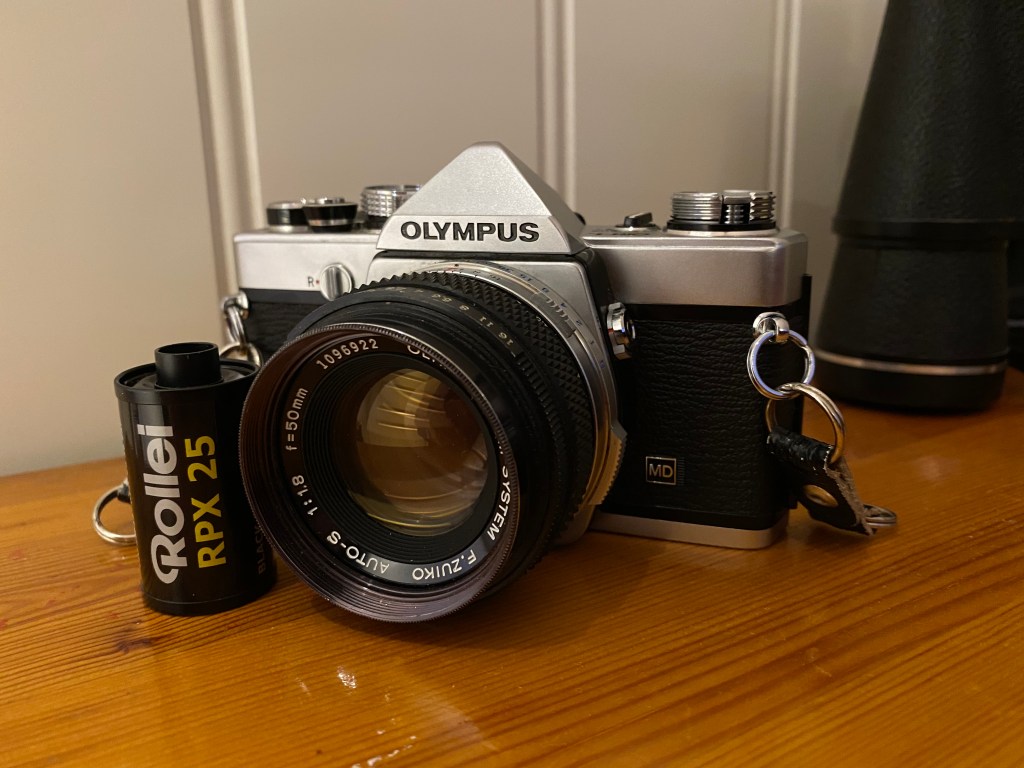
My equipment for the day. Olympus OM-1 w 50mm Zuiko f1,8 and the Rollei RPX25 canister.

I wanted to try this film out in a snowy winter environment, to see if I could tame the contrasts the film gives and end up with a contrasty, but nice winter shot. I chose to shoot at f8 with a yellow filter, to have some aperture to go on, as well as not shooting very long shutter speeds. The yellow filter is also very helpful to shape the contrasts. To be on the safe side, I bracketed the shots to be sure I get something.

Reklamer

So why did I chose the OM-1? I chose this camera because I wanted a reliable camera that I know is fairly accurate both at aperture-settings and shutter speeds. I don’t worry too much about this when I have films I know and that has some latitude, but I was very unsure how this film would handle potential under-exposure, and chose to play it safe. I exposed the film at 20 ISO, which is the lowest my light-meter would go, and developed as shot at 25. My negatives were contrasty but actually rather good looking.

Here are some shots.

I am very happy that my shots didn’t completely blow out the white snow, and the yellow filter helped me keep the detail in the overcast sky, without adding too much extra contrast to the already dark buildings. I am happy with this try-out, and I will finish the roll at another time.

If you want to join the shooting and hear some Camera-babble, a video will be available on YouTube shortly.

Camera-babble

I have been playing around with YouTube lately, and made some videos called Camera babble. I am no expert on photography, nor on cameras, but I thought it might be fun to try making some videos anyway. I am still very much learning how to make videos, so enjoy my very amateur work.

Video og me playing around with Video-equipment and an old Petri 7s

Playing around with a Petri 7s

If you have followed this blog for a while, or read some of my posts, you may know that I have a Petri Racer that I really love shooting. I find the little Petri to be very reliable, accurate, light and handy as well as giving the images some character. I can’t really put my finger on why I like that particular camera so much, it is just a camera I enjoy shooting. A few weeks ago, I came across a Petri 7s on an auction online, and I won it on a very low bid.

The reason I was interested in this particular 7s was that it had the f1,8 lens, which some sources claim to be a six element lens with an interesting bokeh-pattern. Whether it is six element or four, as the f2,8 version, does not necessarily mean that much to me, but I do love nice bokeh and sharpness. For the very low price that I payed, it was worth the gamble at any rate.

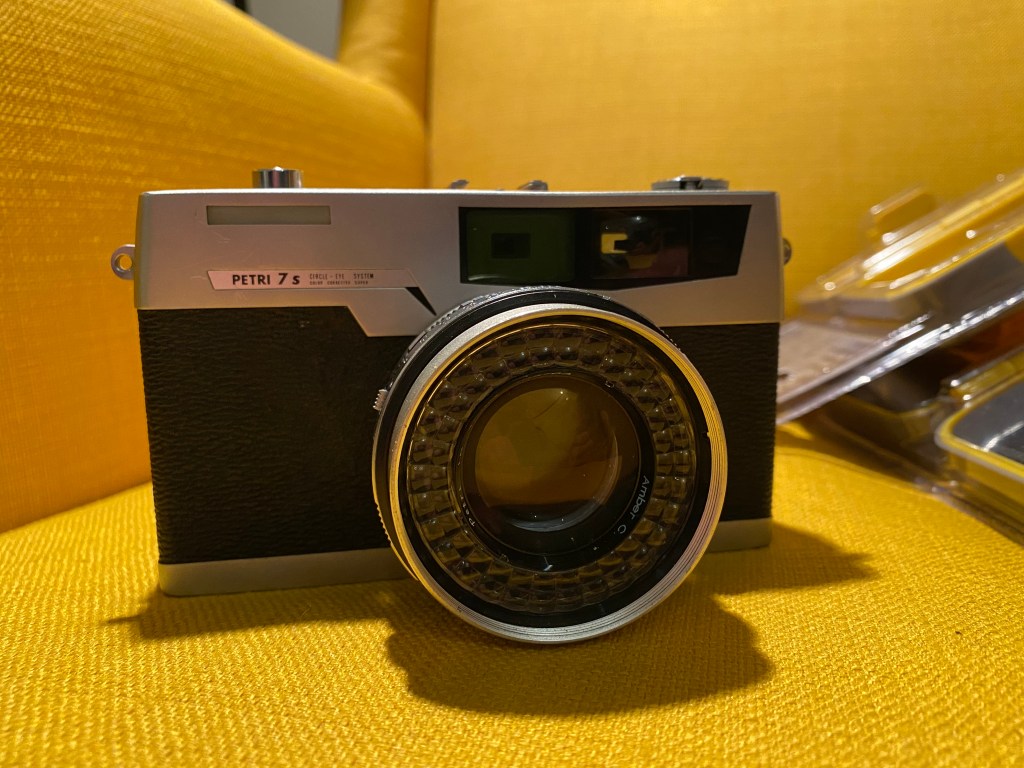
The Petri 7s f1,8 Rangefinder camera w. amber coated lens

A gamble it surely was as this camera has a few personality traits that is very specific to this particular one. First of all. The Rewind-knob is loose, and you cannot turn the camera on its head without risking the film to lose tension as the rewind knob disengages. Another interesting «asset» this camera has, is a dodgy lock on the back. This means you will get the luxury of using electrical tape to secure it from opening mid-roll. In addition to this, the camera invites to a creative approach to focussing, with a rangefinder (although rather dim and dodgy) that jumps in and out of «sanity» a few times pr shot. I ended up guesstimating my focus because I trusted my own eyes more than the rangefinder unit.

Reklamer

These faults aside though, the aperture settings and shutter speeds are fairly accurate. When I took it to Lillehammer to try it out on the newly fallen snow, I got very good negatives. My test was done with half a roll of Fomapan 200, which I because of the lighting conditions shot at 100. I shaved 20% off the development time compared to box-speed, and ended up at 6 minutes with Xtol Stock.

As you can see, in some of my images, my lens fogged over. However, this is not lens-haze, but rather an issue of a swift temperature change and a forgetful photographer who didn’t remember to wipe the lens before shooting against the sun.

Lamp-post portraits

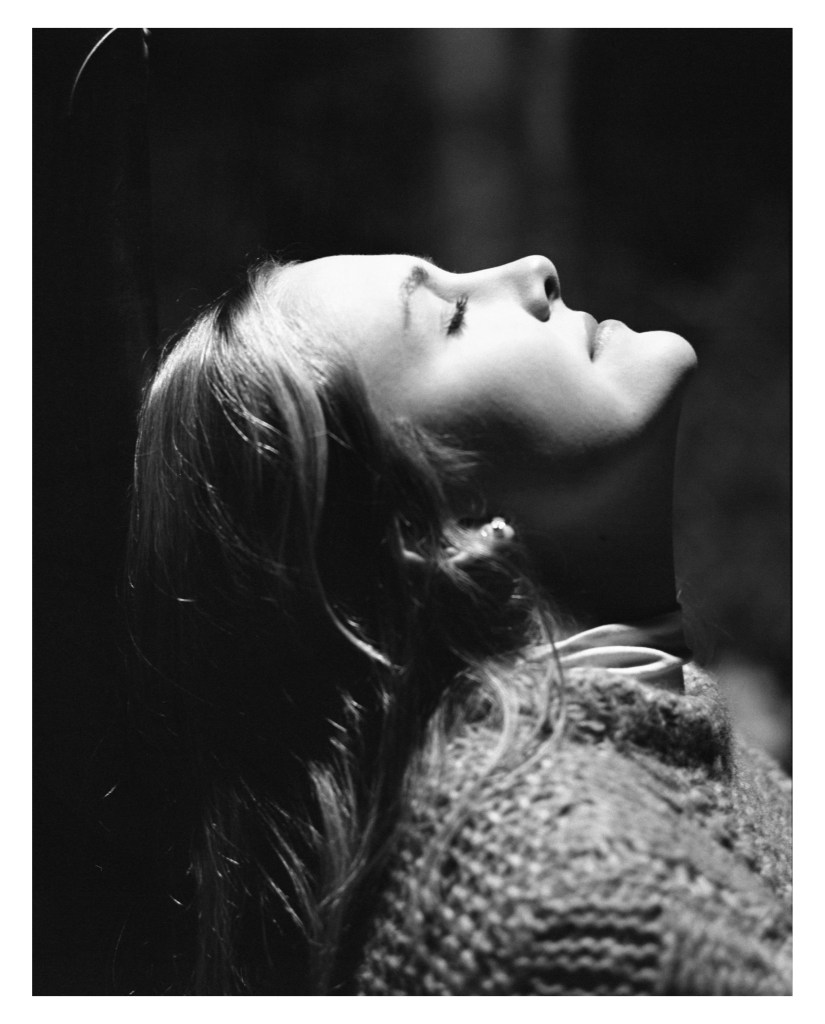
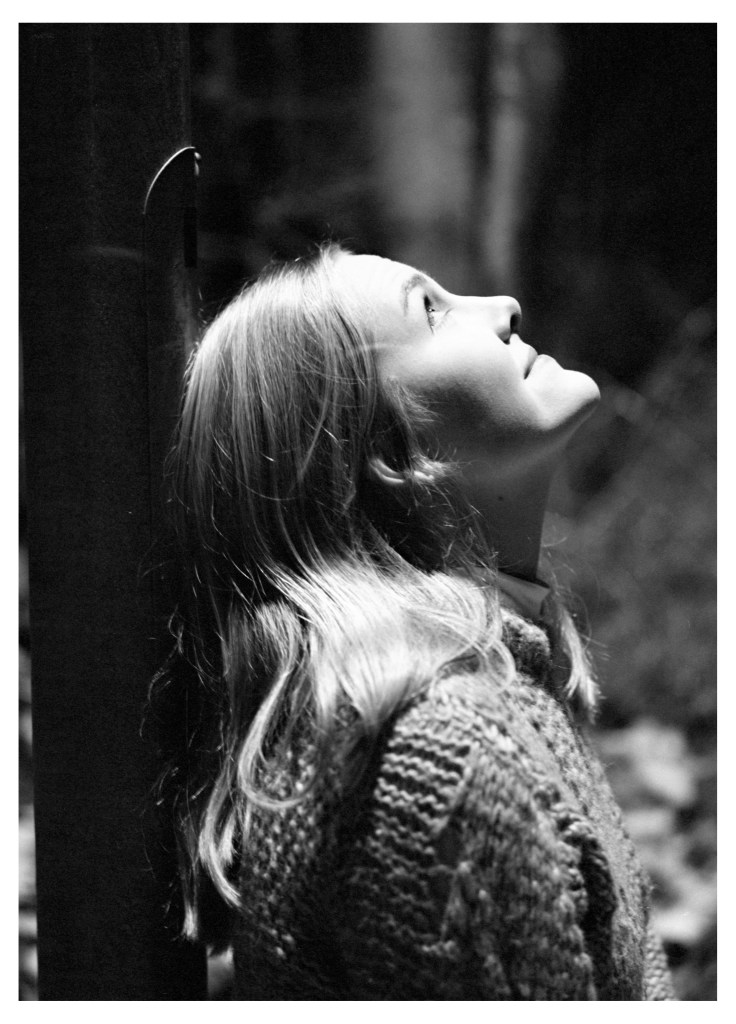
Sometimes you get fun ideas you just want to try out. This is one of these ideas. On a recent occasion I saw how interesting light fall there was under a lamp post in the dark. I thought of making some portraits under a lamp post and because of the yellow-ish tone the lamp post gives, I chose to make it analog black and white. I often prefer the look black and white film gives in low light compared to what I get with a digital camera.

I organized with a model, and loaded the Bronica with a roll of Kodak Tri-X400 and set to work. Because of the lighting conditions, I chose to shoot the Tri-X at 800, and I developed it in Xtol Stock. I chose to go for stock solution, because I wanted high contrast and minimal grain. Therefore I used less time in the developer.

The results came out very nice, and I got exactly what I wanted from this shoot.

Going minimalistic with Delta 100

Today as I was relaxing, enjoying a cup of coffee, I looked out the window. The first fall of snow has just blessed us with its arrival, and this always brings new objects to my attention. Things that I maybe haven’t noticed because it is hidden in the November-browns.

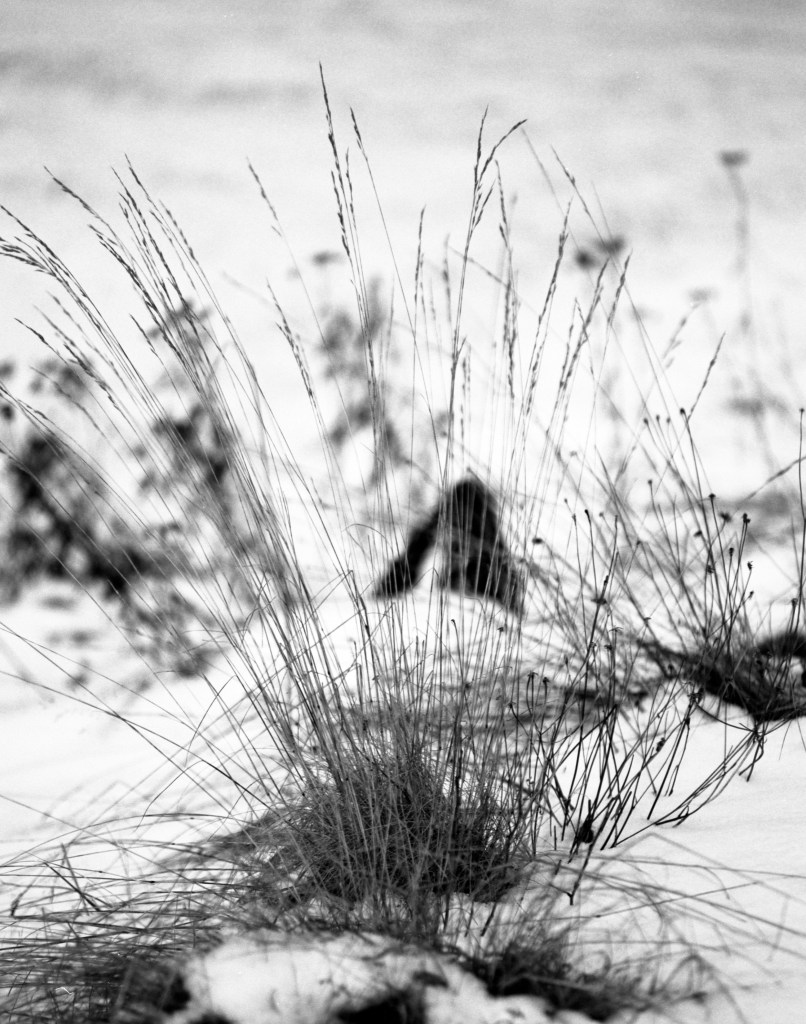
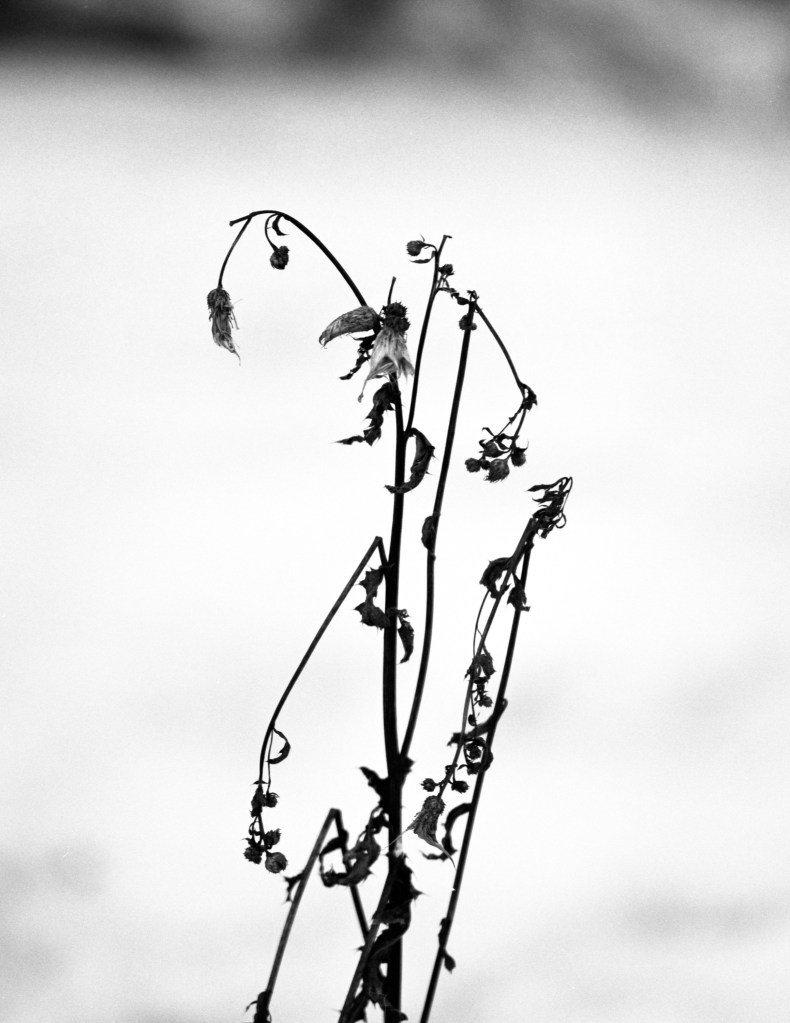
Today my attention was drawn towards some wilted plants. Their very dark brownish colors made a nice, almost minimalistic, tone towards the snowy background. I immediately ran to put a roll of Ilford Delta 100 into my Bronica ETR. I also fitted it with a lens I just bought. a Zenzanon 150mm f3,5. Equivalent to around 90mm at a 35mm camera, and used a yellow filter to get the minimalistic contrast that I was looking for.

Zenza Bronica ETR w 150mm Zenzanon f3,5 + Yellow filter. Ilford DD-X developer

I aimed to keep the snowy areas around zone 8-9, to not completely blow it out, and my dark areas around zone 3-4 to retain some shadow detail. I got fairly good negatives, but I would have loved to have retained some more detail, especially in the most contrasty images.

Reklamer

Once again I chose to develop Delta 100 in DD-X developer, and this time as well, it gave me fabulous negatives. I am really looking forward to working with some of these images in the darkroom, and I expect to use lower grade filters, or maybe some split grading to get the most out of the negatives. A spot on my wall is already prepared for one of these images.

Once again. Thanks to Bjørn for sending me these films and the developer to test. I do really love the results it gives.