A day with Praktica and ENNA

A few weeks ago, I came across an ENNA Tele-Ennalyt 1:4,5/240 mm lens on eBay. I have never tried ENNA lenses before, and was curious about this brand and lens. Since the lens was rather cheap, less than 20$, I decided to give it a go, and ordered it.

A little history first. The ENNA Werk was a relatively small producer of lenses based in Munich (München) in Germany, and operated between 1920 and 1992. They were renown in Germany for making decent lenses for German cameras, but were never as famous as Zeiss, and based on this test alone, not that precise.

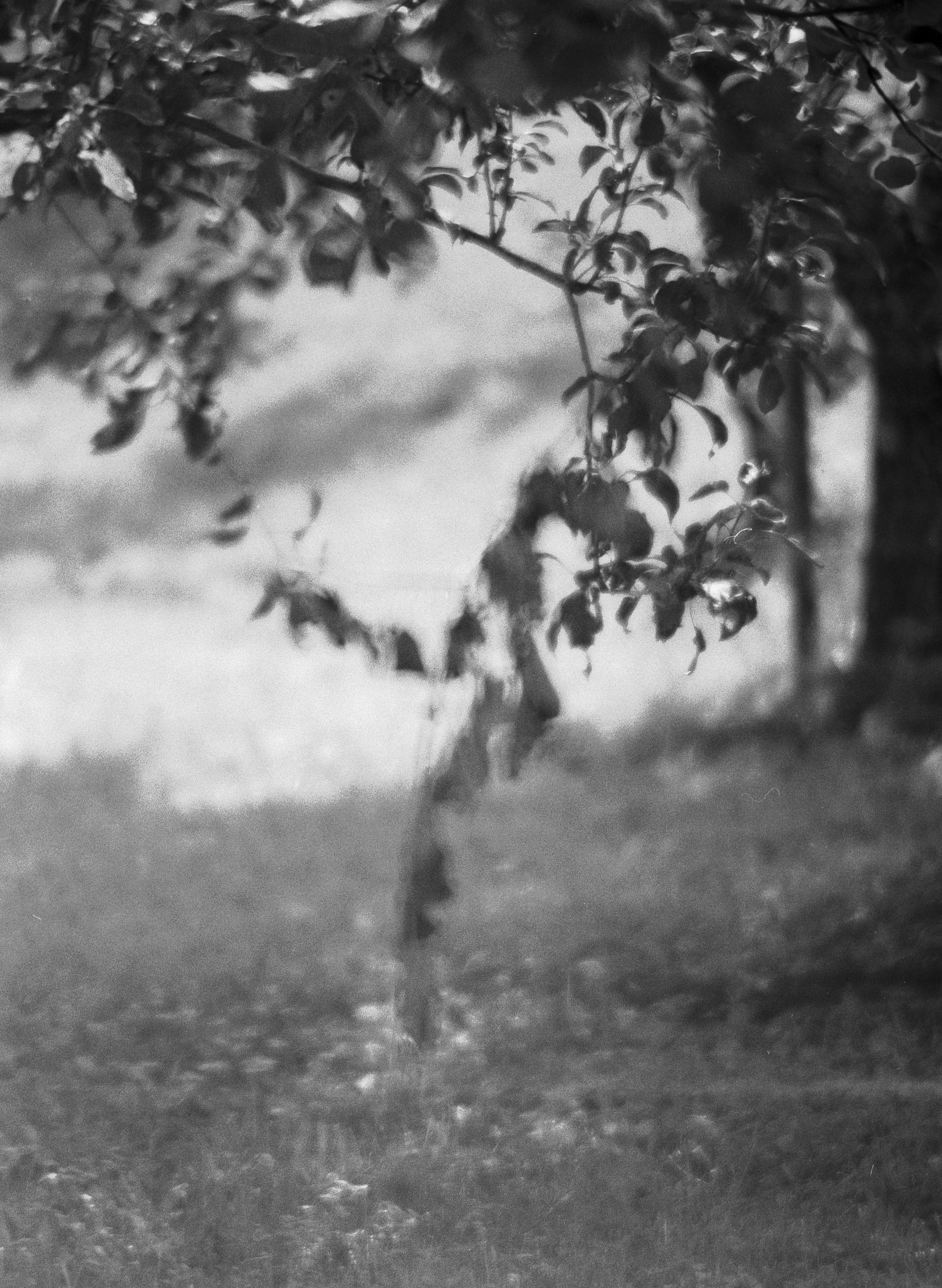
Since my lens has an M42 mount, I decided to attach it to my Praktica MTL5 B, and I went for a walk in an apple garden outside a local museum. For Norwegian readers, I was in Hamar at Domkirkeodden.

The Praktica with the ENNA attached, placed in a tree and secured with a little twig while shot with a cellphone.

I loaded the Praktica with an Ilford Delta 100, and decided to give it a go with the different unripe apples and leaves present at the amazing location. With the East-German camera and the West German lens, I expected everything to be very smooth going.

It turns out, that focussing with the ENNA lens, was really difficult, and most of my images were slightly out of focus. This is because the Praktica Viewfinder with its focus help, did not work with the lens. For some reason.

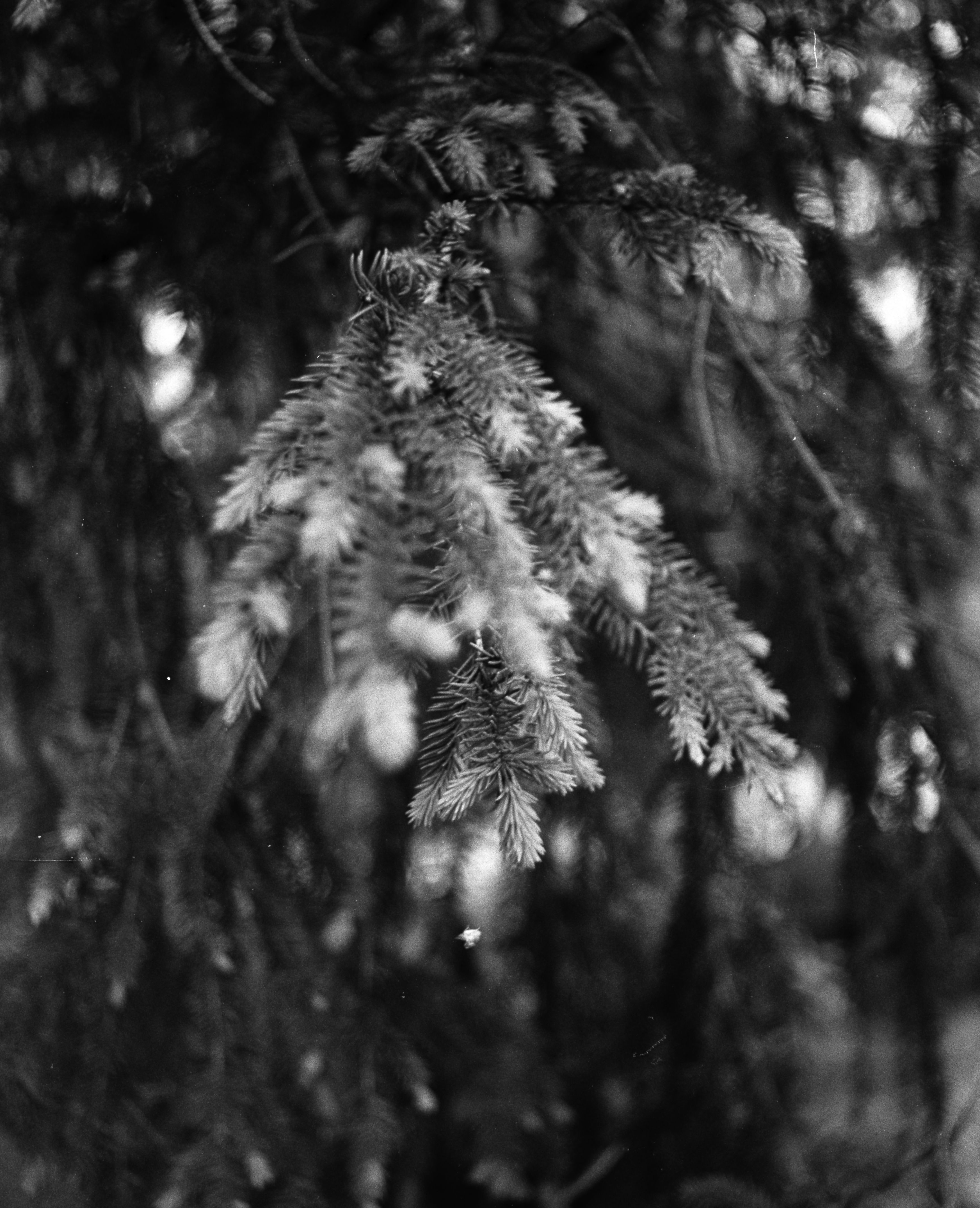
That said, the Enna produces a really pleasant soft bokeh that I really adore. And for a cheap lens like this, I am very happy with the results. I will run a few more test rounds with this lens to make sure the problem is not the photographer.

Enjoy the images.

Images were developed using Kodak Xtol 1:0 for 8 minutes at 20 degrees, the water stop and fix. The fixer was at its last cycle here, and used 10 minutes to clear the negatives. I have come to like Delta 100 with Xtol, and would recommend this combo to anyone comfortable with developing in powder chemistry. It is not that different at all.

Sunny day at Dokka

Today, I had a portrait assignment in Dokka, a little town nearby, and I brought the Voigtländer with an Ilford Delta 100 loaded in it.

I had the Voigtländer well placed in its leather casing.

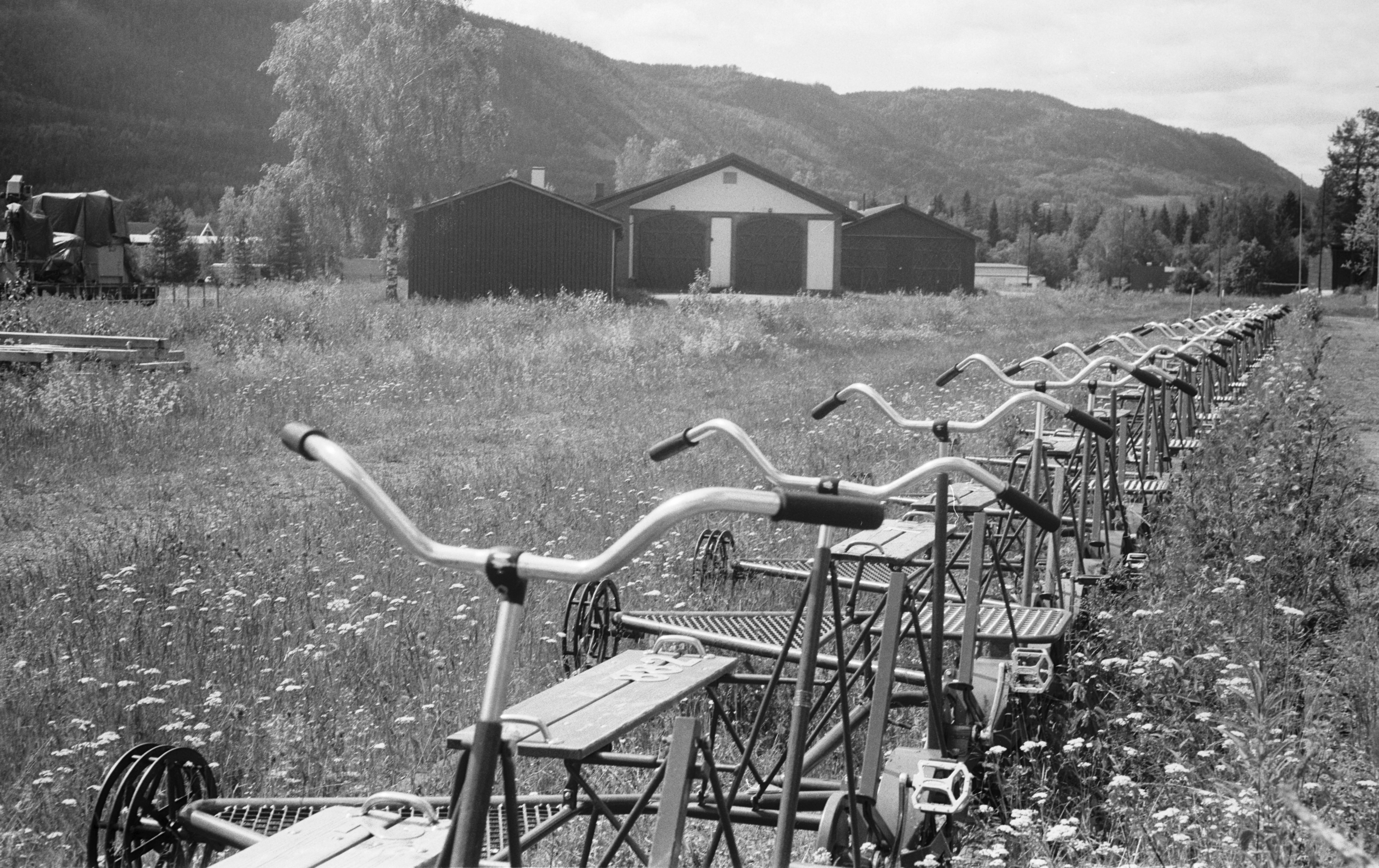
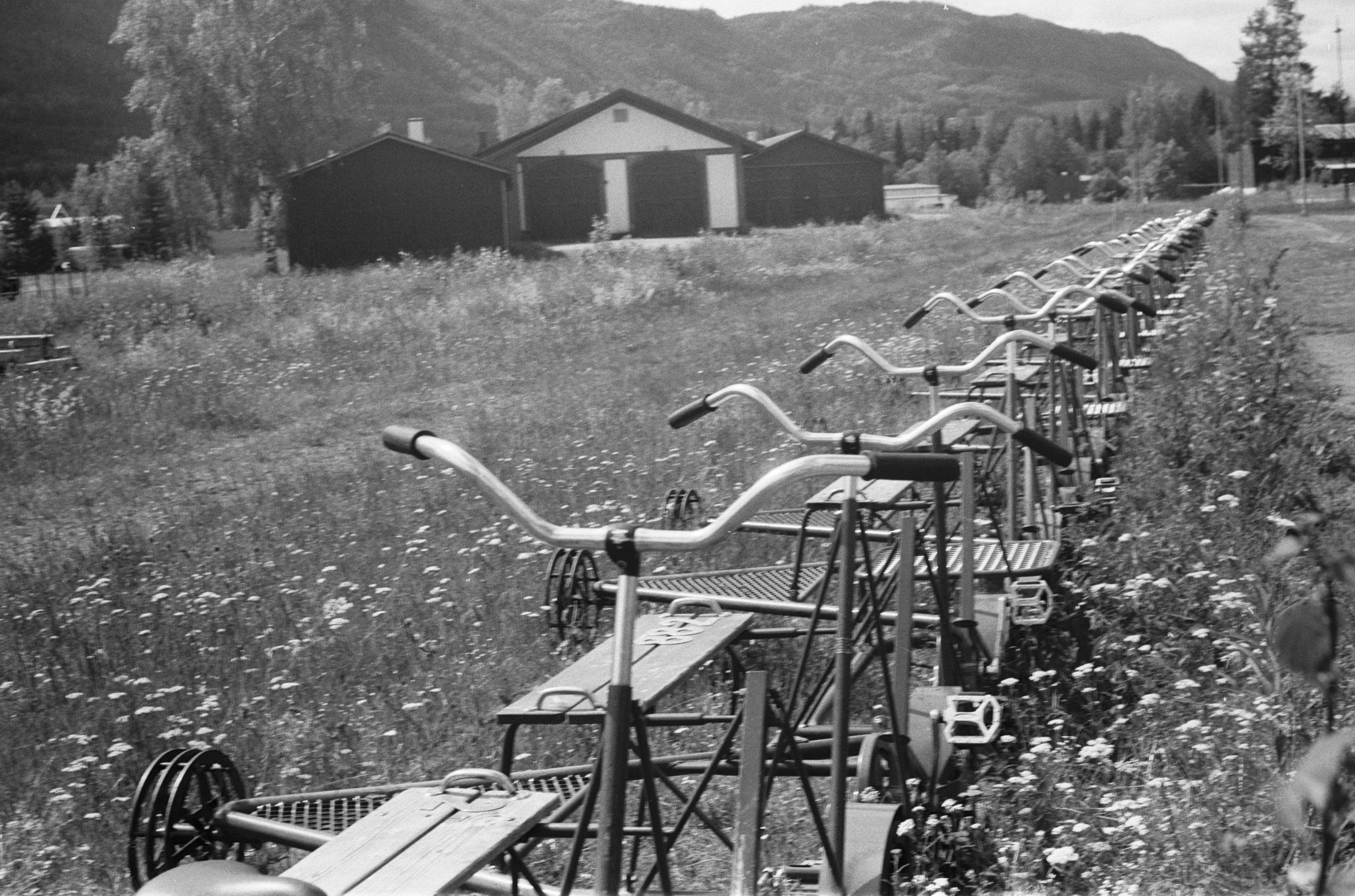
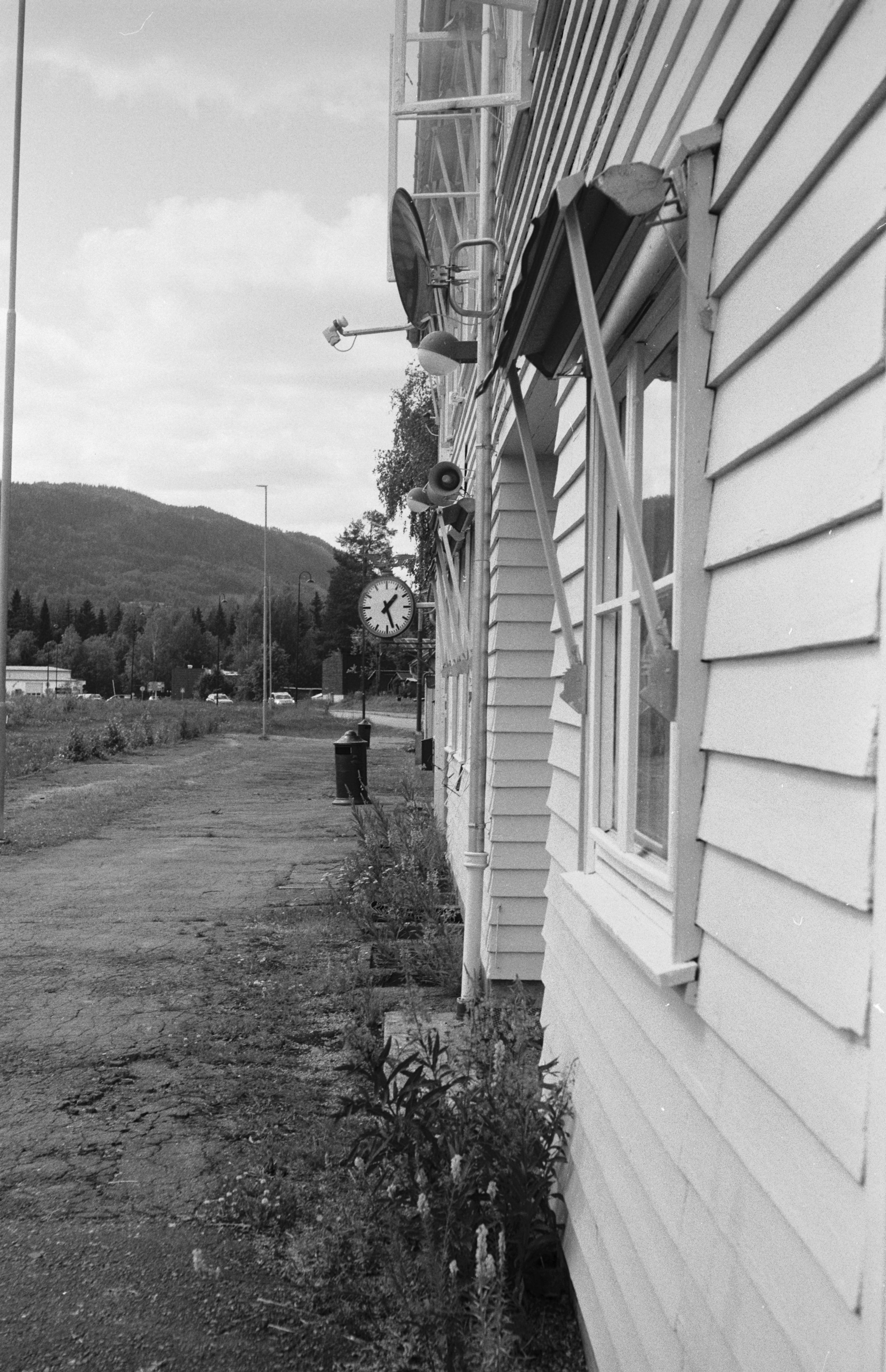
The location for my assignment was at a defunct railway station now used for rail bikes. I arrived a bit early to enjoy the sunshine and, hopefully, make some great images. I was not the only living creature enjoying the sunshine this lovely day. I also met some very social and eager horseflies and mosquitoes. A part of the Norwegian summer.

A little tip for shooting in Norway where light isn’t that bright; think «Sunny 11» not «sunny 16». The lighting conditions in Norway are not as bright as further south in Europe.

Maybe not in mint condition, but for sure a great model. And after all, the BMW still is on its wheels.

Since the Voigtländer is not a rangefinder or markfinder, the focus is based on guessing distance. Not too difficult for street photography and the lens is really interesting. Looking through the pictures after scanning, I can see that I should have used the sun shader following the lens.

I developed in Xtol 1:1 for 8 minutes 20 sec in 21 degrees chemistry. Then rinse and stop in water, and seven minutes fixer.

New for this development cycle was that I used a new termometer, as my last one died an Xtol death from falling into the tank of stock. RIP.

A Summer day adventure with a Voigtländer Vito B

A few days ago I got hold of an old Voigtländer Vito B in «unknown condition». I know from before that Voigtländers are relatively sound cameras, and took it for a test drive with a Kentmere 100 onboard.

The Voigländer used in this test.

The small viewfinder tells me that this is a camera from the earlier production years, between 1954 and 1957. The fucis is done buy measuring the distance manually and setting it manually to the camera. No rangefinder or markfinder.

It’s always fun to play around with an old camera like this, and I must say that despite it’s reputation for being «immensly grainy» I am very happy with the results the Kentmere 100 provides. My guess is that photographers complaining about the grain are either after a smooth as gold PAN-F like smoothness, or just overexposes the film and gets grain in the scanning process.

As previously with the Kentmere, I chose to develop in Xtol 1:2 and used 10 minutes in 24 degrees chemistry. The negatives came out fairly evenly exposed and I am happy with the results.

An old-camera adventure

The oldest camera I own is an Argus C21 from 1947. I bought this one rather cheaply last summer and it was in «unknown» condition. I tried a film in it back in last summer, but the back lid, fell off and the film got ruined. Then i forgot all about the little Argus.

Today I brought the old Argus back to life with a Kentmere 100, and brought it along as I went for a little drive.

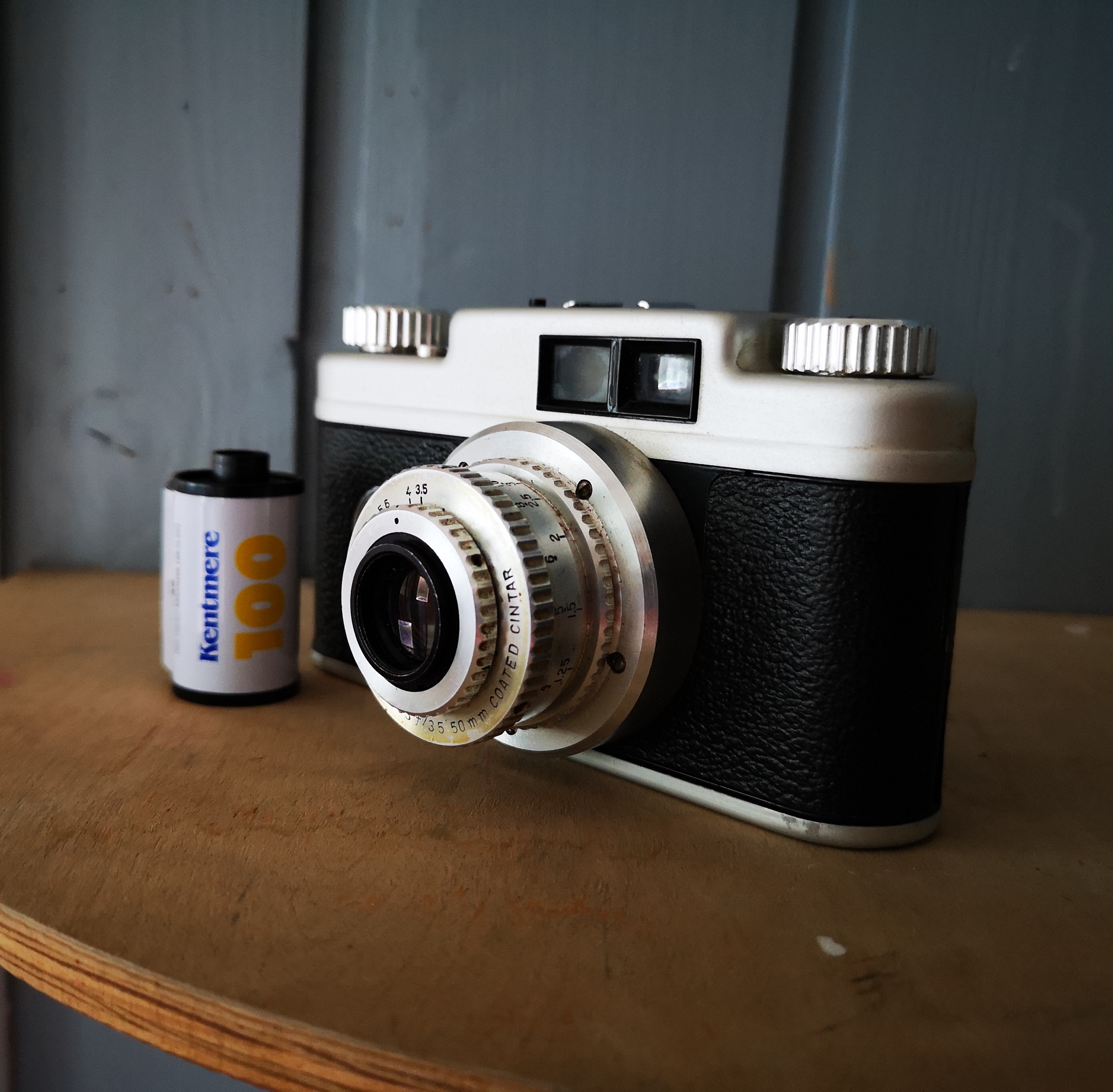
A little documentation image of the Argus C21 and the film.

When the negatives came out of the tank, they looked farily evenly developed and exposed, but when scanning and working with the negatives, it is clear that the lens sufferes from some hazing and probably build-up of dust.

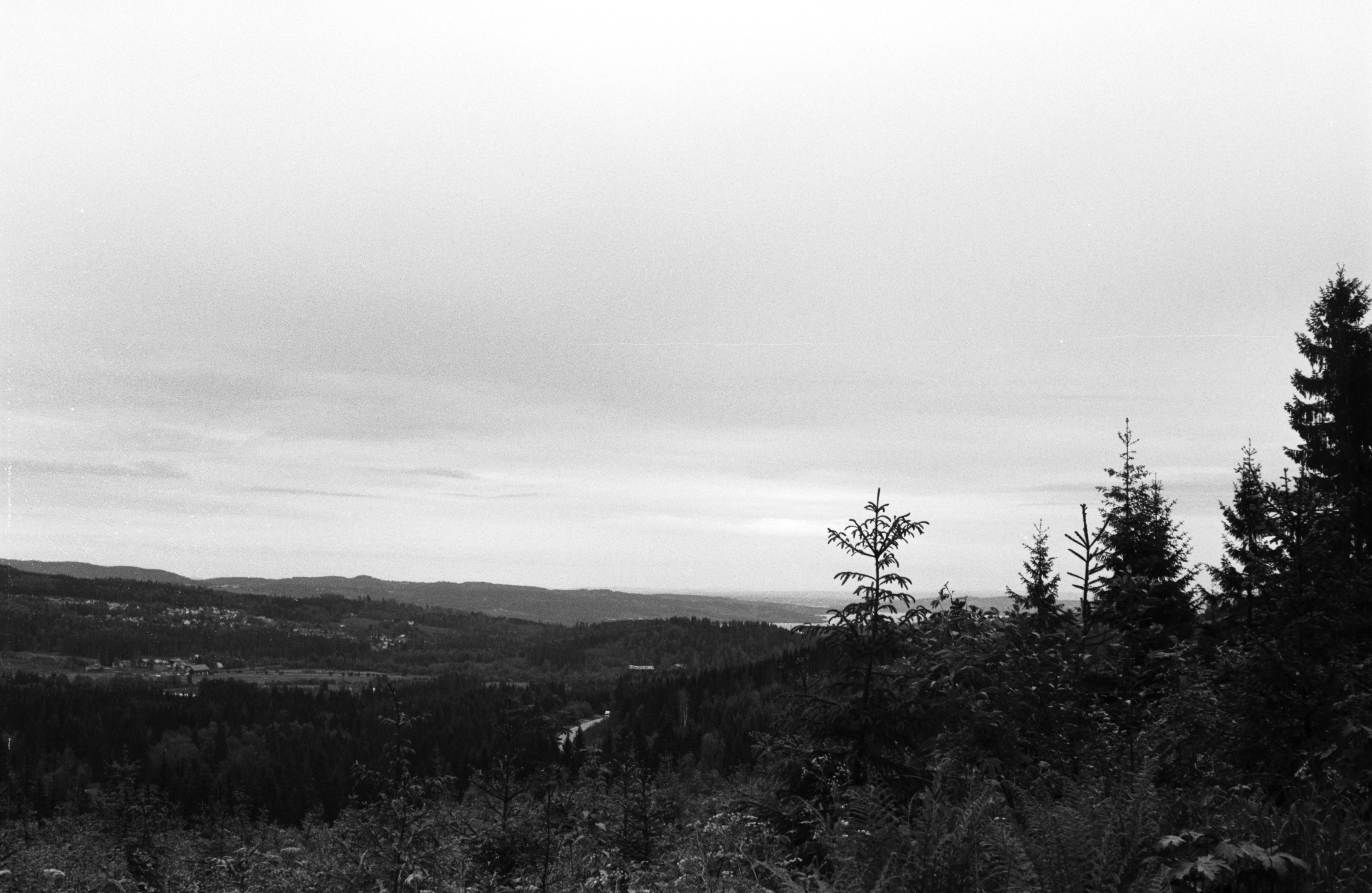
That said, I am really intreagued by the results, and they show that the old Argus still has a sharp eye.

Also, the Kentmere 100 shone with its traditional grain structure, and gives the images a really old fashioned look, even in Xtol. The development cycle for this round was Xtol 1:0 9 minutes 45 seconds at 18,5 degrees. Then I used a water stop, six minutes fixer, rinse and photoflo. Images turned out ok.

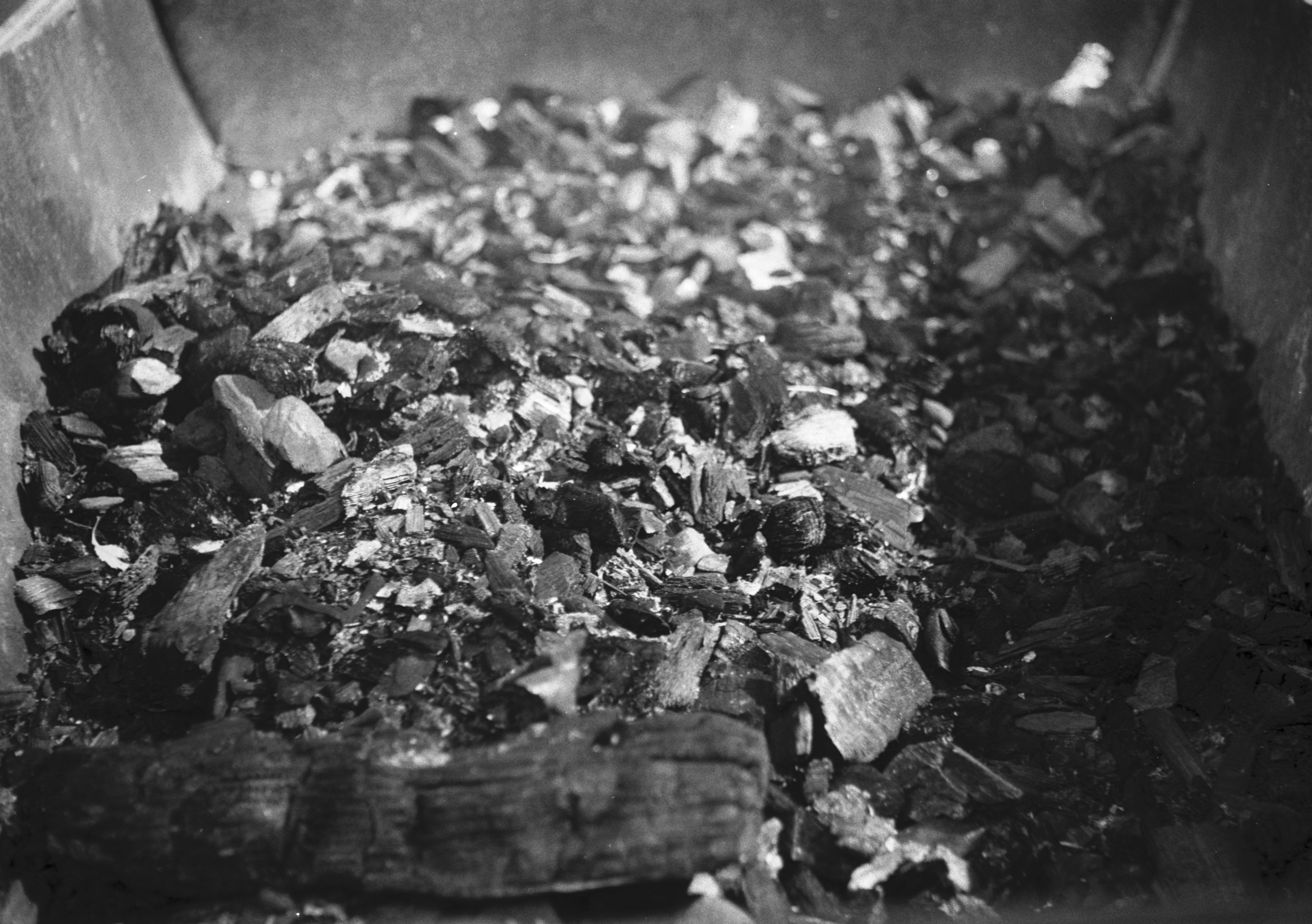
The camera does also scratch the film slightly as you can see in this photo. It might be mendable, but I do not mind a few scratches from a camera this age. Especially not at the price I payed, around 15£.

Also, I like how the Argus focuses, It gives a really sharp middle of the picture focus and a gentle unsharpness at the edges, making a vignetting effect which is pleasant.

As always, images in this blog are untouched by Adobe. Straight from the Plustek-scanner.

A cloudy-day with Kentmere 100

Analogue photography has this horrible reputation for being ridiculously expensive because of expensive films expensive equipment. One of my goals with this blog is to disprove this and show how great results you can get with cheap cameras, but also with budget films.

Today, I picked up a Kentmere 100, which i bought for very little money at my regular online store, and went for a little walk by a lake not far from where I live. I am normally a huge fan of the Ilford-films, and since Kentmere is made my Ilford, I assumed it to be a decent film.

I read a few blog entries and notes on Lomography before I embarked on this adventure, and I saw people complain about «immense grain» and «too grainy». I therefore chose to develop this film in Kodak Xtil 1:0, to have a limited development time to reduce grain.

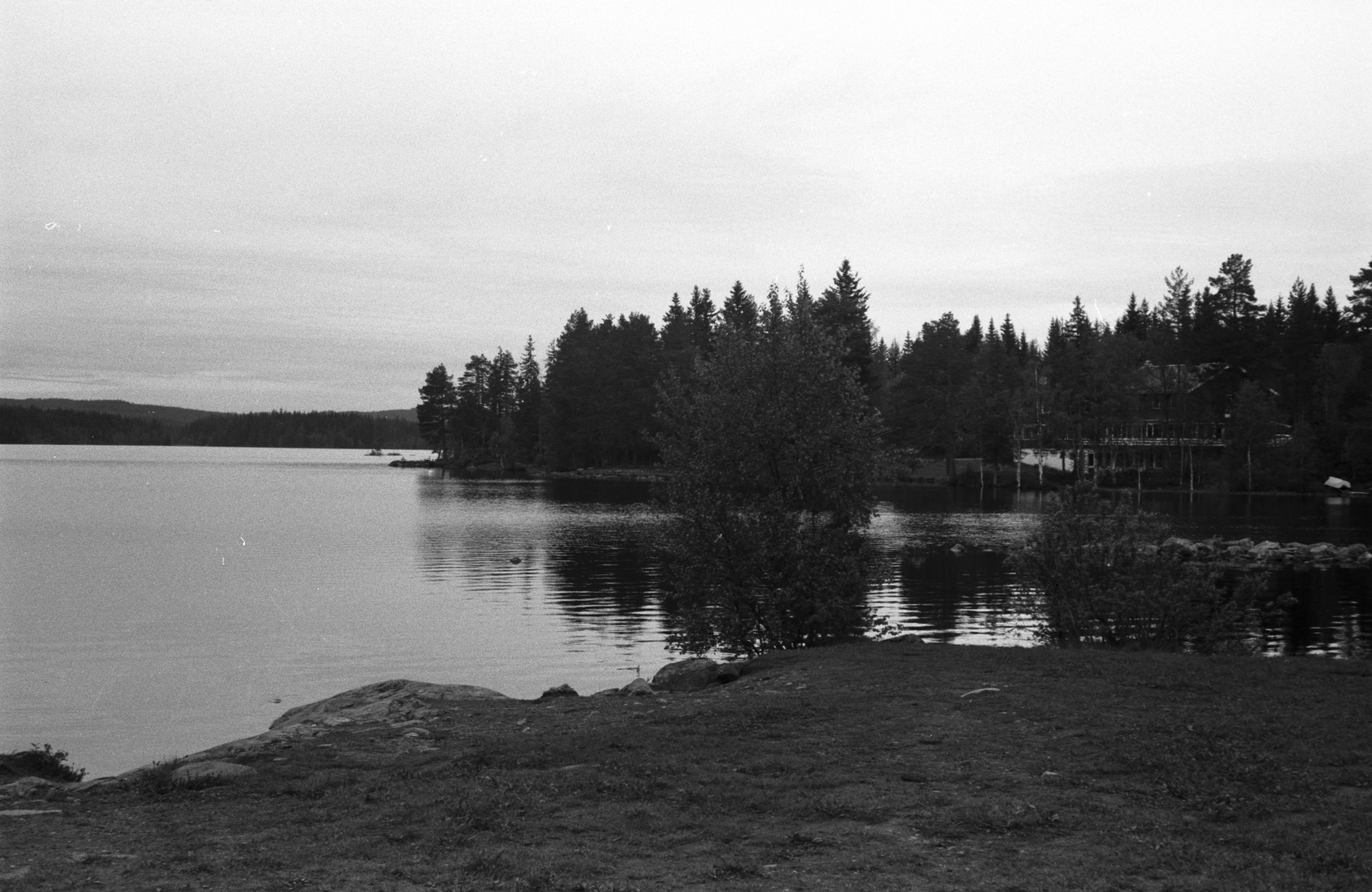
Kentmere 100 shot at box speed, developed at 19,5 degrees in Xtol 1:0 for 8 minutes 15 seconds

At least in this development cycle, the Kentmere produced a really pleasant grain, and I like the soft, but vibrant range it gives. I will definitely shoot this film again, and use the same decelopment cycle which I find to give the results I want.

Furthermore, in 35mm film photography, grain is a part of the «game» and a force that makes your images interesting.

Also, I find the cheap Petri Racer so be one of my absolute favourite cameras. The little rangefinder has a fantastic lens and is truly reliable. More results are in the album beneath.

Analogue photography is not expensive, and with some skills and knowledge, you will appreciate this media. ‘

Colour is descriptive; black and white is interpretive.

Elliot Erwitt

A little walk with the Petri

Today, I had a portrait assignment at a local museum ground, and I decided to arrive a bit early to have a little adventure with the Petri before my shoot. A few days ago I got a few interesting films in the mail, and i decided to try one of these films; an Astrum Foto100, from what I understand the company that bought Svema, when they ran out of business.

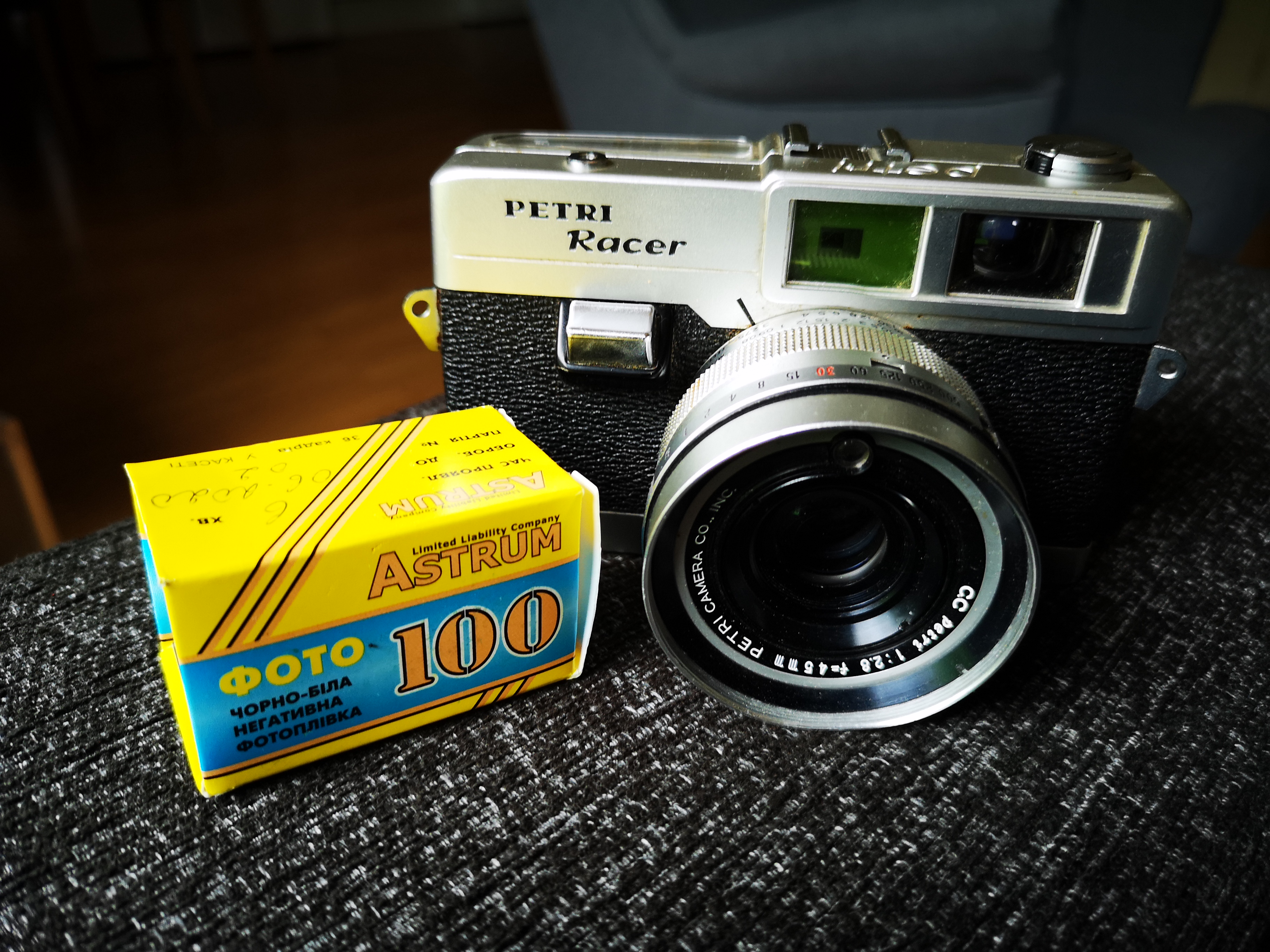
A documentation picture of the Petri and the Astrum.

I was curious about the Astrum-film, since I had never heard about the brand. Also I could not find development instructions anywhere for Kodak HC110 and Astrum Foto100. After some browsing I found a very interesting blog, where the time 9.45 was suggested for 20 degrees water. My water was 21 degrees, so I ended with 9.02 for the developer.

I shot the film using the sunny 16 rule, or as is more appropriate in Norway, the sunny 11, rule. Our sunlight is not as bright as some other places in the world.

I fired mostly landscape photos, using apertures between f8 and f16, and had a really nice little walk around enjoying the sunshine and the Petri’s company. And when removing the negatives from the tank, I was amazed of the fine grain, range and general quality of the images. Also, the negatives were crystal clear.

A sample photo.

The Astrum Foto100 is definitly a film I will use again, and I’m very surprised that HC110 is not listed as a recomended developer with this film. I have to say I am very happy with my results, and would use this combination again. I am also curious to test a film this great with X-tol or Rodinal.

“Color is everything, black and white is more.”

Dominic Rouse

My first adventure with a Zenit E

A bit more than a week ago, i bought a rather cheap Zenit E Olympic edition off eBay. It arrived in the mail today and I loaded it with the first film I found, an Ilford HP5, and went for a spin at an old school building.

The lighting conditions were a bit demanding, so I decided to go for pushing one step to 800 ISO, and shooting at shallow apertures, to really play with that amazing Bokeh of the Helios 44, f2 lens that followed the camera.

The Zenit E and the HP5 that was used.

I decided to develop in my favourite solution, Kodak HC110 1+31, and at slighgly above 20 degrees water, I used 9 minutes 15 seconds.

I got a little surprise when the negatives came out of the tank. Some frames were immensely overexposed, while others were close to perfect. I used the same light meter app, and followed it carefully, so all frames shloud theoretically be equally over or underexposed. I’ll fiddle a bit more with it and familiarise myself with it. Maybe the main issue is the photographer not the camera.

An example of the amazing image quality I got

All in all, I am very satisfied with the results from this adventure, and I cannot wait for the next adventure with this little, Russian friend. The Bokeh and sharpness from the Helios 44, combined with the sturdy feel of the camera inspires me.

I also really love the look of HP5 at 800!

«Photograph not only what you see but also what you feel.» – Ansel Adams

More from the first Petri-test

From the same roll of Ilford PAN 400 as the previous entry. Ilford PAN 400 shot at 800 in an old Petri Racer.

Development: 75 minutes in Rodinal 1+100 17 degrees, agitation first 20 seconds, then careful agitation after 45 minutes. Scanned with Plustek Opticfilm 8100.

«There’s something strange and powerful about black and white imagery.»

– Stefan Kanfer –

A Petri Racer test

The other day I came across a Petri Racer. The Petri Racer is a rangefinder camera from the 1960s, and as it was indeed very cheap, I decided to give it a test. I decided to use an Ilford PAN 400 for this test, and since the conditions were somewhat dim, I shot it at 800 ISO.

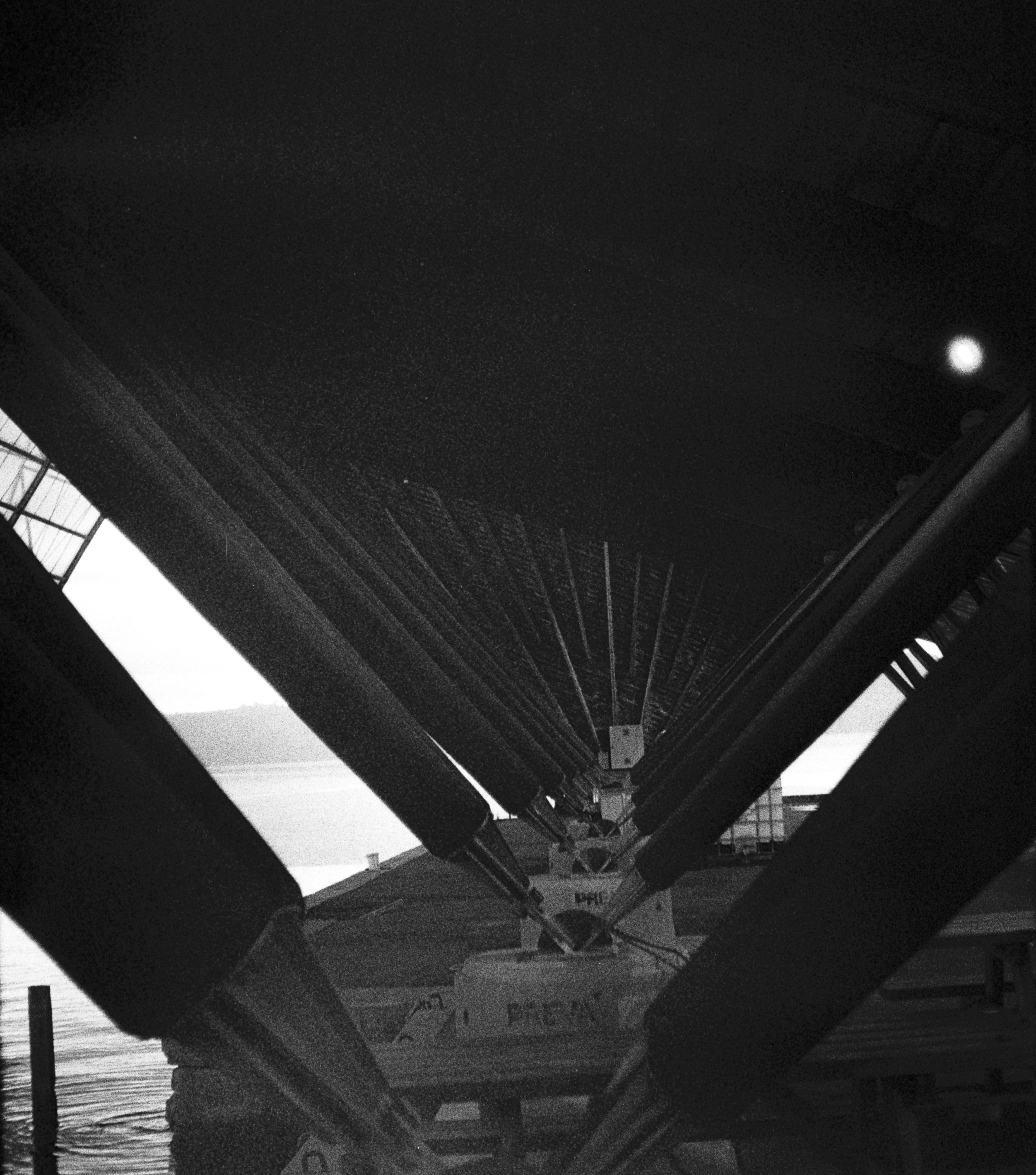
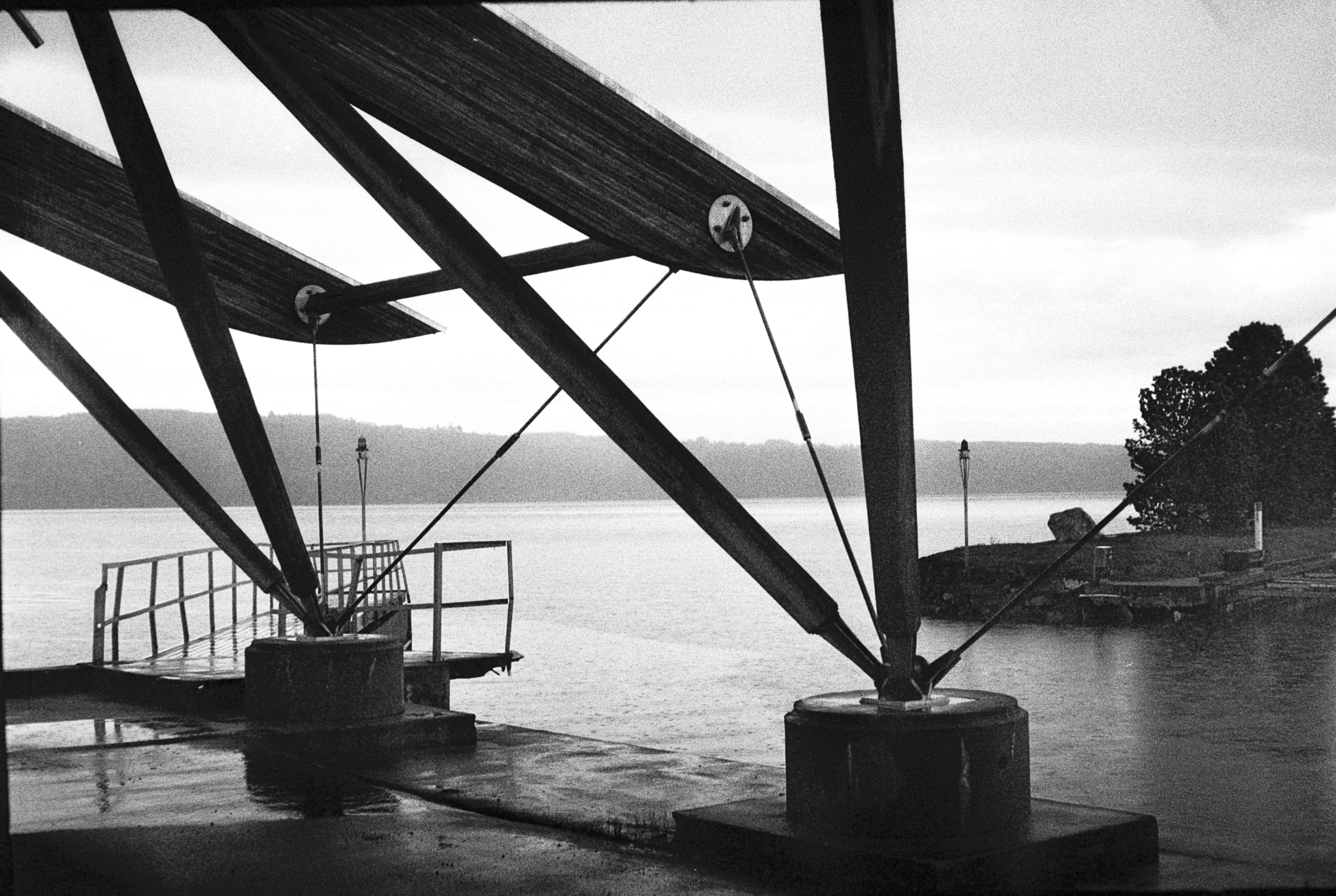
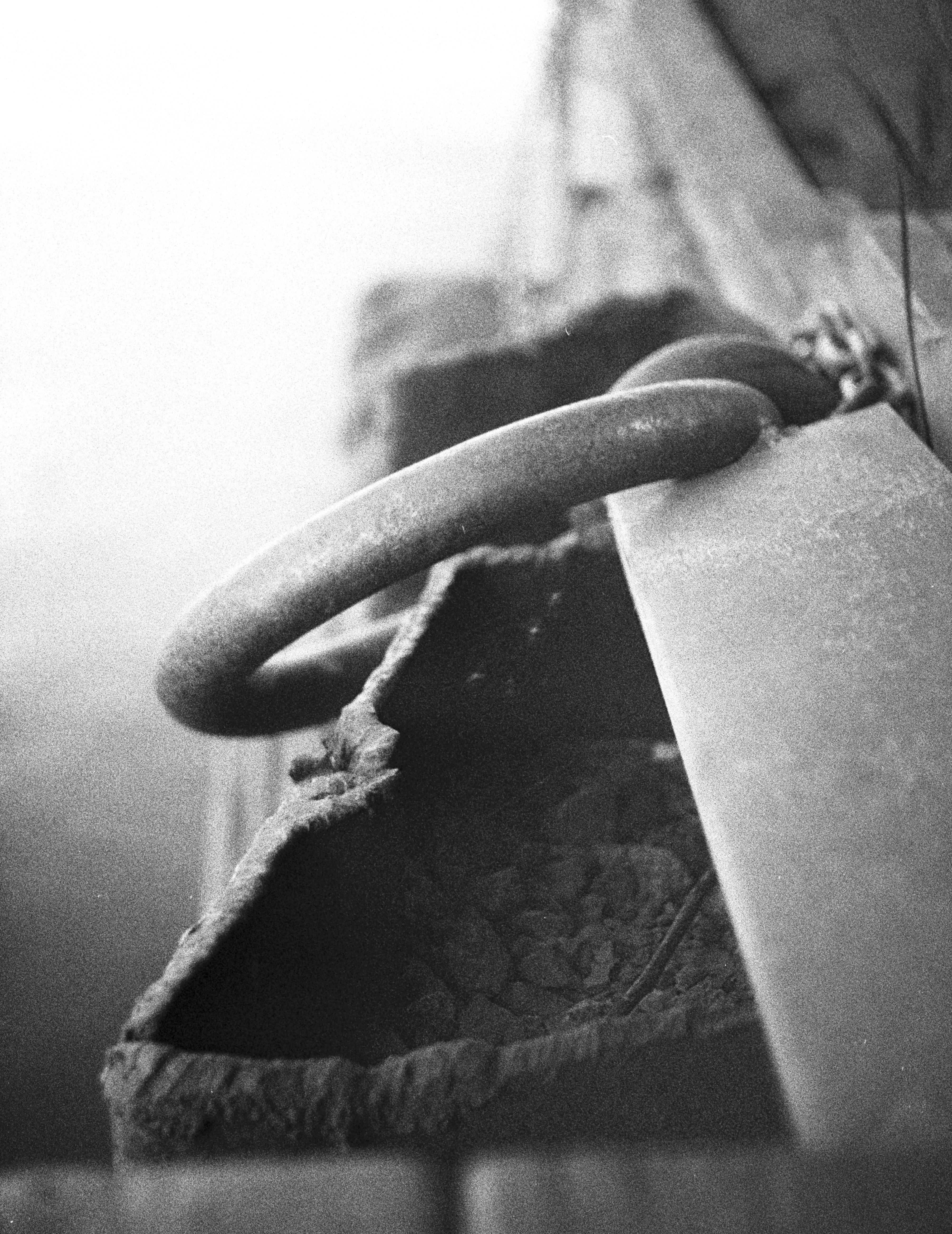
I went out for test shooting in very risky weather, and sure enough, when I was ready to shoot it started pouring down with rain. I went to an interesting architectural area where I had shelter.

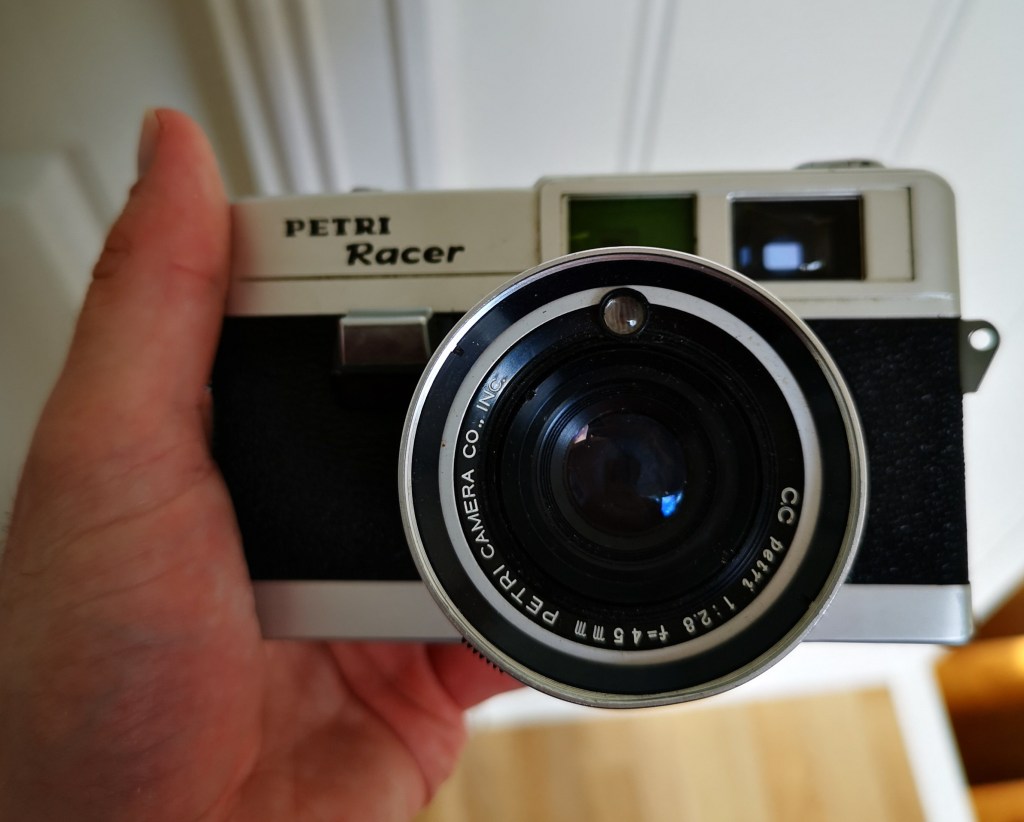
My Petri Racer

I did not know whether the Racer worked or not, and to be honest, I had never even heard of the brand. Regardless, I filled the Pan 400, and decided to develop it in Rodinal 1+100 using stand development. I made this choice because the Pan 400 is a relatively grainy film.

My development cycle for push one step with this film is 75 minutes with careful agitation at 45 minutes. The water temperature is 17 degrees. The negatives are scanned with my Plustek Opticfilm 8100 using SilverFast 8.8.

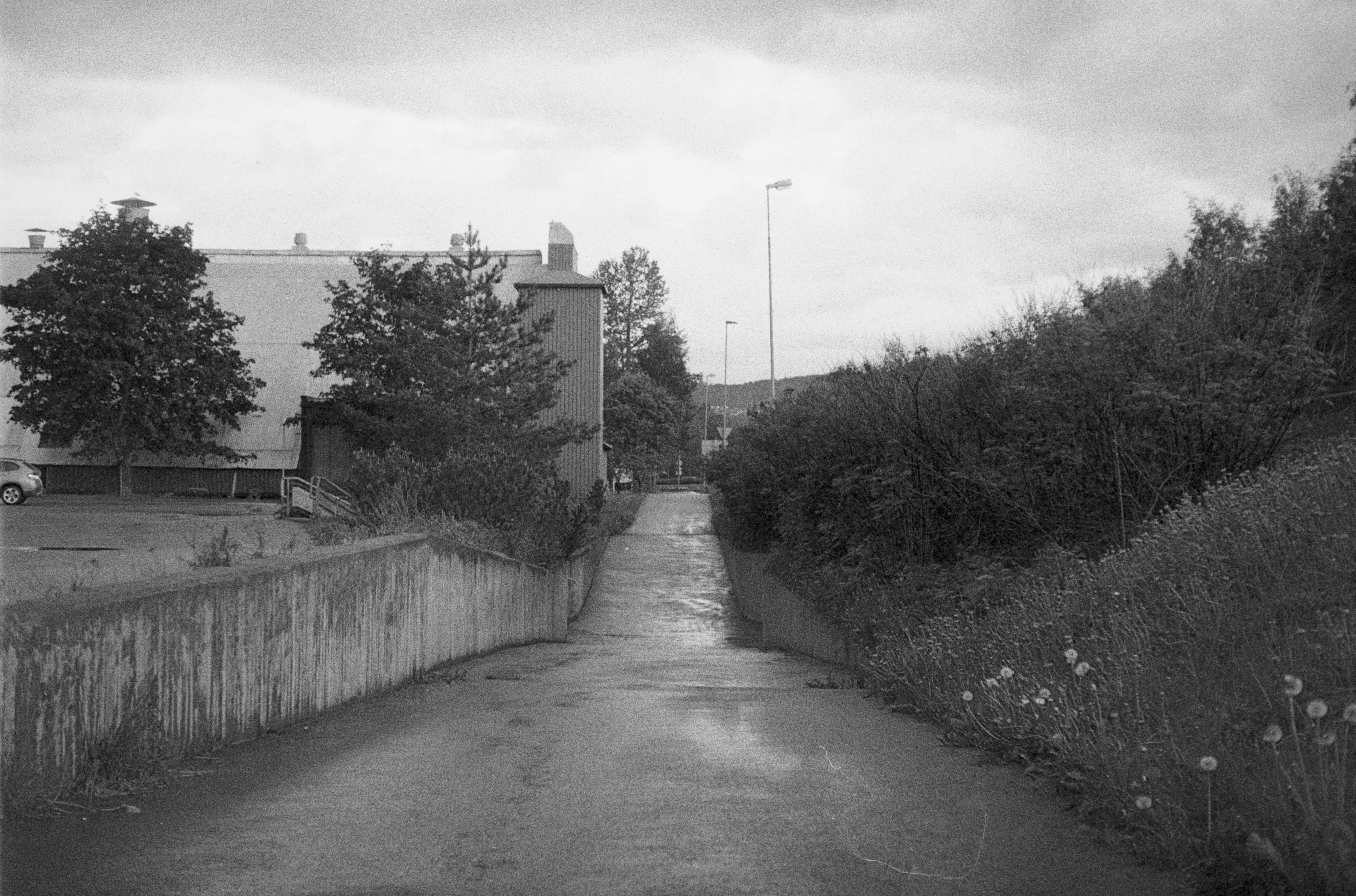
I am very happy with the results from this test round. I now know that the camera works and is capable of rather sharp images.

A real Cheap Camera Adventure.

«Photography is more than a medium for factual communication of ideas. It is a creative art.»
– Ansel Adams –