Capturing snow and fog

Yet again, the persistent winter of 2021 struck  back at us with all its wreath. After a few weeks of impeccable weather and a really pleasant spring mood, we were once again confronted with the face of King Winter. When I went out yesterday, it was blowing a gale and the snow flew thick in the air. Thicker than horse-flies at a swamp in the summer. The weather was bland and uninspiring  and being out there was nasty and uncomfortable. Yet, I had something in mind.

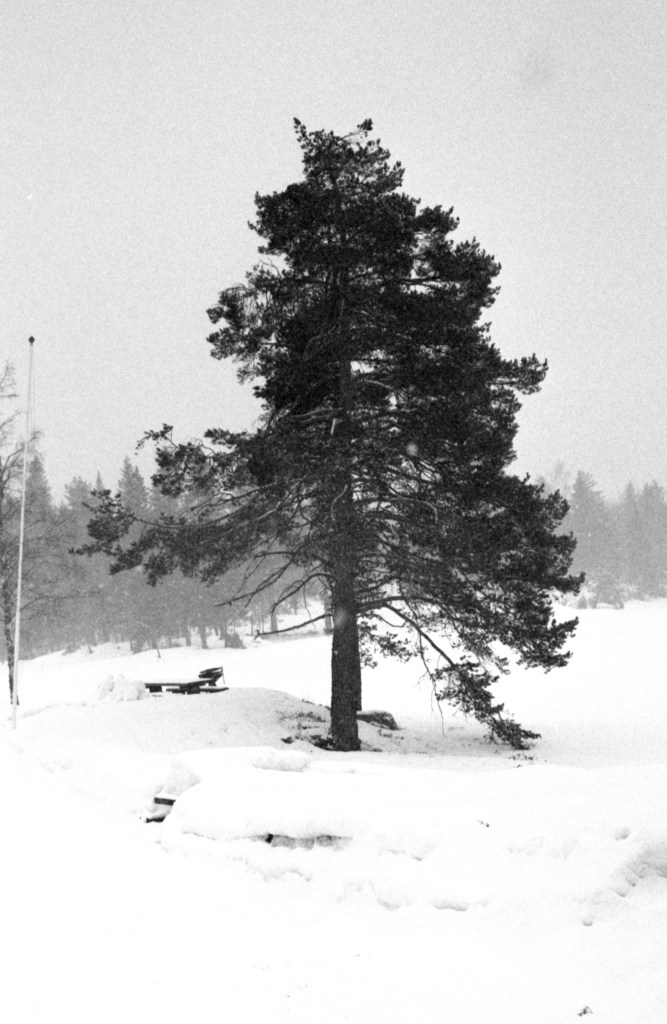
I wanted to capture the foggy and snowy day with a gritty and grainy mood. I chose to go for a BW film. The Rollei Retro 400s, which is a film I have used a bit before and that I find to suit my way of shooting very well. My thinking was that the 400 ISO film would give me just the right amount of grain and contrast, as well as giving me the opportunity to shoot hand-held, which is very handy in windy conditions, where camera-shake due to wind is a real danger, even with  a sturdy tripod.

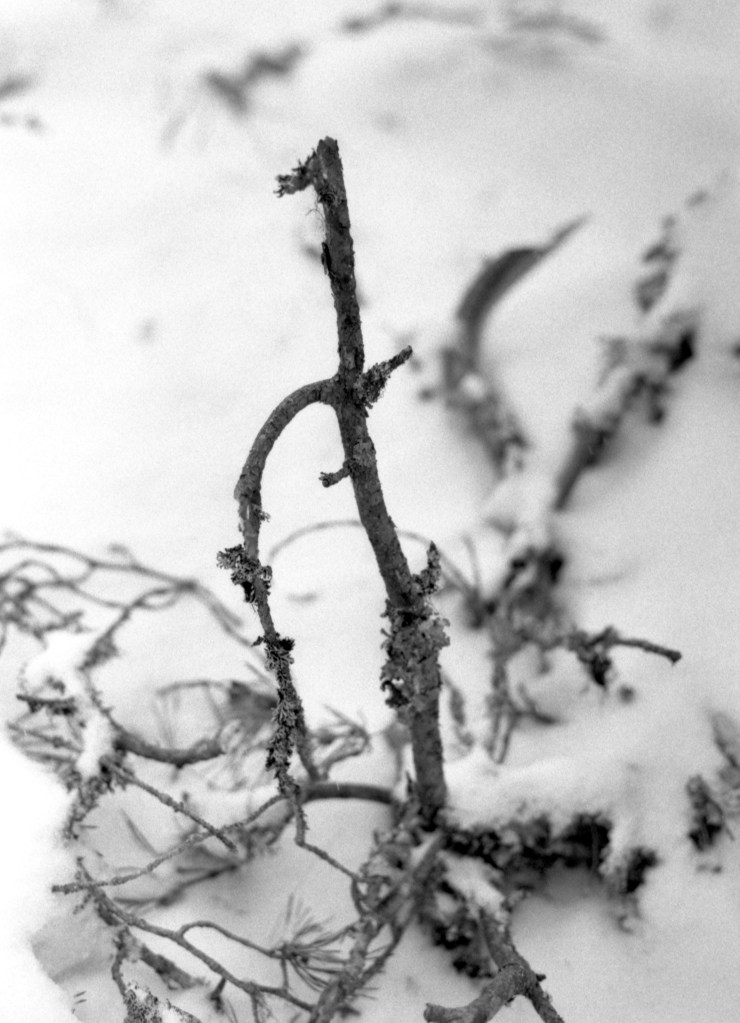
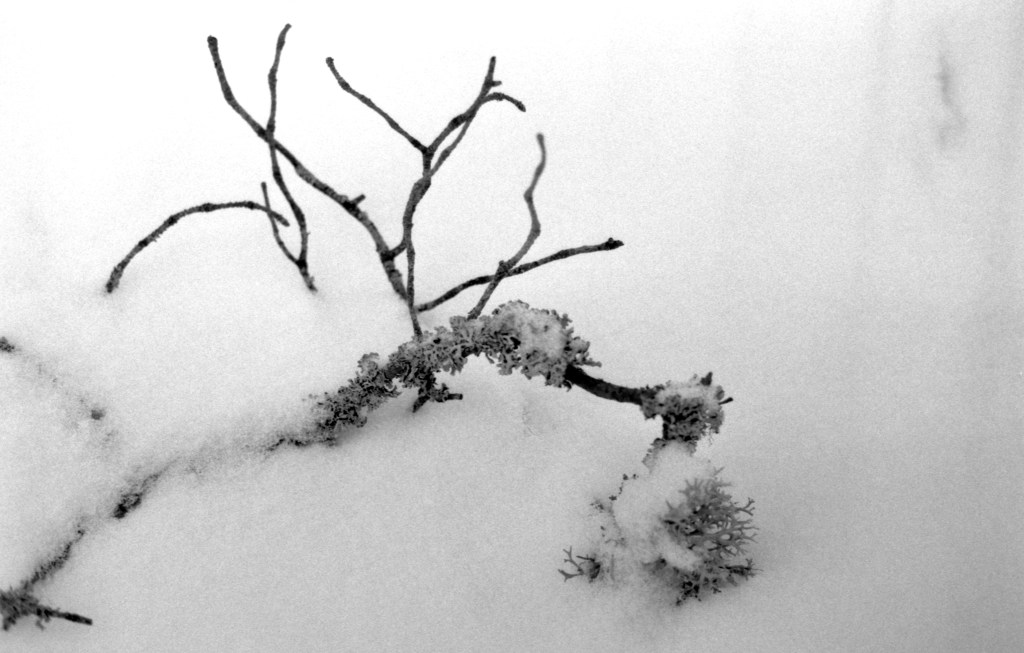
A fallen branch – Olympus OM-1 w 50mm Zuiko f1,8 – Rollei Retro 400s – Rodinal 1+100

I shot about half a roll of film, focussing on making quick compositions around branches that, over the winter with heavy snow, has broken off bigger trees. The foggy and snowy conditions makes these branches stand out as interesting shapes, and shows them for the beauty they are. WIth the added grain from the film and the additional grain and contrast from the use of Rodinal 1+100 Semi-Stand gave that somewhat “raw” look I was going for.

Reklamer

The camera I chose to use, was my brilliant Olympus OM-1. This is a camera I trust at all shutter-speeds and that I know will work regardless of conditions. However, I noticed two issues on this particular outing. first and foremost, there was a little piece of dust that obstructed my view through the viewfinder. I used it as it was when out shooting, because I did not want to take the lens off in the middle of the show-storm. When I took the lens off, there was a little piece of dust on the focussing glass. How this ended up there is unknown to me, I have not taken the lens off this camera for months, and it has not been there before.

A fallen branch – Olympus OM-1 w 50mm Zuiko f1,8 – Rollei Retro 400s – Rodinal 1+100

It also seems to give uneven exposures at the highest shutter-speed 1/1000th, I even got a blank frame that I know was shot with this shutter-speed. This has also never happened to me before, and I will keep an eye on this in better conditions. 

All in all, I got the images I wanted, and all in the matter of around 15 minutes in the snowy gale. Thank you for following and reading, I hope you enjoy my images.
Testing a Konica Autoreflex TC (Part 1)

Sometimes my interest is sparked in some way when I watch Youtube videos. A few weeks ago, I watched a video called «Konica Autoreflex TC – The poor mans OM-1». To me, this title did not really make much sense. In my opinion, the Olympus OM-1 is extensive value for money and indeed very affordable both when it comes to lenses and camera bodies. They are also accurate like clockwork, and relatively hassle-free to service and maintain. I have shot a large number of rolls through my OM-1 and it has never given me any problems even in very cold winter days. So if there would be a cheaper camera that reliable, that had to be a gem for this blog indeed.

My lovely Konica Autoreflex TC with its marvelous Konica Hexanon AR 50mm f1,8 lens

I searched briefly online, and I actually found one incredibly cheap on a local Facebook sales page, and I got it for about 200 Norwegian Kroner (about 20 GBP) with shipping included. A real bargain there indeed. For the first tryout, I loaded it with a roll of Ilford FP4 plus that I shot at ISO50 and developed with Ilford Ilfotec Perceptol. I find that Perceptol really helps me get the winter tones I want for my shots, as well as a very fine grain.

The Konica turned out to be a lovely camera to work with. It is indeed a bit heavier and more bulky than the OM-1 but it fits my hand very well and everything is where you expect it to be, and it all seems to work rather well. I did not try the Aperture priority setting on the camera, but shot it on a variety of shutter speeds and aperture settings with a wide range of filters I found to be helpful for me at this location, which is an old museum. However, I do not see this camera and the Olympus OM-1 to be comparable as equipment.

Reklamer

The Olympus OM-1 is a far more accurate camera with a broader selection of shutter speeds, all the way from a whole second to 1/1000th of a second plus BULB-mode. On the Konica, there is nothing between 1/8th and B, and the longer shutter speeds on my one «drags» a little bit. This could be the particular camera.

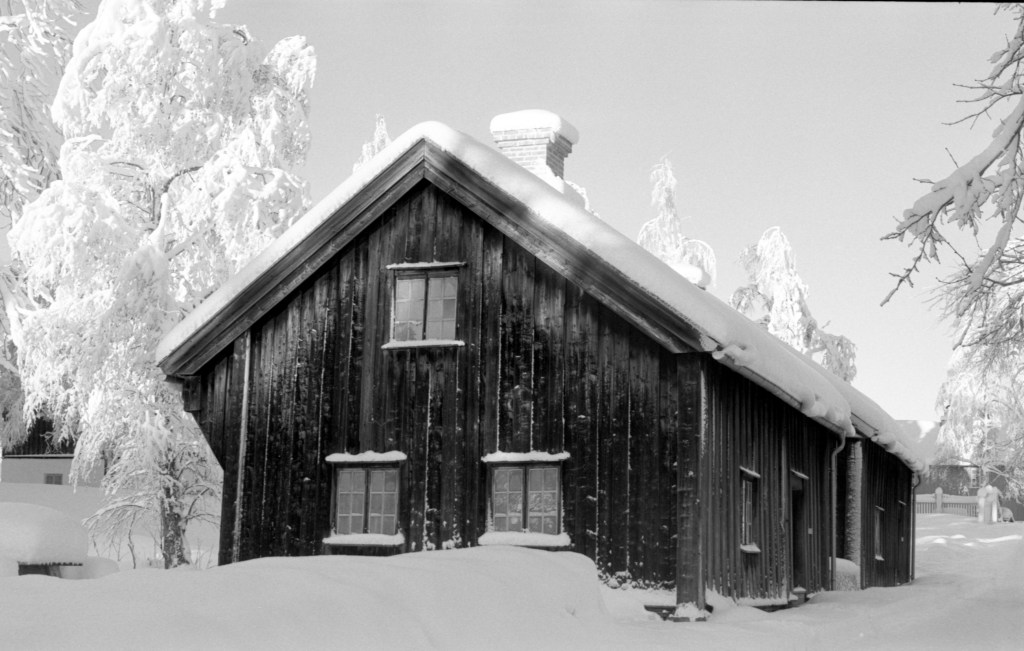
Konica Autoreflex TC w Konica Hexanon 50mm f1,8 lens. Ilford FP4 plus@50 F8 1/25th Yellow filter – Ilfotec Perceptol

Also in the perceived build quality, the Konica is clearly a cheaper and less sophisticated camera than the OM-1. But if you forget about the irrelevant comparison to a clearly better camera, the little Konica is a very pleasant camera to work with, and the 50mm Hexanon Lens, is just outstanding. It gives a really nice sharpness, even at wide apertures and it is easy to focus.

Konica Autoreflex TC w Konica Hexanon 50mm f1,8 lens. Ilford FP4 plus@50 F2.8 1/8th Yellow filter – Ilfotec Perceptol

Through my about 60 minutes photo-walk today, the Konica performed rather well for the first 20 minutes. After that, it coughed up a nice selection of issues and creative problems that I guess is it reacting with the cold weather. The temperature was about -12 degrees and some if these issues might be due to that.

Nr 1. Sticky shutter: After some shots the shutter started sticking every now and then. It did not matter which shutter speed the camera was set to. The only thing to do, was to tap the camera slightly so that the shutter would go off, and then shoot another frame to get one without immense camera shake.

Reklamer

Nr 2. Slowed focusing. After a while out in the cold, the focusing ring got very slow, almost as if the lubrication thickened and became a gooey syrup.

Nr 3. Camera refused to rewind the film back into the cassette and ripped it instead. When I manually retrieved the film, it actually broke on another place as well. Luckily, I did not lose more than four shots, and all of them were bad. (happy days)

Konica Autoreflex TC w Konica Hexanon 50mm f1,8 lens. Ilford FP4 plus@50 F11 1/25th Graduated Magenta filter – Ilfotec Perceptol

All these issues aside, I like the Konica Autoreflex and the Hexanon lens. A ripped film could very well be my mistake and the other issues could be weather related. My next test out of this camera will be with a colour film, trying to capture some lovely, bleak winter colours.

Vintage shoot with Frida and her old Ford

Analog photography is has the loveliest tones imaginable for vintage style photography. The special look an old lens gives is an exquisite vibe to your photo that no digital preset can really copy, and the feeling of doing this with vintage equipment adds an extra element. Photography is not just about the picture, but the way to get there and the feeling of the process.

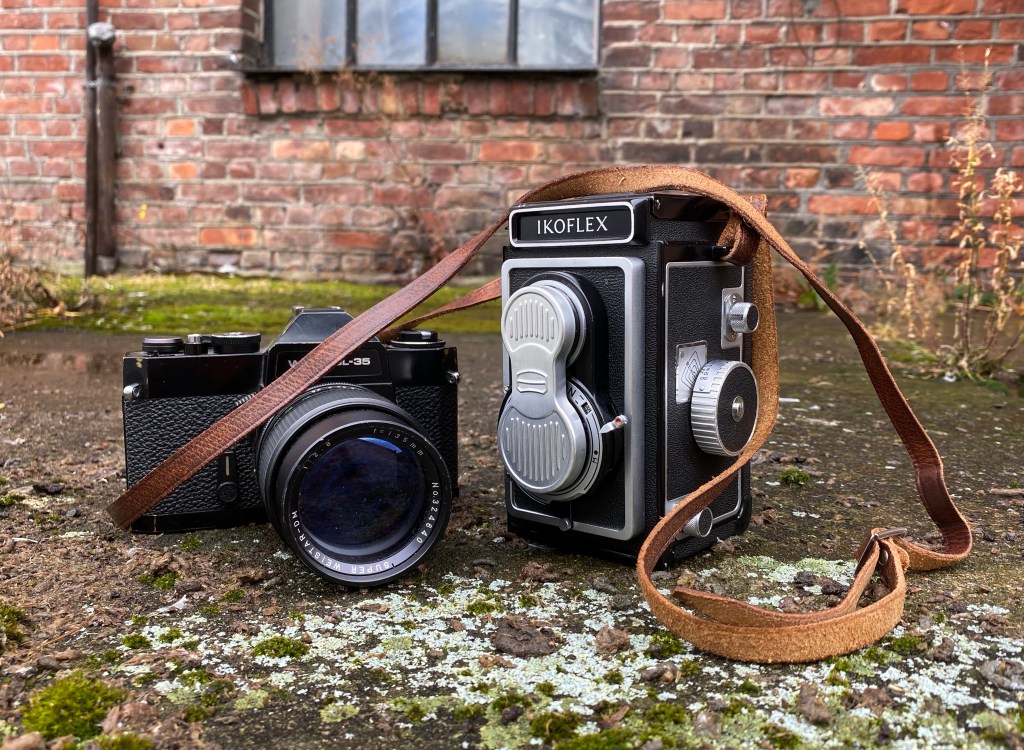
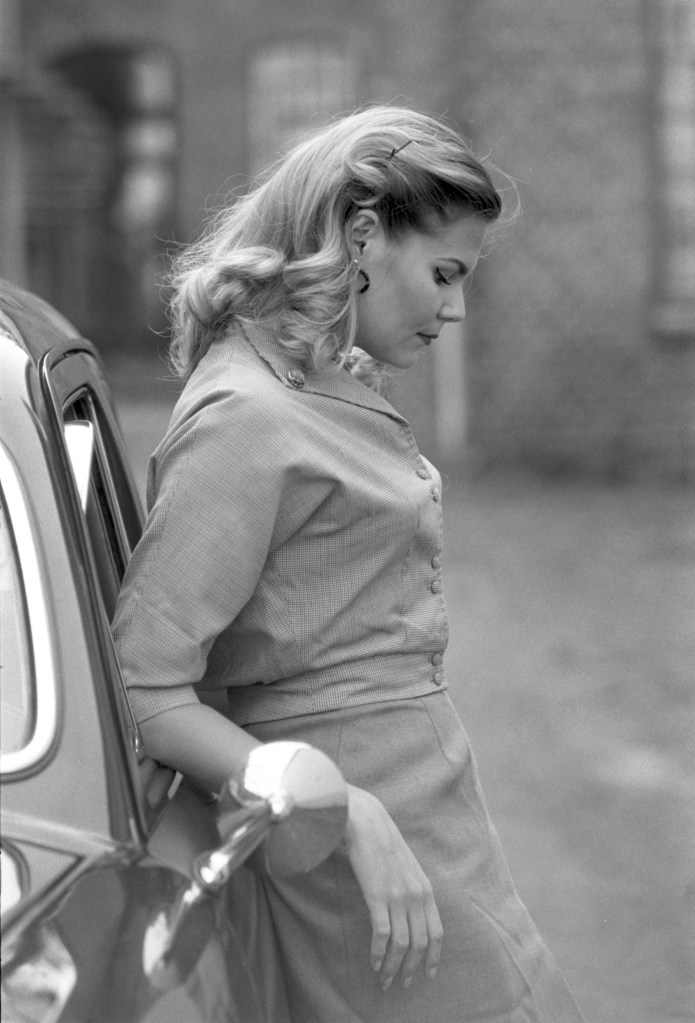
Yesterday I went out to photograph my friend Frida and her lovely 1950 Ford Shoebox. To go with me for this shoot, I chose two cameras. The Weist SL-35 and my lovely TLR, the Zeiss Ikon Ikoflex. Both these cameras are reasonably accurate and has sharp lenses that does really bring out that «vintage feel». I rolled up both cameras with Ilford FP4 Plus, A film that for me is my first choice when I want that «Vintage feel». This film has a really fine cubical grain structure, and has a more visible grain than other films around its speed, and I love how this grain structure affects the images.

My equipment for this shoot. Zeiss Ikon Ikoflex medium format TLR and the Weist SL-35, 35mm M42 SLR.

We met at a lovely location in Kapp just south of Gjøvik. This location used to be a condensed milk factory back in the days, but today it is used for cultural purposes among other things.

Reklamer

We first set off with the Ikoflex. I shot as close to f4 as I could get, and did some bracketing with f5,6 to be sure not to overexpose too wildly. I shot the Ikoflex at its highest shutter speed around 1/300th of a second, but my guess is that this shutter speed is a bit slower. Probably around 1/250th which is still very good for a 70 year old camera like this.

I refer to the Ikoflex as «the bird box» and this is one of my absolute favorite camera in use. When I bought it, it came from a Swedish Zeiss collectors house, and the seller did not believe that it worked. Probably because he didn’t really understand how it works. These cameras have their specific way of use, and you will not be able to shoot this camera if you don’t know how to load film in it and how to set it up.

When we were done with the film in the IKOFLEX, I changed it for some Kodak Portra 160, but these images are not included in this entry.

Reklamer

We then set off with the Weist and its exquisite Weistar 135mm lens. I also shot this one as close to F4 as I could to get that lovely bokeh you get from this lens. This is the first time I tried this camera and lens for a shoot with a model, and I am very happy with how it performed.

These are just quick scans of the negatives. This shoot will be finished as Darkroom prints. Whether the prints and the process of making them will be entered in this blog is yet to be decided.

All in all, I am very happy with how both cameras performed during this shoot and I feel humble and lucky for being allowed to with with people like Frida, who is on board with the analog nerdity.

Photographs open doors into the past, but they also alloq a look into the future

Sally Mann