
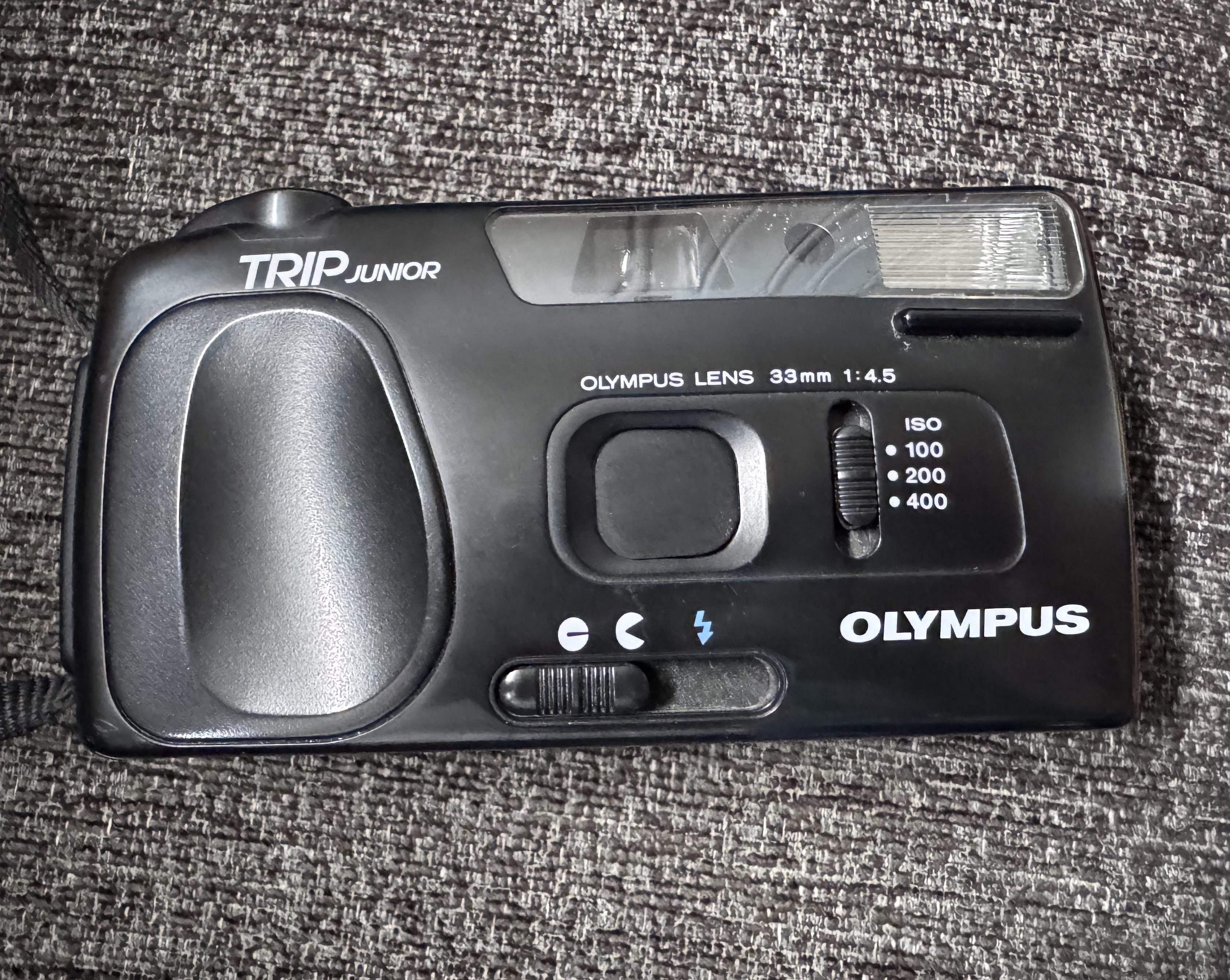
A few days ago, found an old Olympus Trip junior and decided to try it out. The Olympus Trip Junior is probably the cheapest and simplest camera I have ever used on this blog, I payed the equivalent of about 2 euros for it in so-called unknown condition. My test before buying it was putting batteries in it and listen for the advance and shutter if they both worked. They did and I bought ut.
The Olympus Trip Junior is a very simple camera. It is a point and shoot camera with a fixed focal length of 33mm and a shutter button. It also has a flash and three different ISO-settings 100, 200 and 400 ISO. From my first experiment with this camera the exposures were a bit inconsistent so I am not sure whether the ISO markings are mainly aimed at the flash or if it does indeed have different shutter speeds or apertures. Not having been able to find any manuals for this camera, my guess is that it has a fixed aperture of about f8 or f11 focusing at about 4 meters, and that it has one shutter speed of about 1/80. These are just my guesses, and should not be taken as facts.
For my first trip with this camera, I chose to do something along the lines of my most recent project, stopping at locations I usually drive past. Now, I have shot many shoots at the old abandoned train station at Fall in Søndre Land in Norway, however, this abandoned piece of railway has more stations and even a walking path along it. So this time, I went to a different station that I have previously never seen. Trevatn. Not knowing how well the camera worked or how indeed it worked, I decided to go with a film of about 200 ISO. Ilford FP4 shot at 200. I chose this because I just guessed that if it was such at a setting it would likely be at 200, as it was the most popular film speed for hobby users when the camera was new.
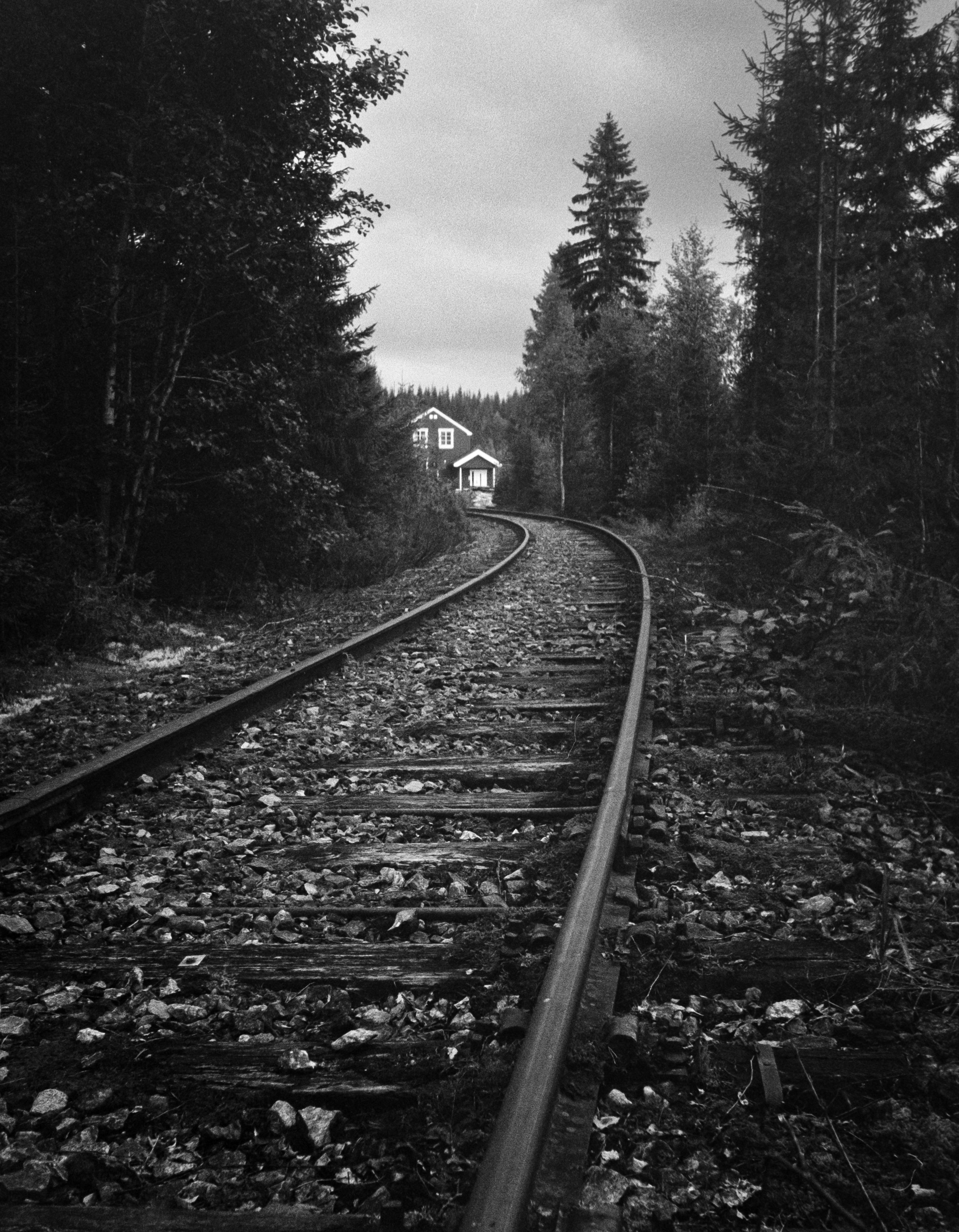
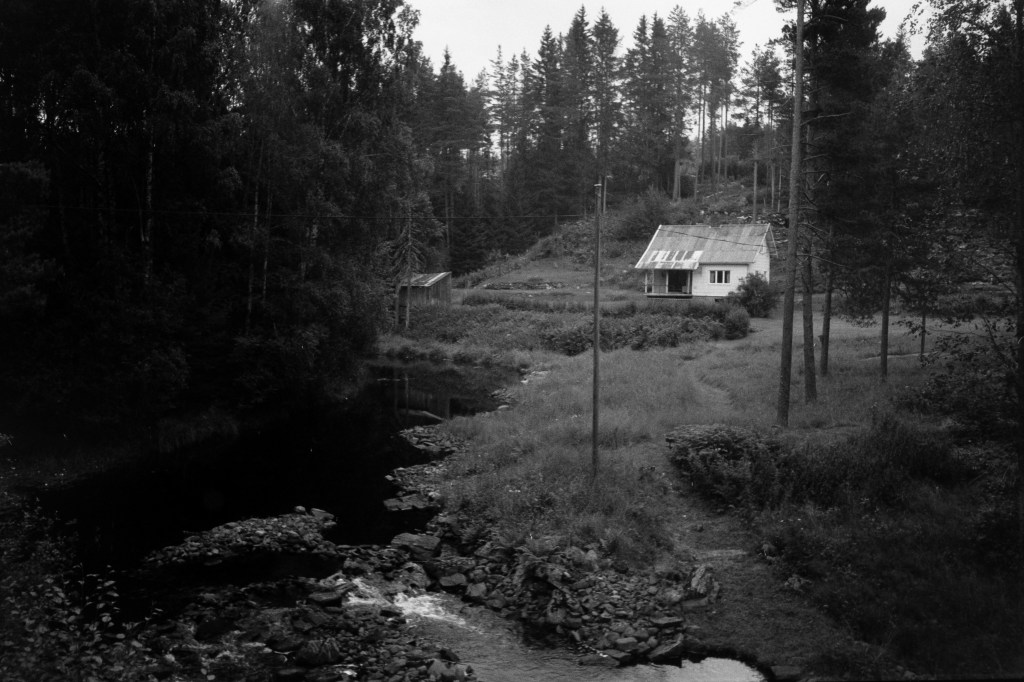
Since I was uncertain how this film would turn out, and if the exposures would be correct, I decided to play it safe and slightly over-develop. I found a time of 7 minutes 30 for FP4+ at 200 on the massive dev chart, and I chose to not make any corrections for it when using a rotary processor. This means that the film was likely pushed to about 320 if not 400 ISO in development. I chose to use Adox FX39 II as my developer as this is a developer I have found to like quite a lot lately. I like how it looks with FP4 as you can see here.
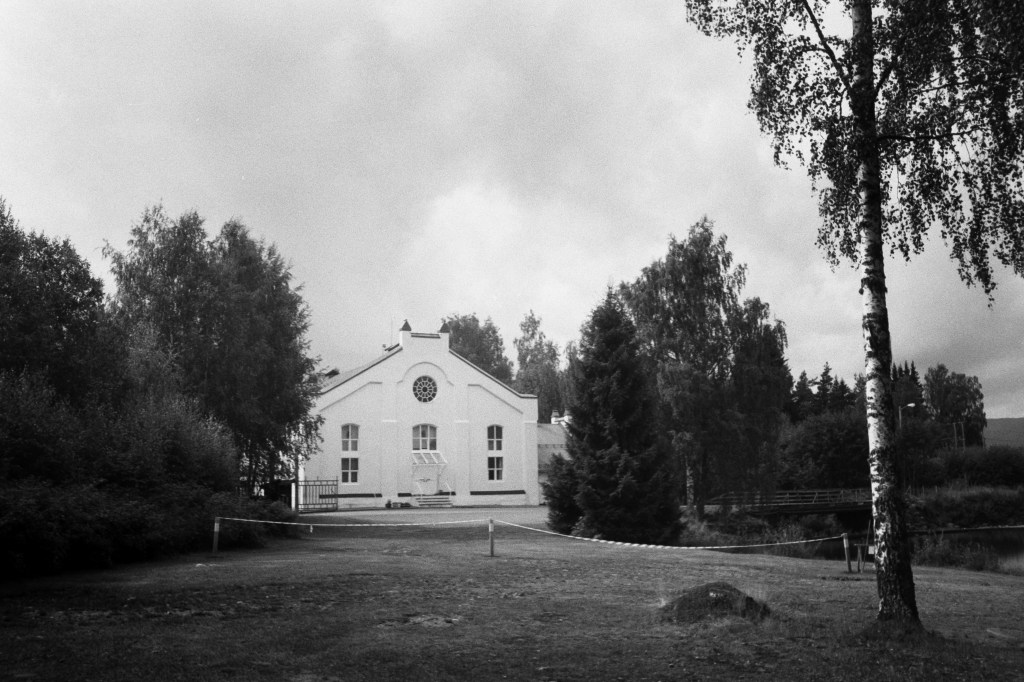
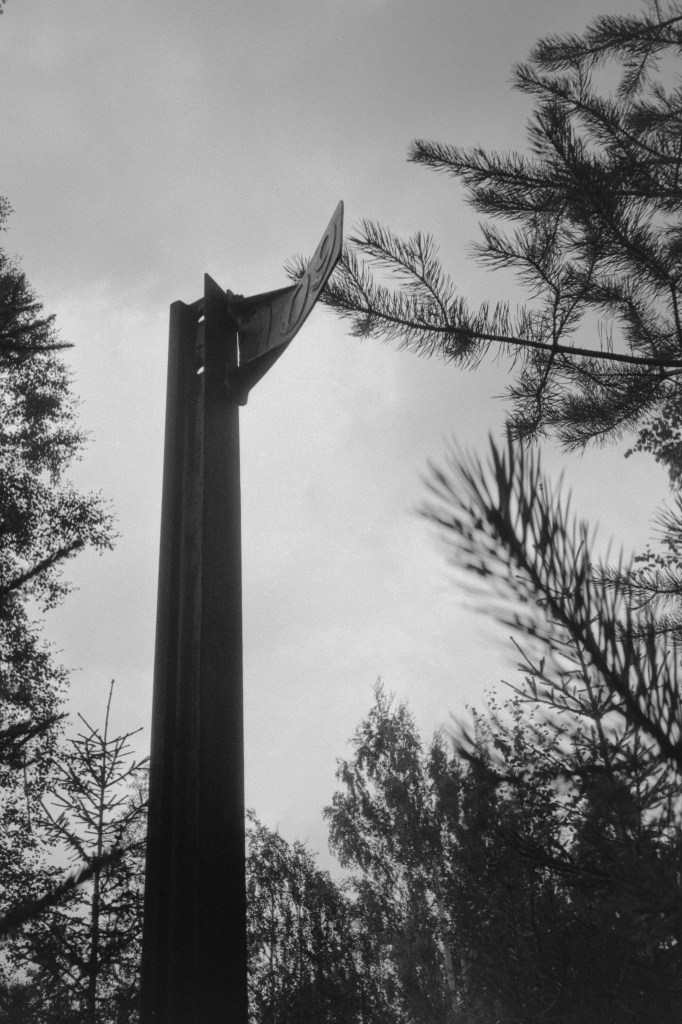
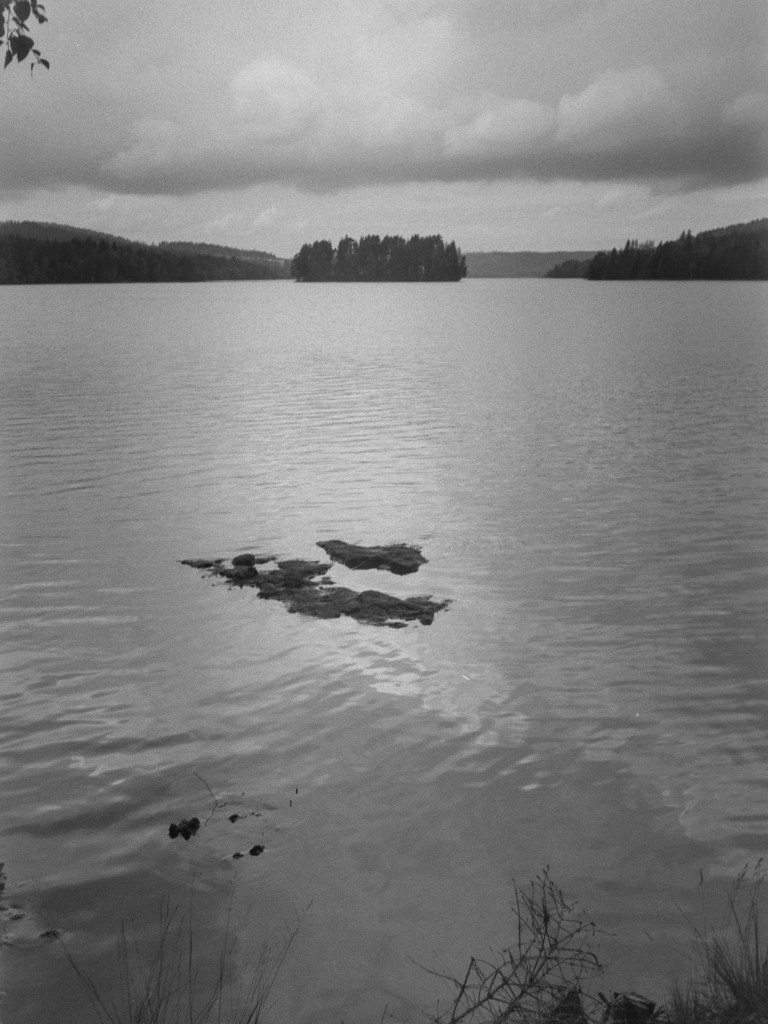
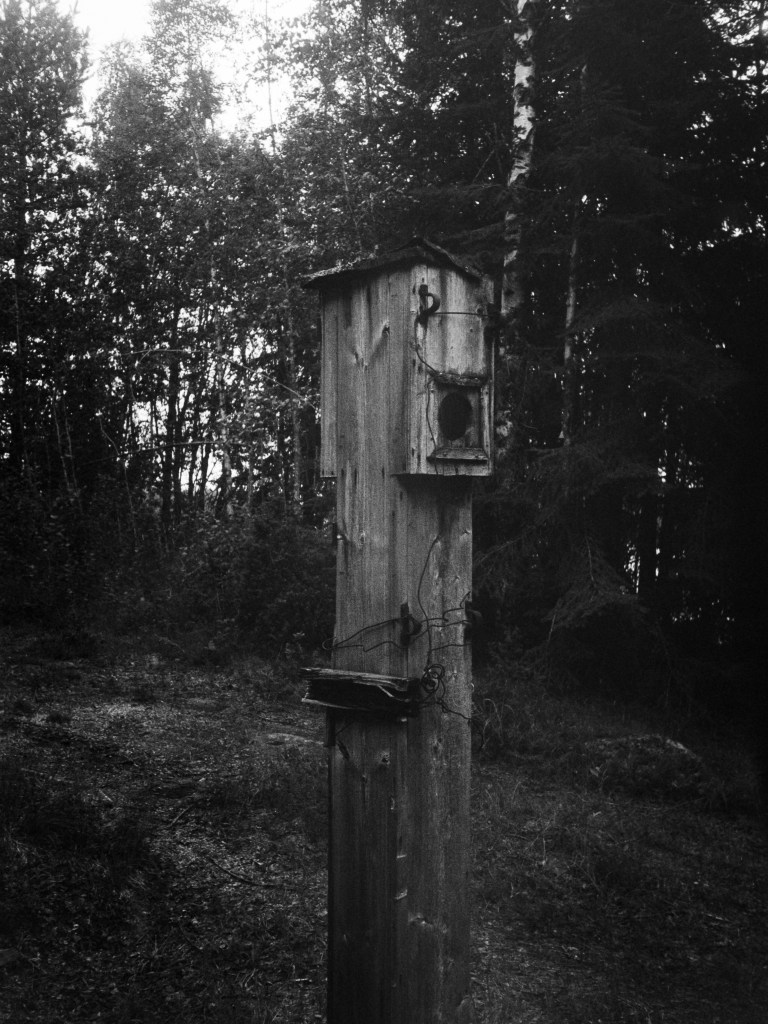
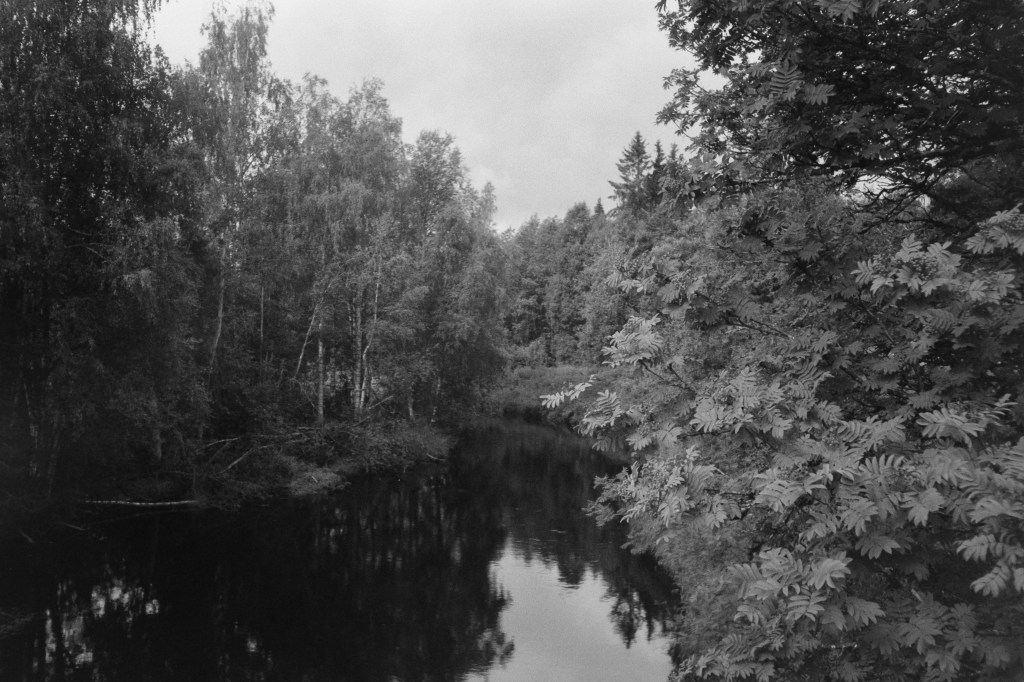
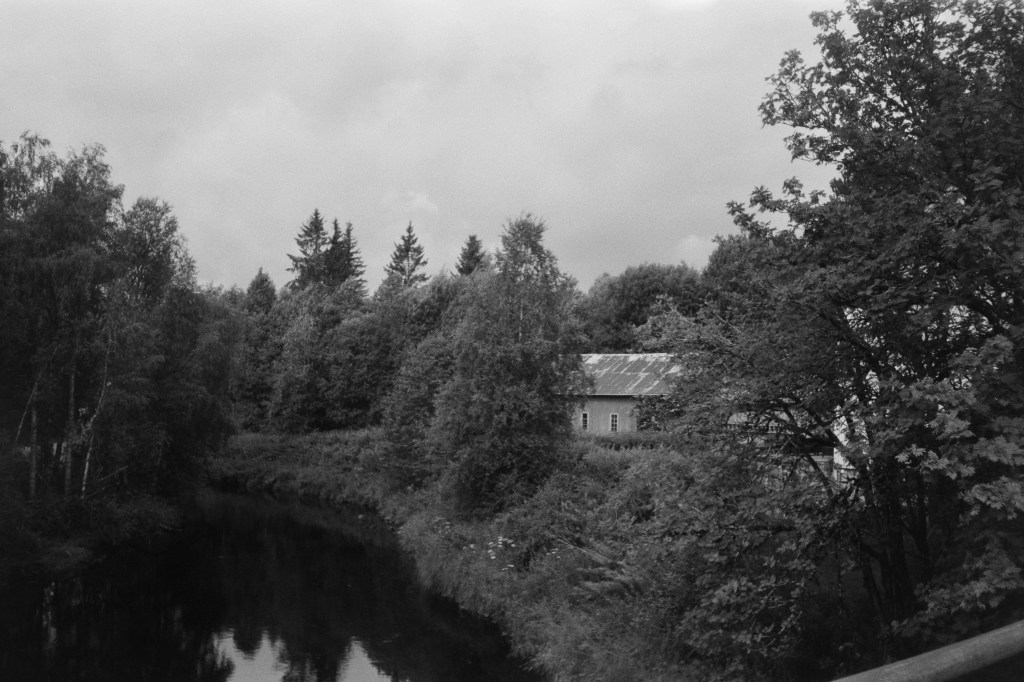
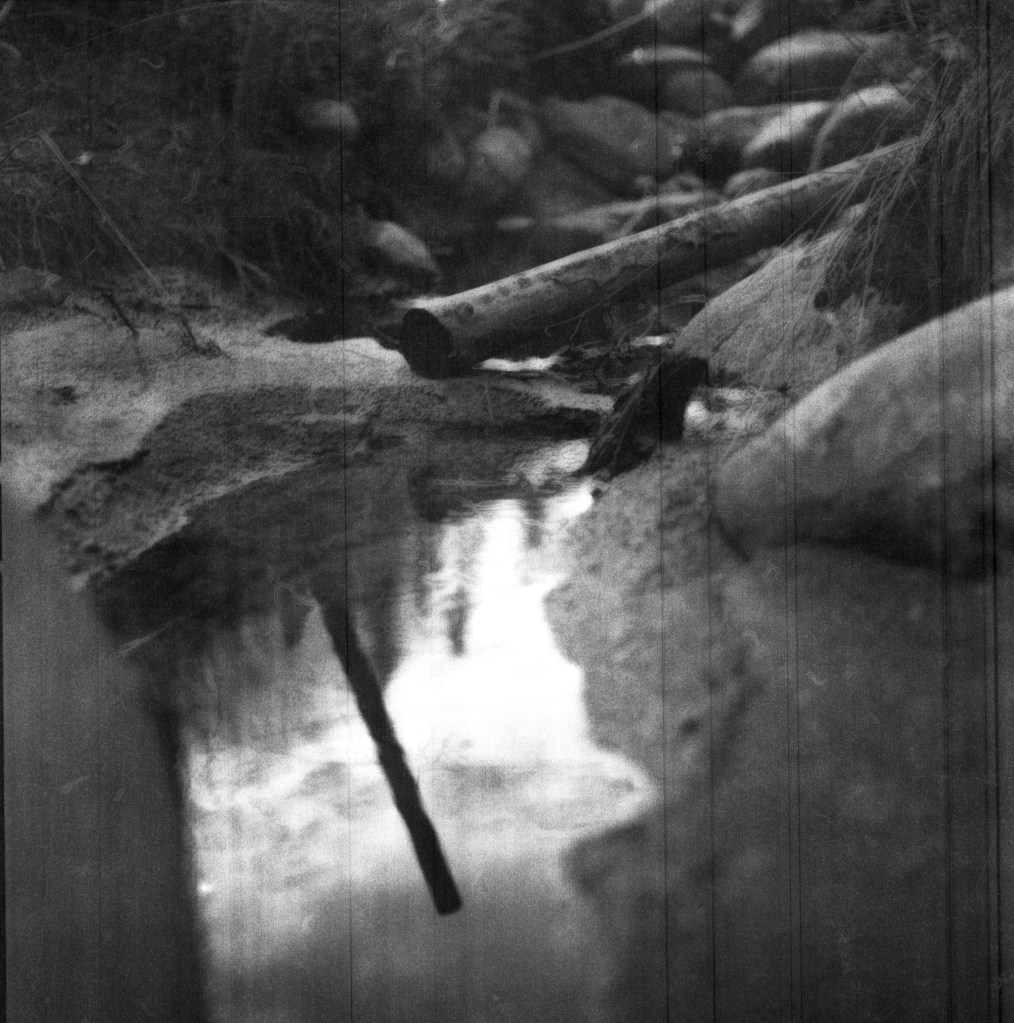
Overall, I think the images turned out very well. I expected the camera to give some severe light leaks, but I couldn’t find any traces of leaking at all. This surprises me, as the film door seemed rather flimsy. But somehow, the light seals must be very good. even when the door isn’t firm.
The lens does what I would expect a point and shoot lens to do, It gives a reasonably sharp image with a bit of character to it. I find it quite good and very much enjoyable to play with. I might bring this camera along with me on some trips in the future just to do some happy-snapping.
The images are camera scanned using the Valoi easy 35-system and a Fujifilm X-T3 camera.
 Cheap Camera Adventures