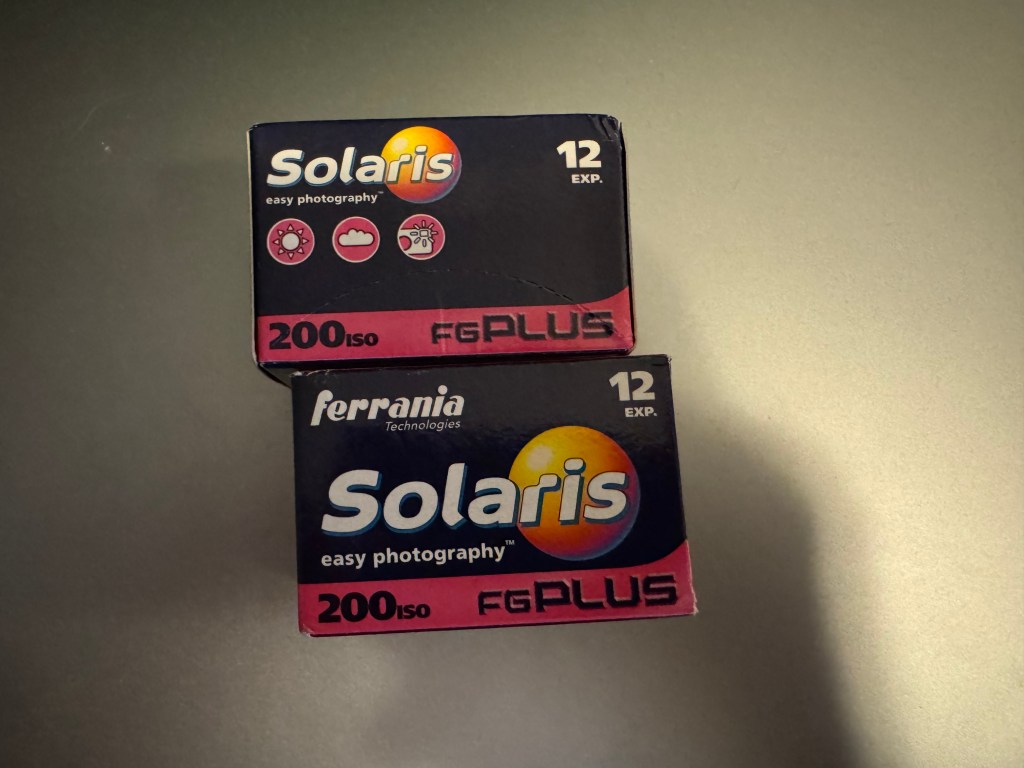
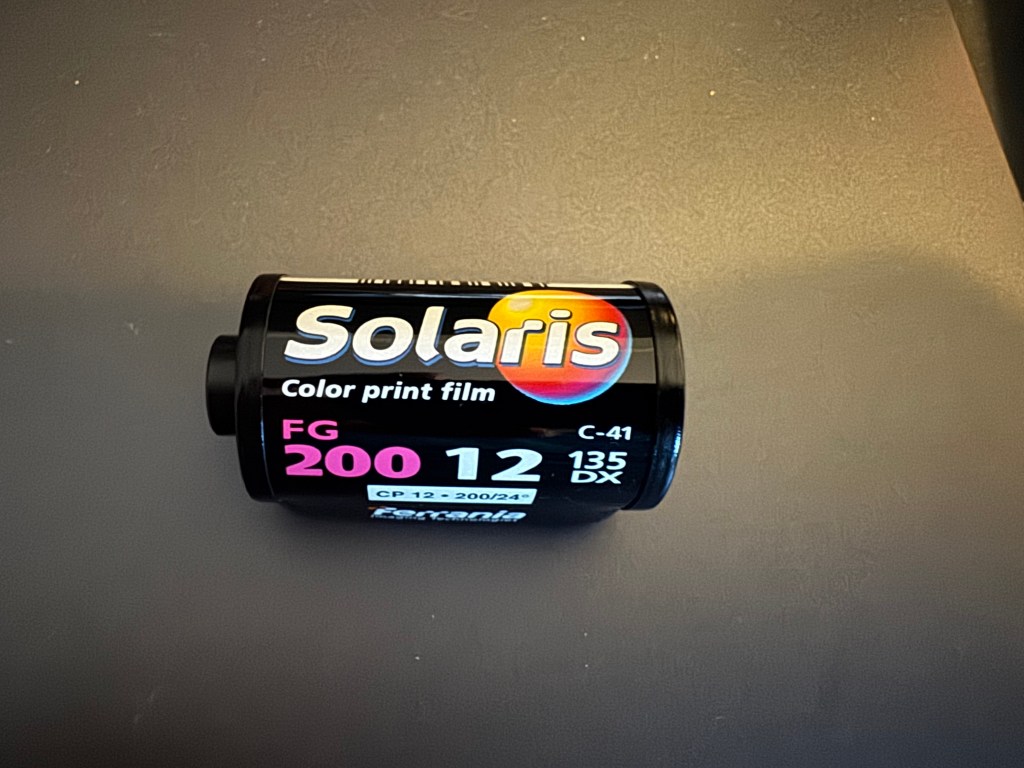
Two rolls of Ferrania Solaris

I have been interested in photography since I was a very young boy. I remember back when I got my first camera, an old Ricoh Point and Shoot camera, how I would walk around and try to find things that I could photograph. Cars, People, animals, buildings… Anything really. In what I think must have been 2002 I got my first own SLR camera as a gift from my uncle who was a journalist. The camera was a Nikon F60. This camera is sadly faulty now, and fixing it would cost more than the camera is worth.

Around the same time, 2003 or 2004, I went to Italy for a summer holiday with my family. Back then, I was a young aspiring photographer who was part of a photography club in my local town of Gjøvik in Norway. On this trip to Italy, I came across a film stock that I had never heard of, and obviously, I bought some rolls and tried it out. The film in question is the Ferrania Solaris 200. A consumer grade film with a lovely lush and vibrant color palette and maybe a bit more grain than other films I had tried. I absolutely loved the results I had on my rolls that I had developed in Italy and on my way home, I picked up a 3pk of Ferrania Solaris 200 on the Airport. I can still remember finding it very cheaply at Ciampino Airport. I bought them without thinking about anything else. Only once I came home, and put one in the camera and went shooting, I figured that the films only had 12 frames. Which to me back then was nothing. I would see that differently today. I was very disappointed and forgot the two last rolls in the basement. I found them when tidying up there this summer. Expired in 2008, stored in a heated basement since 2003 or 2004. What could possibly go wrong here?
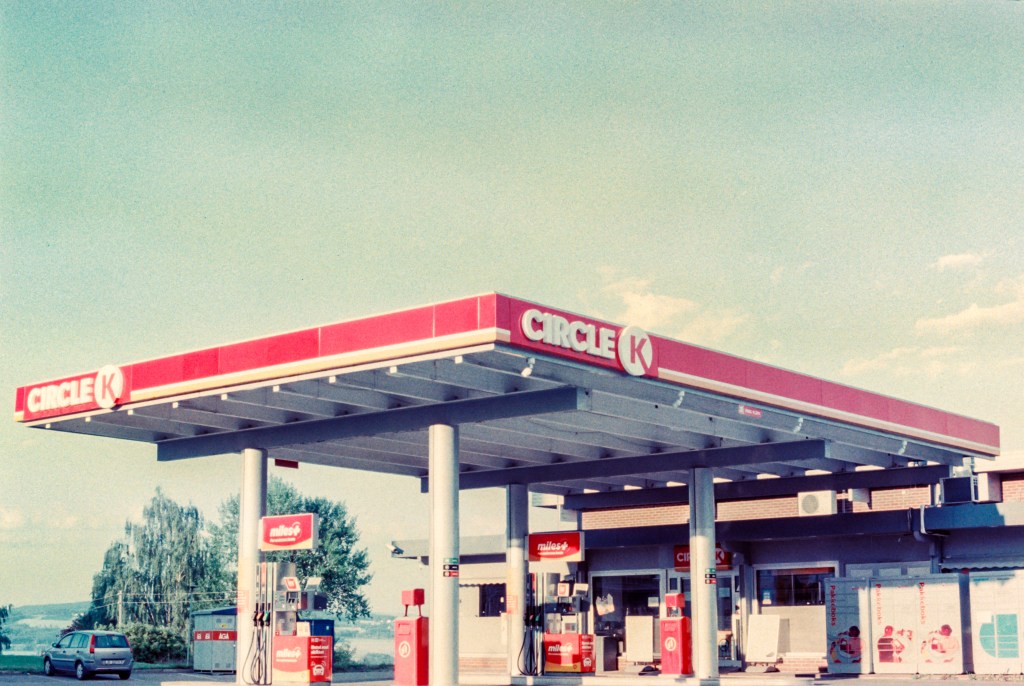
Since I had two rolls, I decided to use them differently. One of them, I decided to treat as I would normally with expired film, overexpose by 1 stop pr decade, meaning I shot this one at ISO 50. The camera I chose, the Olympus OM-1, does not have half or thirds of stops as an alternative, so metering at something like 64 doesn’t really make much of a difference to shooting at 50. Since I was already going a trip down memory lane with the choice of film, I also chose to go to a location that to me is filled with memories. The local petrol station that was recently closed down. To me, this was a place to go and buy ice cream as a child, and I do remember being sent there by my father to buy the news paper back in the days. I bought an ice cream that was too expensive and couldn’t afford the news paper and had to go back and beg for more money. A bit embarrassing to say the least. Anyway. This was my choice of location because of its vibrant Circle K colors. The evening was bright and warm and I got those Ferrania colors that I remembered from my rolls in Italy.

I had two frames left and decided to just photograph a tree by the lake, before I went on to the other film. I managed to capture some cyclists passing the tree, which made for some lovely motion blur.

Motion Blur and tree – Olympus OM-1 with Zuiko 50mm f1.8 – Ferrania Solaris 200@50 (expired 2008) Developed by Oslo Foto

For the second film, I decided to experiment a bit. Since the film is rather sensitive to blue and has a relatively light base, I decided to attempt red-scaling it. I mean, when you’re already shooting at ISO 50 with a tripod you can easily compensate three extra stops for red-scaling.

Now, I like the look of red-scaled film. I think it gives a level of abstraction that makes «boring» conditions more interesting. However, I do prefer to compensate three stops because it gives some light to the blue layer, making the blues visible. To me, this gives a more interesting effect than shooting the film for red and black images.

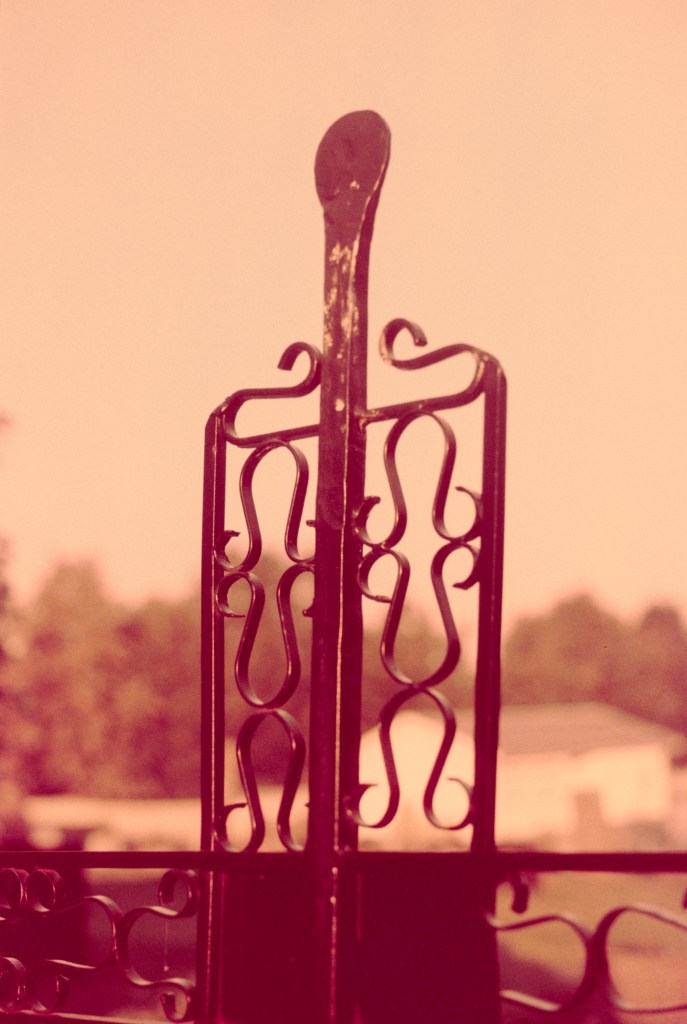
Depending on how well I hit the exposure, the film did really well in red-scale. I like how the warmth of the film shines through and makes it look like a slightly tilted color palette, and not just black and red. The middle photo was slightly under exposed and had more reds in it.

Overall, I find it a bit sad that this film is off the market now. It was a lovely film and I would love to still have it in my arsenal.
Expired slide-film

I am usually not a big user of slide film. I have shot some rolls in the past, but due to both cost and availability, I have not really gone deep into the positive films. In this entry, however, I am shooting slide film. And not just any slide film, I am shooting a roll of Provia 400F that expired in 2002. 23 years ago. I’ve obviously heard the warnings about shooting expired slide film and how temperamental it can be, but the guy I got this film from claimed that it had been stored in a freezer for most of its life. Hence I took the risk.

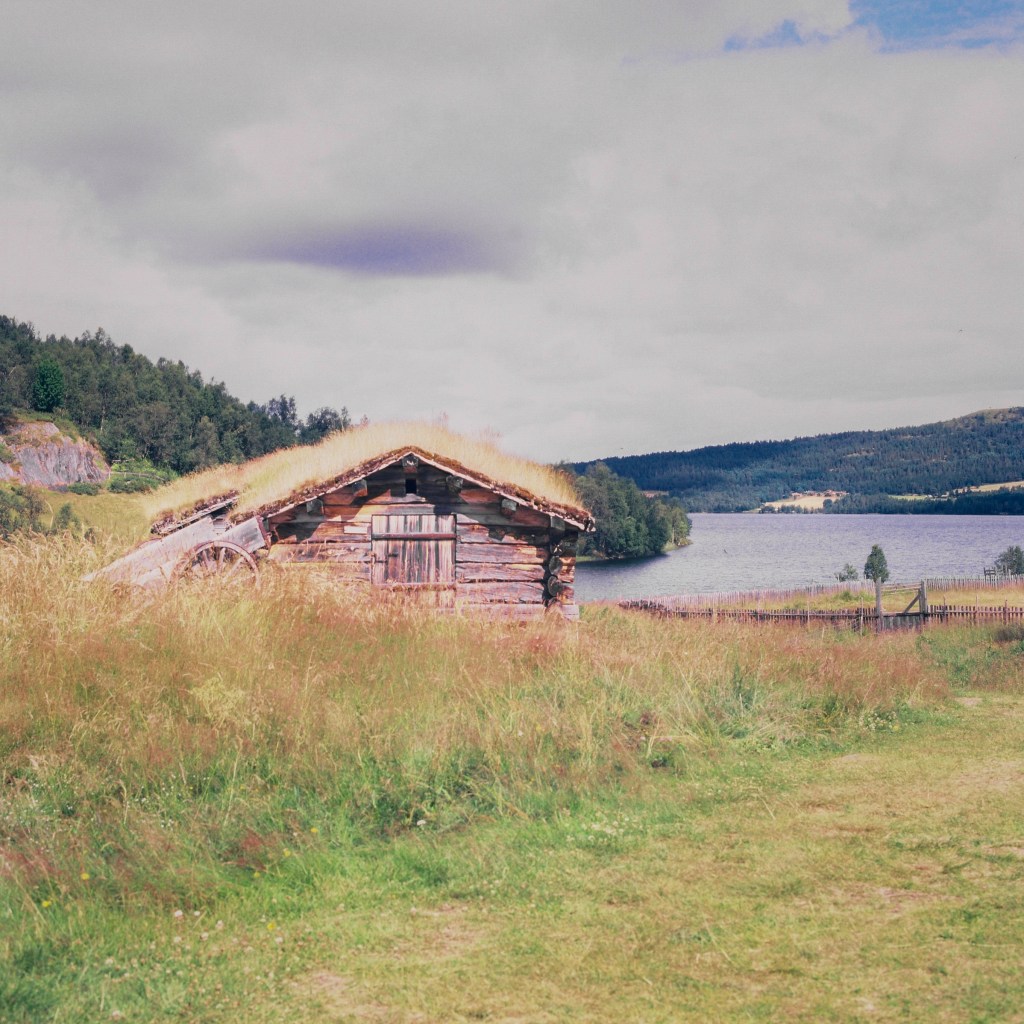
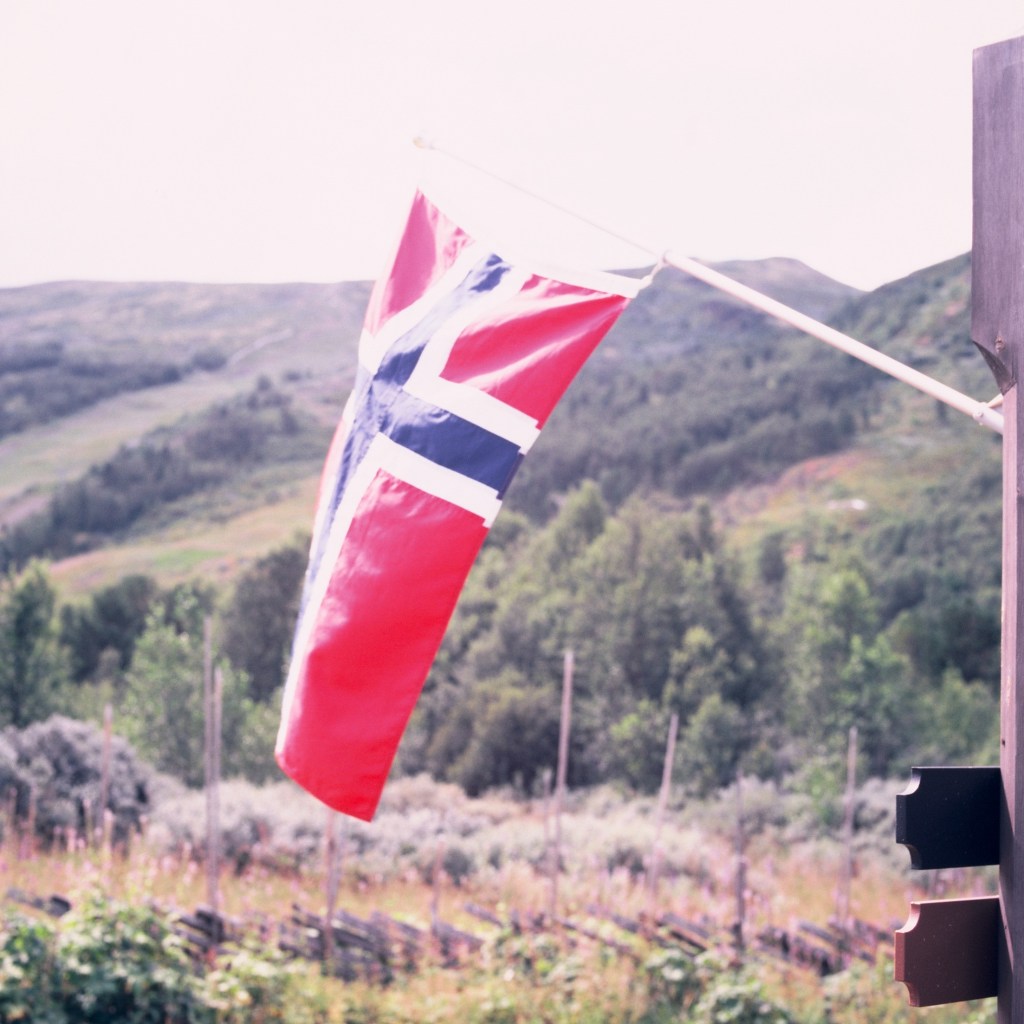
A Norwegian flag on a very Norwegian location. Hasselblad 500C with 80mm planar – Fujifilm Provia 400F expired 2002

I decided to use a reliable camera which gives me a great deal of control. My Hasselblad 500C. A camera that I absolutely love to use. I chose the most Norwegian of locations I could come up with. Kalven Sæter around Lemonsjø in Vågå Kommune. The day was mainly overcast with some rays of sun, and I chose to double my shots, to make sure I got the best results. I shot one frame at box speed and one shot a stop over. Overall, the box-speed shots came out best.

I’ve heard all those horrible stories about severe color casts etc, but with this roll, I seem to have been lucky. I got a slight cast towards magenta, but nothing I couldn’t deal with in post. The images came out very sharp and slightly green-cold tinted as I would expect from Fujifilm. I do miss Fujifilms colors in the market these days. It was one of my favorite film brands to use.

Overall, I am impressed with how this film turned out. The development in E-6 was done by Stavanger Foto, and they also scanned the film. I have been very happy with them for development before and they did not disappoint this time either. The slides and scans came out great.

Would I recommend anyone shooting old expired slide film? Probably not, but I mean, why not? As an experiment it is good fun to have some slides lying around. They look magical and the new films are far too expensive to shoot a lot of.

Playing with lamp posts

Some days ago, while driving home I realized that there are a plethora of different types of lamp posts in my local area. Different both in design, placement and light source. I decided to spend a roll of Kodak Tri-X, a film I rarely use, to play with the lamp post and a red filter for contrast. I had never tried using a red filter in different conditions before, and I decided to just leave it on regardless if the lighting conditions changed from sunny to overcast. This turned out to be a mistake and some of the shots did not come out well. However, the well exposed turned out very nice.

Canon T70 – Kodak Tri-X 400 – 510 Pyro 1+100 semi-stand

To take these images, I had to look up into the sky, hence my idea to use a red filter for the backgrounds. I like how the sky and the contrast to the light post turned out. I see little bit of evidence of dust inside the camera house, which I will have to figure out at a later point.

This roll was also the first roll I developed using 510 Pyro, a developer I had heard so much about but never really tried. I bought a bottle that I will be trying out over the coming months. The concentrate is a bit gloopy, but not anything I haven’t seen from HC110 in earlier developments. All in all, I am very happy with the results. The grain is surprisingly fine on the well exposed negatives, and obviously more prominent on the underexposed negatives. This is my fault entirely.

A seagull started to dive towards me at one point. I like how the grain makes this image more active.

Shooting the beast

Sometimes you are really lucky. A few weeks ago, I signed up for the news-letter from a Youtube-channel run by a Canadian photographer named Azreal Knight. If you have not heard about his channel, you should really check it out. A lot of interesting content about analog photography. By signing up to this news letter, I also entered into a little «lottery» or whatever you would call it, and I won. When the price arrived, the box was rather big and I was curious what was in the box.

The content of the box was: One roll of Ilford HP5 plus, one roll of Kodak Gold 200, a selection of stickers, a really cool box-set of darkroom prints of the best Azreal Knight images of 2020… AND… A weird and huge BEAST of a 35mm camera. An Olympus iS-1.

This camera did not make sense to me at all when I first held it in my hand. It was huge and bulky, heavier than my Hasselblad 500C, has a plastic feel to it and the design is best described with the word hideous. At the same time, I am a big fan of Olympus and their lenses never let me down, so I was curious to try it out.

Loading the camera was actually rather fiddly. The take up spool is in the back-door of the camera, in a purpose built box on the back making up most of the bulky design of the back side of the camera. This sounds like a great idea as you would not ruin your whole roll if you should be unlucky and open the back door mid-roll. At the same time, getting the film to load properly is difficult because the motion of closing the door makes the film curl up and away from the take-up spool.

A tree – Olympus iS-1 – Ilford HP5 plus – Ilford ID-11 1+1

In use, the camera is an interesting experience. Even though I don’t really feel that this is a camera for me, I did enjoy using it. Not to be mistaken, there are a lot of small problems with this camera that I find to be very annoying, but using it is very different from using any kind of SLR og PaS-camera I have ever used. This belongs somewhere in the middle from my understanding.

First of all, the camera is heavy and bulky and does not really fit my hand very well. Especially the part about the ergonomics I fear would make me not bring the camera along.

Second, the camera has one of the slowest and least precise AF-systems I have used in a long time, and focusing it manually is fiddly and difficult as well. I ended up doubling and sometimes tripling the shots on many occasions to be sure I had something usable at least.

Third, due to its size and weight, this camera is difficult to hand-hold even at shutter speeds around 1/100, and many of my images shows severe camera shake. Even images I know were shot at 1/100 and above.

A tree – Olympus iS-1 – Ilford HP5 plus – Ilford ID-11 1+1

On the positive side, I must say that the lens is its Olympus name worthy. It performs very well both on its widest and longest settings and the when the AF hits it seems to be a very sharp lens.

As you can see through the images and their captions, I went for Ilford HP5-plus for my test this time. I actually used the roll that came with the camera. This is a film I use often and that I find works very well with the conditions like what I had on this day. Overcast with a bit of rain. I find that this film adds an extra element of texture to the images in a very nice way with its grain-structure which is visible, but pleasing. Even in 35mm shooting.

The derelict hut

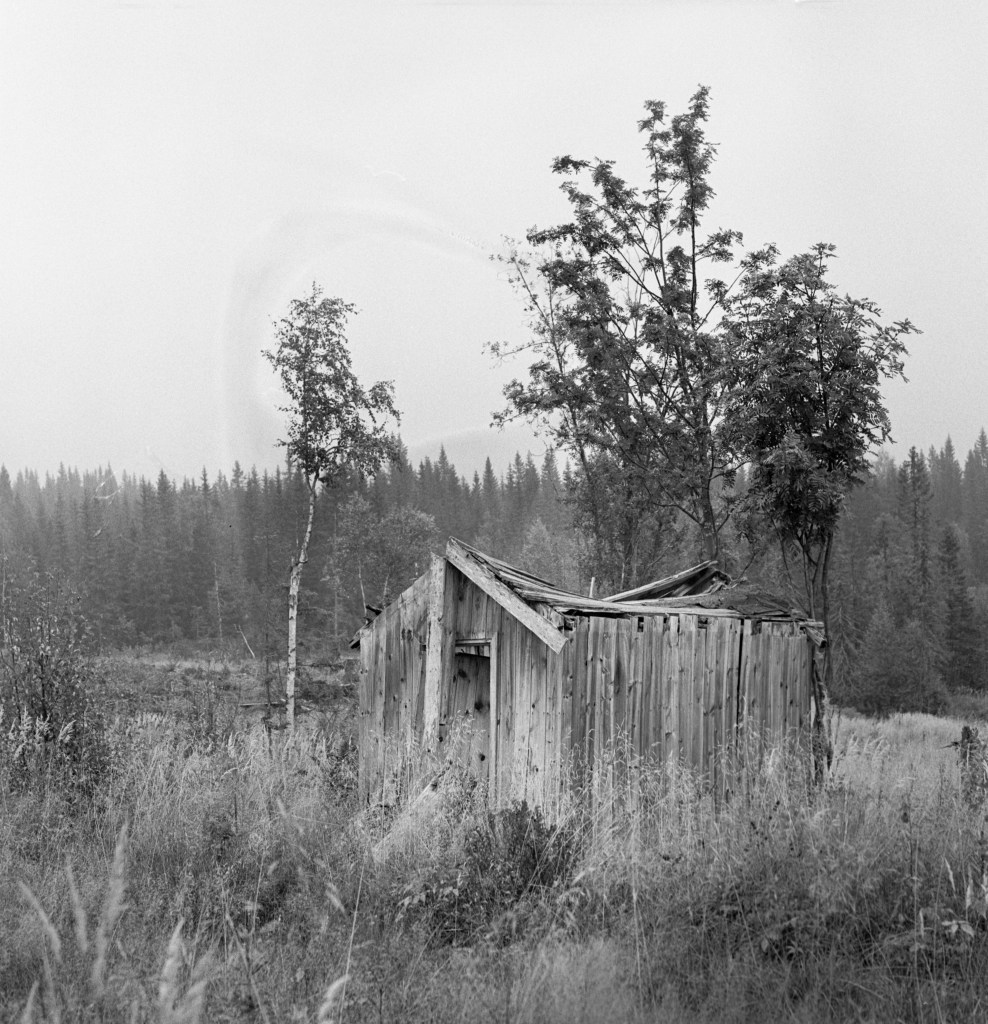
Over the last year, I have noticed an old wooden hut, standing on its own in a chopping-field a short distance from Gjøvik. The hut in itself is not really that beautiful to look at anymore. The roof has fallen down and the wood looks withered and dry. It would need significantly more than a lick of paint to make it shine once again. All the times I have driven past it or seen it when out walking, it has not worked because of the weather. I have pictured it to work well on a overcast and preferably misty day on black and white film. Today was the day that I would finally go for it and try this old hut, that I for my own amusement has named «Jabba». It is a bit amusing to tell yourself to go out shooting Jabba the Hut.

I rolled up the Hasselblad 500C with a roll of Kodak Tri-X 400 and brought with me a selection of filters, including yellow, orange and red, and I set off into the misty and drizzly morning. I found the hut in its usual condition, rather tatty and derelict, but this time, there was some mist in the background, creating a more interesting atmosphere around it. The scene itself is a bit messy and overgrown after a very lush summer, but the mist made it work.

My first frame of the day – Hasselblad 500C – Kodak Tri-X – No filters – Ilfotec ID-11 1+1

I decided to try the compositions in different ways with different filters, partly just to see what they would do to a scene like this. Especially, I was curious to what the red filter would do in conditions like these, and hence, I tried different approaches to learn a bit more about my filters. My pack of filters is rather inexpensive and are just plastic filters. At some point, I will upgrade my collection of filters, but not for this trip.

Trying again at Jabba – Hasselblad 500C – Kodak Tri-X – Orange filter – Ilfotec ID-11 1+1

Based on my rather limited access to the hut, as it stands in a rather difficult area to move around, I only made two different compositions this time. One straight on and one from the side. I did the latter without filter and with all three colors I brought – Yellow, Orange and red – and I must say that the results were a bit different than I thought. I expected that the red filter would give me deeper contrasts than the yellow, but actually, my results pointed in the different direction. That the yellow filter actually gave me much punchier images than the red, and the one without any filters gave me the best results.

What I see that the red filter does, and also to some extent the orange, is brightening up the greens and making the trees in the background brighter. For future reference, I will probably leave the two darkest filters at home for these days, but I do think it was worth the try.

Another reflection I have after this shoot is that I remember why I have stopped using Tri-X and other Kodak-films for my images. At least to some extent. Their tendency to curl when trying after development is very annoying and makes it very difficult tu both scan and print them in the darkroom. I have not had this issue with ILFORD-films and since I really do not see any difference between Tri-X and HP5 at box speed, I usually save the Tri-X for the difficult lighting conditions where I have to push the film, as I see Tri-X to be a better push-film.

A fun little German one

The analog camera market is very focused around a few certain brands and models such as the Leicas, Nikons, Hasselblads and Zeiss’s. But cameras that does not hit the «name requirement» can be just as good and fun to shoot with. Today, I went out to a flea market run by some friends and I found a little interesting camera that I just had to buy. The camera in question was produced from 1957 to 1961 in Germany. With such a short production span, only four years, it is an interesting little camera that probably didn’t hit the market as well as its producer would have hoped.

The camera is an AGFA AMBI SILETTE. A little rangefinder camera with interchangeable lenses and some very clever patents on it. The camera has a Synchro Compur leaf shutter and its highest shutter speed is 1/500th second. When changing between lenses, you can use a little switch on the top to set the viewfinder up with different lines to help you compose while using the rangefinder unit. I found the rangefinder on this camera to work beautifully even after all these years, and the main lens, the 50mm f2.8 Color Solinar is clean and appears to be rather sharp based on this test. The tele lens that also came with it, the 90mm, has severe fungus on it, and I’d guess it would affect the image quality, although, I have not really tried it.

The AGFA AMBI SILETTE – straight from the flea market.

Since I knew that a camera purchase would be a possibility, I brought along a roll of Fomapan 100 and two camera batteries. The Agfa is fully mechanical, so the batteries were not used, but I loaded the roll of Fomapan 100 and went for a little walk at Husodden, to try it out and see how it felt to use. Mind you, I hadn’t really read anything about this camera in advance and I had not even heard about this particular model. So this is a true first impression entry.

My first little quest, was realizing that the rangefinder and viewfinder is hidden behind a little covering lid that you have to flap open before using it. This is a really clever invention both because it protects the cleanliness of the glass behind it, but also because it works as a sun shield making focusing easy and smooth without any disturbing sun-glare. After that, the camera is very straight forward and simple to use.

Agfa Ambi Silette – Agfa 50mm f2.8 Color Solinar lens – Fomapan 100 Ilford ID-11 1+1

Age is noticeable on this camera, but it seems like it just will need some use to get back into life. Both shutter speeds and aperture settings seem to be in reasonable working order, but I did not try the longer shutter speeds this time as I shot hand held in the September sunshine. My guess is that shutter lag will be present from shutter speeds lower than 1/60th and that the lens will show diffraction at f22. But this must be for another time.

The most important error I found with this camera, was the fact that my first shots were all double exposed, and I only got a few decent shots on my roll. This seems to be some lag due to lack of use, and I am sure this will sort itself out with some use. I will not give this camera a CLA. That would probably cost more than the camera is worth in 2021 money.

An old barn by a field – Agfa Ambi Silette – Agfa 50mm f2.8 Color Solinar lens – Fomapan 100 Ilford ID-11 1+1

The shot above, was the first shot on the roll that turned out to be just exposed once, and no images after this one showed any sign of double exposure. This leads me to believe that there probably isn’t anything wrong with the film advance other than lack of use.

The focus ring was light, but still firm and very pleasant to use, as well were the rings for setting shutter speeds and aperture opening. The camera seems to have been very well looked after and I believe it to have been serviced before it was stored. It can indeed seem like that. The back door on the camera is somewhat sticky, and the camera came with one of those horrendous leather cases that looks good enough, but makes loading and unloading film very unpractical and the camera bulky and larger than necessary to use. I took it out of the leather case when I used it, and there are no signs of light leaks from the camera.

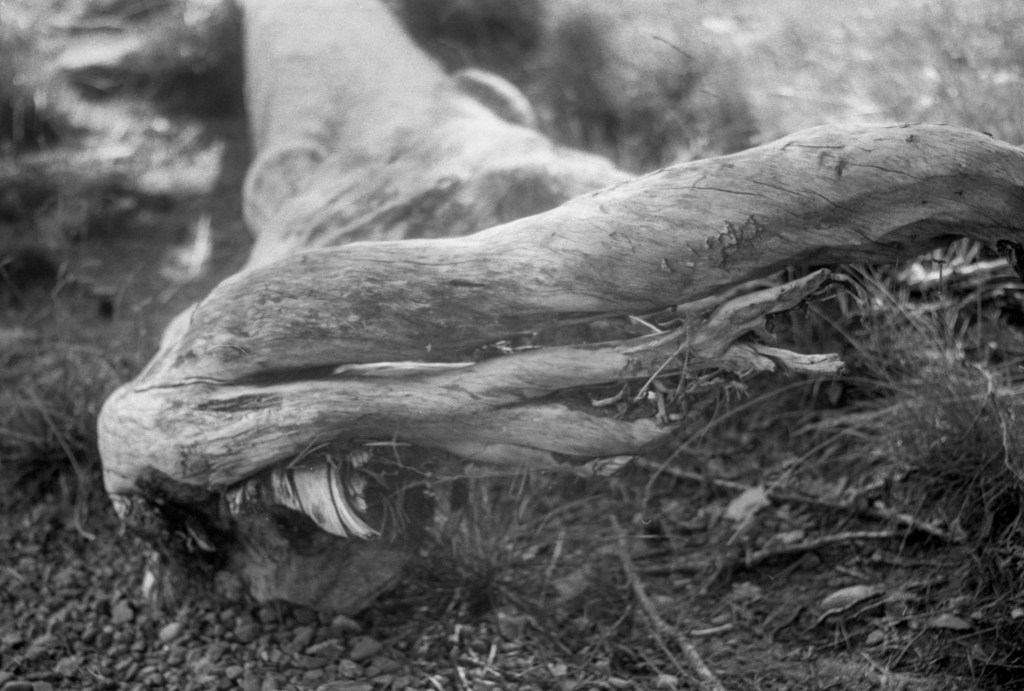
A tree root – Agfa Ambi Silette – Agfa 50mm f2.8 Color Solinar lens – Fomapan 100 Ilford ID-11 1+1

All in all, the little outing with the Agfa was a fun experience, and I will definitely be shooting this camera again. The only slight annoyance is the patent for rewinding the film. It is one of those that doesn’t have a lever for rewinding but just a small knob that you wear your fingers off while using. But with a camera this good, it is worth some sore fingers.

A little success

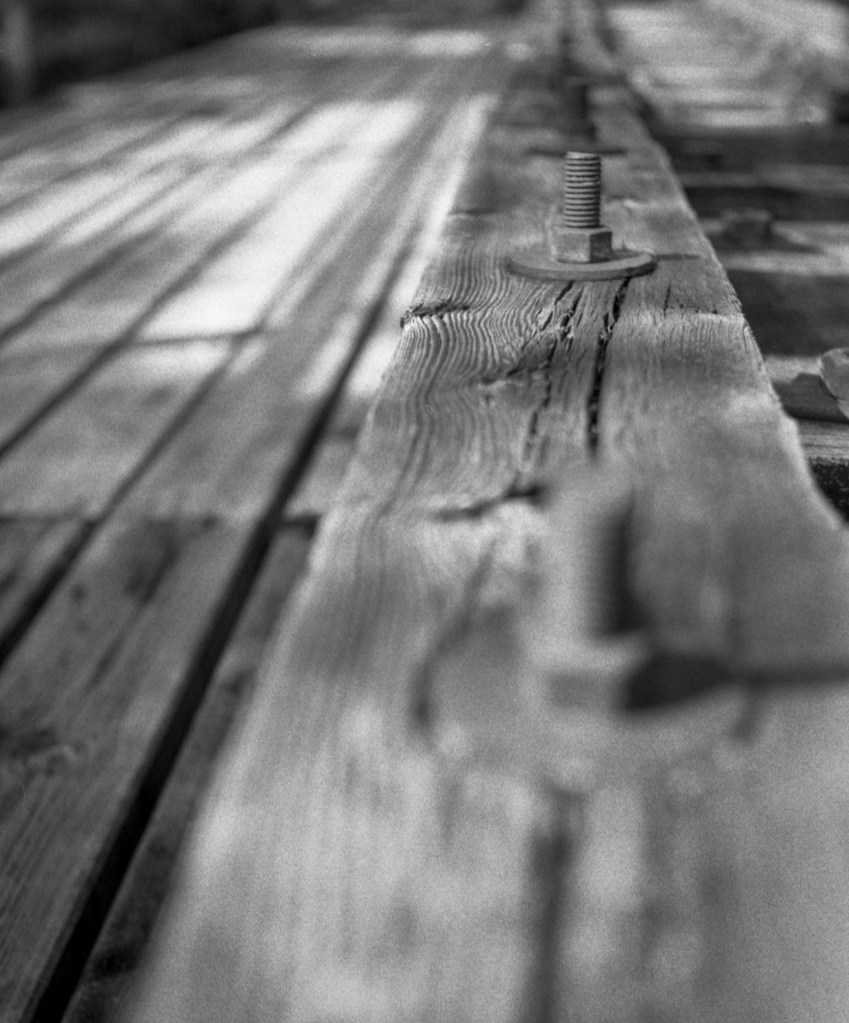
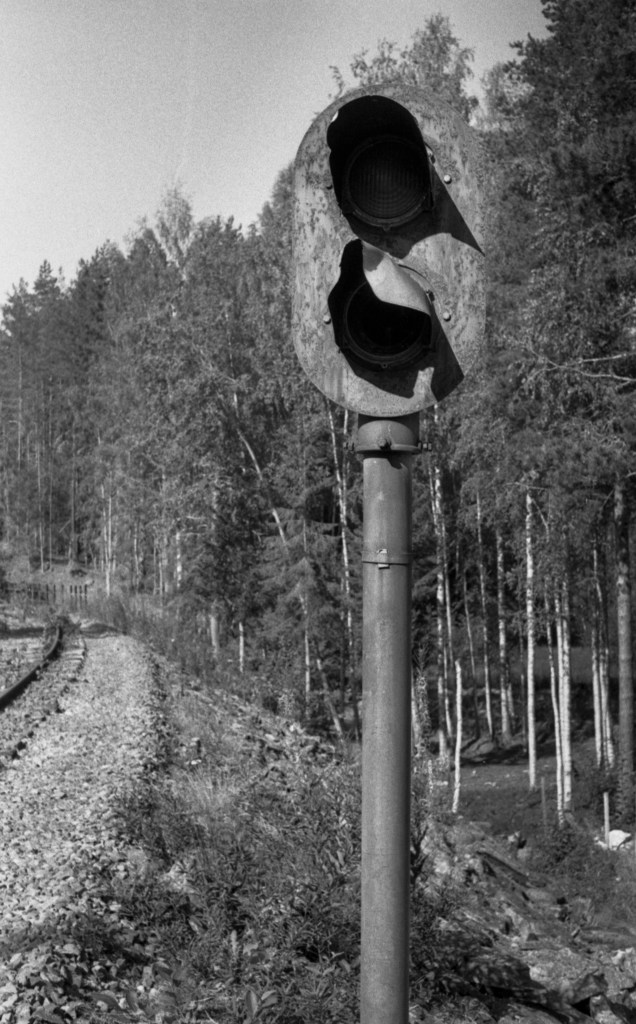
If you have followed me over the last months, you know that I bought a 100ft roll of Agfa APX100 a while back. It was the cheapest film available on the market and I was curious about how the film would work for me and my type of photography. So far, I have not really had a lot of success with it. I have studied the data-sheet for the film and I have tried it out in different situations. Some of the unlucky shoots have been due to poor bulk-loading skills or bad cassettes, and some has been due to my lack of understanding of how the film works. This time, however, I went a completely different direction. Instead of shooting landscapes, I went for an abandoned railroad track and I chose a very sunny and contrasty day to get deep contrasts and shadows in my images.

After many headaches with very grainy images, even when using fine grain developers such as ID-11, I chose to just embrace the grain and develop with Rodinal. I have used Rodinal with this film before, and I must say that from my experience with this film, after shooting it in different conditions and with different subjects, I find Rodinal to be the best developer with it. It actually produces a finer and less pronounced grain with Rodinal 1+100 than it does with ID-11.

Petri Racer – Agfa APX100 – Rodinal 1+100 1 hour.

Shooting vegetation with this film is not the best idea. It seems to be rather over sensitive to certain tones of green and gives a very mushy feel on all types of vegetation without any real separation. However, when shooting metal and dead objects, the film seems to produce rather beautiful contrast and lovely sharpness. I would think this film would be ideal for street photography with good light as it really works for this kind of shoot. It does benefit from a slight overexposure of one stop and the development process with Rodinal seems to get the most out of the contrasts in this film. Not that I am in any way pretending to be a master film reviewer.

I chose the Petri Racer for this outing. This camera is a small rangefinder camera made in the 1960s by the Japanese company Petri. A much forgotten brand today, they are really nice and quirky little cameras with mostly working rangefinder units even after about 60 years of use. The Petri was also the first camera I featured on this blog back in 2018 when the blog was new. I find that the world looks really nice through the lens of a Petri Racer, and it is a camera that I really enjoy using.

Petri Racer – Agfa APX100 – Rodinal 1+100 1 hour.

Shooting railroad track details is not something I do very often, but I really enjoyed the outing. I also found that finally I had some decent results with the Agfa film, where I was actually happy with the images I captured. My initial goal for the trip was to make three darkroom prints that I was happy with. And this time, I did succeed.

Petri Racer – Agfa APX100 – Rodinal 1+100 1 hour.

Shooting a very cheap film with a very simple camera does indeed make sense as well. I would think that most users of simple cameras like this would generally use cheaper films such as Kodak Colorplus and Fuji C200 for color and Fomapan or Agfa for black and white. For my personal taste, I find the Fomapan to be the better option of the latter, but as I mentioned earlier, I can see that the Agfa would make sense to use if you were shooting a lot of urban, street and architecture and you want the raw effect of this film.

Would I recommend the APX100? To some extent. It for sure is a decent film and if you are mainly snapping around as you go, you would probably be very satisfied with this film. However, if you are shooting a lot of landscapes, I would rather go for the Fomapan 100 which I find to work better for vegetation. And yes, develop with Rodinal.

APX 100, another go!

Yet another time, I find myself out trying the ultra-cheap AGFA APX100 that I managed to buy 100 ft of earlier this year. This time, I loaded it into an old Delta 400-casette because I wanted to use it in one of my more automatic cameras. My initial thought was to use the Minolta Dynax camera I own, but since I loaded it a cartridge DX-coded 400, and the fact that I cannot override the ISO on the Minolta, I had to look another way for this outing, and I opted for the Nikon F80 with the Voigtländer Skopar 28-80mm Zoom lens I used in the last entry.

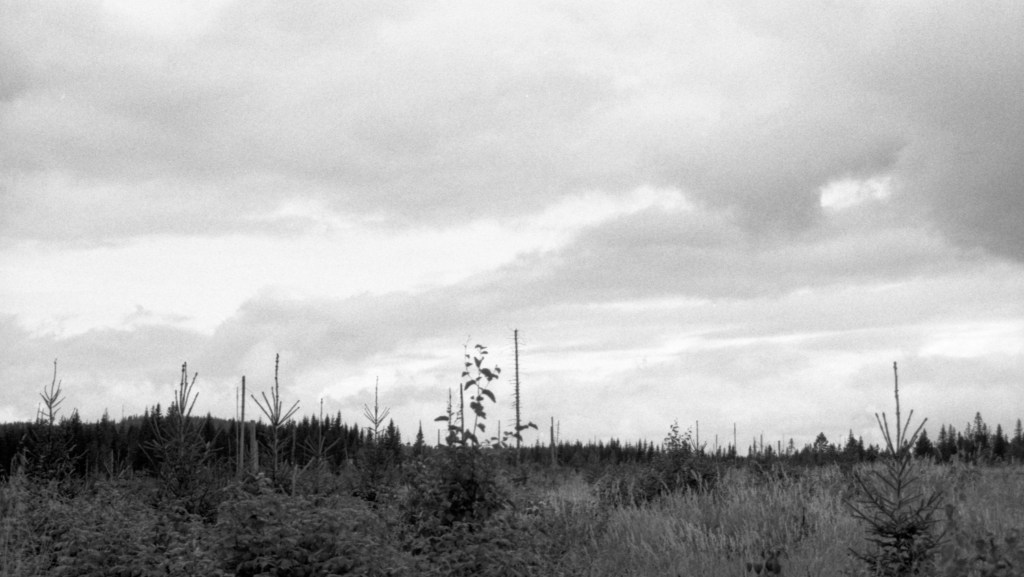
I have previously struggled quite substantially with making this film work for my type of photography, and for this time, I decided to go out to a logging area close to where I live. When you are cutting down trees in Norway, you have to let some trees stand to accommodate for the loss of animal homes, and this creates a rather interesting atmosphere where some trees really stand out. This very contrasty scene should help the film to get this contrasts out rather than creating some bland mushy mess, as it tends to do with very green scenes.

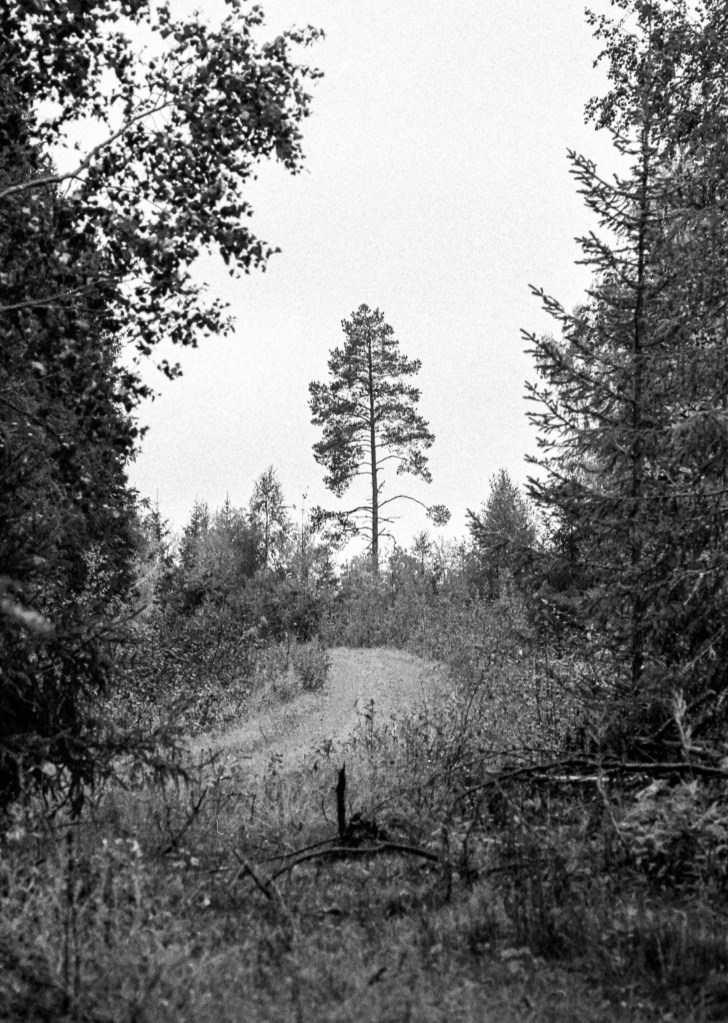
A lonely thistle – Nikon F80 w Voigtländer Skopar 28-80mm f3,5-5,6 – Agfa APX100@50 – Ilford ID-11 1+1

For positive things, I really found that the sky was brought out really well on these images, if that is due to the exposure or the film I am not sure, but it does create some extra mood and context to the images which I find really nice. Also, this time, I chose to overexpose the film a stop in exposure and develop for the full film speed of 100. Ive found that this gives me the best negatives with this setup and I chose to develop with ID-11. I am not sure if I find ID-11 to be a good match for this film as it seems to enhance the feeling of the grain somewhat. The film itself is extremely grainy for a 100 ISO film, and maybe the best idea is just to embrace the grainy feeling and go with Rodinal.

A lonely birch – Nikon F80 w Voigtländer Skopar 28-80mm f3,5-5,6 – Agfa APX100@50 – Ilford ID-11 1+1

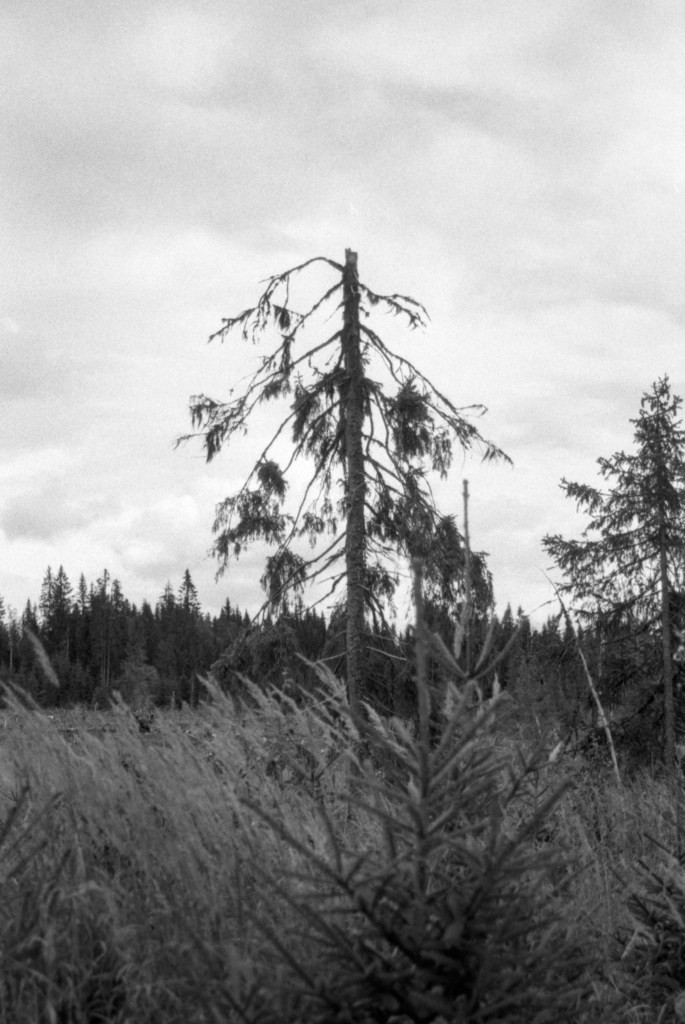
As you can see in the sky on this image, the grain structure of this film is very coarse and raw even with a fine-grain developer like ID-11, and I actually find it rather unpleasant in these images. Just to rule out the fact that this could be down to my scanner, Epson V600, I went for a quick dark-room session making a print of the Thistle-image, and the grain is very prominent even in relatively small enlargements such as 4×5 or 10×8. This film might not really work very well for landscape-photography in any way, and I think my next experiment with this film will be more in the fields or architecture or urban details and embracing the rawness and graininess of these negatives.

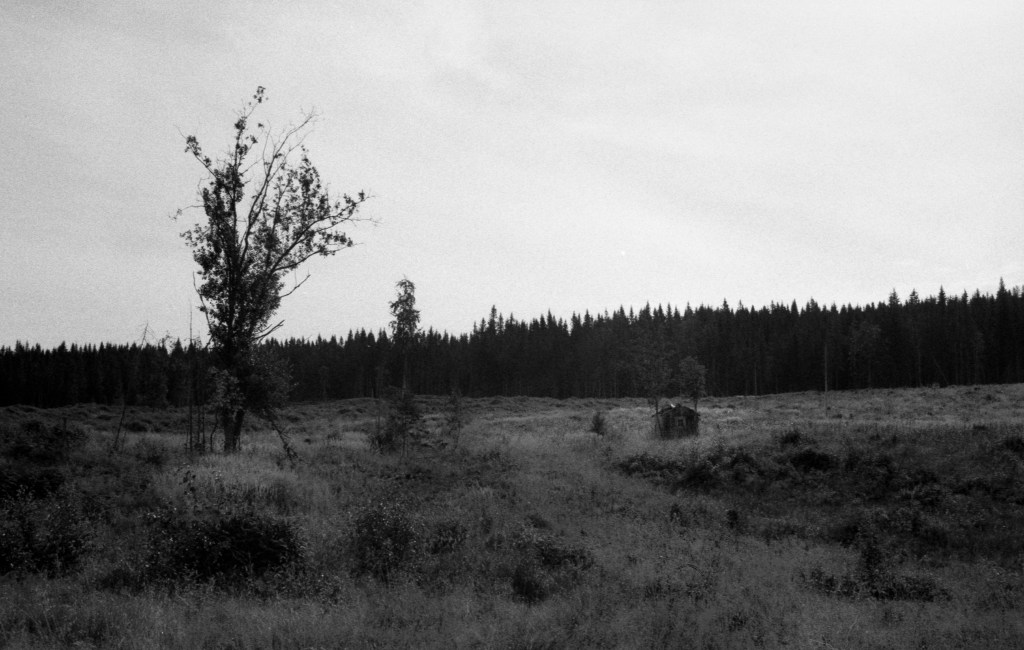
Tree-lines – Nikon F80 w Voigtländer Skopar 28-80mm f3,5-5,6 – Agfa APX100@50 – Ilford ID-11 1+1

I actually really like the composition of the image above, but it is clear that it does not really work with this setup of film, camera and lens. I like that centered slightly diagonal stem and the upright spruce behind it, bit I do not care that much for the mushy gray grassy-area where one cannot really distinguish what is grass and what is small spruces. Also, the sky shows the raw grain that I feel is rather unpleasant even though it makes for somewhat of a moody feeling.

Shooting with zoom

Many years ago, when I was given my first analog SLR camera as a gift from my uncle, I got my interest for photography sparked immediately. This was a time where digital cameras weren’t a thing, and Kodak was a company as famous as Coca-Cola to me and my friends. If I talk to children and teenagers today, they might not even have heard of Kodak as a company.

My first SLR camera was a Nikon F60 and with it came a Voigtländer Skopar 28-80mm f3,5 lens. This isn’t by any means the sharpest or best lens in the world, but at the time I was given this package, it was my first try of a real camera with a proper lens on it. I was indeed very happy with it and I shot dusins of rolls of film with it. Usually Fuji C200 or Kodak Gold 200, with the occasional Agfa-film. From that time, I have changed cameras, medias and formats many times, but I have still kept the F60 and this lens. Sadly, the F60 does not work anymore, but I do have a Nikon F80, and I decided to give the old lens a try.

This idea struck me after I tried this lens on my D750, and I was rather underwhelmed by the results I got from that. I then figured it was worth giving it a go, once again with a film and see if it would work.

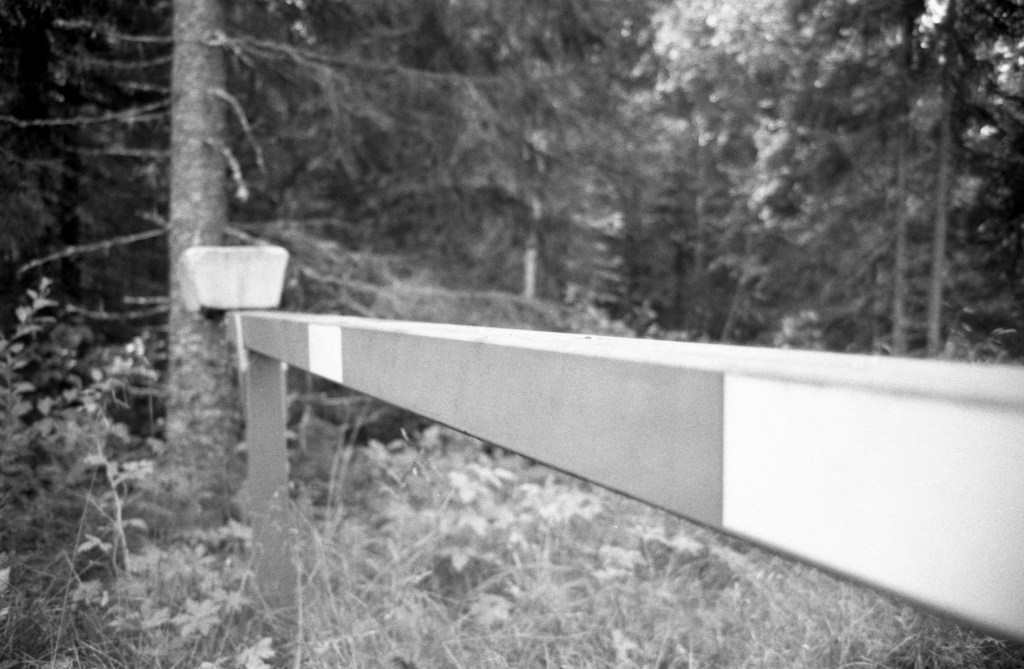
A little birch – Nikon F80 w Voigtländer Skopar 28-80mm f3,5 – Ilford Delta 400 – Ilford ID-11 stock

I then figured that I would take another old friend out for a spin as well. The Ilford Delta 400. I have never really got the love for this film because I often tend to prefer the look of HP5+ to the look of the Delta 400. This however, doesn’t mean that the Delta 400 isn’t a brilliant film, and since I was going in rather bright conditions, I figured the finer grain structure would make my images shine more in the highlights. I also went for a development cycle in ID-11 to really give it the finest grain possible with the developers I currently own.

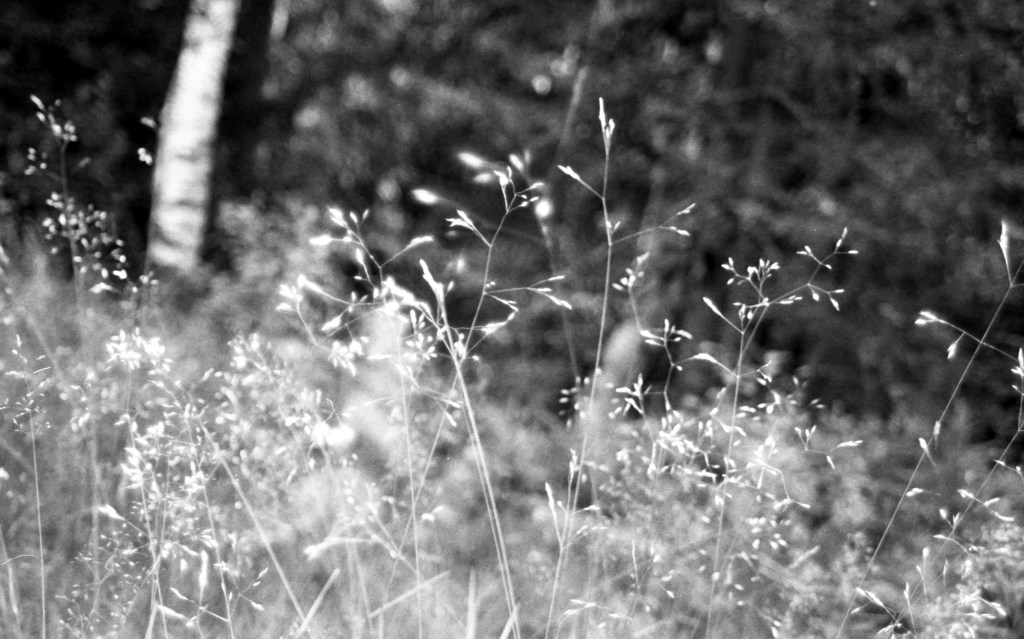
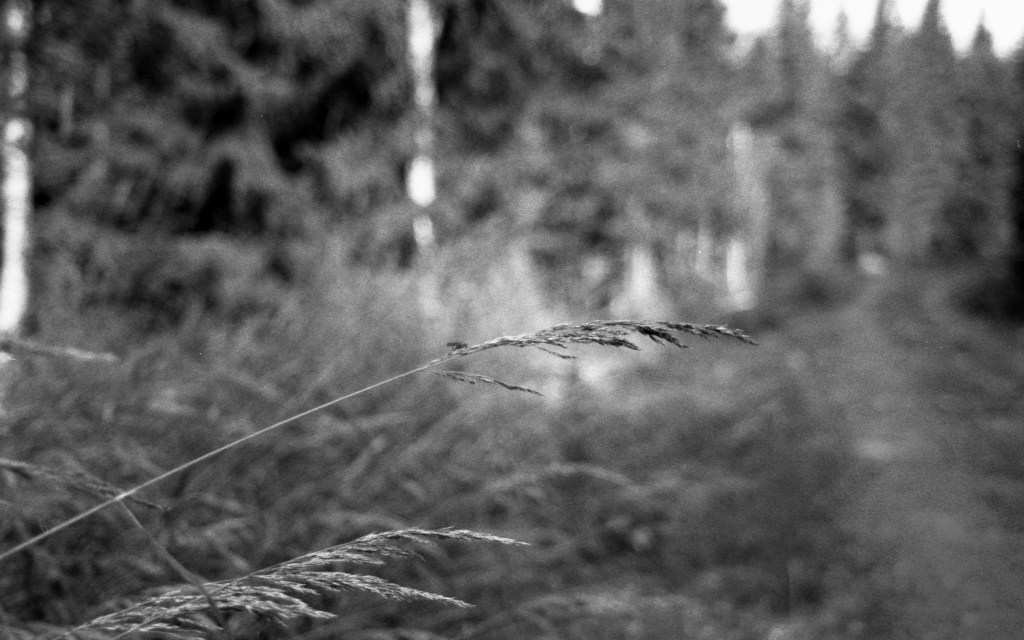
Some grass – Nikon F80 w Voigtländer Skopar 28-80mm f3,5 – Ilford Delta 400 – Ilford ID-11 stock

I went mainly for what I refer to as «small landscape» for this shoot. I define most of my landscape photography work into the two categories «small» and «big» landscape. A big landscape photo is a view, a mountain, a lovely lake and so on. Small landscape are more details and small snippets of wheat my surroundings look like. This category is often easier to find and work on in the East of Norway where I live, where most of the landscape is forest and rather flat areas.

Some more grass – Nikon F80 w Voigtländer Skopar 28-80mm f3,5 – Ilford Delta 400 – Ilford ID-11 stock

All in all, I had an enjoyable little outing with my old lens and the F80. It is clear though, that my eyes for lenses have changed somewhat over the years, and I am not blown away by the sharpness I see in these images, but it could also be down to my rather «simple» scan process for these images and my general preference for medium format negatives.

Going slightly panoramic with Agfa APX 100

Over the last couple of weeks, I have done a lot of testing, trial and error of the cheapest film on the European market. The Agfa APX100. I have tried it for different types of scenes and landscapes and even in some cases some urban stuff. All in all, I am slightly underwhelmed by its performance and I have seen it having a really big tendency to become a grey mesh or insanely contrasty. This made me do something that I figured that I should have done far earlier. I looked into the data sheet for the Agfa APX100 looking for its spectral sensitivity curve. And I must say that this sensitivity curve was something I really did not expect. Compared to the films I have shot before and compared it to, the APX100 is not even similar at all.

The curve is jumping up and down all the way, indicating that this film has a dip both between blue and green, as most panchromatic films tend to have, but also a dip into the yellows. This would explain the difficulty I have in soft light where grass and boggy areas are shifting between greens and yellows. I’ll ad the curves for FP4 plus and Fomapan 100 under for comparison. These films have a much calmer curve and I am much more comfortable with films like that.

I then figured that maybe if I chose to shoot very high contrast scenes with this film and develop with Rodinal, that this would be a better use for its qualities. I therefore broke out the panoramic adapter and rolled a full length film, and went out as a cold-front marched in over the town to take images of trees along the lake.

Trees by the lake – Zeiss Ikon Nettar – Agfa APX100@50 – Rodnial 1+100

This time, I really saw something happen that I liked with this film. Even though my stand development technique gave me some slight maks on the negatives and that I got a weird light leak on one of the frames, I am very happy with how this outing went. The high sensitivity to blue made the sky blow out somewhat but the contrasty clouds made them come back in a really nice way, painting the skies beautifully.

Trees by the lake – Zeiss Ikon Nettar – Agfa APX100@50 – Rodnial 1+100

I chose to once again meter my exposures at 50 rather than 100, and I think metering a stop above is a very good idea with this film as it tends to get «inky blacks» very easily. It does also seem that Rodinal is a good choice when working with APX 100. I does really give a nice result. I chose stand-development for this round because I think it is a very relaxing way of developing films giving a very smooth result. And I found it to really get the nice tonality out of the Agfa.

Trees by the lake – Zeiss Ikon Nettar – Agfa APX100@50 – Rodnial 1+100

I should have looked into the data-sheet before beginning the work with this film, but now, a little bit wiser, I will use the film for its best use rather than at its weak points. For the rest of the bulk. For my morning soft-light grass-shoots, I will use FP4 or HP5.