The scent of spring

Nothing fills me with such joy and happiness as the day when I for the first time see grass being liberated from the firm fist of the winter-snow. Today was that day, and I immediately decided to go shooting. I loaded the Zeiss Ikon Ikoflex with a roll of Ilford FP4 plus, and went down to Kråkvika by Hov. A location where spring is often present early. And sure enough, there were a lot of spots and spaces where the snow was melted away, leaving the lifeless brownish colour of grass that has been buried for a while under the snowy carpet. The colours weren’t really spectacular, hence the choice of black and white-film.

To me, the Ikoflex is maybe one of the cameras that inspires me the most. There is something about the sensation of using something so brilliantly engineered and with a lens that sharp in a very light and beautiful box that appeals to me. I haven’t used it for a while because the winter was exceptionally cold this year, and I don’t think the Ikoflex would be too fond of the cold weather. Also, my Ikoflex has developed misfiring on lower shutter speeds, so I tend to keep it at 1/100th or 1/300th, which could be too short shutter speeds for winter-time. Whether I will have it repaired remains to be decided, but for my current use, the Ikoflex works well.
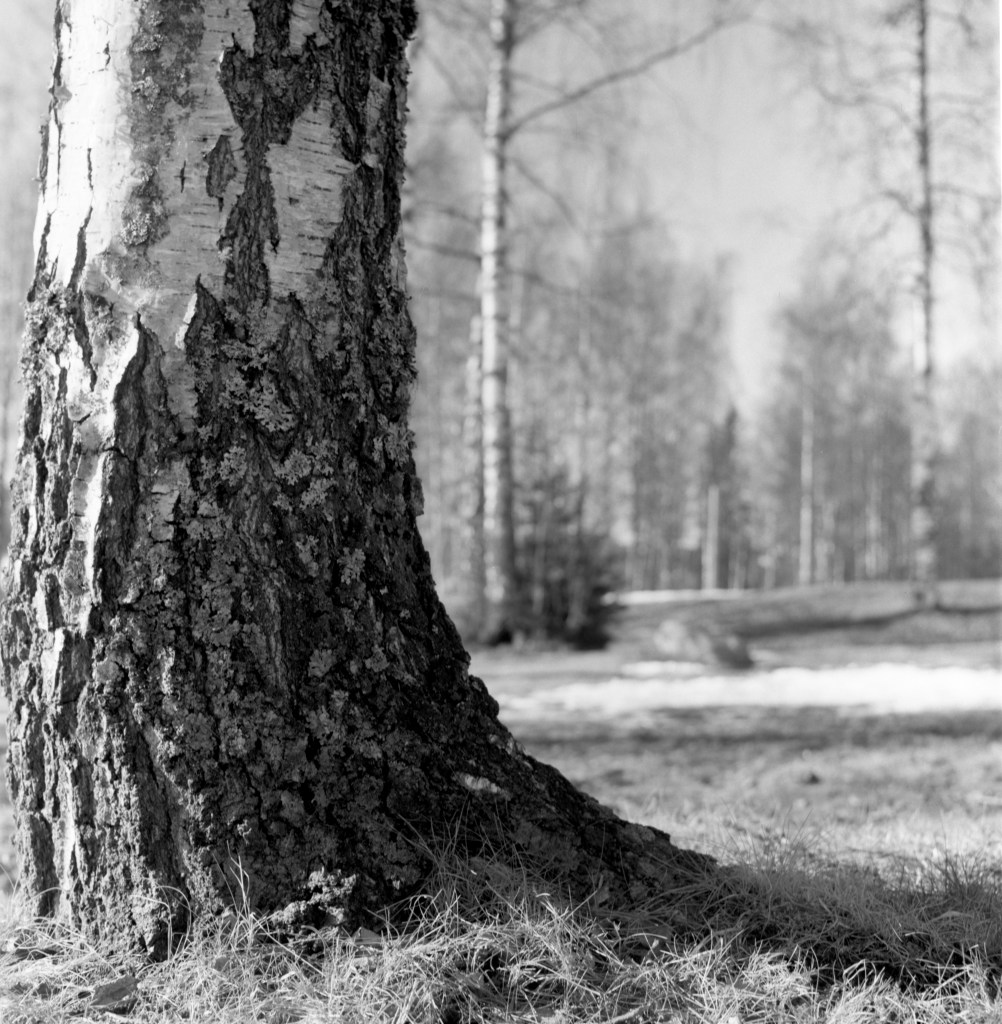
Spring landscape with melting snow – Zeiss Ikon Ikoflex – Ilford FP4plus – Adox Atomal 49

I find that filling the roll and finding the right compositions, is a very easy task with the Ikoflex. The inspiration comes naturally when using it, unlike the Zeiss Ikon Nettar, which I find that I can get bored when using. I have heard a lot said in negative ways about the Ikoflex and it being like an «over protective mother» or «insanely difficult and complicated to load», but I cannot understand how any of these can be true. If you read the manual, which I know is a very uncommon thing for people to do today, you will very easily understand that the advance wheel will turn freely when it reaches frame nr 12, and that you have to manually reset it for frame 1. Not at all difficult. I have a video on Youtube showing how it is done.

Reklamer
I am a rock – Zeiss Ikon Ikoflex – Ilford FP4plus – Adox Atomal 49

Walking around on a day where the snow is melting and the landscape comes back into sight, makes you notice objects or shapes that would normally either be removed or invisible in the greens and lush landscapes. There is something «rough and contrasty» about these snow-melting days that really appeals to my way of composing.
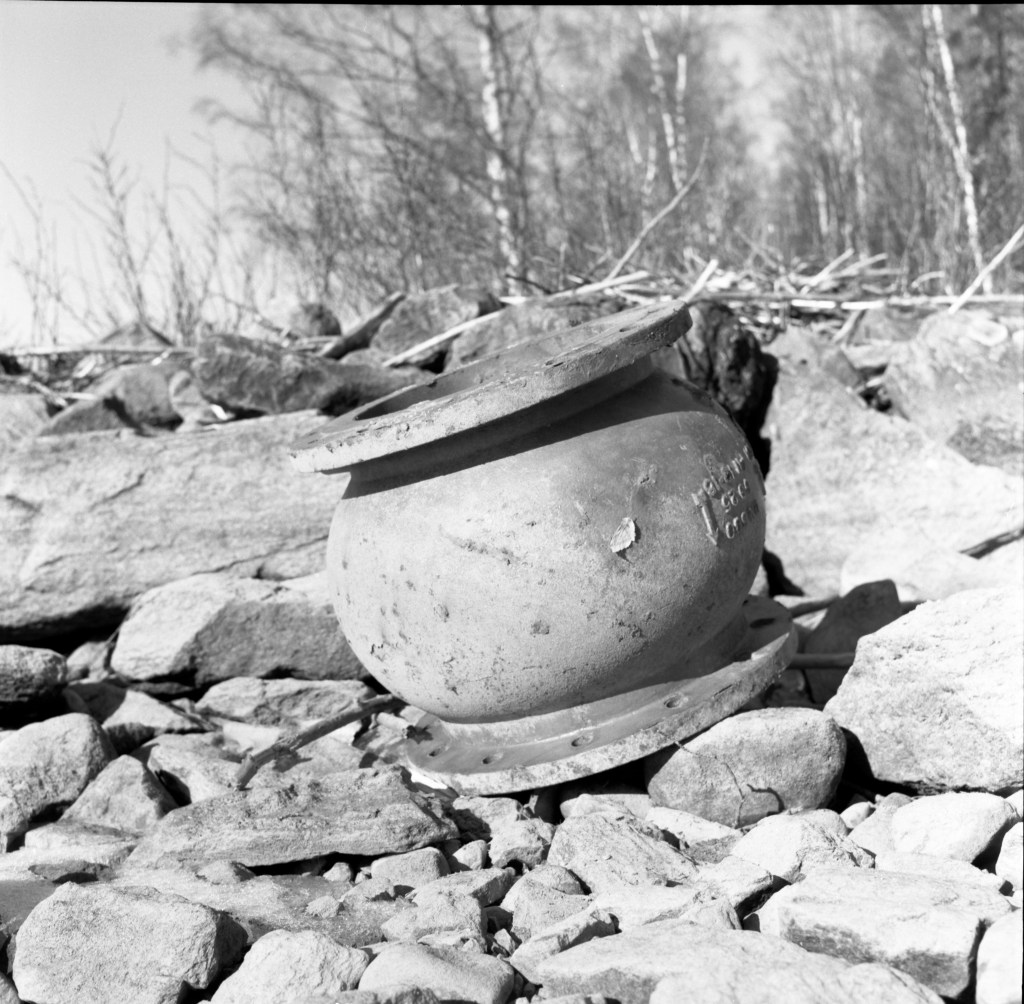
An object – Zeiss Ikon Ikoflex – Ilford FP4plus – Adox Atomal 49

All in all, I had a very joyful little day out in the sun and I enjoyed every minute of shooting with the Ikoflex again. It is such an amazing little camera and the images really speak for themselves.

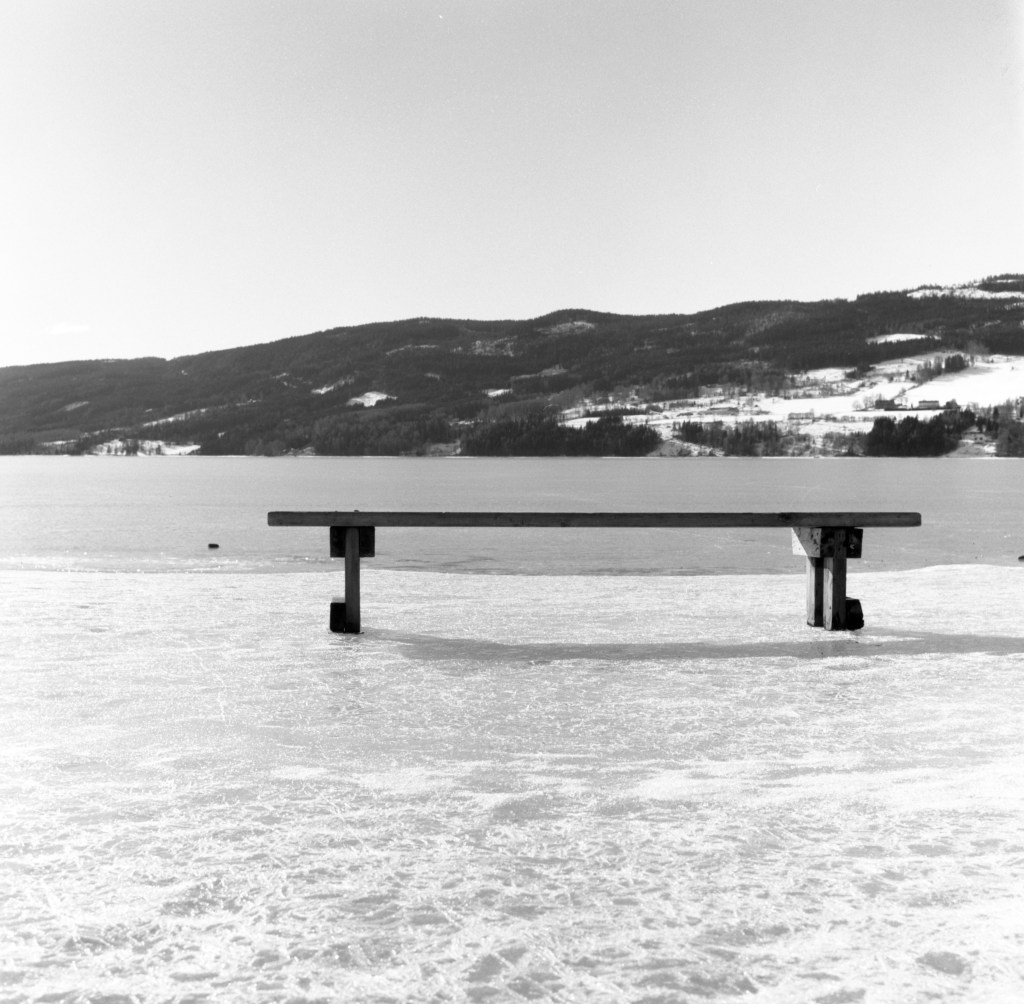
A DDR Rangefinder camera

We all have our weak-spots as photography enthusiasts. I certainly have a weak spot for the lovely Carl Zeiss Jena Tessar lens. I will not in any way claim that I am even close to a lens and optics expert, but this lens, with its four elements in three groups, gives a sharpness and tone to the images I just love. I had one of these lenses for my M42 cameras, but this lens would benefit from some servicing as the aperture blades keeps jamming when stopping down further than f8, and the focusing ring is very heavy to operate.

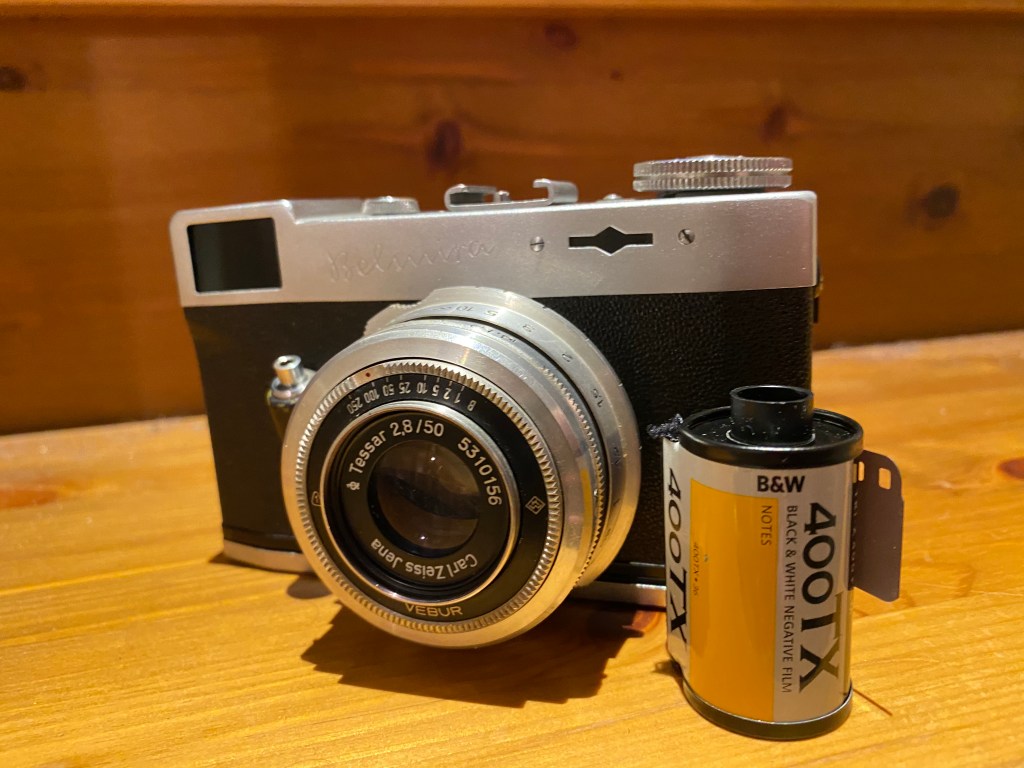
A little while back, I read about a little rangefinder camera from East Germany that was said to be magnificent value for money and deliver splendid image quality and sharpness. The camera was called «Welta Belmira» and was, believe it or not, equipped with a lovely Carl Zeiss Jena Tessar 50mm f2,8 lens. I started looking for one of these cameras to try out, and it was not difficult to find them. However, they were often in very varying condition and it was clear that getting the right and good one would take a while. And so sure it did, but after some months of searching and looking, I found one in decent condition. Yes, it was a bit dusty, and yes it had a dim rangefinder, but the camera in itself seemed to work really well.

My lineup for this test – a Welta Belmira and a roll of Kodak Tri-X400. I also used an external rangefinder unit, because the inbuilt one is very dim and only usable if the light is bright.

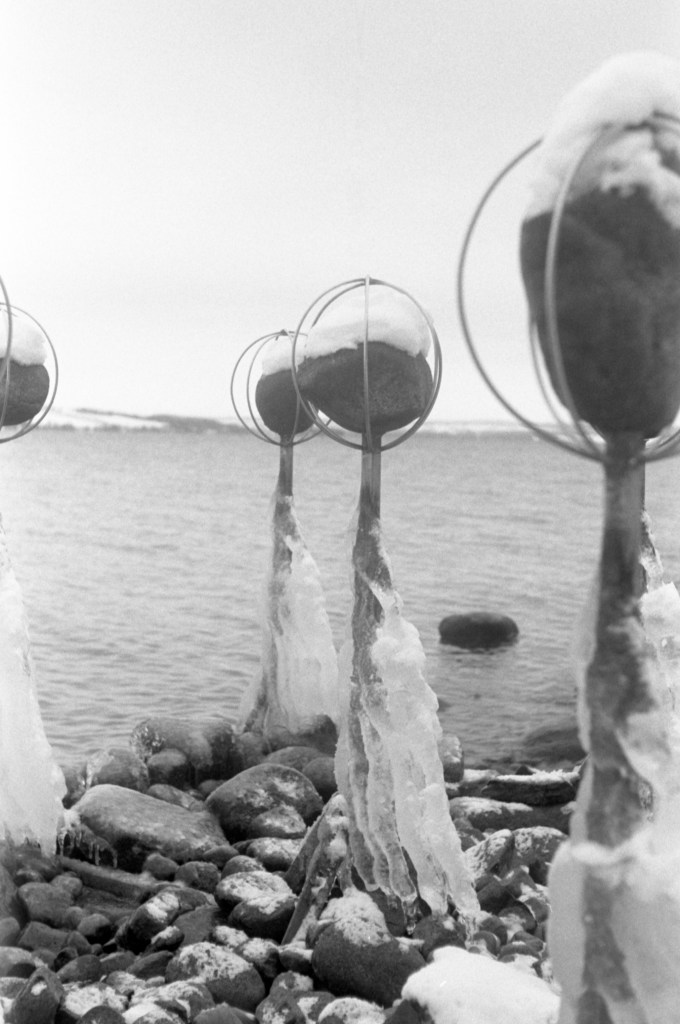
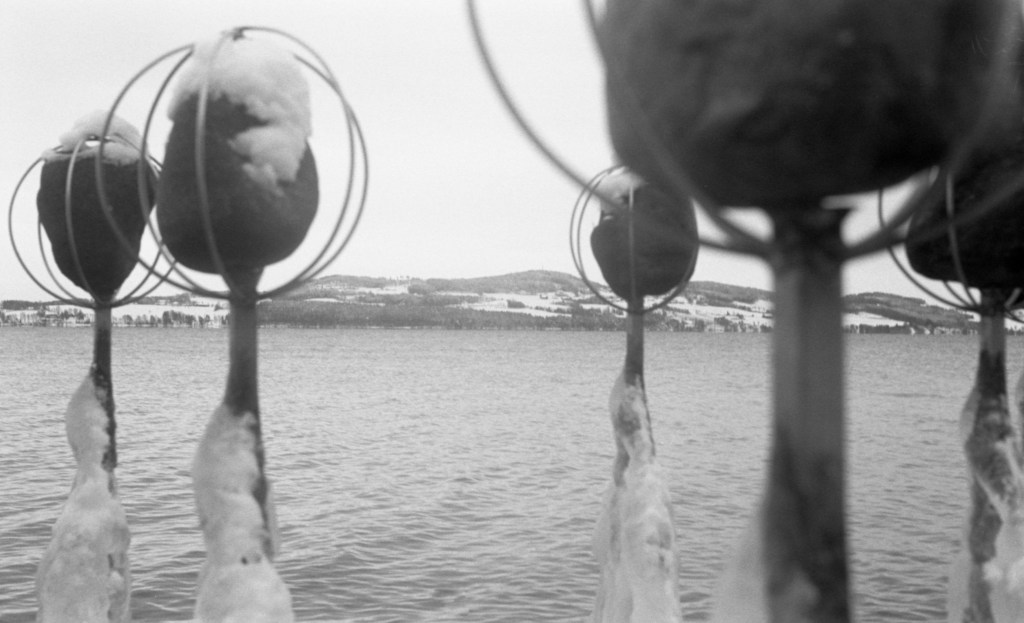
I went out to a location where there is a lovely artistic installation close to the lake, and I have thought for a while to experiment with some photography around this location. The origin of this artwork is unknown to me, but it is only accessible in the winter and spring time, as it will be submerged by the lake most of the summer time.

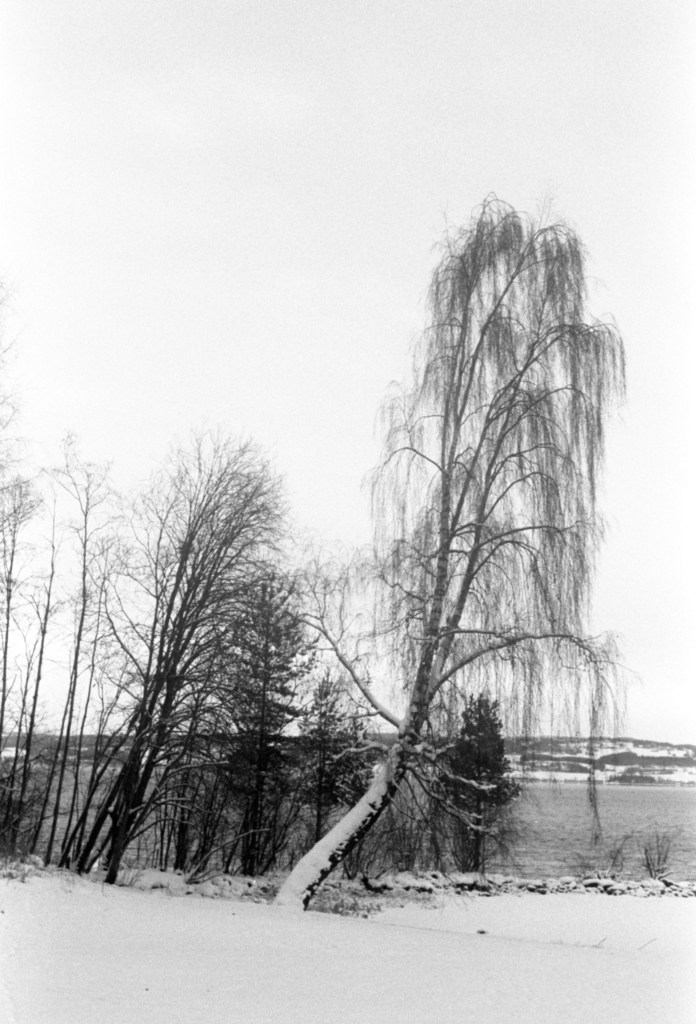
Welta Belmira – Kodak Tri-X 400 Adox Atomal 49 1+1
Reklamer

I also with this outing, made my first test of the Adox Atomal 49 developer. I read a bit about it online and saw some images developed in it, and I got curious to try it out myself. Atomal 49 is a very fine grain developer that gives you full film speed unlike Perceptol that will eat some of your speed. For that reason alone, I bought a 5L package of it and decided to give it a try. And based on these results with Tri-X at 35mm, I am very happy with what it looks like. This might well become a developer of preference to me, but I will obviously have to make more tests before deciding.

Back to the camera. I really enjoyed using the camera. It has a very special and differently engineered slider instead of the usual advance lever. It is a bit fiddly to use and has a tendency to stick at different points, but it works faultlessly. The dim rangefinder is not really an issue as long as you have an external one, and the focus ring seems to be pretty much accurate. However, I believe the camera «drags» the shutter speeds a little bit, but slight overexposure is not any issue with any negative film really.