A little success

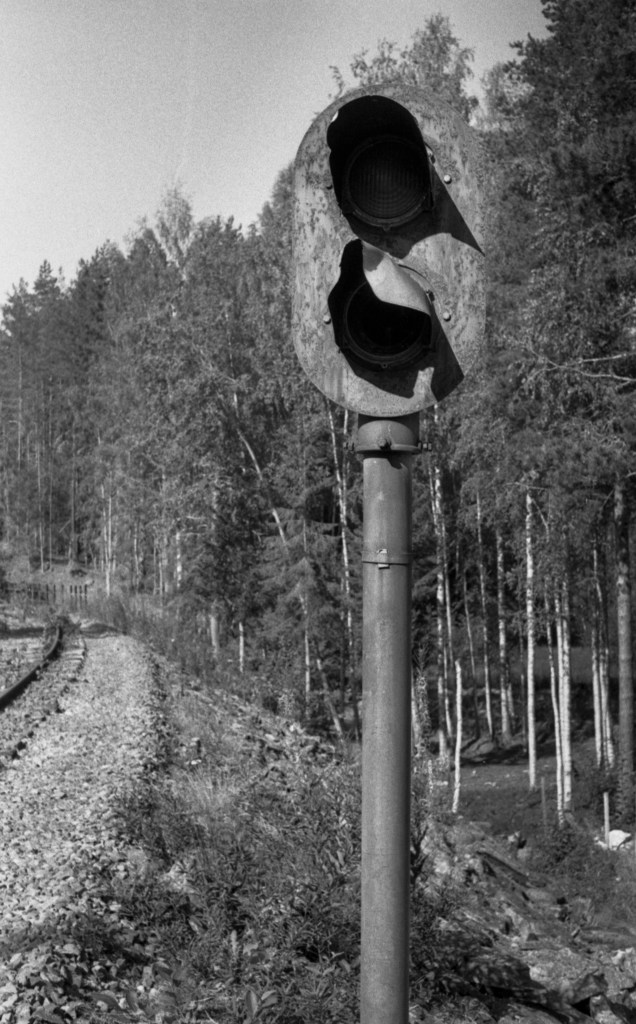
If you have followed me over the last months, you know that I bought a 100ft roll of Agfa APX100 a while back. It was the cheapest film available on the market and I was curious about how the film would work for me and my type of photography. So far, I have not really had a lot of success with it. I have studied the data-sheet for the film and I have tried it out in different situations. Some of the unlucky shoots have been due to poor bulk-loading skills or bad cassettes, and some has been due to my lack of understanding of how the film works. This time, however, I went a completely different direction. Instead of shooting landscapes, I went for an abandoned railroad track and I chose a very sunny and contrasty day to get deep contrasts and shadows in my images.

After many headaches with very grainy images, even when using fine grain developers such as ID-11, I chose to just embrace the grain and develop with Rodinal. I have used Rodinal with this film before, and I must say that from my experience with this film, after shooting it in different conditions and with different subjects, I find Rodinal to be the best developer with it. It actually produces a finer and less pronounced grain with Rodinal 1+100 than it does with ID-11.

Petri Racer – Agfa APX100 – Rodinal 1+100 1 hour.

Shooting vegetation with this film is not the best idea. It seems to be rather over sensitive to certain tones of green and gives a very mushy feel on all types of vegetation without any real separation. However, when shooting metal and dead objects, the film seems to produce rather beautiful contrast and lovely sharpness. I would think this film would be ideal for street photography with good light as it really works for this kind of shoot. It does benefit from a slight overexposure of one stop and the development process with Rodinal seems to get the most out of the contrasts in this film. Not that I am in any way pretending to be a master film reviewer.

I chose the Petri Racer for this outing. This camera is a small rangefinder camera made in the 1960s by the Japanese company Petri. A much forgotten brand today, they are really nice and quirky little cameras with mostly working rangefinder units even after about 60 years of use. The Petri was also the first camera I featured on this blog back in 2018 when the blog was new. I find that the world looks really nice through the lens of a Petri Racer, and it is a camera that I really enjoy using.
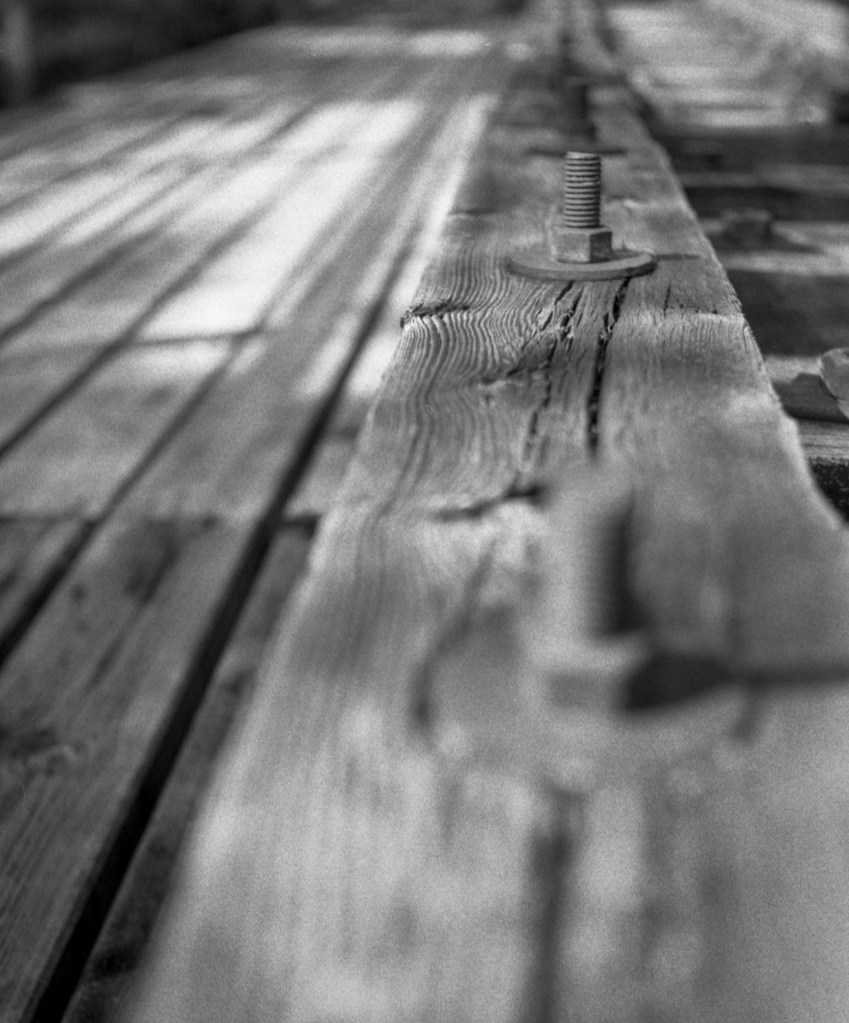
Petri Racer – Agfa APX100 – Rodinal 1+100 1 hour.

Shooting railroad track details is not something I do very often, but I really enjoyed the outing. I also found that finally I had some decent results with the Agfa film, where I was actually happy with the images I captured. My initial goal for the trip was to make three darkroom prints that I was happy with. And this time, I did succeed.

Petri Racer – Agfa APX100 – Rodinal 1+100 1 hour.

Shooting a very cheap film with a very simple camera does indeed make sense as well. I would think that most users of simple cameras like this would generally use cheaper films such as Kodak Colorplus and Fuji C200 for color and Fomapan or Agfa for black and white. For my personal taste, I find the Fomapan to be the better option of the latter, but as I mentioned earlier, I can see that the Agfa would make sense to use if you were shooting a lot of urban, street and architecture and you want the raw effect of this film.

Would I recommend the APX100? To some extent. It for sure is a decent film and if you are mainly snapping around as you go, you would probably be very satisfied with this film. However, if you are shooting a lot of landscapes, I would rather go for the Fomapan 100 which I find to work better for vegetation. And yes, develop with Rodinal.
Misty Woodland

Spring is an incredible time of year in Norway. This spring has been incredibly cold and slow, and even now, in the middle of May, we are bothered with snow in the forest. The good thing about that is that you, as a photographer isn’t very bothered with other people along the paths and you in most cases have the place to yourself. Today, I went out into some local woodland that I know quite well. Yesterday was a very rainy day, and it rained all night, so I figured that the snow was most probably melted away in the forest by now. I was very wrong, and I was not able to walk further into the forest than about four hundred meters before the snow was too deep. Also, the path looked more or less like a stream, and I had the feeling that most people would go for a swim rather than a walk on a location like this.

Traces of winter – Zeiss Ikon Ikoflex, Ilford HP5 plus, Ilfotec ID-11 1+1

Nevertheless, I went out this morning and waded myself through the soaking wet forest floor searching for nice woodland-compositions. These kind of conditions, grey, wet and misty days, are the conditions that inspire me the most. They makes the location stand out in a very different way than you would see it on sunny days, and you spot details and areas you wouldn’t see if the light was brighter.

On this particular outing, I went for the Zeiss Ikon Ikoflex, a TLR-camera that I have owned for a while, and that I absolute love using. There is something about this camera that inspire me. The world looks very nice through the waist-level viewfinder on the Ikoflex, and there is something about the way the lens renders the images that really suits my eye. I chose to shoot at shallow depths of field in this particular outing for two different reasons.

First of all, I wanted to emphasis the relaxing bokeh-feeling this lens gives and how smooth the sharpness of this lens is at around f3.5 and f4. It gives a very relaxed feeling to the scene. Secondly, my particular Ikoflex has some faults with its slower shutter-speeds and below 1/50th can give a very unpredictable result when used. From no activity at all, to just a random shutter-speed. I should probably have it serviced, but I guess fixing this one would be too expensive compared to its value, and it serves me well as it is at this point.

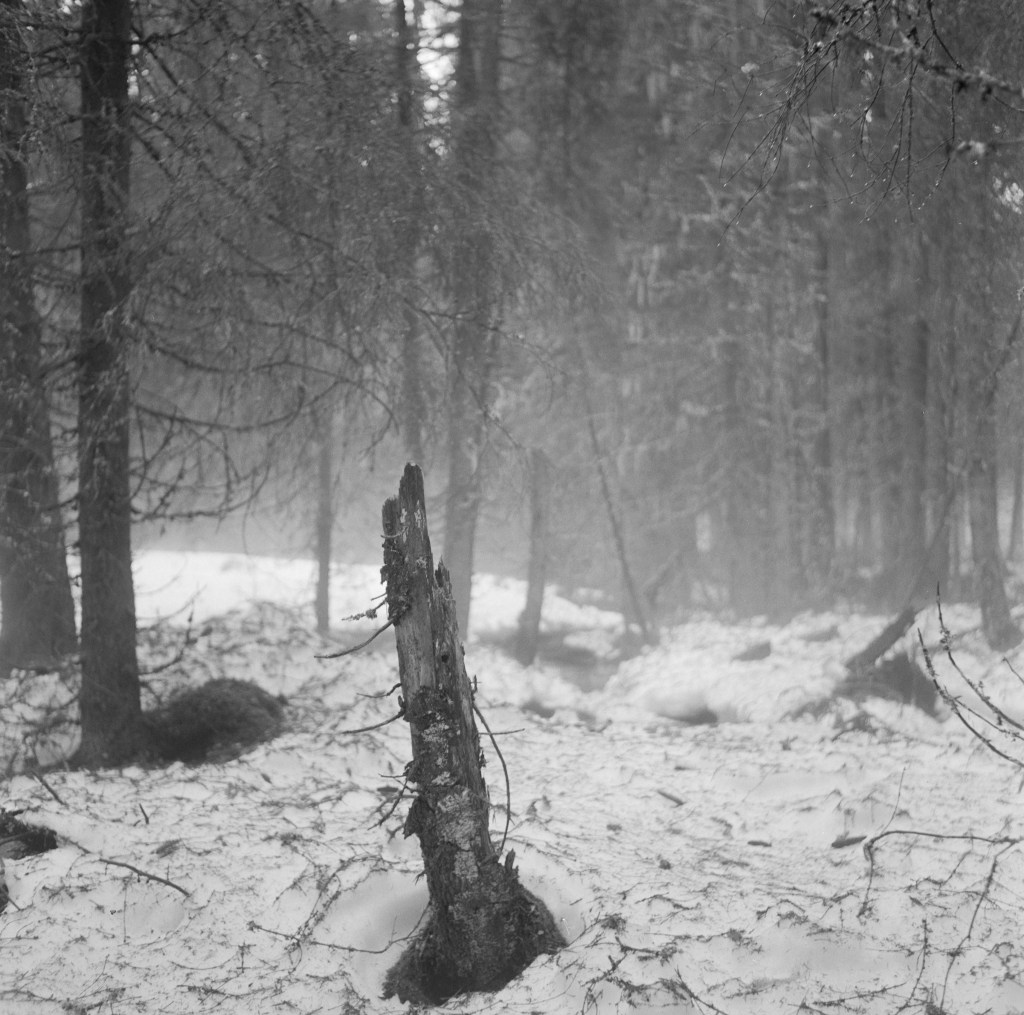
Scene of melting – Zeiss Ikon Ikoflex, Ilford HP5 plus, Ilfotec ID-11 1+1

For that last reason, I chose to go with a very flexible film to give me some wiggle-room with my exposures. I went for a roll of Ilford HP5 plus that I shot at its box-speed of ISO 400. After seeing the conditions in the forest when I came there, with that layer of mist that I didn’t expect to find there due to the conditions in general, I was very happy about this choice of film for that reason as well. Ilford HP5 plus is fantastic at capturing the mood of a misty forest.

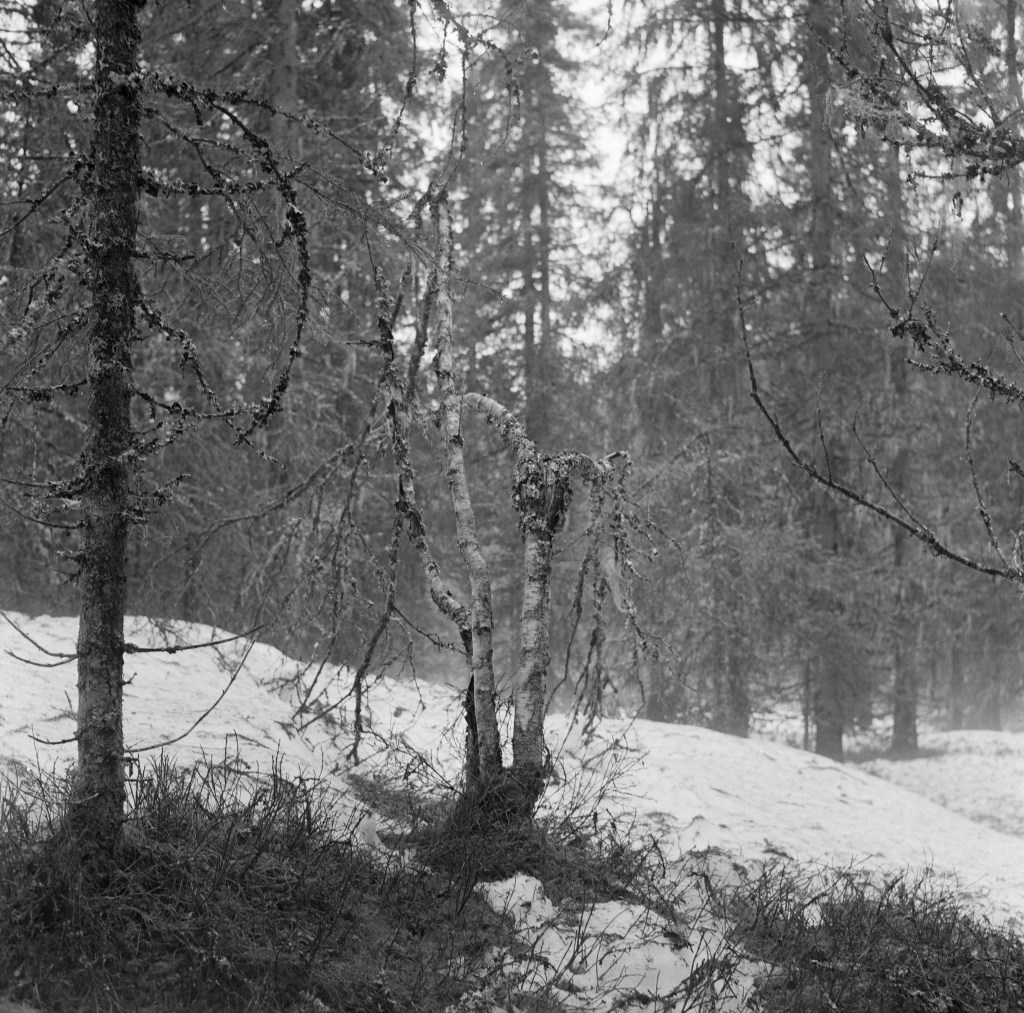
Old mans beard – Zeiss Ikon Ikoflex, Ilford HP5 plus, Ilfotec ID-11 1+1

Even though the walk this time wasn’t that long, and the way there was rather wet and unpleasant; I actually had to jump across a stream of melting-water to reach the path; I got some images that I am very happy with. I also really enjoyed my little adveture into the wet and misty forest, and I will certainly be out again in these kinds of conditions soon.

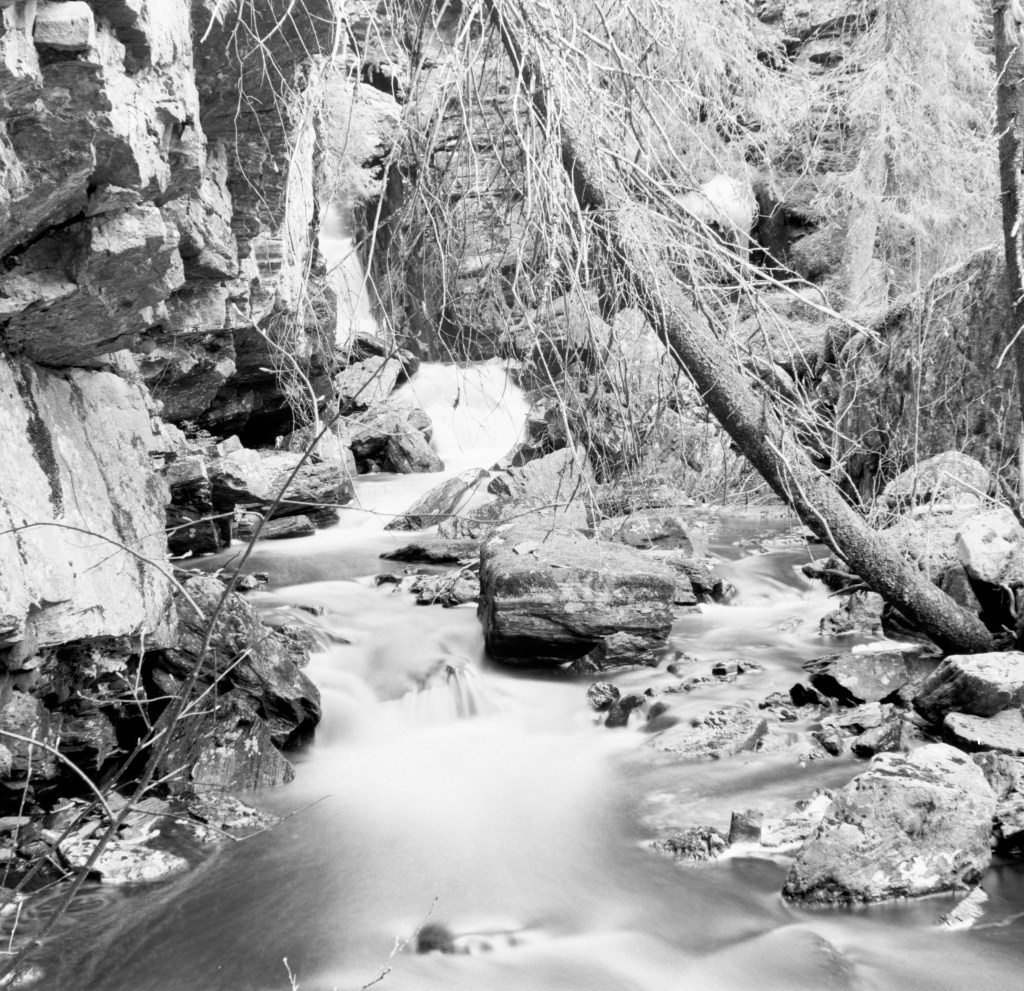
Silky water with Fomapan 100

I have written a lot about Fomapan 100 on this blog. This is a film I absolutely love shooting, and that I have found to have some really nice qualities such as insanely fine grain when developed in Xtol stock, a rich and wide exposure latitude, that makes it very pushable and pullable. An obviously, the fact that this film is an absolute bargain with its low price.

Back in the beginning of May 2020, when Norway woke up from lockdown, I brought my Zeiss Ikon Nettar 6×6 camera out to a location, to test longer exposures with Fomapan 100. To really get the longer exposure times, I brought with me what I thought to be a four stop ND-filter, but what turned out to be a three stop red filter.

My Zeiss Ikon Nettar Medium format 6×6 bellow camera.

Having already made the effort, and trotted myself a path towards the three waterfalls I wanted to shoot, I decided to go with the red filter, and see what results I would get in the darker forests in the early morning in May. The Nettar was placed on a tripod, and I had a cable release to avoid camera shake on longer exposures. I did some metering, and used an app to calculate the correct exposure times. For Fomapan 100, the Schwarzschild effect becomes important from shutter speeds at 1 second. Since I shot most of mine at longer times, I used the cable release all the time.

Reklamer

I had some happy time shooting this roll, and I struggled my way through tree roots and forestland with threes that had fell down over the winter. But when I went for the last three pictures, on a little view-point above the biggest of the water falls. I noticed a «marked» path around the whole area. At least I got some unusual angles in my shots. I cannot imagine that anyone else have been where I went that morning.

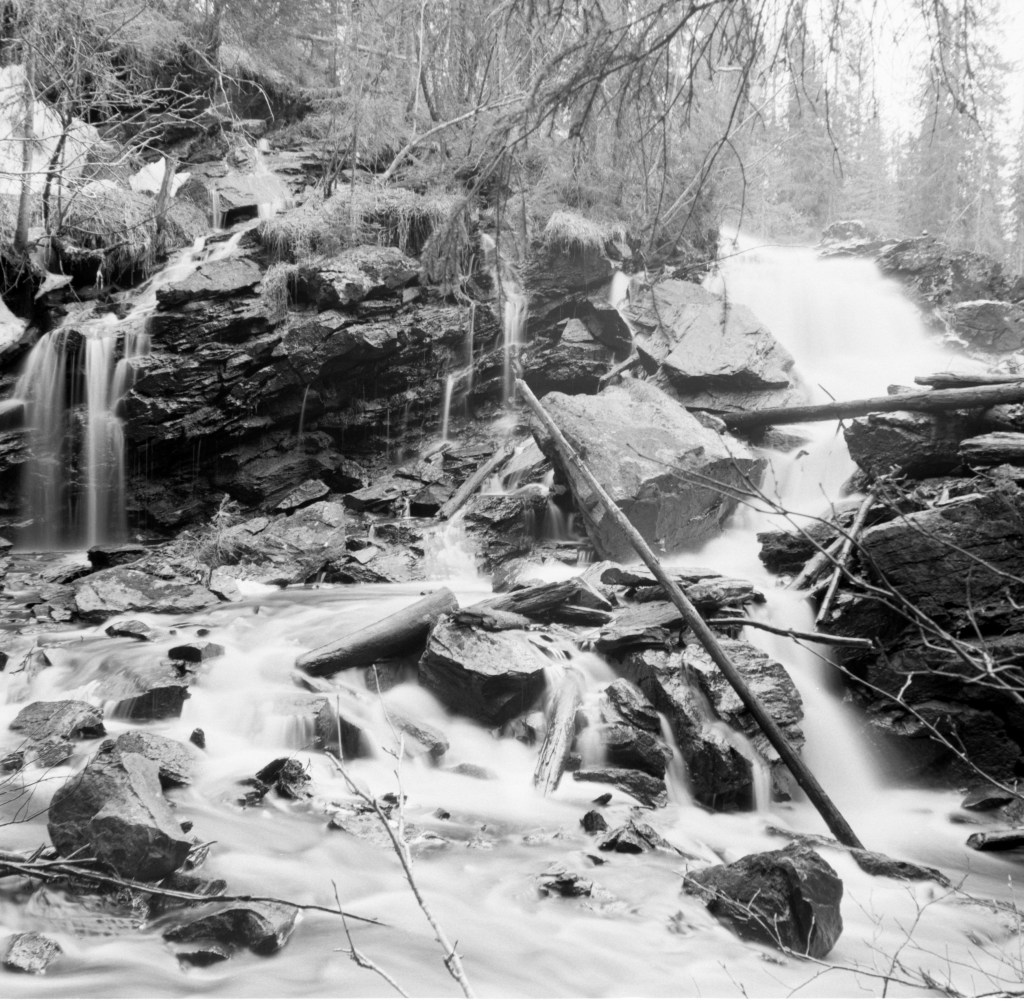
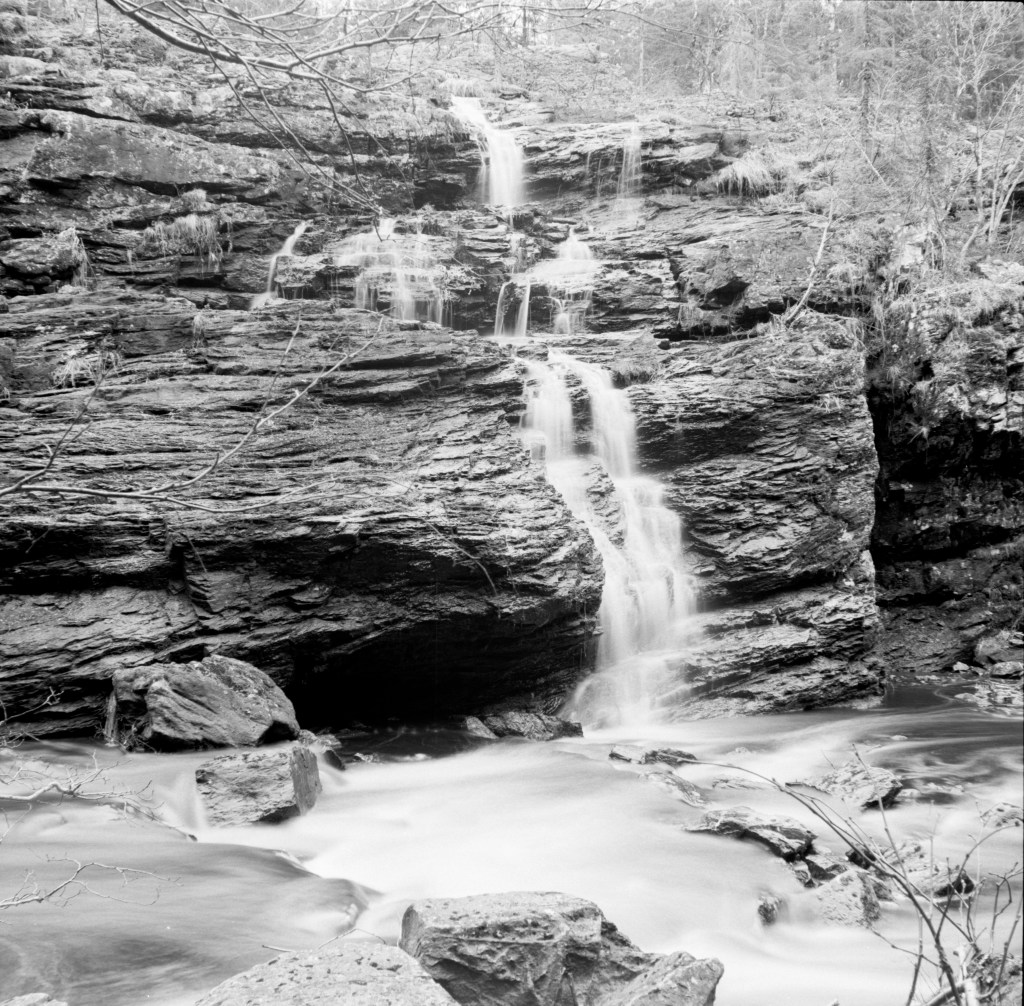
Zeiss Ikon Nettar w three stop red filter, f22, 4 seconds exposure time. Fomapan 100 Xtol Stock 5 minutes

When I pulled the developed negatives out of the tank, I was surprised to see how «normal» they looked. I had pictured a more contrasty result from a red filter than what I got in this shoot, and I did not really think a lot about these images before I started working with them in the darkroom a few days ago.

I realized that they were actually quite interesting, and that the three stop red nearly gave me an «infrared» look in my shots. I have no huge experience with infrared photography, but I do like the effect it gives, and I will most likely do more of that in the future.

Reklamer

I also love the way the greys and whites create a dramatic scene and that it puts its emphasis on the silky water effect, creating a more dramatic look than I expected. Maybe the misplaced «red filter» was actually a good idea for this shoot. I do at least see this as a happy mistake. And I got to see a side of Fomapan 100 that I did not expect. The Infrared-ish side.