Playing with a Point and Shoot

The market for film cameras has changed substantially over the last two-three decades. In the 90s there were a range of very simple easy cameras that you could use to get some pictures without knowing anything about photography nor wanting to learn about it. They were simple, fully automatic and would give you acceptable images with minimum effort. These were the fully automatic point and shoot cameras. They’d set the film speed through DX coding on the cassette, they would set the aperture and shutter speed accordingly. The small catch, you had to press the shutter release button yourself. The bigger catch, you had no idea what the images would look like.

This morning, I played around with one of these cameras. I haven’t used one of them for a long time, and I was curious about what it would «bring to the table» of images and quality. The camera was bought cheaply online and arrived by Norwegian snail mail two weeks after it was posted from a town reasonably nearby. Well done Snail Mail. After this wait, I was the confused owner of a Chinon Pocket Zoom AF.

The Chinon Pocket-Zoom AF – 38-60mm lens (probably f8 or something like that as widest aperture)

I was eager to test it out, and I gave it a roll of Rollei Retro 400s. The electronic and automatic wind-on mechanism did its job and rolled on a few frames that could have been used, and the display on the back showed «1». The Chinon was ready. I went out in very dull weather and the Chinon did not seem to be too fond of dull and «boring» light. It constantly set off the flash, and I had to manually reset it to «flash off» every time I changed compositions, as it would have reverted to flash mode automatically. It is a bit like an overbearing parent, the security net is always there.

Reklamer

Shooting the Chinon was like shooting with your phone. You aim vaguely in the direction of what you want to photograph, you press the shutter button and wait for a while while the small elves inside the camera gets to work setting up your exposure. This takes a while, and you would probably not use this camera to photograph running animals or people in action. If you used it to photograph someone playing football, they would be done with their game and home for dinner before the camera takes a shot. After a while, when you hear the reassuring sound of the shutter and the winding mechanism, you are ready for your next shot.
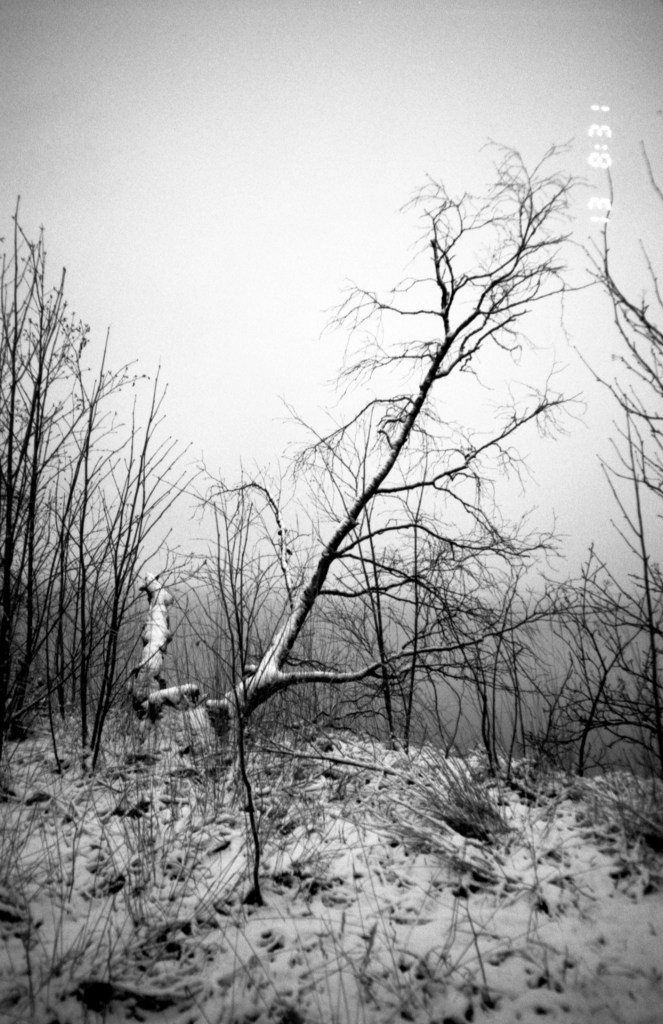
Chinon Pocket Zoom AF – Rollei Retro 400s – Xtol Stock

When looking at the final images, they are not that sharp and crisp as you would hope. But since I have not had any control in the making of there images other than pressing the shutter release button, I don’t really feel it is my fault.

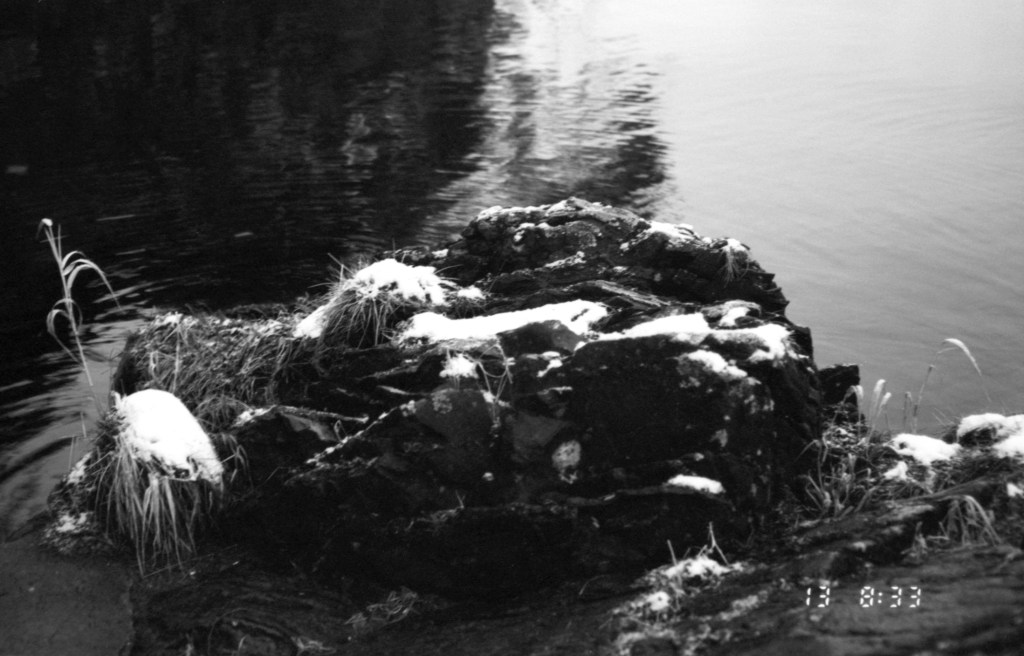
Some issues I see. The lens is probably not that bright and certainly not very sharp, and the images seem all slightly under exposed. They have a strange vignetting, much like the one you get while shooting a Holga camera, and the lens perfomance isn’t that much better on this Chinon. Also, you get these imprinted numbers on all your frames, and I was not aware that it would be printing numbers on my frames. I have left them here in all their atrociousness.

My conclusion. I will sell this camera to someone who will use it. I will certainly not use this camera again and if anyone wants it, please contact me.

I like this image because of the mood, and that it is evenly blurry all the way over.
Chinon Pocket Zoom AF – Rollei Retro 400s – Xtol Stock

Playing around with a Petri 7s

If you have followed this blog for a while, or read some of my posts, you may know that I have a Petri Racer that I really love shooting. I find the little Petri to be very reliable, accurate, light and handy as well as giving the images some character. I can’t really put my finger on why I like that particular camera so much, it is just a camera I enjoy shooting. A few weeks ago, I came across a Petri 7s on an auction online, and I won it on a very low bid.

The reason I was interested in this particular 7s was that it had the f1,8 lens, which some sources claim to be a six element lens with an interesting bokeh-pattern. Whether it is six element or four, as the f2,8 version, does not necessarily mean that much to me, but I do love nice bokeh and sharpness. For the very low price that I payed, it was worth the gamble at any rate.

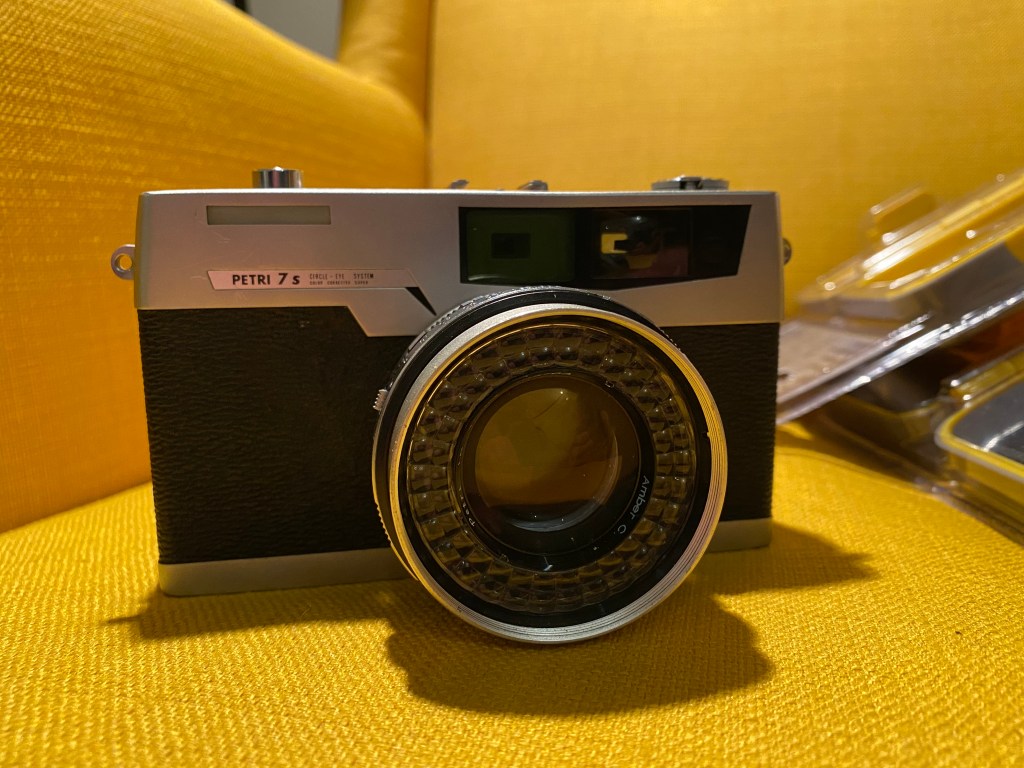
The Petri 7s f1,8 Rangefinder camera w. amber coated lens

A gamble it surely was as this camera has a few personality traits that is very specific to this particular one. First of all. The Rewind-knob is loose, and you cannot turn the camera on its head without risking the film to lose tension as the rewind knob disengages. Another interesting «asset» this camera has, is a dodgy lock on the back. This means you will get the luxury of using electrical tape to secure it from opening mid-roll. In addition to this, the camera invites to a creative approach to focussing, with a rangefinder (although rather dim and dodgy) that jumps in and out of «sanity» a few times pr shot. I ended up guesstimating my focus because I trusted my own eyes more than the rangefinder unit.

Reklamer

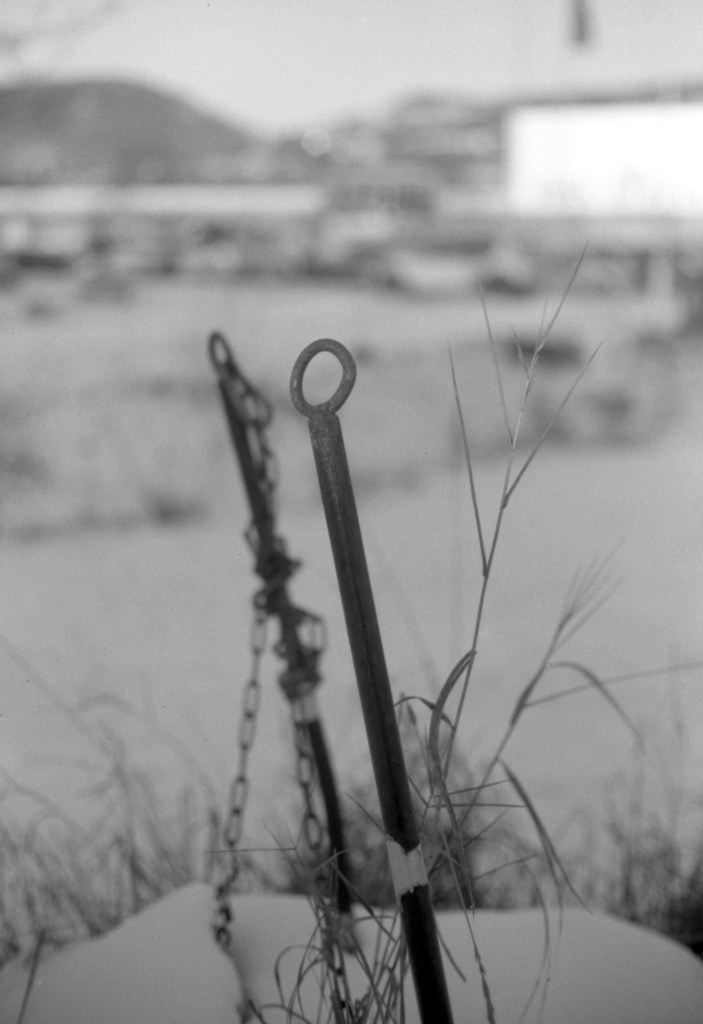
These faults aside though, the aperture settings and shutter speeds are fairly accurate. When I took it to Lillehammer to try it out on the newly fallen snow, I got very good negatives. My test was done with half a roll of Fomapan 200, which I because of the lighting conditions shot at 100. I shaved 20% off the development time compared to box-speed, and ended up at 6 minutes with Xtol Stock.

As you can see, in some of my images, my lens fogged over. However, this is not lens-haze, but rather an issue of a swift temperature change and a forgetful photographer who didn’t remember to wipe the lens before shooting against the sun.

Double tryout

A few months ago, I ordered a few rolls of StreetCandy ATM 400 off their own website. From previous experience I know that street film is very contrasty and that they are great to pull. I put one of the rolls in a new camera that I bought and planned to take it for a little spin around the area, looking for architectural shapes, trying to find shadows and deep contrasts. The trip did not happen because of Norwegian summer and some weeks of rain and dull weather.

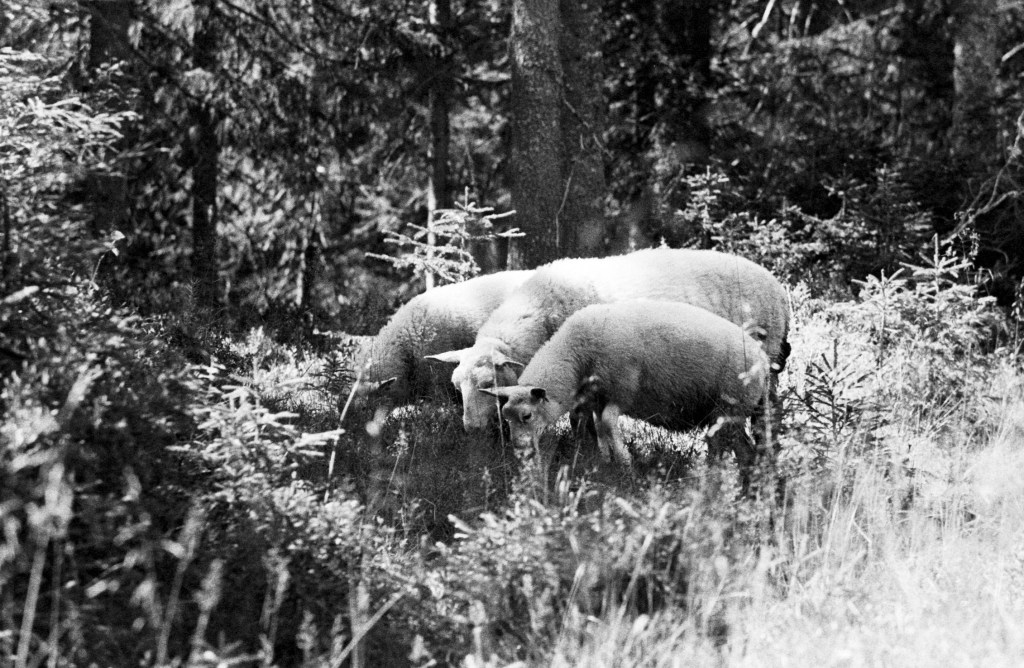
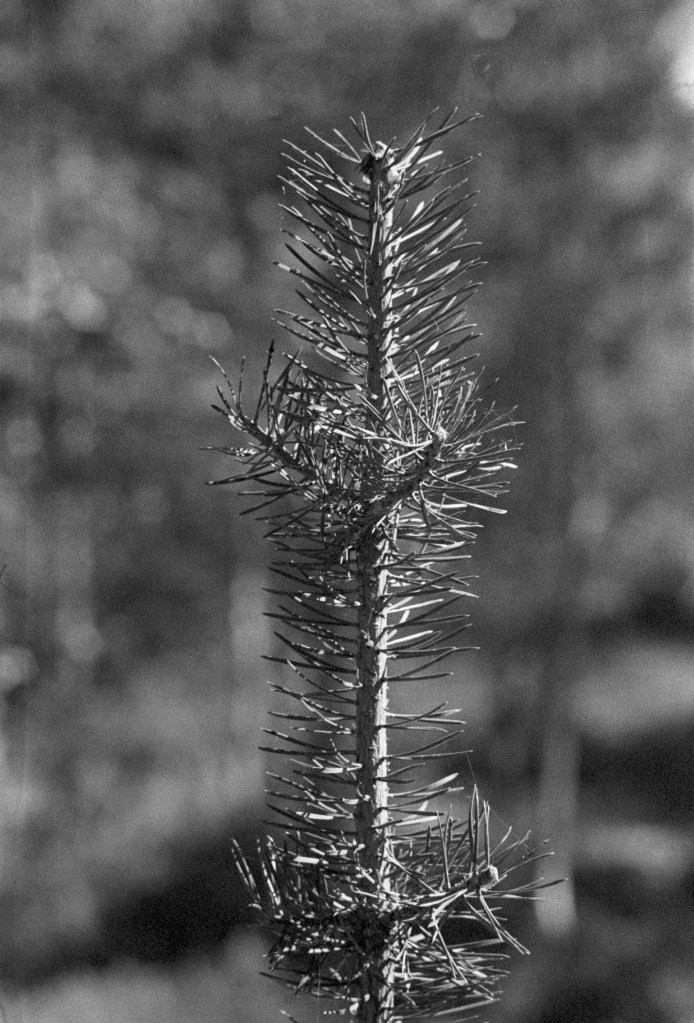
The other day though, I went out for a hike in the forest looking for some sheep and forest details to photograph. I decided to try out the Street Candy at box speed for this trip, and I shot the whole roll of film that was in my camera.

The Camera

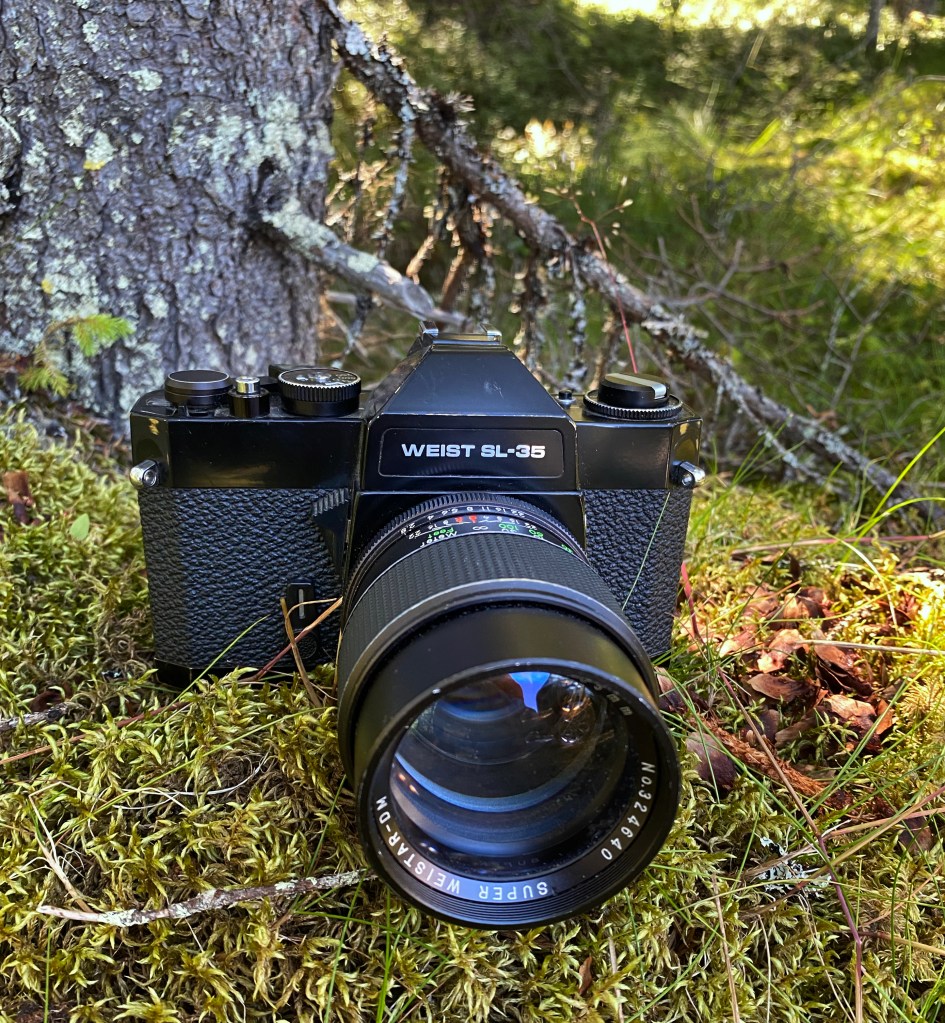
I love old, interesting and manual cameras. I often frequent thrift-shops and charity shops to see what kinds of old, forgotten and dusty stuff they have on their shelfs. On a recent trip to a local charity shop, I picked up a Weist SL35 with a «Super Weistar 135mm» lens. I have tried to google the camera, but not much came up. The best lead is that it could be a rebadged Chinon CX. Nonetheless, it is heavy as a brick and feels sturdy and solid in your hand.

I am happy for any details on this camera, as I do not know much about it other than that it seems to work perfectly and accurately. Even the lightmeter is working and fairly accurate based on this shoot.

Reklamer

This was my first time trying out this camera, and I must say that this camera will become a frequent companion for me. the M42 screw mount makes me able to use some of my favorite lenses, and it is surely more accurate than my Zenith Olympic Edition.

The film

As I stated earlier, the film I used on this trip was a Street Candy ATM400 street film. You can buy it from the manufacturer’s own website and at a fairly decent price. Be aware that they use the slowest shipment partner you can imagine. From their address in France to mine in Norway, it used more than two months. I have tried to imagine how that can even be possible. In the current Covid-age I could have traveled to France, stayed two weeks in quarantine, picked up the film, traveled back to Norway, stayed two weeks in quarantine. This whole process would have been a quicker way of getting the film, than using their shipment partner.

My guess is that their films are delivered by just one man, picking the film up at their address, walking to a port somewhere in southern France. Who then jumps in a rowing boat, rowing around Gibraltar and over the Nordic Sea to deliver it. Probably.

Reklamer

From their own website, you can learn something about this film. It is a medium speed, 400 ISO, film originally made for surveillance cameras to keep people safe. In the modern days, these systems have turned digital, and the films are unnecessary. Street-Candy has made this film available for film photographers to use, and I am truly grateful. This film is great, even when I took it out of its comfort zone and into the first.

Not what it was originally made to photograph.

The grain-structure is beautiful and very fine for a 400 ISO film, but as most other street films, it is very contrasty. In my negatives I saw the contrast immediately, and some were to contrasty to turn out anything in this setting, and a normal Tri-X or HP5 would maybe be a more suitable choice for this kind of shoot, but some of the results were really unique.

On Street-Candy’s website, it advised to refer to the same development cycle as for Ilford HP5 plus, which I did on this cycle. Eight and a half minutes in Xtol 1+0 and then normal stop and fix, rinse and Photoflo.

Reklamer

I am looking forward to trying out my other rolls of this film both for proper street photography and pulled one stop for portraits. I can imagine brilliant results from this film. I am also surprised to see how well it coped in the forest with the sheep and structures I found out there

All in all I am very happy with both the camera and the film, and if I would order this film again. If you come over a Weist SL35 at a decent price, it is worth buying. My cost 35 Norwegian kroner, approx 3,5 Euros.

There are always two people in every picture: the photographer and the viewer.

Ansel Adams