Aiming at contrast and grain

I haven’t really done any contrasty BNW-stuff for a while, and the other day I loaded a roll of StreetCandy ATM400 into my little Petri Racer and brought it with me for some days, aiming at whatever caught my eye wherever I was at the time. I haven’t used the Petri Racer for a while, and I found this was an option to use it and its little, interesting lens.

The Petri Racer is a little rangefinder camera that I have used a lot on this blog. It was the camera that made this blog happen and the camera I used for my first two entries. I am very happy with the way the Petri makes the world look. It has a special tone to it that I cannot really put my finger on.

My first pictures for this entry were taken a few minutes after it stopped raining at a car-park when I filled my coffee-cup in the nearby petrol station. I experimented somewhat with the DOF on these images, and they are shot around f4 on the little 40mm lens. My favorite one is here:

Petri Racer, StreetCandy ATM400@400 – Rodinal 1+25, 6 minutes

As I aimed for the contrasty and somewhat grainy look on this roll, I went for a pretty concentrated dilution of Rodinal; 1+25. I guessed this dilution to give me the maximum accutance and give me deep and sharp contrast as well as the lovely Rodinal grain. I don’t really mind the grainy structure of Rodinal, and I find it to suit these kinds of images as it gives them a raw impression.

Reklamer

A bit later that day, I went to an old, derelict school building to set up for the shoot mentioned in a previous entry. The first thing I noticed was the interesting lights in the old hallway. Filled with old chairs, a ladder, dirt and the smell of old building, it really gave an incredible shot. I shot this one on a tripod using f5.6 for 1/2 of a second, and I find that this shot shows the mood of the hallway well.

Petri Racer – Streetcandy ATM400@400 – Rodinal 1+25 6 minutes

Then I went to an old museum where someone had backed their Tractor-trailer into a ditch. There were some interesting contrast to be captured there and I went for it.

Petri Racer – Streetcandy ATM400@400 – Rodinal 1+25 6 minutes

All in all I am very happy with this roll of film. I got the grain and the contrast that I wanted, and the little Petri got another run. Shame it hasn’t been used for a while. It will not sleep as long this time.

Really pushing it with portraits

Sometimes you come across settings and situations where there just isn’t sufficient lighting to go smooth and grain free photography with reasonable shutter speeds and settings. Especially with living subjects, like people, you need to allow for some «life» in your model and hence use 4 seconds shutter speed. In these situations, an option is to push the film. However, when pushing film, you will lose some of the detail get increased contrast added to your images.

For this entry, I created a situation where I had very limited light, and I went for two 400 speed films which I pushed. My initial Idea was to push both of the two stops to 1600 and see what differences I could spot, but due to a change in lighting conditions, I had to do one of them at 3200, a three stop push.

Ilford HP5+@1600

My first film for this photoshoot was a roll of Ilford HP5+ Medium format film. This is a film I regularly shoot, and I am very familiar with the characteristics of this film at both 400 and 800, but I have never pushed it further than that before. Therefore, I was curious how it would deal with the extra stop of push, both in terms of grain and contrast.

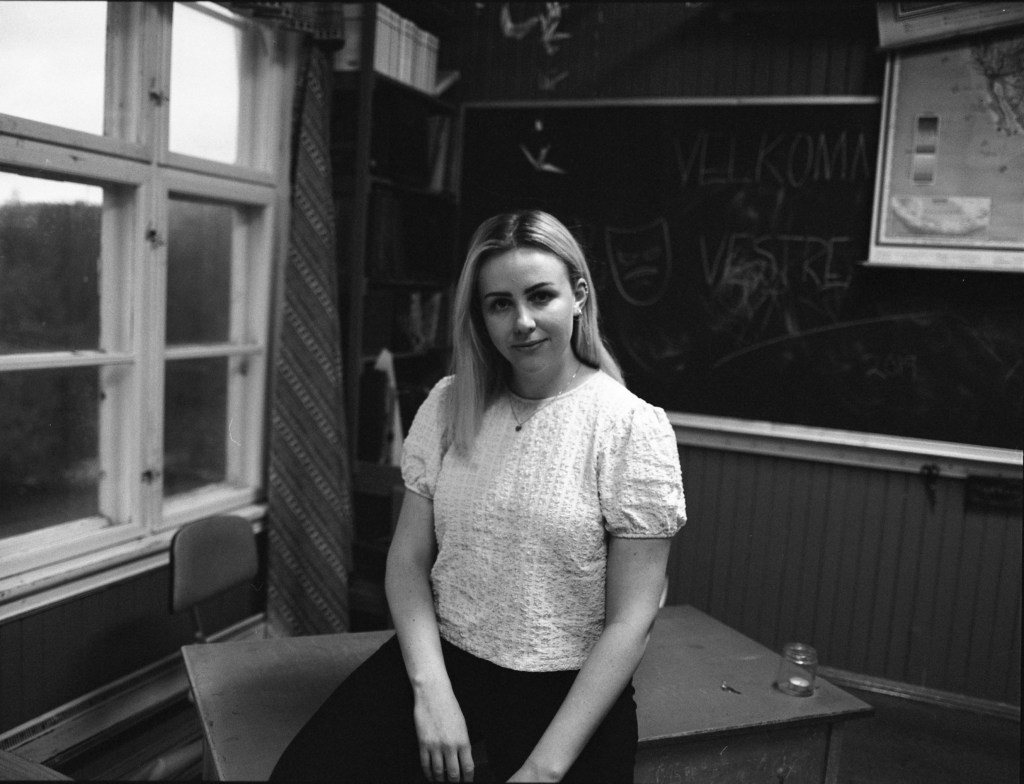
The only lighting used for this shoot was the available light in the old derelict class-room and what I could reflect back using the «sunfire»side of my reflector. I shot as close to F4 as I could and got shutter speeds around 1/60th of a second.

Reklamer

I was surprised to see the negatives when I pulled them out of the tank. I expected a very punchy-looking negative with a substantial lot of contrast and severe loss of detail, but the negatives looked reasonably good. The push was obviously visible, but not as prominent as I would have guessed. My quick scans also turned out some nice images. Although grainy, I like the look of these pictures.

I see that I got a bend mark on one of the images, I clearly was a bit unlucky when reeling the film for development.

Kodak Tri-X400@3200

If I expected grain and heavy contrast on the HP5+, I did not expect much of the images from the three stop pushed one. On my way home, I actually doubted my move and was already drafting my apology letter to the model, who friendly joined me for this experiment. I was, however surprised in two different ways.

Even though I followed the guidelines for a three stop push found in the massive dev-chart and had fresh and well tempered chemistry (20 degrees) some of these negatives came out very thin. I metered in the same way all the way through the shoot, and I obviously developed the whole roll at the same time so the big difference surprised me. I must have made a mistake with my metering at some of these images.

However, some of the negatives looked really nice. Although they were obviously very contrasty and punchy they looked to have kept at least some of the detail I looked for. As you can see in the pictures the push is very visible, and I would not go for a three stop push if it could be avoided.

This shoot was a real gamble, and I am thankful for the model who helped me on this. Although I couldn’t really compare the two films because I had to do different pushes, I must say that I am surprised how well both films coped. However, I would say that the grain and latitude of the HP5+ appeals more to me than the TRI-X. But this is a personal observation.

I have decided to try out these negatives in the darkroom at some point, and I will post my results and workflow from that at a later point.

Double tryout

A few months ago, I ordered a few rolls of StreetCandy ATM 400 off their own website. From previous experience I know that street film is very contrasty and that they are great to pull. I put one of the rolls in a new camera that I bought and planned to take it for a little spin around the area, looking for architectural shapes, trying to find shadows and deep contrasts. The trip did not happen because of Norwegian summer and some weeks of rain and dull weather.

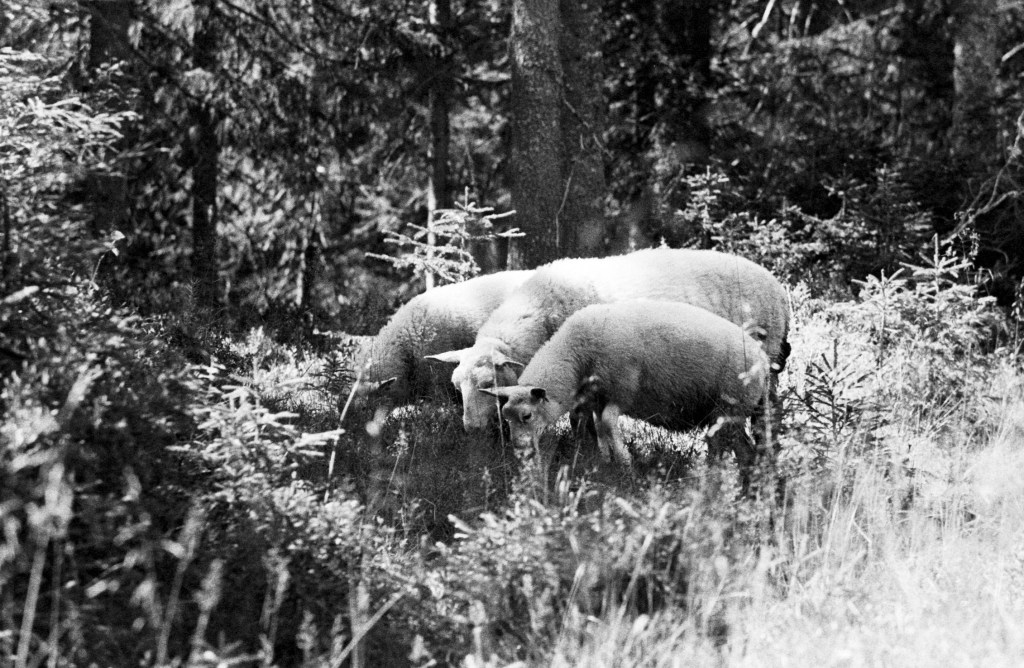
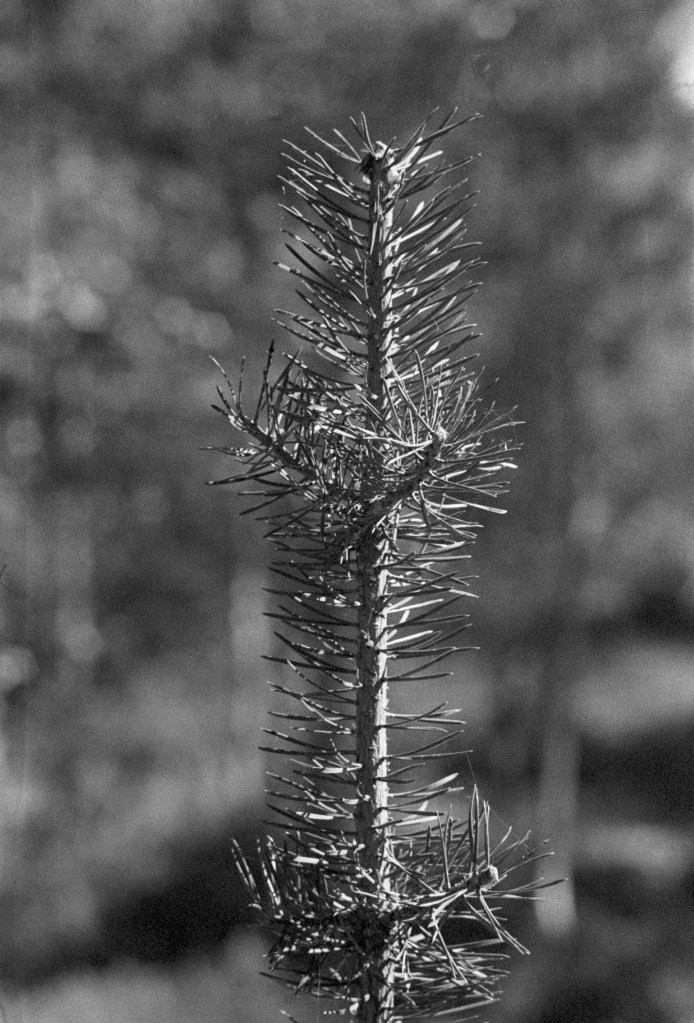
The other day though, I went out for a hike in the forest looking for some sheep and forest details to photograph. I decided to try out the Street Candy at box speed for this trip, and I shot the whole roll of film that was in my camera.

The Camera

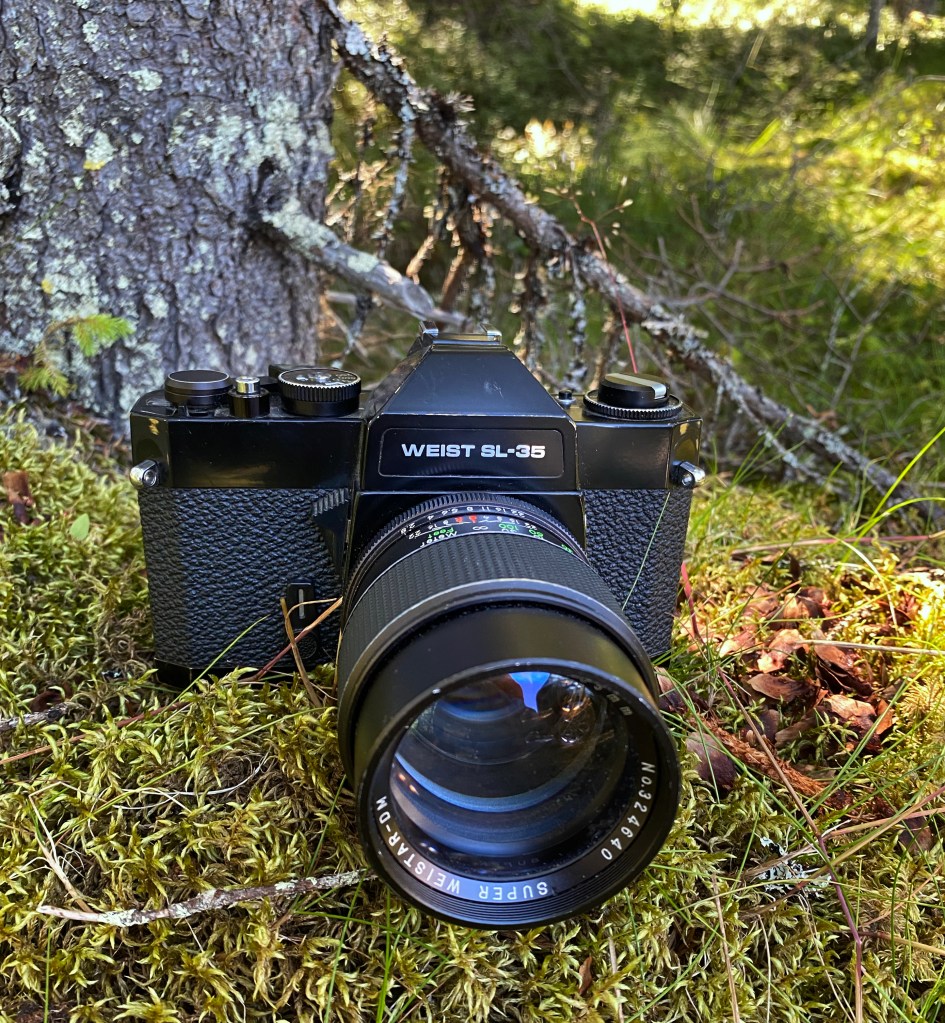
I love old, interesting and manual cameras. I often frequent thrift-shops and charity shops to see what kinds of old, forgotten and dusty stuff they have on their shelfs. On a recent trip to a local charity shop, I picked up a Weist SL35 with a «Super Weistar 135mm» lens. I have tried to google the camera, but not much came up. The best lead is that it could be a rebadged Chinon CX. Nonetheless, it is heavy as a brick and feels sturdy and solid in your hand.

I am happy for any details on this camera, as I do not know much about it other than that it seems to work perfectly and accurately. Even the lightmeter is working and fairly accurate based on this shoot.

Reklamer

This was my first time trying out this camera, and I must say that this camera will become a frequent companion for me. the M42 screw mount makes me able to use some of my favorite lenses, and it is surely more accurate than my Zenith Olympic Edition.

The film

As I stated earlier, the film I used on this trip was a Street Candy ATM400 street film. You can buy it from the manufacturer’s own website and at a fairly decent price. Be aware that they use the slowest shipment partner you can imagine. From their address in France to mine in Norway, it used more than two months. I have tried to imagine how that can even be possible. In the current Covid-age I could have traveled to France, stayed two weeks in quarantine, picked up the film, traveled back to Norway, stayed two weeks in quarantine. This whole process would have been a quicker way of getting the film, than using their shipment partner.

My guess is that their films are delivered by just one man, picking the film up at their address, walking to a port somewhere in southern France. Who then jumps in a rowing boat, rowing around Gibraltar and over the Nordic Sea to deliver it. Probably.

Reklamer

From their own website, you can learn something about this film. It is a medium speed, 400 ISO, film originally made for surveillance cameras to keep people safe. In the modern days, these systems have turned digital, and the films are unnecessary. Street-Candy has made this film available for film photographers to use, and I am truly grateful. This film is great, even when I took it out of its comfort zone and into the first.

Not what it was originally made to photograph.

The grain-structure is beautiful and very fine for a 400 ISO film, but as most other street films, it is very contrasty. In my negatives I saw the contrast immediately, and some were to contrasty to turn out anything in this setting, and a normal Tri-X or HP5 would maybe be a more suitable choice for this kind of shoot, but some of the results were really unique.

On Street-Candy’s website, it advised to refer to the same development cycle as for Ilford HP5 plus, which I did on this cycle. Eight and a half minutes in Xtol 1+0 and then normal stop and fix, rinse and Photoflo.

Reklamer

I am looking forward to trying out my other rolls of this film both for proper street photography and pulled one stop for portraits. I can imagine brilliant results from this film. I am also surprised to see how well it coped in the forest with the sheep and structures I found out there

All in all I am very happy with both the camera and the film, and if I would order this film again. If you come over a Weist SL35 at a decent price, it is worth buying. My cost 35 Norwegian kroner, approx 3,5 Euros.

There are always two people in every picture: the photographer and the viewer.

Ansel Adams