Two rolls of Ferrania Solaris

I have been interested in photography since I was a very young boy. I remember back when I got my first camera, an old Ricoh Point and Shoot camera, how I would walk around and try to find things that I could photograph. Cars, People, animals, buildings… Anything really. In what I think must have been 2002 I got my first own SLR camera as a gift from my uncle who was a journalist. The camera was a Nikon F60. This camera is sadly faulty now, and fixing it would cost more than the camera is worth.

Around the same time, 2003 or 2004, I went to Italy for a summer holiday with my family. Back then, I was a young aspiring photographer who was part of a photography club in my local town of Gjøvik in Norway. On this trip to Italy, I came across a film stock that I had never heard of, and obviously, I bought some rolls and tried it out. The film in question is the Ferrania Solaris 200. A consumer grade film with a lovely lush and vibrant color palette and maybe a bit more grain than other films I had tried. I absolutely loved the results I had on my rolls that I had developed in Italy and on my way home, I picked up a 3pk of Ferrania Solaris 200 on the Airport. I can still remember finding it very cheaply at Ciampino Airport. I bought them without thinking about anything else. Only once I came home, and put one in the camera and went shooting, I figured that the films only had 12 frames. Which to me back then was nothing. I would see that differently today. I was very disappointed and forgot the two last rolls in the basement. I found them when tidying up there this summer. Expired in 2008, stored in a heated basement since 2003 or 2004. What could possibly go wrong here?
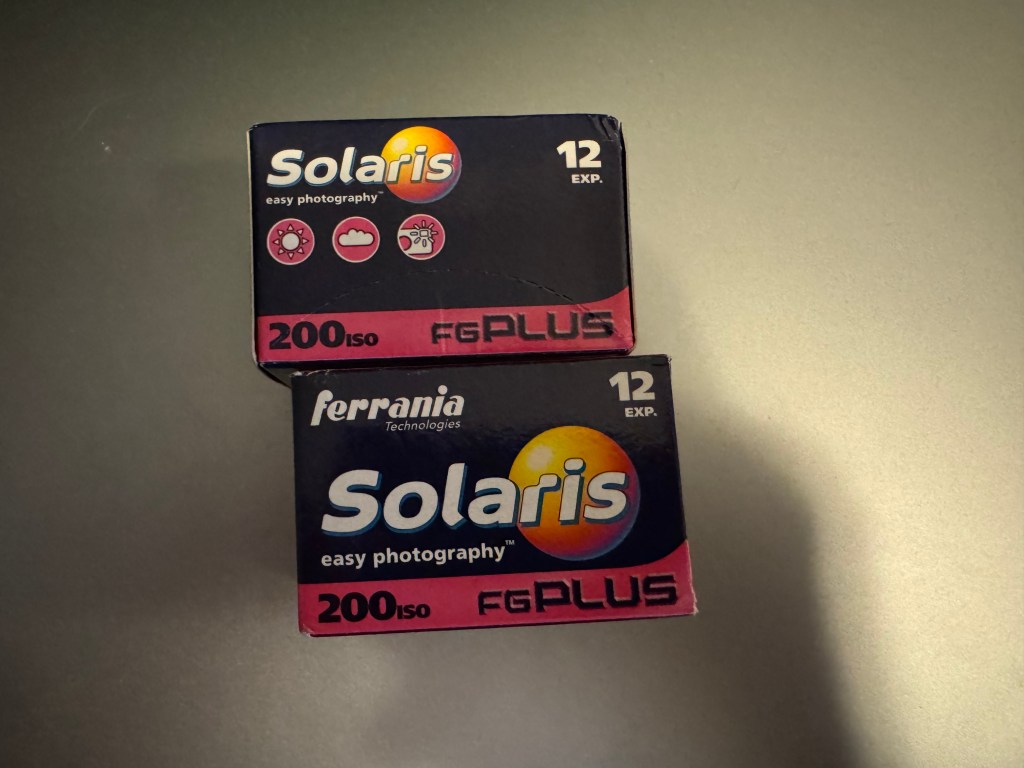
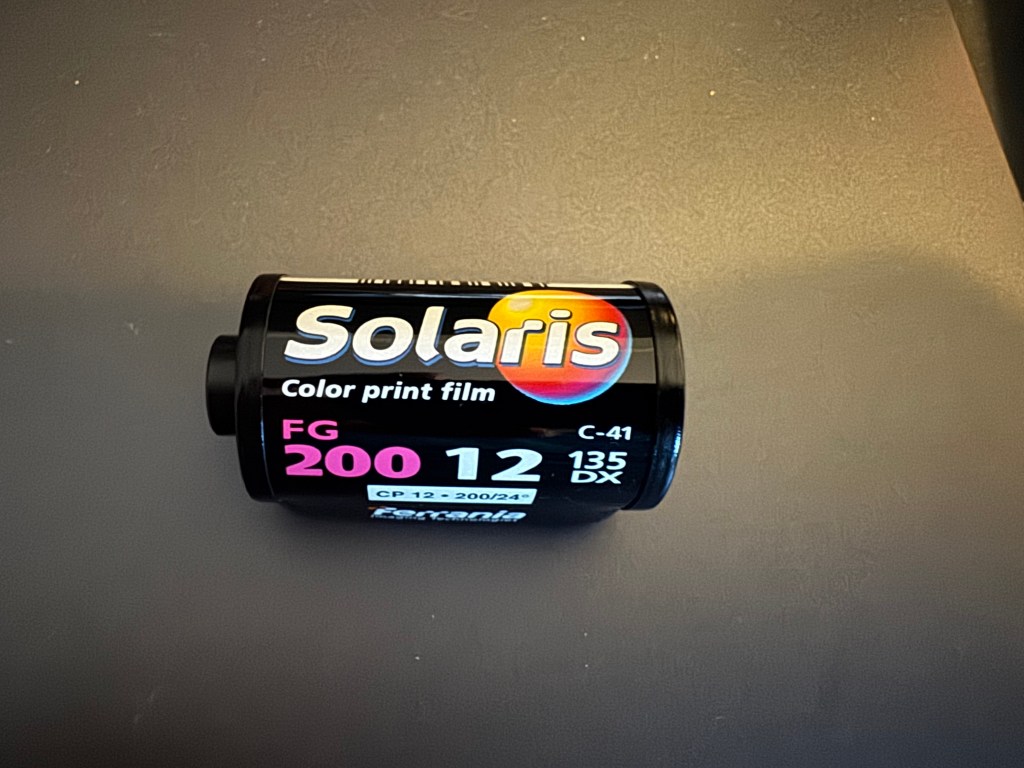
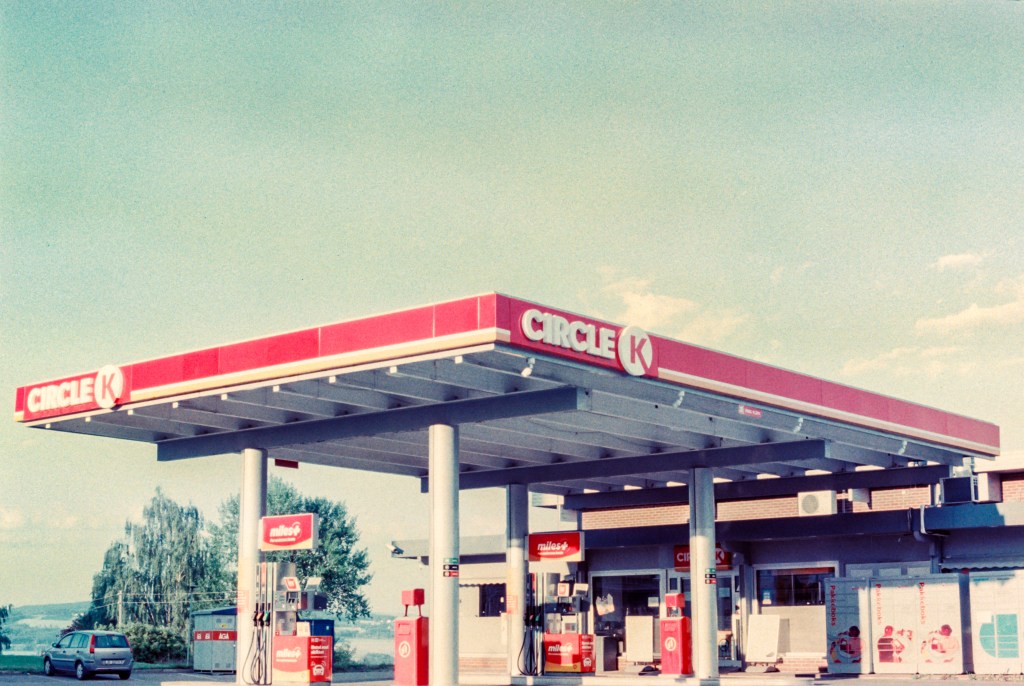
Since I had two rolls, I decided to use them differently. One of them, I decided to treat as I would normally with expired film, overexpose by 1 stop pr decade, meaning I shot this one at ISO 50. The camera I chose, the Olympus OM-1, does not have half or thirds of stops as an alternative, so metering at something like 64 doesn’t really make much of a difference to shooting at 50. Since I was already going a trip down memory lane with the choice of film, I also chose to go to a location that to me is filled with memories. The local petrol station that was recently closed down. To me, this was a place to go and buy ice cream as a child, and I do remember being sent there by my father to buy the news paper back in the days. I bought an ice cream that was too expensive and couldn’t afford the news paper and had to go back and beg for more money. A bit embarrassing to say the least. Anyway. This was my choice of location because of its vibrant Circle K colors. The evening was bright and warm and I got those Ferrania colors that I remembered from my rolls in Italy.

I had two frames left and decided to just photograph a tree by the lake, before I went on to the other film. I managed to capture some cyclists passing the tree, which made for some lovely motion blur.

Motion Blur and tree – Olympus OM-1 with Zuiko 50mm f1.8 – Ferrania Solaris 200@50 (expired 2008) Developed by Oslo Foto

For the second film, I decided to experiment a bit. Since the film is rather sensitive to blue and has a relatively light base, I decided to attempt red-scaling it. I mean, when you’re already shooting at ISO 50 with a tripod you can easily compensate three extra stops for red-scaling.

Now, I like the look of red-scaled film. I think it gives a level of abstraction that makes «boring» conditions more interesting. However, I do prefer to compensate three stops because it gives some light to the blue layer, making the blues visible. To me, this gives a more interesting effect than shooting the film for red and black images.


Depending on how well I hit the exposure, the film did really well in red-scale. I like how the warmth of the film shines through and makes it look like a slightly tilted color palette, and not just black and red. The middle photo was slightly under exposed and had more reds in it.

Overall, I find it a bit sad that this film is off the market now. It was a lovely film and I would love to still have it in my arsenal.

Working with long lenses

One of the things I have been working with lately, is familiarizing myself with long super-tele lenses. I recently found and picked up a Vivitar 400mm lens for my Olympus OM-system and I also have a 75-300mm Tamron Zoom lens for my Nikon F-system. I have used the Tamron a little, but I have never explored it on the longest setting. For that reason, I decided to make this a project. I shot three different films. A Kodak ProImage 100, an expired Colorama 200 and a roll of Kentmere 100. The ones in-date were shot in the Olympus and the Colorama in the Nikon.

I first went out on an evening outing with the 400mm Vivitar. I shot a roll of Kodak ProImage that I had lab-developed my OsloFoto. I shot most of the shots on a tripod using a cable release. The lens is so long it cannot be safely hand helt by the camera without risks at the low shutter speeds I had to use. It was inspiring seeing how much was now suddenly a possible picture and seeing how I now had to think composition in a very different way.

Olympus OM-1 + Vivitar 400mm f5.6 – Kodak ProImage 100

I started looking for things that would usually not work as compositions. Like the top of the electrical masts at the location and some people out fishing in the lovely weather.

Olympus OM-1 + Vivitar 400mm f5.6 – Kodak ProImage 100

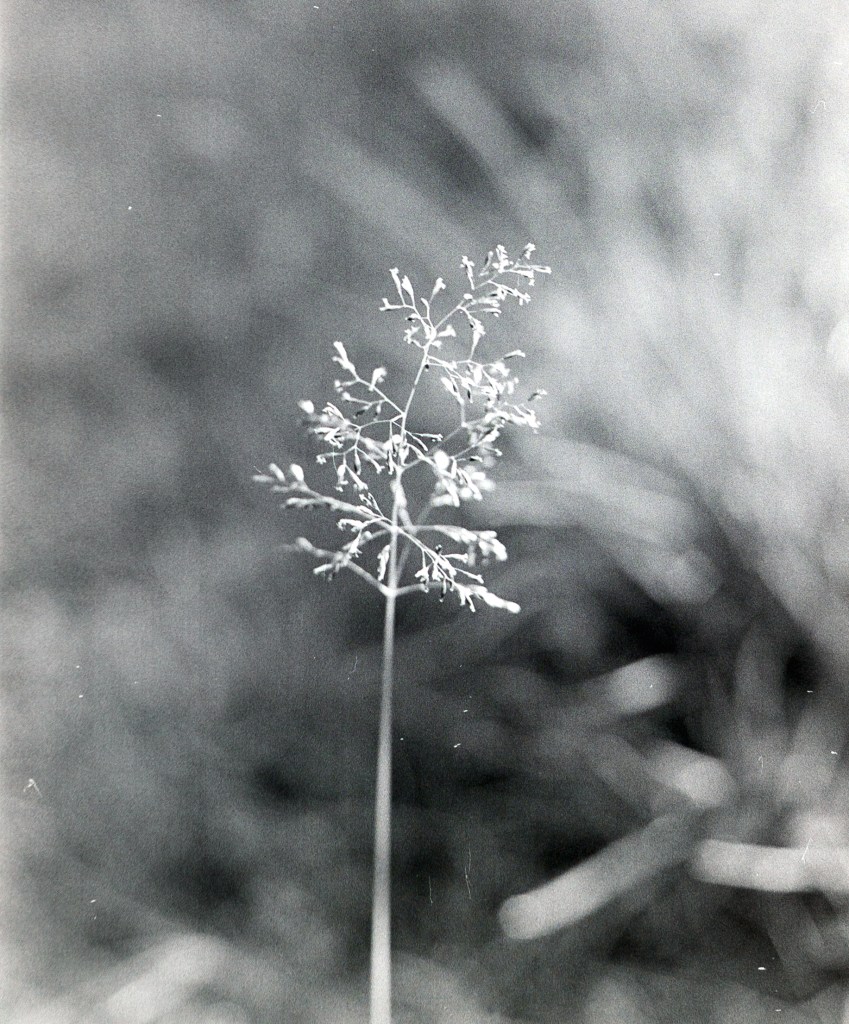
I then figured that a long lense like this would most likely produce a lovely bokeh and I chose to see if I could get some lovely macroesc shots of plants and flowers. The Bokeh is silky and looks really nice to my eyes.

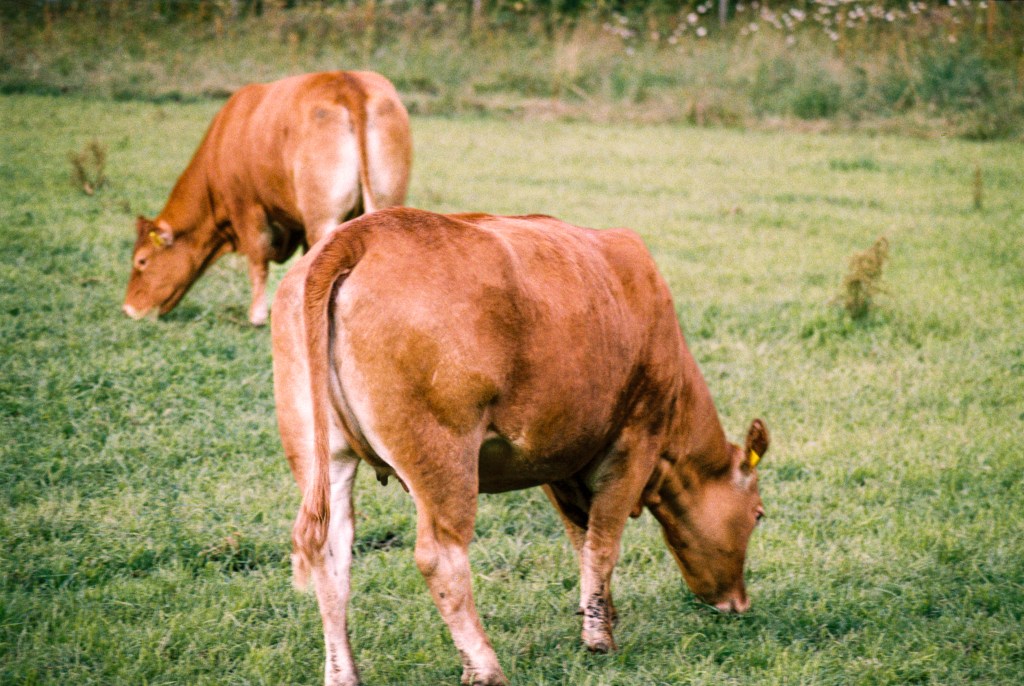
My next experiment was keeping a roll of expired Colorama 200. A consumer grade film made in the EU. My guess based on the colors is that we are talking about a repackaged Agfa Vista 200, but the film is expired and it is difficult to know what is attributes to the film and what is degradation over time. The film is 20 years expired and was shot at ISO 50. I managed to shoot it decently hand held on my Nikon F80 and I got a few interesting shots from this combination as well. My main focus for this film was some cows grazing in a field next to where I live. I made these shots when I was out strolling with my little daughter trying to get her to nap.

For the last outing I also shot some images with the 50mm f1.8 because I went to an interesting location I have visited a few times before.

The images above are shot with the 50mm lens and a yellow filter for contrast. I didn’t find the same luck on this outing with the longer lens, and I have to go for another outing with black and white. These images are shot with the Olympus OM1 and a roll of Kentmere 100. I developed it myself with Adox Atomal 49. A fine grain developer that I have found to be fantastic. It has a bad reputation for being highly toxic, but so are most developers anyway. Considering that the SDS-sheets we look at are referring to the powder and not the stock of working solutions, I would argue that most developers are stock and working strength are reasonably safe when taking proper precautions. I always use gloves, eye protection and a dust mask when mixing the solutions. I also use gloves and eye protection when developing with a liquid solution.

My favorite image from the 400mm on this trip is this little spruce.

I have truly enjoyed working with this project and I will keep working on my long-lens skills. You might see more here in the coming months.

Shooting Boots film?

A short while ago, I shot a roll of expired medium format film and got «interesting» results with a lot of mottling and so on. I am not a very frequent user of expired films, but once in a while, I get hold of some expired film, and I do not mind trying it out either. Normally, the expired films you get hold of are your big manufacturers such as; Kodak, Ilford, Fuji and their friends. However, in the late 1990s and early 2000s, there were a huge number of rebranded films and budget options that are not present today.

In this entry, I am writing about my tryout of one of these films. A film sold in the pharmacies back in the day. The Boots Universal 400. Which film this actually is, is not easy to read out of the packaging or negatives. The negatives are fairly anonymous without much writing on them, and on the box, it only says that it is made in the EU for Boots Pharmacies in England. The EU-part leads my suspicion to either Agfa or Ferrania as the real producer of this film, but I will not make any claims. Please let me know in the comments if you know.

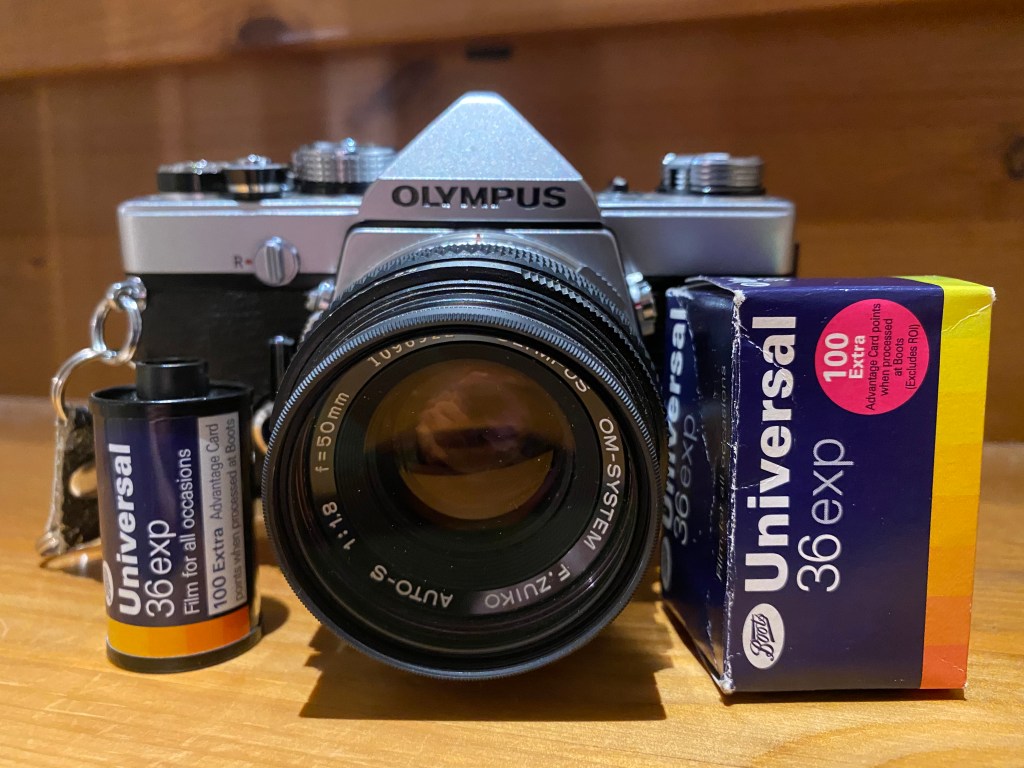
My equipment and film for this entry. Olympus OM-1 and the Boots Universal 400. Sadly, I did not get the extra 100 advantage card points from Boots, because I developed the film myself at home.

I chose to go with the Olympus OM-1 as it was a very cold morning. The temperature was -20 degrees when I arrived at the location, and the Olympus has an impeccable record of always functioning in cold weather conditions like the ones today.

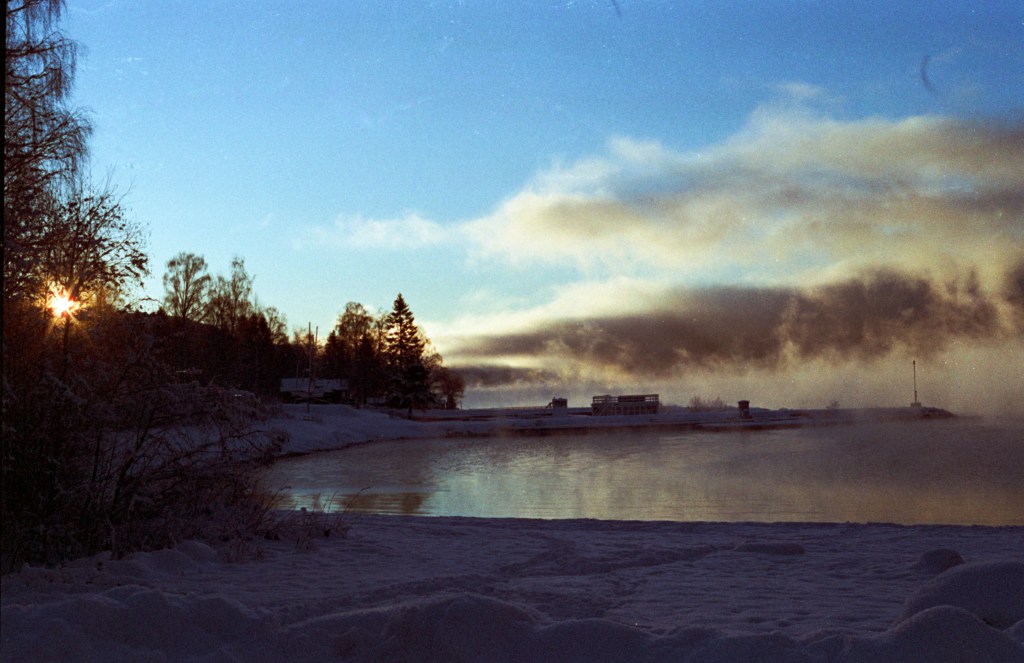
Because the film expired in 2006, I chose to abide with the rule of thumbs, one stop pr decade, and I metered my shots at ISO 160, and did some slight bracketing just in case. My expectation from this film was slight colour casts and an increase in grain, which I indeed got. The colours were severely off in many of the shots, rendering the misty lake in everything from strong oranges to fiery reds. Instead of making heavy colour corrections in post-processing, I chose to go with the colours the film gave me, and I did not do any grain reduction either.

Boots photographic aquarelle – Olympus OM-1 w Zuiko 50mm f1,8 lens. Boots Universal 400@160

Some of the images got a nearly «Aquarelle like» mood to them, and I find them quite interesting and beautiful in their own way, even though they are clearly not the most spotless, nor grain free images I have taken by any means.

Reklamer

Another interesting thing from this morning, was the the lighting conditions changed so much over the 45-60 minutes I was out shooting. The previous image was taken at the beginning of the session, and the following was image nr 36 on the roll.

Boots photographic aquarelle – Olympus OM-1 w Zuiko 50mm f1,8 lens. Boots Universal 400@160

Shooting films with huge amounts of grain is not normally my thing, but sometimes grain gives you images a little extra punch in the mood and makes them more interesting. In this case, I think that is what the grain did. It gave the images a level of abstraction that I find very pleasing. But I appreciate that this might not be everybody’s cup of tea.

Trying out an expired film

I am normally not too enthusiastic about expired films. For me photography is more about precision and less about experimenting. However, a while back I bought a camera online, and with it came a full package of Svema Foto65 expired in 1986. As this package was full and dust-free, I guessed they had been stored properly, maybe frozen or refrigerated over time. Therefore I decided to give these films a go.

As they are 120 films, I rolled one of them into my Bronica ETR, and went back to my favorite old derelict train station. If you have followed my blog for a while, you will have seen me shooting at that location before. I chose to rate the film at ISO 20 and bracket one stop in each direction. As it turned out, ISO 10 would have been my best pick for this outing. The films original box-speed was once ISO 80, and with the «one stop pr decade» 10 would be the correct speed I guess.

Because I feared very low contrast in the images, I chose to shoot with an orange filter to give the film some extra contrast boost. It seems to have worked out the way I expected it to.

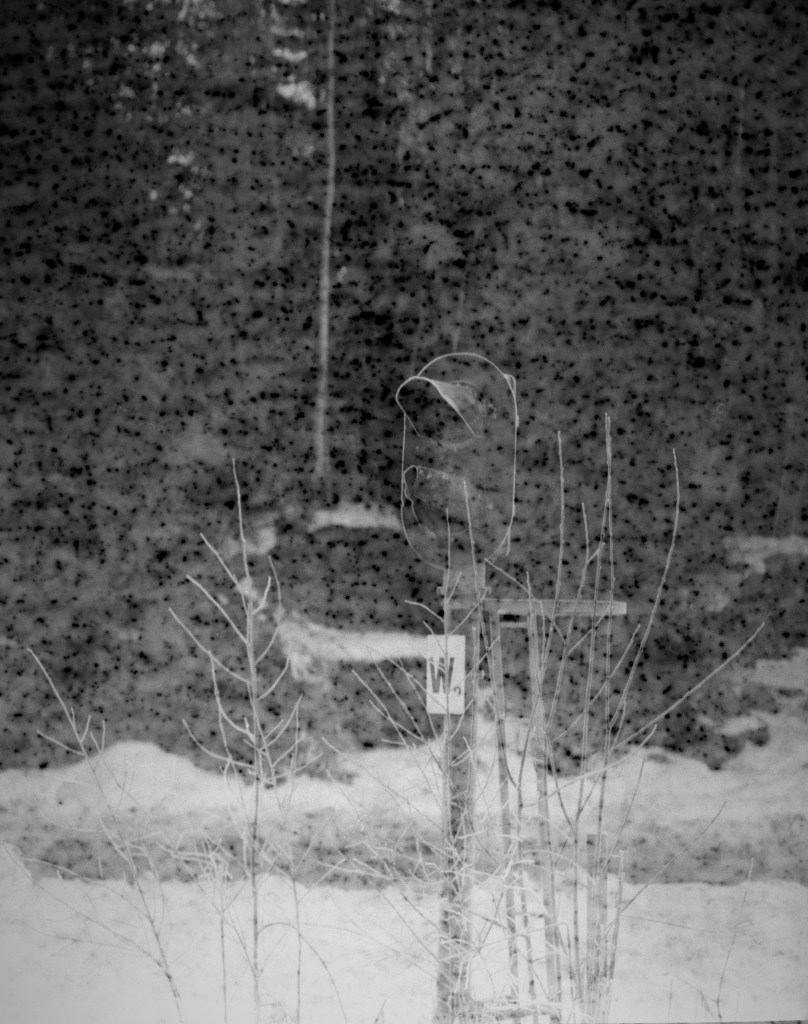
Bronica ETR w 150mm Zenzanon f3,5 – Orange filter – Svema Foto65 @Iso10 – Rodinal 1+100 70min

Despite the nasty mottling all over the frame, the Svema Foto65 seems to have been a very fine grain and sharp film once. My guess is that this mottling has come off the backing paper, there are visible discoloration on both the negatives and the backing paper. If I am mistaking, please let me know in the comments. All in all, the Svema performed acceptably I find, and maybe a well kept roll of this film would still make really nice images, despite its age.

Reklamer
Bronica ETR w 150mm Zenzanon f3,5 – Orange filter – Svema Foto65 @Iso10 – Rodinal 1+100 70min