A fun little German one

The analog camera market is very focused around a few certain brands and models such as the Leicas, Nikons, Hasselblads and Zeiss’s. But cameras that does not hit the «name requirement» can be just as good and fun to shoot with. Today, I went out to a flea market run by some friends and I found a little interesting camera that I just had to buy. The camera in question was produced from 1957 to 1961 in Germany. With such a short production span, only four years, it is an interesting little camera that probably didn’t hit the market as well as its producer would have hoped.

The camera is an AGFA AMBI SILETTE. A little rangefinder camera with interchangeable lenses and some very clever patents on it. The camera has a Synchro Compur leaf shutter and its highest shutter speed is 1/500th second. When changing between lenses, you can use a little switch on the top to set the viewfinder up with different lines to help you compose while using the rangefinder unit. I found the rangefinder on this camera to work beautifully even after all these years, and the main lens, the 50mm f2.8 Color Solinar is clean and appears to be rather sharp based on this test. The tele lens that also came with it, the 90mm, has severe fungus on it, and I’d guess it would affect the image quality, although, I have not really tried it.

The AGFA AMBI SILETTE – straight from the flea market.

Since I knew that a camera purchase would be a possibility, I brought along a roll of Fomapan 100 and two camera batteries. The Agfa is fully mechanical, so the batteries were not used, but I loaded the roll of Fomapan 100 and went for a little walk at Husodden, to try it out and see how it felt to use. Mind you, I hadn’t really read anything about this camera in advance and I had not even heard about this particular model. So this is a true first impression entry.

My first little quest, was realizing that the rangefinder and viewfinder is hidden behind a little covering lid that you have to flap open before using it. This is a really clever invention both because it protects the cleanliness of the glass behind it, but also because it works as a sun shield making focusing easy and smooth without any disturbing sun-glare. After that, the camera is very straight forward and simple to use.

Agfa Ambi Silette – Agfa 50mm f2.8 Color Solinar lens – Fomapan 100 Ilford ID-11 1+1

Age is noticeable on this camera, but it seems like it just will need some use to get back into life. Both shutter speeds and aperture settings seem to be in reasonable working order, but I did not try the longer shutter speeds this time as I shot hand held in the September sunshine. My guess is that shutter lag will be present from shutter speeds lower than 1/60th and that the lens will show diffraction at f22. But this must be for another time.

The most important error I found with this camera, was the fact that my first shots were all double exposed, and I only got a few decent shots on my roll. This seems to be some lag due to lack of use, and I am sure this will sort itself out with some use. I will not give this camera a CLA. That would probably cost more than the camera is worth in 2021 money.

An old barn by a field – Agfa Ambi Silette – Agfa 50mm f2.8 Color Solinar lens – Fomapan 100 Ilford ID-11 1+1

The shot above, was the first shot on the roll that turned out to be just exposed once, and no images after this one showed any sign of double exposure. This leads me to believe that there probably isn’t anything wrong with the film advance other than lack of use.

The focus ring was light, but still firm and very pleasant to use, as well were the rings for setting shutter speeds and aperture opening. The camera seems to have been very well looked after and I believe it to have been serviced before it was stored. It can indeed seem like that. The back door on the camera is somewhat sticky, and the camera came with one of those horrendous leather cases that looks good enough, but makes loading and unloading film very unpractical and the camera bulky and larger than necessary to use. I took it out of the leather case when I used it, and there are no signs of light leaks from the camera.
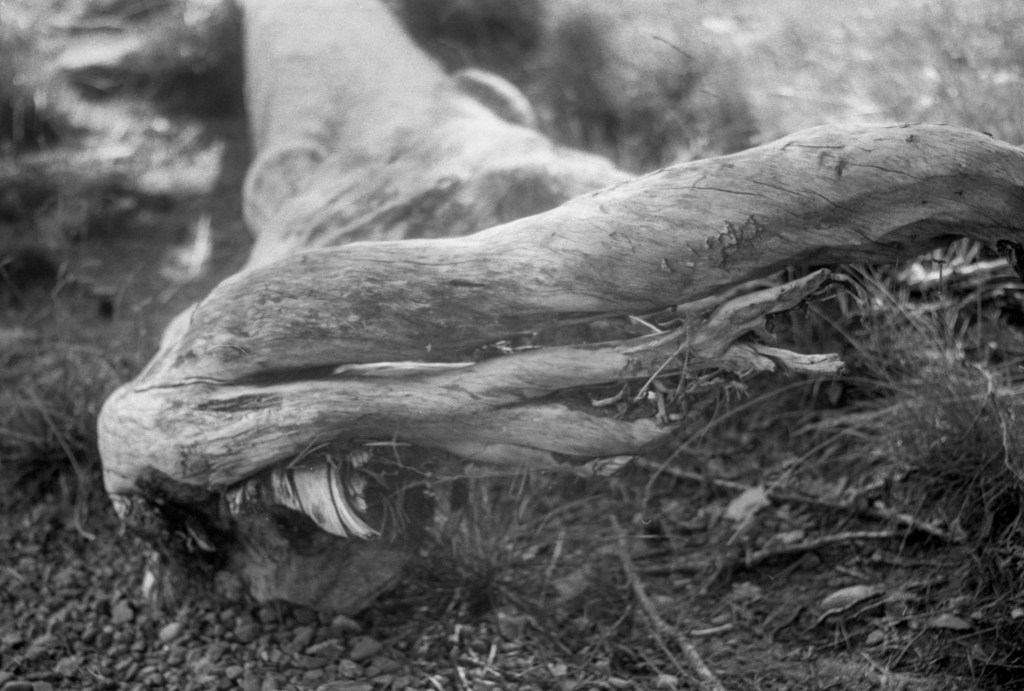
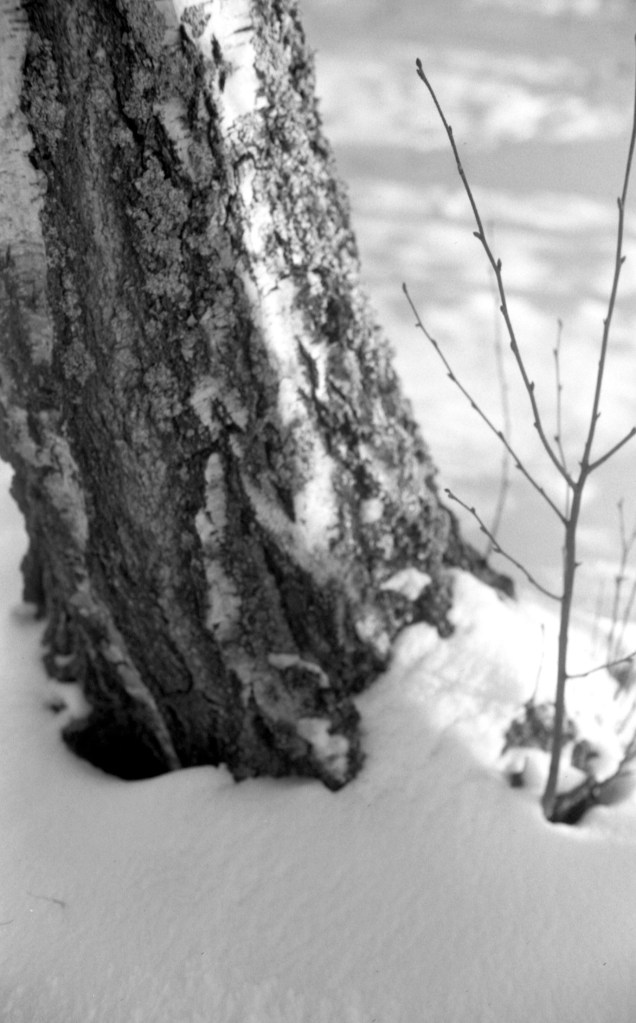
A tree root – Agfa Ambi Silette – Agfa 50mm f2.8 Color Solinar lens – Fomapan 100 Ilford ID-11 1+1

All in all, the little outing with the Agfa was a fun experience, and I will definitely be shooting this camera again. The only slight annoyance is the patent for rewinding the film. It is one of those that doesn’t have a lever for rewinding but just a small knob that you wear your fingers off while using. But with a camera this good, it is worth some sore fingers.

The Nikon-guy using a Canon.

The endless debate.. The friend-breaker. The source of family feud and potentially divorces. Canon or Nikon. People tend to be very sworn to one of them and show some (somewhat humorous) hatred for the other. Personally, I usually shoot Nikon Cameras. I own a fair amount of them both digital and analog, and the main reason for my choice of Nikon over Canon, is that I find their ergonomics to suit my hands and style more than the Canons. If shown images or specs, I am not able to tell any difference between the two brands, and I see them as equally brilliant manufacturers.

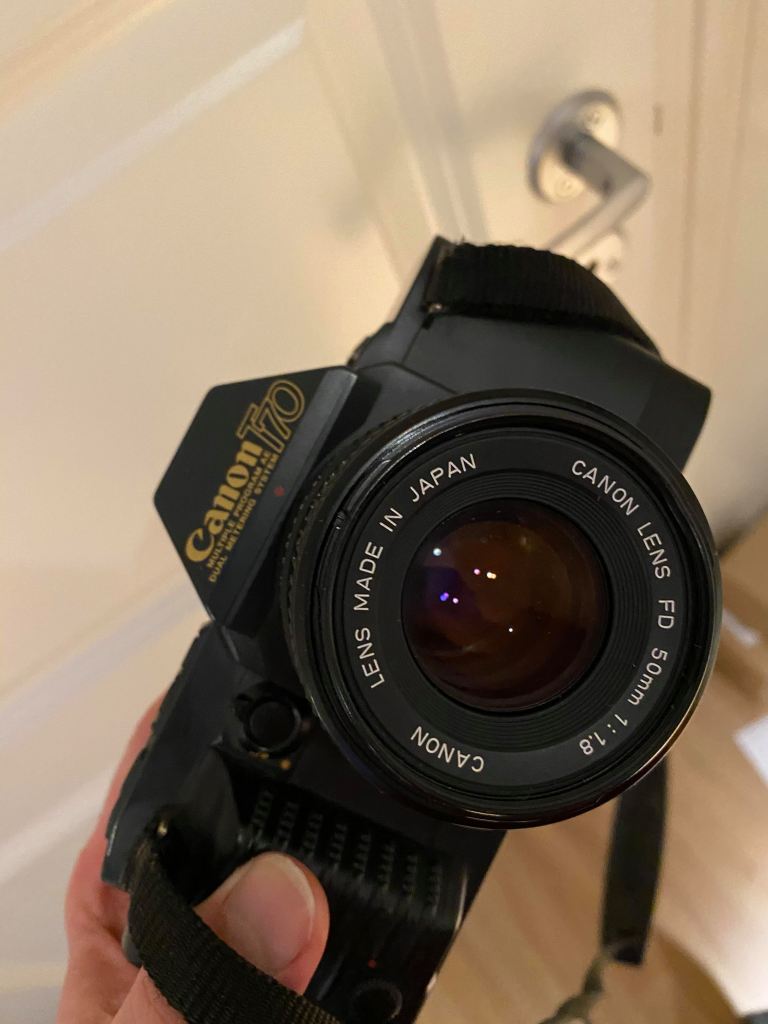
Even so, I have never before very recently owned a Canon camera. A little while back, I came across a Canon T70, and its extremely complex nature sparked my interest. Its incredible «inboard» 8 bit chip and how it was sort of the bridge between Canons older generation of very manual cameras, to the soon-to-follow EOS systems was, I found, intriguing and I started my search to get one for CC-adventures money – less than 100 Euros. I got lucky, and found one way cheaper with 50mm lens included. As a very happy man, I was now the owner of my first Canon camera, a T70.

My very clean and nice Canon T70 from the mid 80s.

Operating a new camera is always interesting, and the T70 has a very interesting button based menu system. It does not read DX-coding, but you set the ISO by pressing the ISO-button and one of the two buttons on the top over the LCD-screen named «Up» and «Down». It is programmed to go 1/3 steps and setting the ISO is very easy and the buttons are big enough to be operated with gloves in winter time.

Reklamer

Another lovely feature with this camera, that I notices straight away, was the fact that it takes AA batteries instead of the CR123A batteries. Both these types are readily available and can be picked up cheaply in most shops, but you more often tend to have AA batteries lying around than CR123A, and hence you are less likely te find yourself in a Cannot Shoot Situation with the T70.

I also like the different safety features it has. You need to press a button to unlock the release mechanism for the film loading door, preventing you from accidentally opening it «mid roll». It has an extra slider beside the rewind button, preventing you from accidentally rewinding the film too early, and it has a little button to unlock the «Power ON» button. A feature that helps you save battery. On the downside, mine has clearly a tiny light-leak, but nothing that in any way affects the images.

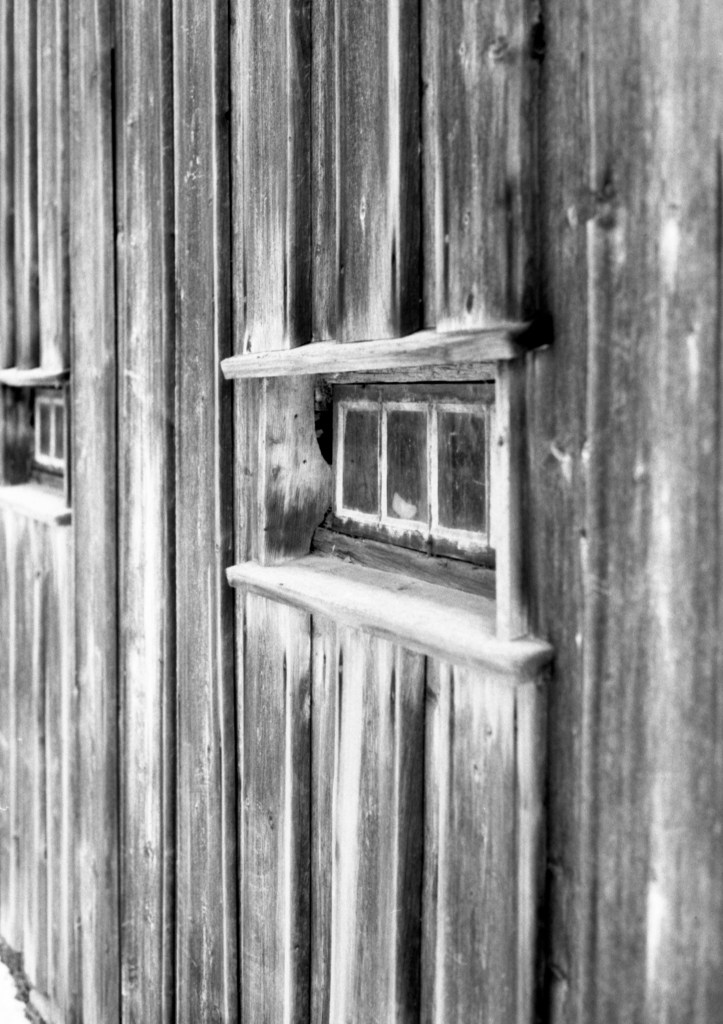
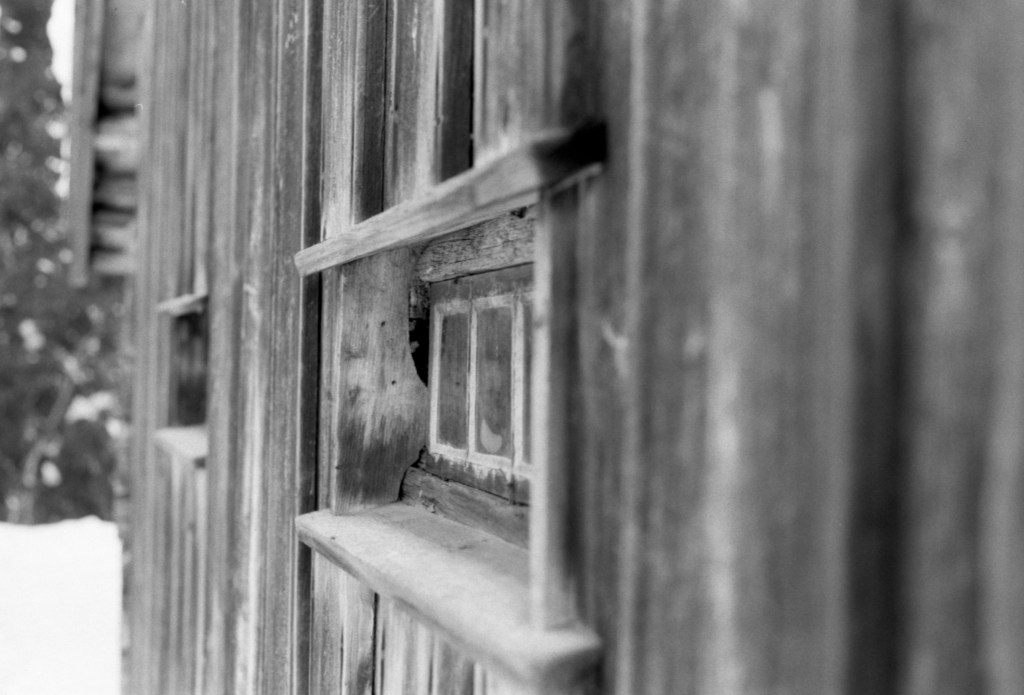
Canon T70 w Canon 50mm f1,8 FD lens – Fomapan200@160 – Adox Atomal 49 Stock

Using the camera is a real treat. It is very easy to focus and set, and the main setting is an aperture priority where you set your aperture and the camera will find the suiting shutter speed to go with it based on your entered ISO-speed. You also have settings for full Program-mode and you have two additional settings, one called «wide» where the camera will bias towards a higher f-stop to get deeper depth of field, and one called «TELE» where it will bias towards higher shutter speeds and shallower depth of field. I did not try out these fully automatic modes in my first tryout, but based on the function of the rest of this camera, it would surprise me if it wasn’t spotless.

Holding the T70 is an interesting sensation. The plastic body feels very cheap in you hand, but it is as heavy as a brick and has the noise-level of a helicopter. Even so, this camera feels like what it is, a quality piece of kit, with that feel of «80s science fiction» over its design and the «buttonyness» of an old Volvo dashboard.

This is a very nice camera to use, and clearly one I will use again many times.

Trying out a Konica Autoreflex TC (Part3)

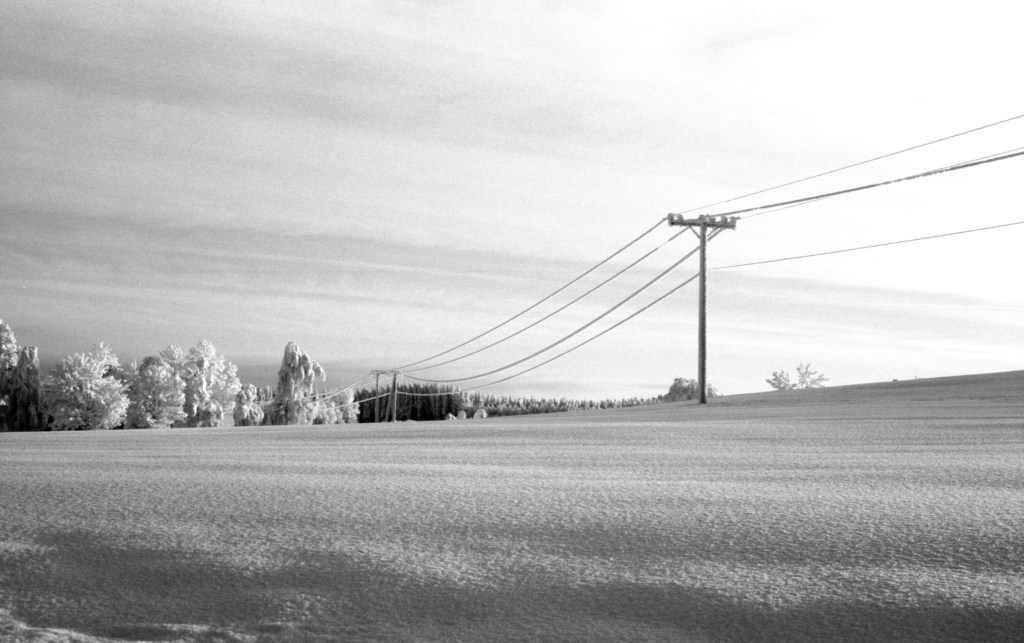
As you have seen through my previous posts, I have been playing around with a Konica Autoreflex TC lately, doing different styles and types of photography with it and different films. Some days ago, I took it out once again with a roll of Fomapan 100and a yellow and a graded orange filter. I went for subtle snowy shapes in nature to test out both the sharpness of the lens, and to once again try the Fomapan 100. Over 2020, I shot many rolls of Fomapan 100 to test it out and get familiar with that film, and I must say that Fomapan 100 is a film I really like shooting, and that I find to give very fine grain when developed in Kodak X-tol at stock level, and that I get very nice results with it for most of my photography. However, this is my first test of this in snowy conditions.

Konica Autoreflex TC w 50mm Hexanon f1,8 lens w yellow filter. f11 1/125th Fomapan 100@100 Fomadon Excel 1+0

I did not have Kodak Xtol at this moment, because I’ve recently had two batches that split. I initially thought this was my mistake and that I hadn’t mixed it properly or made some other mistake with it; however, after some research online, I got leads about a bad batch of Xtol that had this issues. The date I bought the two bags of powder correlated well with the production and estimated sell-dates of the problem batch. Even though the two batches didn’t cause me any issues, I have not bought Xtol for a while. I will, however buy another batch some time soon. But I had a few bags of Fomadon Excel left, which is basically Foma’s take on the Kodak Xtol.

Reklamer

Previously, I used to have Xtol in the spring, summer and autumn-time, when I shoot most film, and Fomadon Excel in wintertime, when I shoot less. When handeled properly, I cannot see difference between negatives developed with Excel and Xtol. One difference though, is that Fomadon Excel can be slightly more challenging to mix. I have found that mixing it as you wold mix Ilford Chemistry, with warmer water, makes the powder dissolve better and easier, and that is how I mix Fomadon Excel. For this particular process, I also used Foma Fixer and Foma Stop bath as well. So this is a all around Fomapan Process.

All in all, I am very happy with these images. They were taken very quickly whenever I saw something that I found worthy of shooting, and I find that they make the sky come forward in a very pleasant way.

Playing around with a Petri 7s

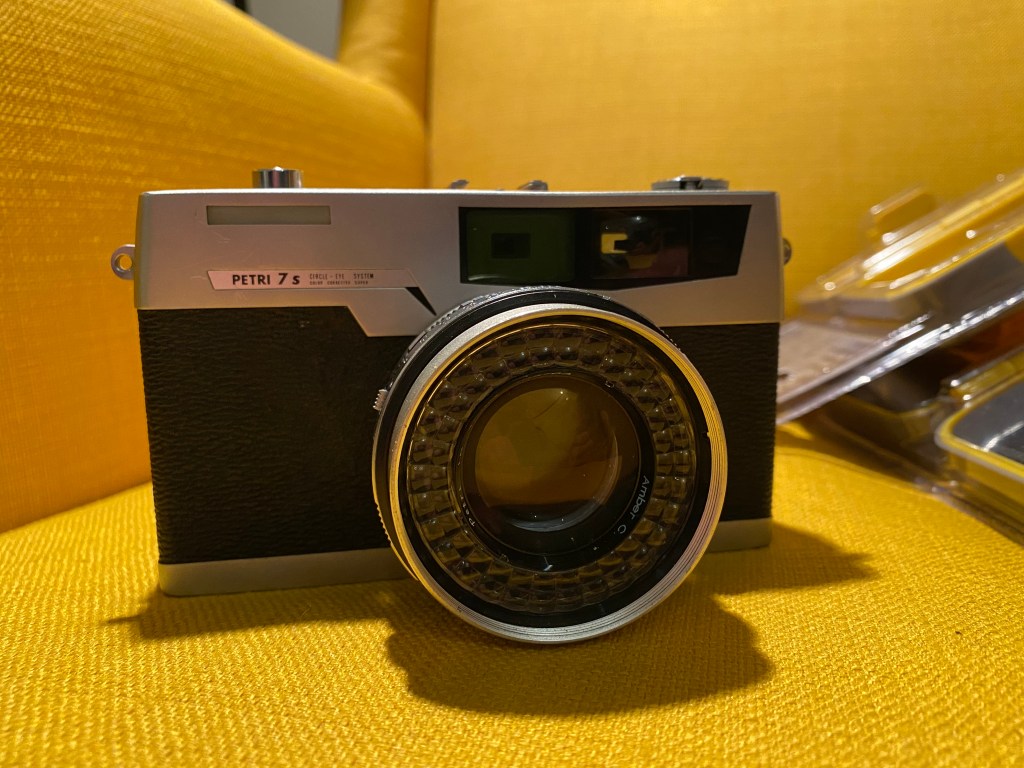
If you have followed this blog for a while, or read some of my posts, you may know that I have a Petri Racer that I really love shooting. I find the little Petri to be very reliable, accurate, light and handy as well as giving the images some character. I can’t really put my finger on why I like that particular camera so much, it is just a camera I enjoy shooting. A few weeks ago, I came across a Petri 7s on an auction online, and I won it on a very low bid.

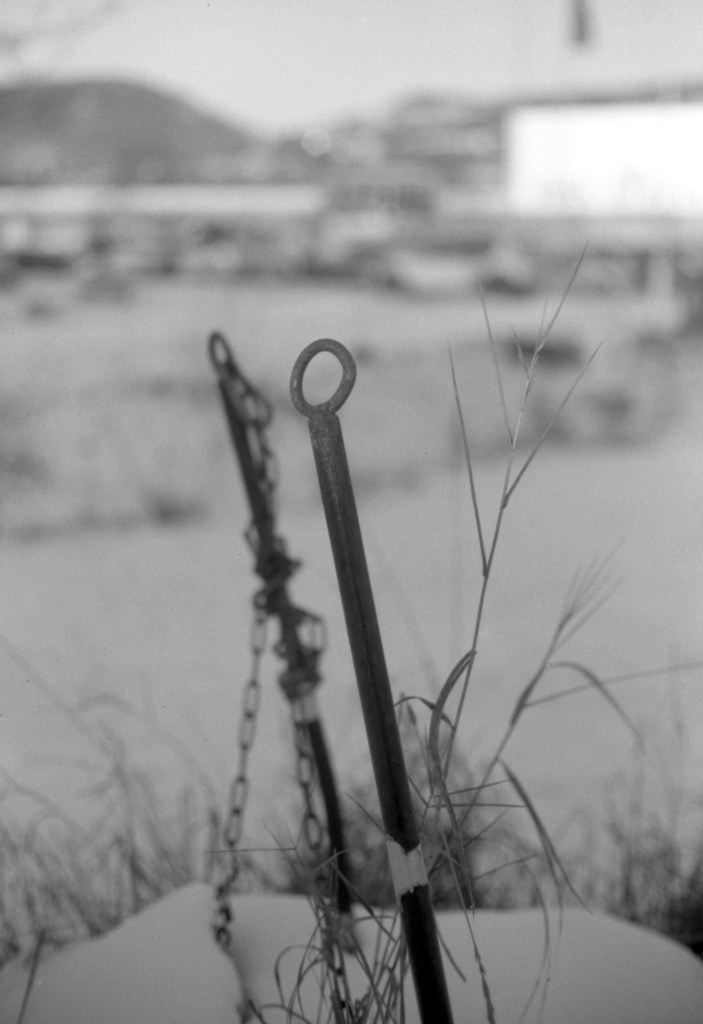
The reason I was interested in this particular 7s was that it had the f1,8 lens, which some sources claim to be a six element lens with an interesting bokeh-pattern. Whether it is six element or four, as the f2,8 version, does not necessarily mean that much to me, but I do love nice bokeh and sharpness. For the very low price that I payed, it was worth the gamble at any rate.

The Petri 7s f1,8 Rangefinder camera w. amber coated lens

A gamble it surely was as this camera has a few personality traits that is very specific to this particular one. First of all. The Rewind-knob is loose, and you cannot turn the camera on its head without risking the film to lose tension as the rewind knob disengages. Another interesting «asset» this camera has, is a dodgy lock on the back. This means you will get the luxury of using electrical tape to secure it from opening mid-roll. In addition to this, the camera invites to a creative approach to focussing, with a rangefinder (although rather dim and dodgy) that jumps in and out of «sanity» a few times pr shot. I ended up guesstimating my focus because I trusted my own eyes more than the rangefinder unit.

Reklamer

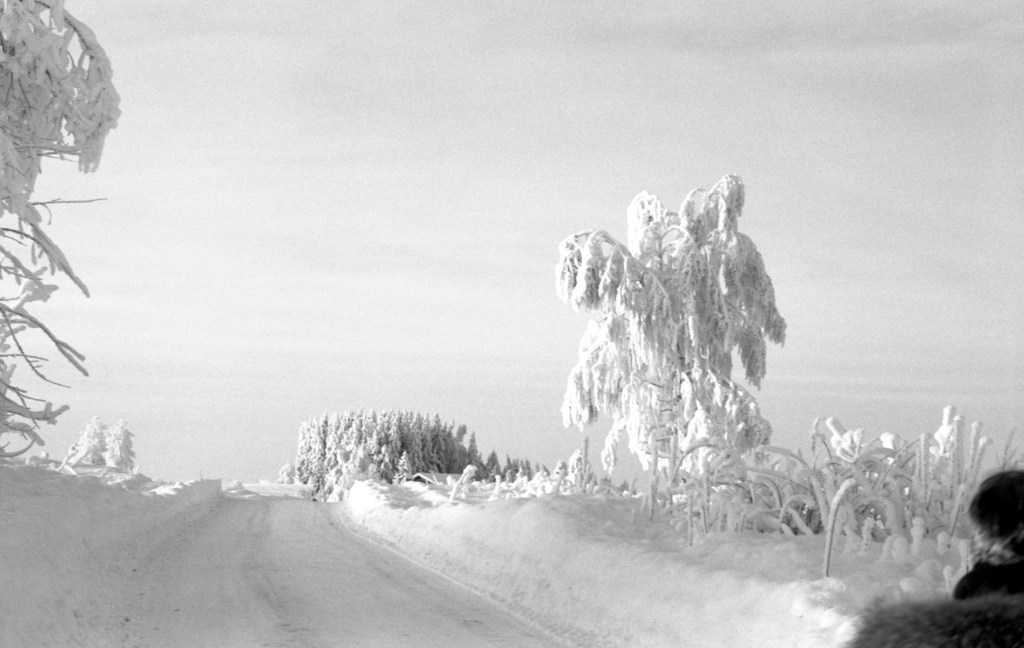
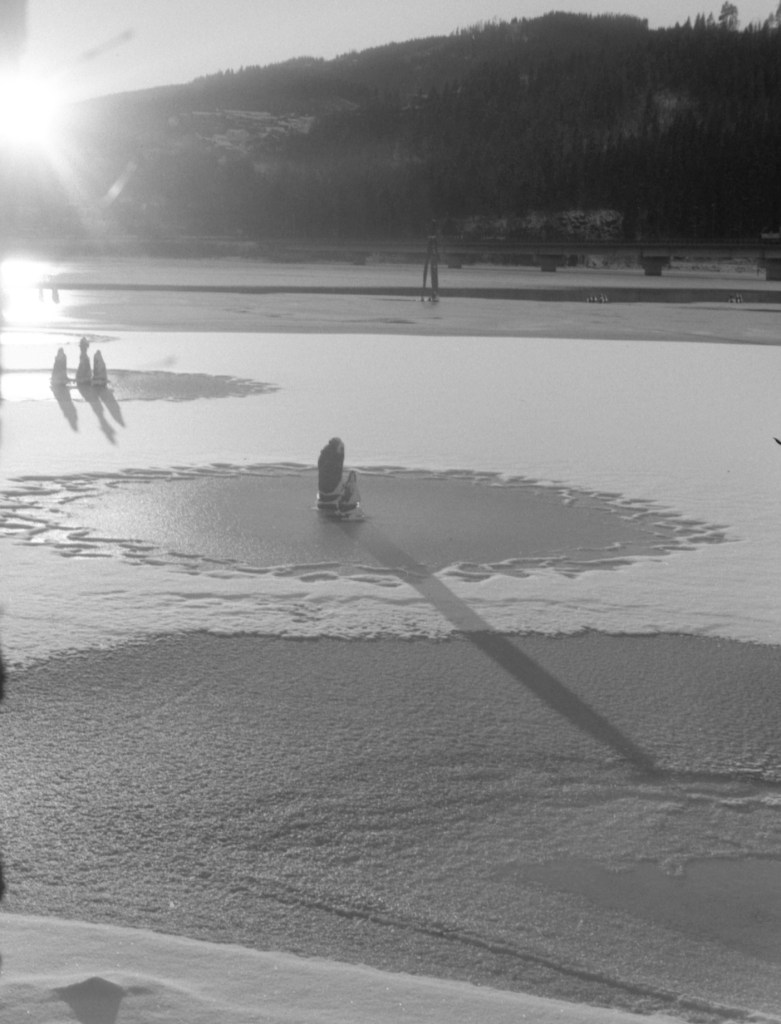
These faults aside though, the aperture settings and shutter speeds are fairly accurate. When I took it to Lillehammer to try it out on the newly fallen snow, I got very good negatives. My test was done with half a roll of Fomapan 200, which I because of the lighting conditions shot at 100. I shaved 20% off the development time compared to box-speed, and ended up at 6 minutes with Xtol Stock.

As you can see, in some of my images, my lens fogged over. However, this is not lens-haze, but rather an issue of a swift temperature change and a forgetful photographer who didn’t remember to wipe the lens before shooting against the sun.

Derelict train station

I’ve always had a fascination for derelict buildings and other traces of human civilization that is let aside and forgotten. Today, I brought out one of my good friends, the Olympus OM-1, to an old, derelict train station a short drive from where I live. I equipped the Olympus with a roll of Fomapan 100 and the razor sharp 50mm Zukio 1,8 lens. I brought with me a selection of colored filters to boost contrast and play with the light in the lifting sun and shifting blue skies.

Valdresbanen, the railway I worked by, was closed for passenger traffic in 1988. Some freight trains were ran there later, but the old station buildings have been untouched since this time. Quite sad to think about the number of shut down railways in Norway really. Nevertheless, the old buildings are still characteristic and beautiful in their own way.

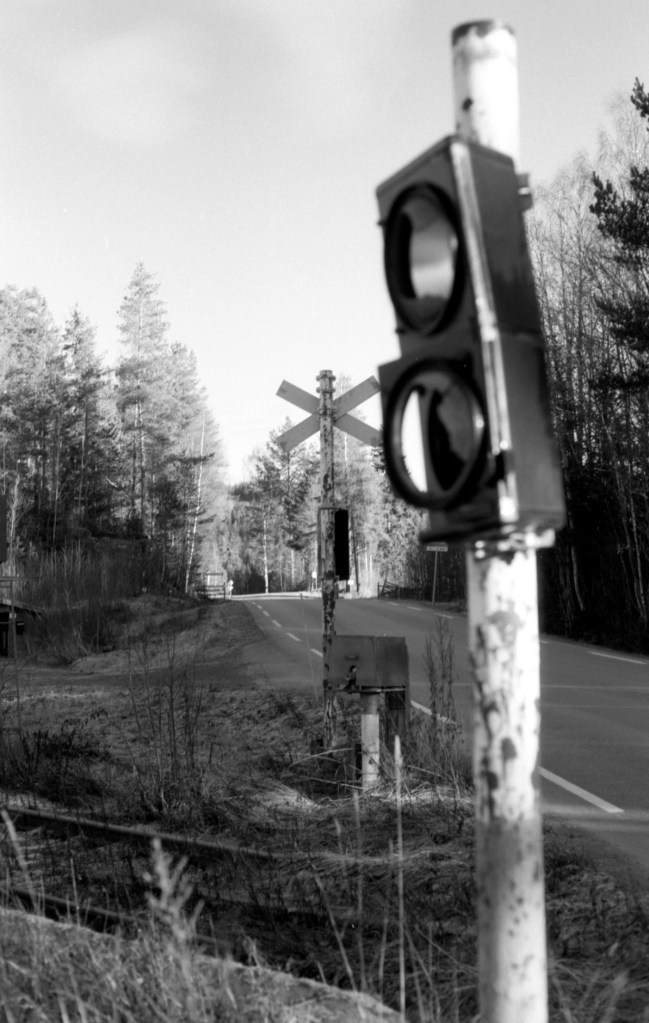
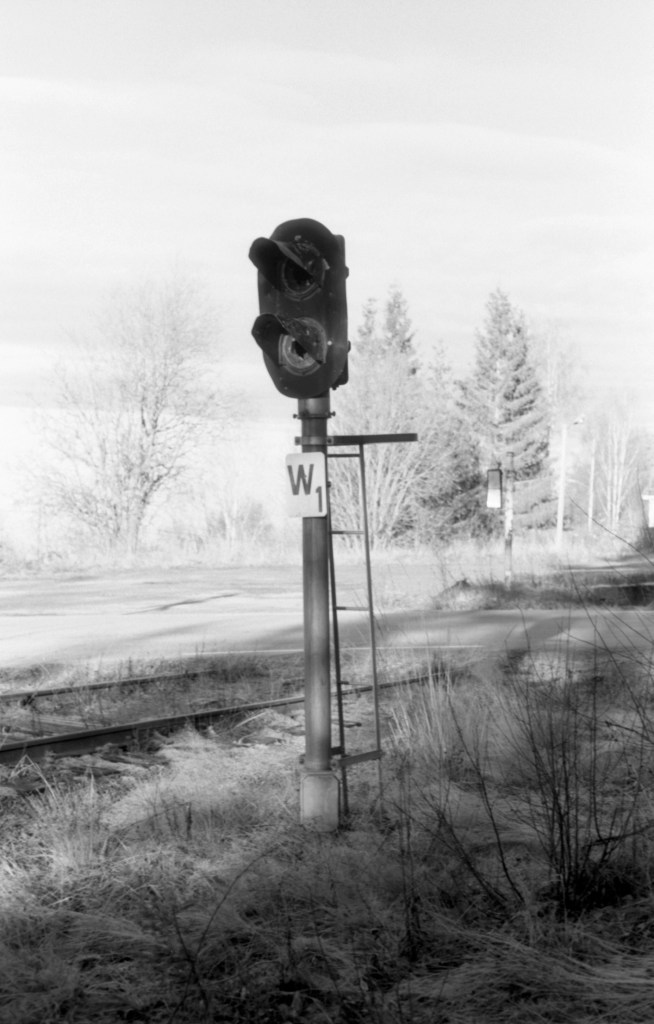
Today, I went to Fall station which is very close to Hov in Søndre Land municipality. This was never a big and populous station, and the only building there is a little shed where people would wait for their train to arrive. The main station building was burned down in 1982 by the Norwegian railway company and the shed was built after that. I have shot portraits at and around this location multiple times, but I have never before gone there to explore the location as a subject of its own.

Reklamer

I have never tested out the filters I used today, so I did a lot of bracketing to understand how they work and see how to best compensate for their function. I only got to use the yellow and the orange filters, as they were what I found to match the lighting and location the best.

I did some playing around with different items left aside by the old railway, and did heavy bracketing. I figured that the Orange filter needs two stops of compensation, while the yellow needs a bit more than one from how I interpret my negatives.

Working with dark colored filters can be a bit challenging due to the light loss, and hence difficulties to focus. With the Olympus, however, I found that working with colored filters were a dream. The viewfinder is wide and bright, and there was never any difficulties getting the focus where I wanted it with either the yellow or the orange filter.

The foggy train station lies up a steep hill, and at the bottom of this hill it was a hazy and relatively thick fog, removing pretty much all background scenery from many of my images. The station itself, however, was above the fog, and was shining for itself in the misty and cold morning light.

Reklamer

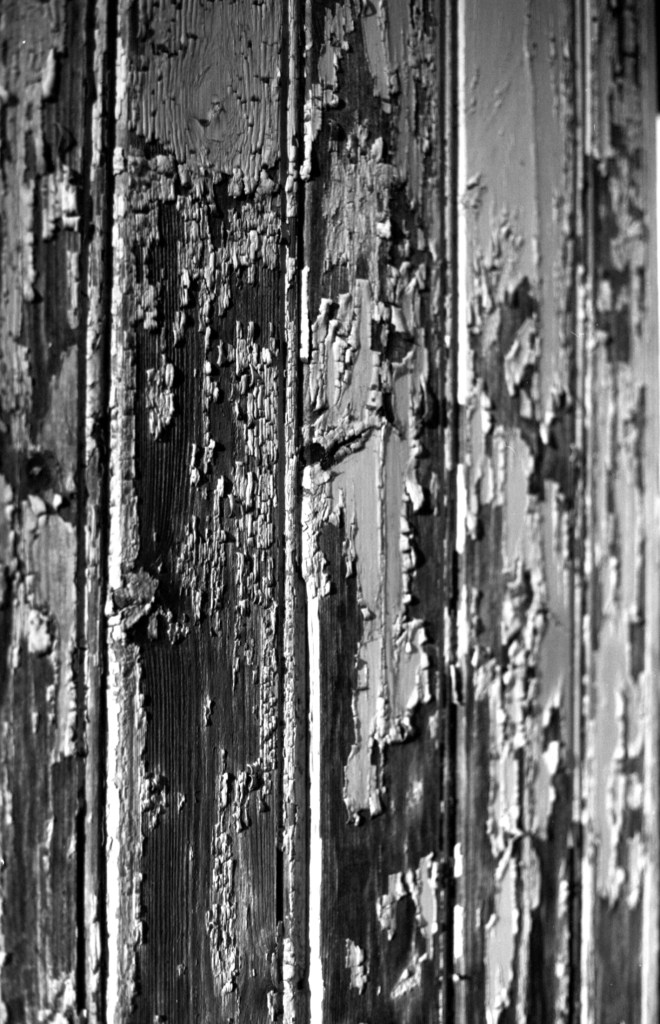
I also shot an image of some crackled paint on the station building. I chose to shoot this with the yellow filter and I went all the way down to f2,8 to get a very shallow depth of field, but retain some sharpness. I haven’t tried this lens at f1,8, and even though I guess it would work very well, I did not want to risk a too shallow depth on this one. I forgot to note down my shutter speed for this image, so that information is not provided.

Crackled paint – Olympus OM-1, Zukio 50mm f1,8 – f2.8. Fomapan 100, Xtol 1+0. yellow filter

All in all, I enjoyed this little shoot, and I once again remembered why I love to shoot the Olympus. This is such a pleasant camera to use and its handy size and bright viewfinder makes it a great choice for all kinds of shoots.

All images are unedited scans from my Epson V600.

Landscapes Fomapan 100

As mentioned in previous posts, I made 2020 my year of getting familiar with the amazing and affordable Fomapan 100.

Back in July, I was traveling around in Northern Norway with the mission of taking photographs and testing out some old equipment. In this edition, an Olympus OM-1 and a roll of Fomapan 100. Along I also brought a set of colored and graded filters that I found cheaply online at Kent Faith Project. I have been curious to try out some square filters in my photography and also to try out color filters with gradient effects.

Reklamer

My Olympus has a Zukio 50mm lens, which is extremely sharp and well focused. But the filter-ring was slightly dented, so the space-ring for 49mm did not quite fit. I had to use some heat and some pliers to round it back out again, and I managed to fix this without damaging anything.

Photo taken without any filters on the lens. For reference use only.

The second day of my trip, I had to catch a ferry in Bindal. I thought I would have good time, but miscalculated and suddenly had a two hour wait in the middle of nowhere without anything to do. I decided to do some test-shooting with the Olympus, a Fomapan 100 and an orange and an orange gradient filter.

I shot sunny 16, and with the available light, I chose f8 and 1/125 for my shots. The image above shows the results without a filter. Shows a wide variety of grays and the lovely fine grain of the Fomapan 100.

Shot with the gradient filter from orange to UV

In the shot above, I used the gradient filter organge/clear. I did bracket the shots here, since I was not 100% sure how the gradient would turn out, but I actually fell for this, slightly under-exposed image, because of the lively grays in the distant mountains. I love the way the gradient filter made the skies pop without underexposing and losing detail in the other parts of the image.

Taken with the orange filter. Compensation used was two stops.

For the orange filter shots, I also bracketed. I chose to use this image, where I compensated two stops with the shutter and shot at 1/30 with f8. To the right you can see the savior arrive. The ferry I had been waiting for, and hence this was one of the last shots before I returned to the car and continued my journey.

Reklamer

All in all, I am falling in love with the Fomapan 100. When developed in Xtol 1+0 it produces a smooth, but characteristic grain that gives the images a natural and somewhat «raw» look that I truly adore.

Also the Square filters from Kent Faith are great stuff to play with, and I will upload another entry at a later time focusing on these.

Thank you for reading!