
The endless debate.. The friend-breaker. The source of family feud and potentially divorces. Canon or Nikon. People tend to be very sworn to one of them and show some (somewhat humorous) hatred for the other. Personally, I usually shoot Nikon Cameras. I own a fair amount of them both digital and analog, and the main reason for my choice of Nikon over Canon, is that I find their ergonomics to suit my hands and style more than the Canons. If shown images or specs, I am not able to tell any difference between the two brands, and I see them as equally brilliant manufacturers.
Even so, I have never before very recently owned a Canon camera. A little while back, I came across a Canon T70, and its extremely complex nature sparked my interest. Its incredible «inboard» 8 bit chip and how it was sort of the bridge between Canons older generation of very manual cameras, to the soon-to-follow EOS systems was, I found, intriguing and I started my search to get one for CC-adventures money – less than 100 Euros. I got lucky, and found one way cheaper with 50mm lens included. As a very happy man, I was now the owner of my first Canon camera, a T70.
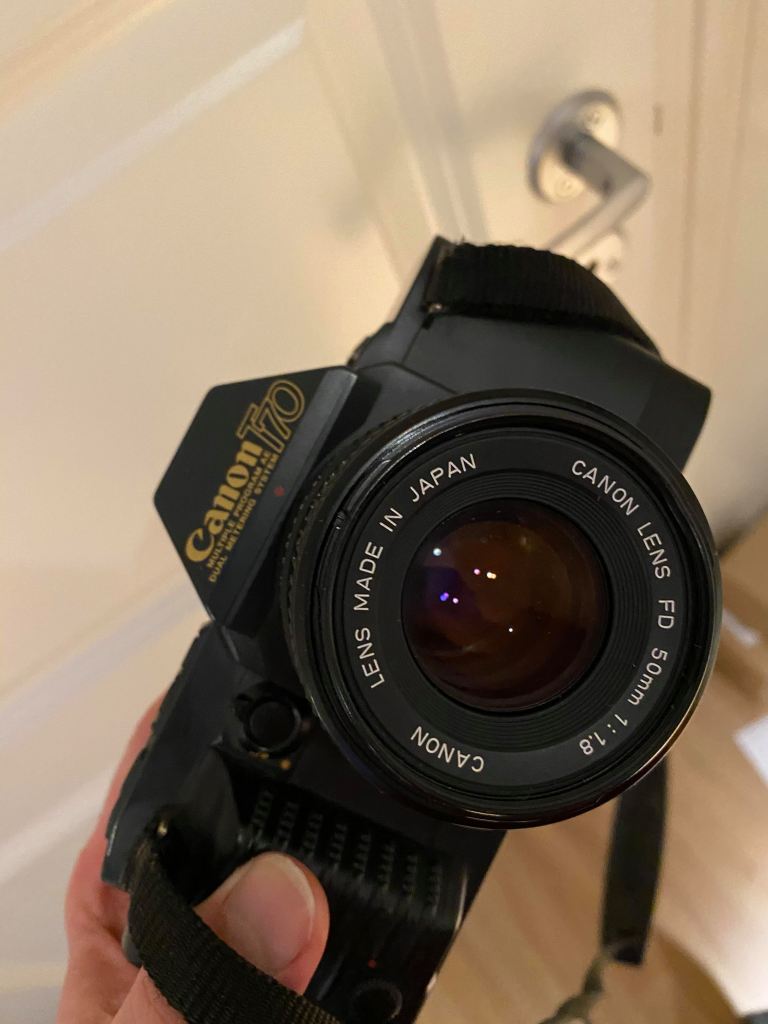
Operating a new camera is always interesting, and the T70 has a very interesting button based menu system. It does not read DX-coding, but you set the ISO by pressing the ISO-button and one of the two buttons on the top over the LCD-screen named «Up» and «Down». It is programmed to go 1/3 steps and setting the ISO is very easy and the buttons are big enough to be operated with gloves in winter time.
Another lovely feature with this camera, that I notices straight away, was the fact that it takes AA batteries instead of the CR123A batteries. Both these types are readily available and can be picked up cheaply in most shops, but you more often tend to have AA batteries lying around than CR123A, and hence you are less likely te find yourself in a Cannot Shoot Situation with the T70.
I also like the different safety features it has. You need to press a button to unlock the release mechanism for the film loading door, preventing you from accidentally opening it «mid roll». It has an extra slider beside the rewind button, preventing you from accidentally rewinding the film too early, and it has a little button to unlock the «Power ON» button. A feature that helps you save battery. On the downside, mine has clearly a tiny light-leak, but nothing that in any way affects the images.

Using the camera is a real treat. It is very easy to focus and set, and the main setting is an aperture priority where you set your aperture and the camera will find the suiting shutter speed to go with it based on your entered ISO-speed. You also have settings for full Program-mode and you have two additional settings, one called «wide» where the camera will bias towards a higher f-stop to get deeper depth of field, and one called «TELE» where it will bias towards higher shutter speeds and shallower depth of field. I did not try out these fully automatic modes in my first tryout, but based on the function of the rest of this camera, it would surprise me if it wasn’t spotless.
Holding the T70 is an interesting sensation. The plastic body feels very cheap in you hand, but it is as heavy as a brick and has the noise-level of a helicopter. Even so, this camera feels like what it is, a quality piece of kit, with that feel of «80s science fiction» over its design and the «buttonyness» of an old Volvo dashboard.
This is a very nice camera to use, and clearly one I will use again many times.

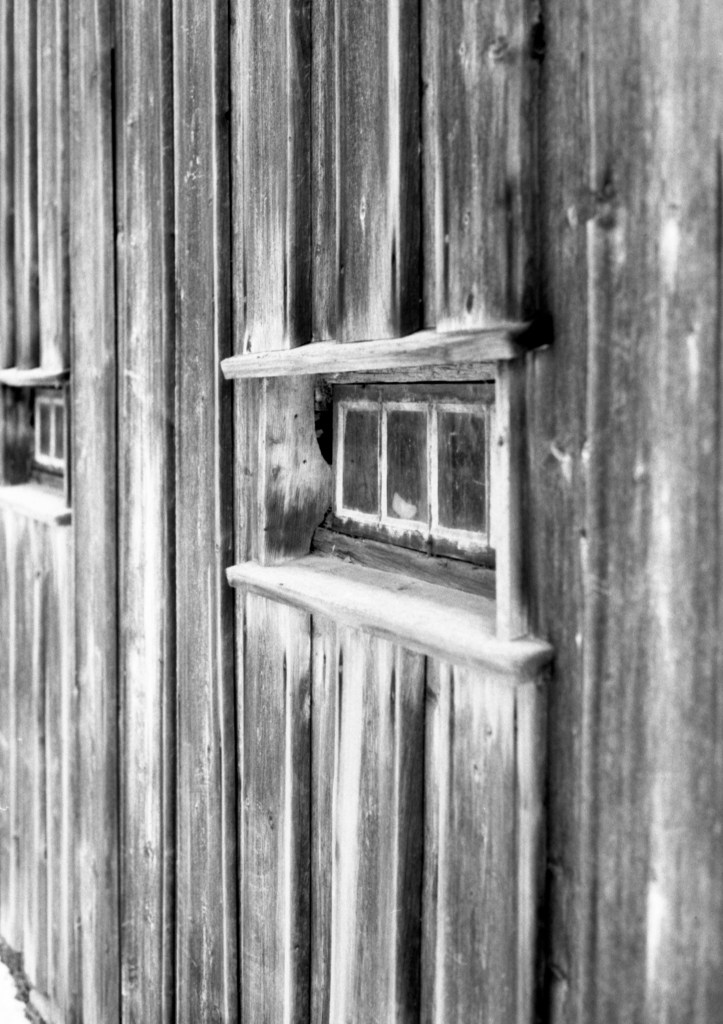
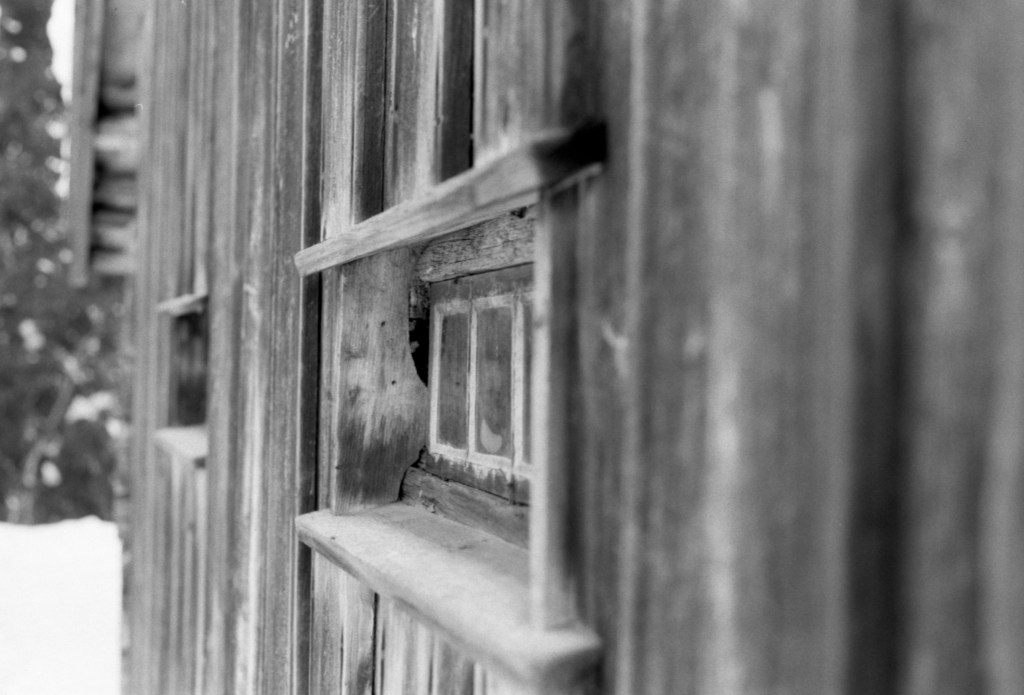


 Cheap Camera Adventures