Shooting with zoom

Many years ago, when I was given my first analog SLR camera as a gift from my uncle, I got my interest for photography sparked immediately. This was a time where digital cameras weren’t a thing, and Kodak was a company as famous as Coca-Cola to me and my friends. If I talk to children and teenagers today, they might not even have heard of Kodak as a company.

My first SLR camera was a Nikon F60 and with it came a Voigtländer Skopar 28-80mm f3,5 lens. This isn’t by any means the sharpest or best lens in the world, but at the time I was given this package, it was my first try of a real camera with a proper lens on it. I was indeed very happy with it and I shot dusins of rolls of film with it. Usually Fuji C200 or Kodak Gold 200, with the occasional Agfa-film. From that time, I have changed cameras, medias and formats many times, but I have still kept the F60 and this lens. Sadly, the F60 does not work anymore, but I do have a Nikon F80, and I decided to give the old lens a try.

This idea struck me after I tried this lens on my D750, and I was rather underwhelmed by the results I got from that. I then figured it was worth giving it a go, once again with a film and see if it would work.

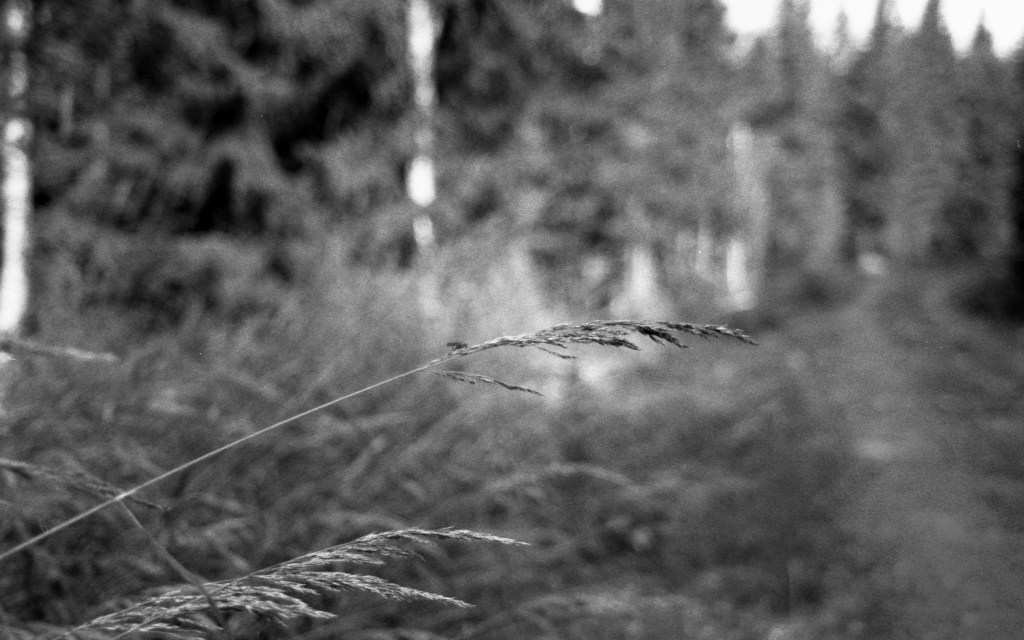
A little birch – Nikon F80 w Voigtländer Skopar 28-80mm f3,5 – Ilford Delta 400 – Ilford ID-11 stock

I then figured that I would take another old friend out for a spin as well. The Ilford Delta 400. I have never really got the love for this film because I often tend to prefer the look of HP5+ to the look of the Delta 400. This however, doesn’t mean that the Delta 400 isn’t a brilliant film, and since I was going in rather bright conditions, I figured the finer grain structure would make my images shine more in the highlights. I also went for a development cycle in ID-11 to really give it the finest grain possible with the developers I currently own.

Some grass – Nikon F80 w Voigtländer Skopar 28-80mm f3,5 – Ilford Delta 400 – Ilford ID-11 stock

I went mainly for what I refer to as «small landscape» for this shoot. I define most of my landscape photography work into the two categories «small» and «big» landscape. A big landscape photo is a view, a mountain, a lovely lake and so on. Small landscape are more details and small snippets of wheat my surroundings look like. This category is often easier to find and work on in the East of Norway where I live, where most of the landscape is forest and rather flat areas.
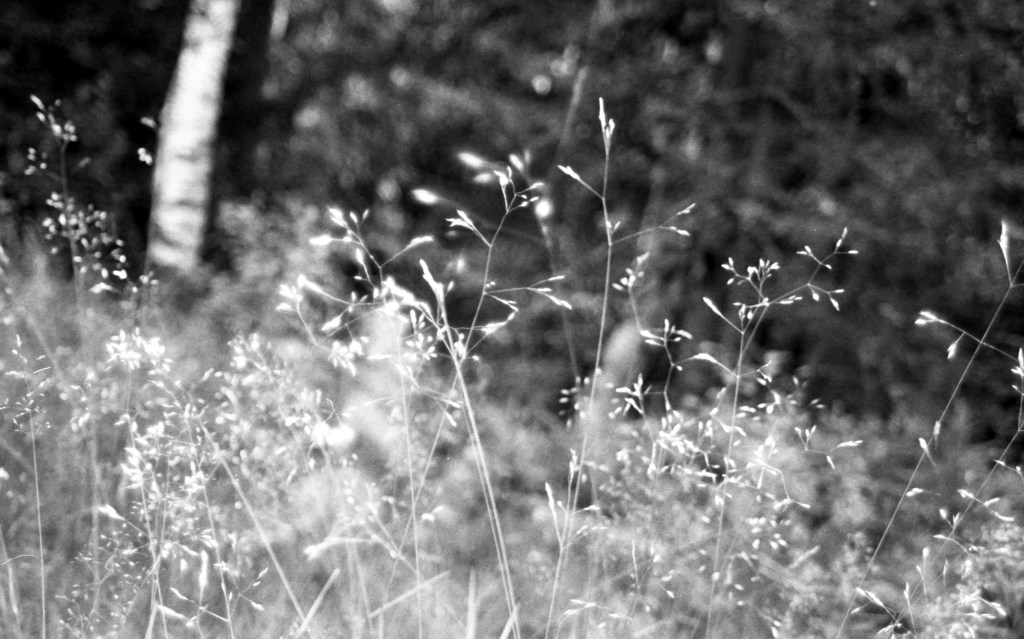
Some more grass – Nikon F80 w Voigtländer Skopar 28-80mm f3,5 – Ilford Delta 400 – Ilford ID-11 stock

All in all, I had an enjoyable little outing with my old lens and the F80. It is clear though, that my eyes for lenses have changed somewhat over the years, and I am not blown away by the sharpness I see in these images, but it could also be down to my rather «simple» scan process for these images and my general preference for medium format negatives.
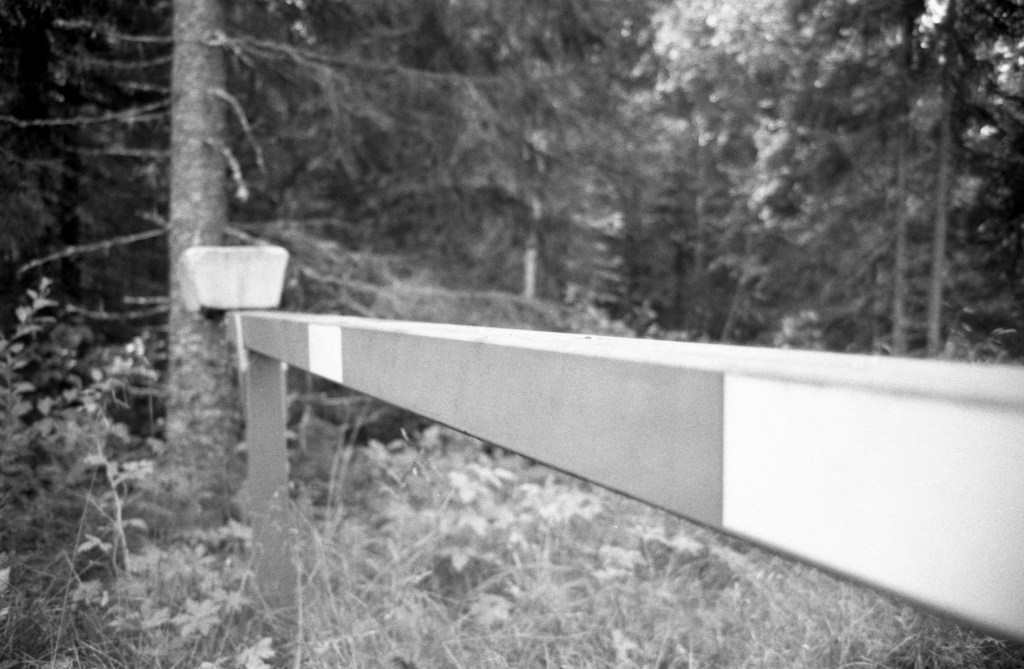
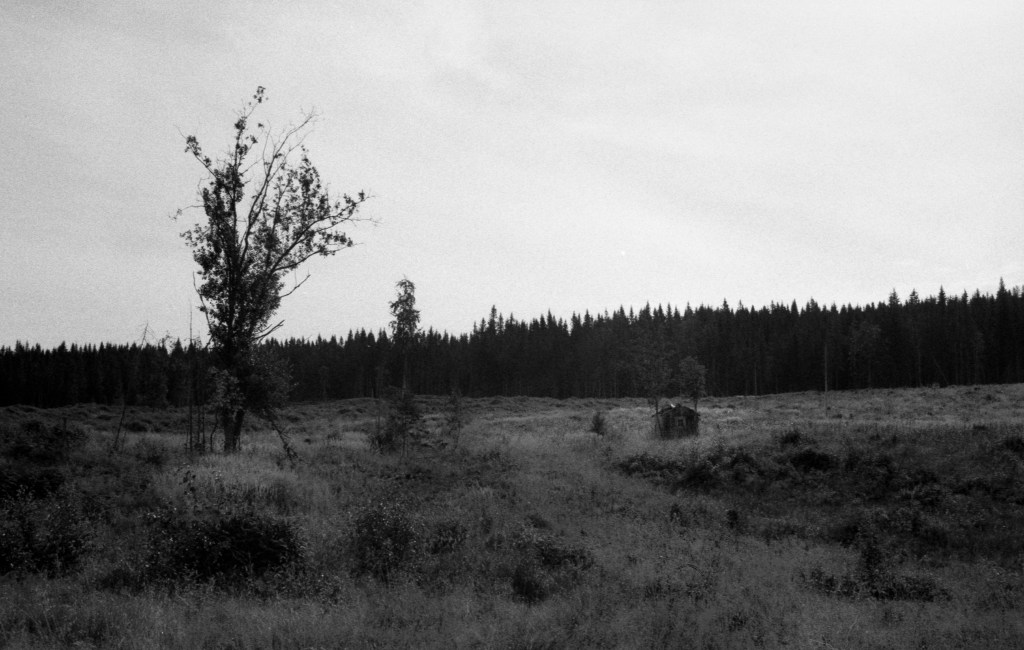
Going Panoramic in the fog

I have never worked with any kind of panoramic equipment before. I have held a Hasselblad X-pan in my hand at one point, but I never tried shooting it. Even so, panorama photography is interesting, and I have wanted to give it a proper try. Not that I will really try it properly in this entry, but I recently bought some very cheap 3D-printed (I guess) plastic parts off eBay. Specifically, the small plastic parts that you use for using 35mm film in your medium format cameras. To be honest, I didn’t really expect much results from this. My anticipation was the following:

  1. The film will not be kept dark enough after exposure and will be fogged.
  2. The film might not be kept flat enough in the camera.
  3. Composing the image will be difficult not having a proper viewfinder for it.
  4. Unknown amount of images pr film and difficult to know how far to wind.
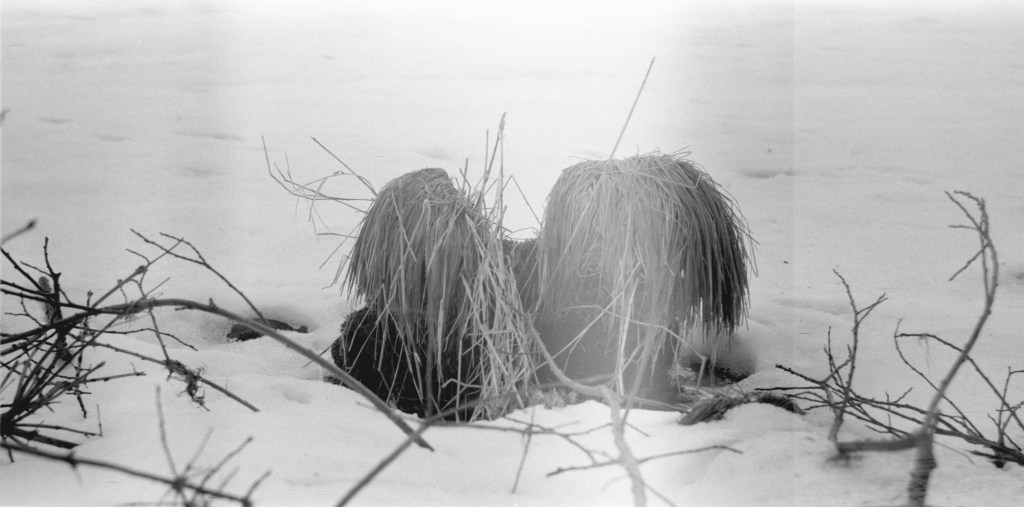
The plastic-stuff and a canister of film. Not the one I used for this test.

I decided to give it a try in my Zeiss Ikon Nettar. This because it is the only MF camera I have where the film is inserted in the horisontal direction, allowing me to easily shoot landscape without turning my camera into portrait. I decided to go for a roll of Ilford Delta 400 and go for a little walk while the fog was lifting over the lake. I was looking for wide compositions, which was a new experience for me, and I felt that I often reverted back to looking for squares or normal rectangles rather than the super wide compositions that this line-up would allow for.

Didn’t quite nail it with this one. See the light leaks that I got for most of the shots on the roll. Luckily not too bad in this shot.

First of all, I can confirm the first part of my assumption. Using this system, with the 3D-printed parts, will give you severe light leaks between the shots. I know for a fact that it is not the light seals acting up, because I used black tape to ensure no light-leaks would come from that area.

Reklamer

For the most part, I think that the film stayed flat in the camera, and that the adapter kept it reasonably well aligned throughout the roll. I did; however, notice that the film was not as «in the middle» of the viewfinder as I had thought, and I shot a few of the frames «too high» losing parts of my intended compositions.

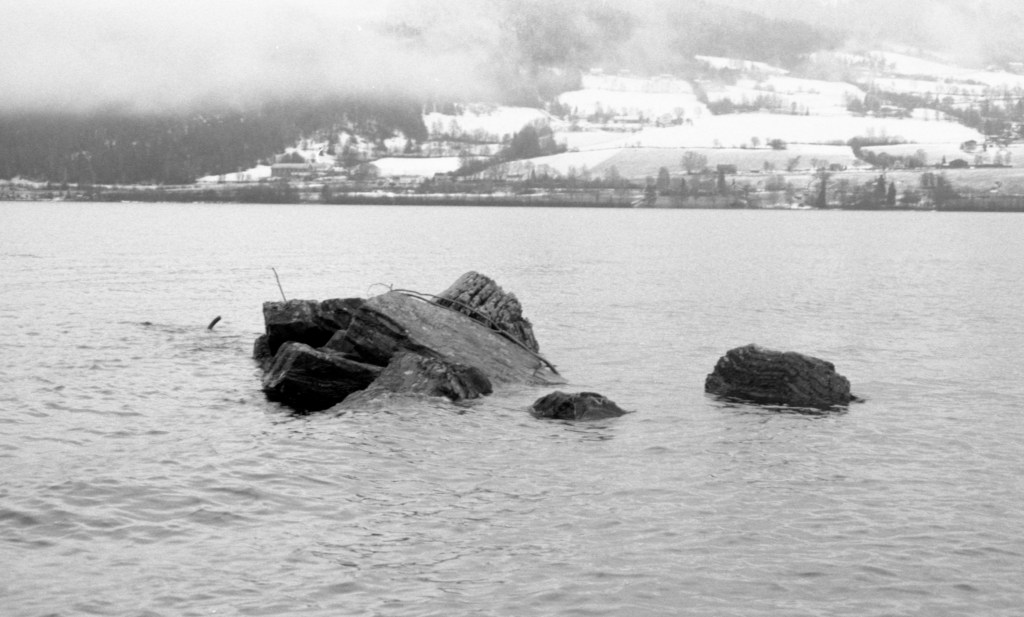
Over the rocks – Zeiss Ikon Nettar, Ilford Delta 400 Adox Atomal 49 Stock

Even though I like some of these images and the way they look and how they turned out, I am not certain I would use this adaptor system a lot. I will very likely do some more experiments with it and try it out at different occasions, and maybe I am luckier with my next rounds and avoid some light leaks. I find the system to be functional for shooting only one frame at a time. This would mean a lot of «cutting the film out of the camera» and «developing fragments of a roll». Not that I mind doing that, but it is a hassle.

Lifting fog – Zeiss Ikon Nettar, Ilford Delta 400 Adox Atomal 49 Stock

Trying out Delta 400

When I first tried out Ilford HP5 plus, I completely fell in love with the film. I just loved the amazing latitude and the rich feel it gave my photos, and since then, I have mainly used HP5 plus whenever I needed a 400 or even a 200 speed film, which the occasional use of Tri-X-X when I want to push the film slightly, or just want to have a yellow cassette in my camera instead of a green one. At box-speed the two films are interchangeable in my humble opinion and I challenge you to spot which photo was shot with which of these two if I put up a selection.

A While back, before Covid and quarantines were an issue, I was in Aarhus in Denmark visiting a friend and enjoying the lovely Danish landscape and all the lovely pastries and coffee shops they have. I also visited Mimosa Photo shop in Aarhus city center, and picked up some rolls of film. Since I only had one roll of HP5 plus left, I needed a 400 speed film, and the only one they had in at that moment was Delta 400. I bought three rolls, and since then they have just been sitting around in the fridge, and not been tested. The other day, I went out for a little outing in the misty Norwegian winter-weather, and I decided to shoot with Ilford Delta 400.

Reklamer

I put one of the rolls in my Minolta Dynax SPxi, and screwed on the yellow filter and went for a spin, trying to find black and dark grey contrasts against the misty, white skies. I have often found the yellow filter to help me get the results I want in winter time, lifting the darks, while helping me retain detail in the very bright whites. I was curious how this film would be different from the HP5 plus, but after only one tryout, I can obviously not say that I have the knowledge to make a comparison nor a good enough photographic bank of results to base any personal judgement on. But I do know what I would expect from HP5 plus in these situations. An my prediction was more or less the same, but with finer grain.

Minolta Dynax SPxi w Minolta AF Zoom 35-70mm f4,5 Yellow filter – Ilford Delta 400 professional Ilford Ilfotec DD-X

The grain on this test-roll was actually finer than I expected, but I did not get the same contrast boost that I would have expected comparing FP4 plus and Delta 100 which I know both of very well. But all in all, I do rather like my results. The Minolta Zoom lens is not by any means the sharpest of lenses, but I tried out different aperture settings and even at some points used «Aperture priority» mode to get the most out the lens that I had on. The camera has a few functions that I find to be very helpful.

First of all, I like the two sensors on the right hand handle that will automatically focus when you touch them. In rainy weather; however, it turned out that these sensors were actually reacting to the rain touching it as well as my fingers, to the AF went berserk a few times. Also the AF tends to select different spots and, as visible in the images, it back focuses somewhat. It would be interesting to try this camera out with a different lens, to see whether this is a camera or lens-issue.

Reklamer

Second, I like the way you set the different parameters on different places on the camera. However, I do find it a bit fiddly and that you very easily forget which knob does what, and hence, shooting this in fully manual mode, is sometimes really exasperating. But the idea of having the controls on knobs and not on wheels, is something I really like. If Minolta only would have been friendly enough to mark these knobs with what they do.

Minolta Dynax SPxi w Minolta AF Zoom 35-70mm f4,5 Yellow filter – Ilford Delta 400 professional Ilford Ilfotec DD-X

Even with the AF on, as you can see, the focus gets very soft, and I suspect that there might be an issue with the AF system on this camera. But at the same time, I think that some of these photos gets some additional mood with that soft focus.

I chose to develop with Infotec DD-X which I know is made for the Delta series. I got the developer from Bjørn Joachimsen in November, and I would recommend you to look through his amazing catalogue of photos both here on WordPress and on Flickr.