Shooting the beast

Sometimes you are really lucky. A few weeks ago, I signed up for the news-letter from a Youtube-channel run by a Canadian photographer named Azreal Knight. If you have not heard about his channel, you should really check it out. A lot of interesting content about analog photography. By signing up to this news letter, I also entered into a little «lottery» or whatever you would call it, and I won. When the price arrived, the box was rather big and I was curious what was in the box.

The content of the box was: One roll of Ilford HP5 plus, one roll of Kodak Gold 200, a selection of stickers, a really cool box-set of darkroom prints of the best Azreal Knight images of 2020… AND… A weird and huge BEAST of a 35mm camera. An Olympus iS-1.

This camera did not make sense to me at all when I first held it in my hand. It was huge and bulky, heavier than my Hasselblad 500C, has a plastic feel to it and the design is best described with the word hideous. At the same time, I am a big fan of Olympus and their lenses never let me down, so I was curious to try it out.

Loading the camera was actually rather fiddly. The take up spool is in the back-door of the camera, in a purpose built box on the back making up most of the bulky design of the back side of the camera. This sounds like a great idea as you would not ruin your whole roll if you should be unlucky and open the back door mid-roll. At the same time, getting the film to load properly is difficult because the motion of closing the door makes the film curl up and away from the take-up spool.

A tree – Olympus iS-1 – Ilford HP5 plus – Ilford ID-11 1+1

In use, the camera is an interesting experience. Even though I don’t really feel that this is a camera for me, I did enjoy using it. Not to be mistaken, there are a lot of small problems with this camera that I find to be very annoying, but using it is very different from using any kind of SLR og PaS-camera I have ever used. This belongs somewhere in the middle from my understanding.

First of all, the camera is heavy and bulky and does not really fit my hand very well. Especially the part about the ergonomics I fear would make me not bring the camera along.

Second, the camera has one of the slowest and least precise AF-systems I have used in a long time, and focusing it manually is fiddly and difficult as well. I ended up doubling and sometimes tripling the shots on many occasions to be sure I had something usable at least.

Third, due to its size and weight, this camera is difficult to hand-hold even at shutter speeds around 1/100, and many of my images shows severe camera shake. Even images I know were shot at 1/100 and above.
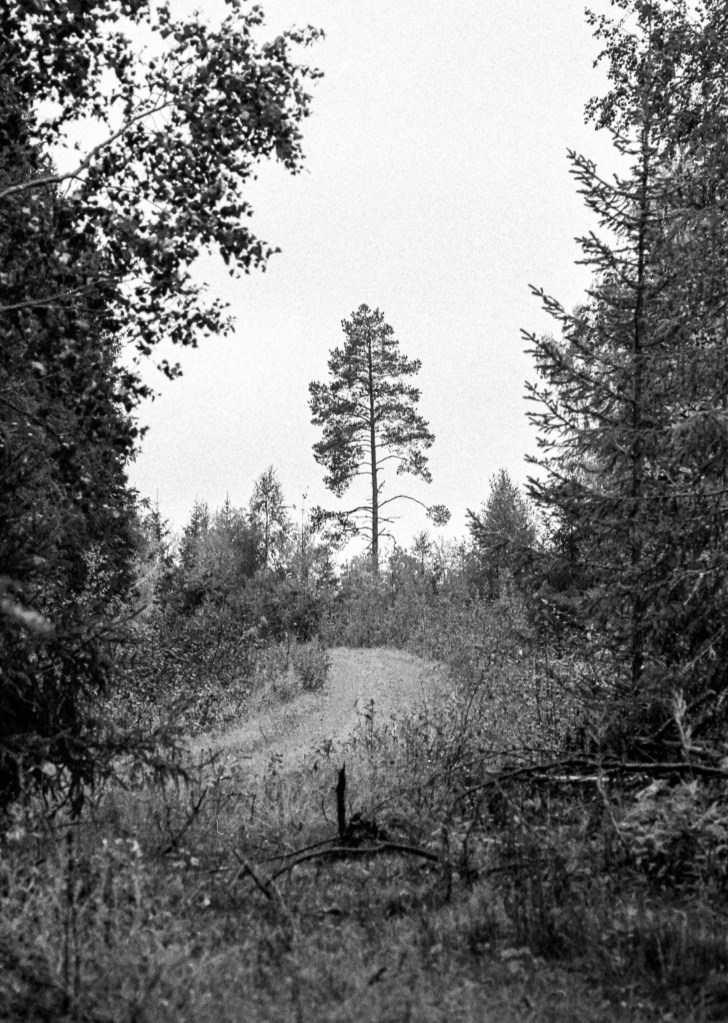
A tree – Olympus iS-1 – Ilford HP5 plus – Ilford ID-11 1+1

On the positive side, I must say that the lens is its Olympus name worthy. It performs very well both on its widest and longest settings and the when the AF hits it seems to be a very sharp lens.

As you can see through the images and their captions, I went for Ilford HP5-plus for my test this time. I actually used the roll that came with the camera. This is a film I use often and that I find works very well with the conditions like what I had on this day. Overcast with a bit of rain. I find that this film adds an extra element of texture to the images in a very nice way with its grain-structure which is visible, but pleasing. Even in 35mm shooting.

Morning shooting at Næra

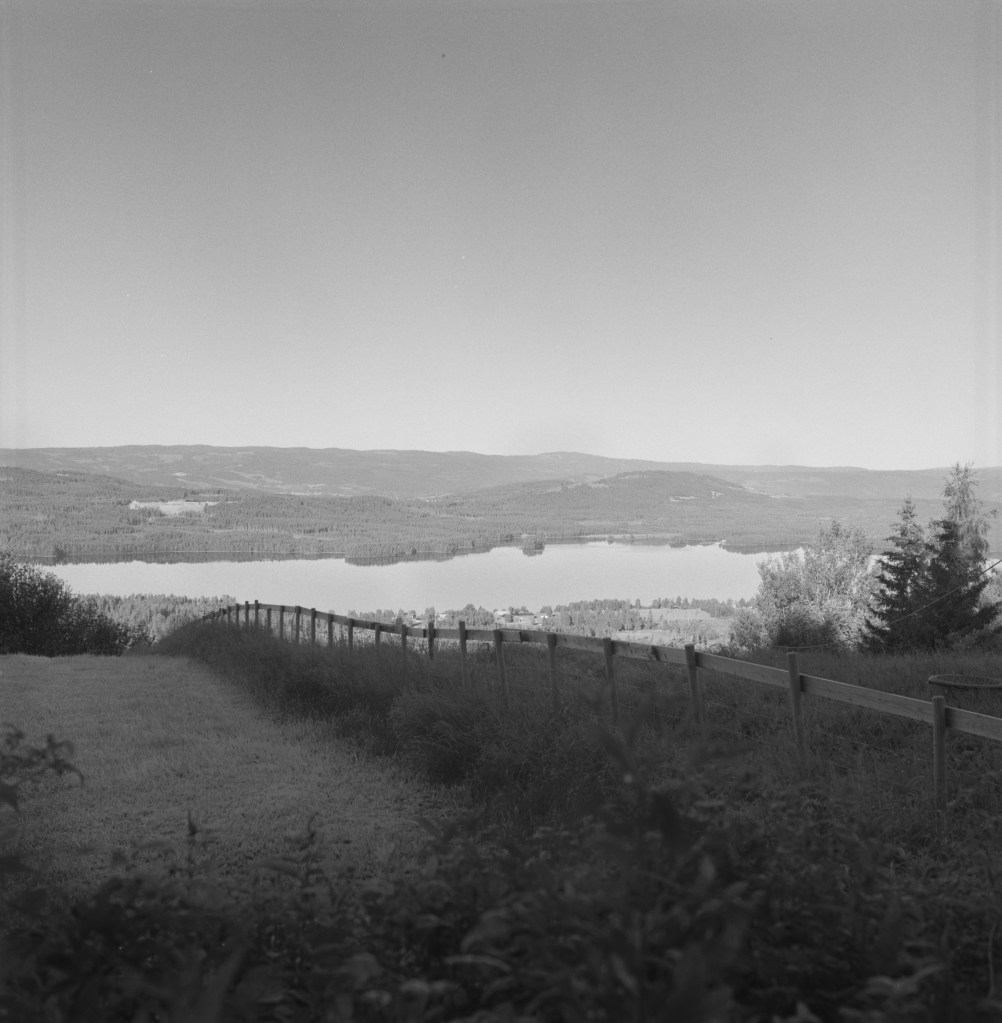
One of the most photogenic lakes around my area is bu far the lovely little lake named Næra. Situated a bit east of Moelv, it is the main bathing-water for places like Næroset, Åsmarka, Lismarka and Moelv and it is also an important area for leisure boating. A few weeks ago, as I was pondering around Åsmarka looking for an infrared-view of Næra, I came in contact with some locals. They told me about what was allegedly a much better viewing point over the lake, and I decided to take their word and go there in an early morning quest.

Armed with the Hasselblad and two rolls of film, Ektar and HP5 plus, my friend Cameron and I went for a morning stroll to the viewing point, and indeed, what a view.

The lake Næra – Hasselblad 500C – Ilford HP5 plus @ 200 Yellow filter – Ilford ID-11

Realizing that I had misread the lighting conditions on this scene, I soon decided that the HP5 would most likely be the best film for the job. My total range within the scene pushed 9 stops, and I was afraid to blow out the skies or the water with the Ektar as I didn’t bring a polariser filter because I broke it a few days prior. I then settled for a yellow filter instead, and chose the approach of pull-processing to give me a flatter negative.

Along the path – Hasselblad 500C – Ilford HP5 plus @ 200 Yellow filter – Ilford ID-11

Our path went through some really lovely forest areas, and at one point, we had a row of telegraph-poles making their way towards the farm I believe is named Harabakken. I like the way that the poles made their way towards the farm and decided to attempt a composition with the HP5+. I would probably have gotten more out of this shot using an orange filter, but I decided to travel light, and only brought the yellow.

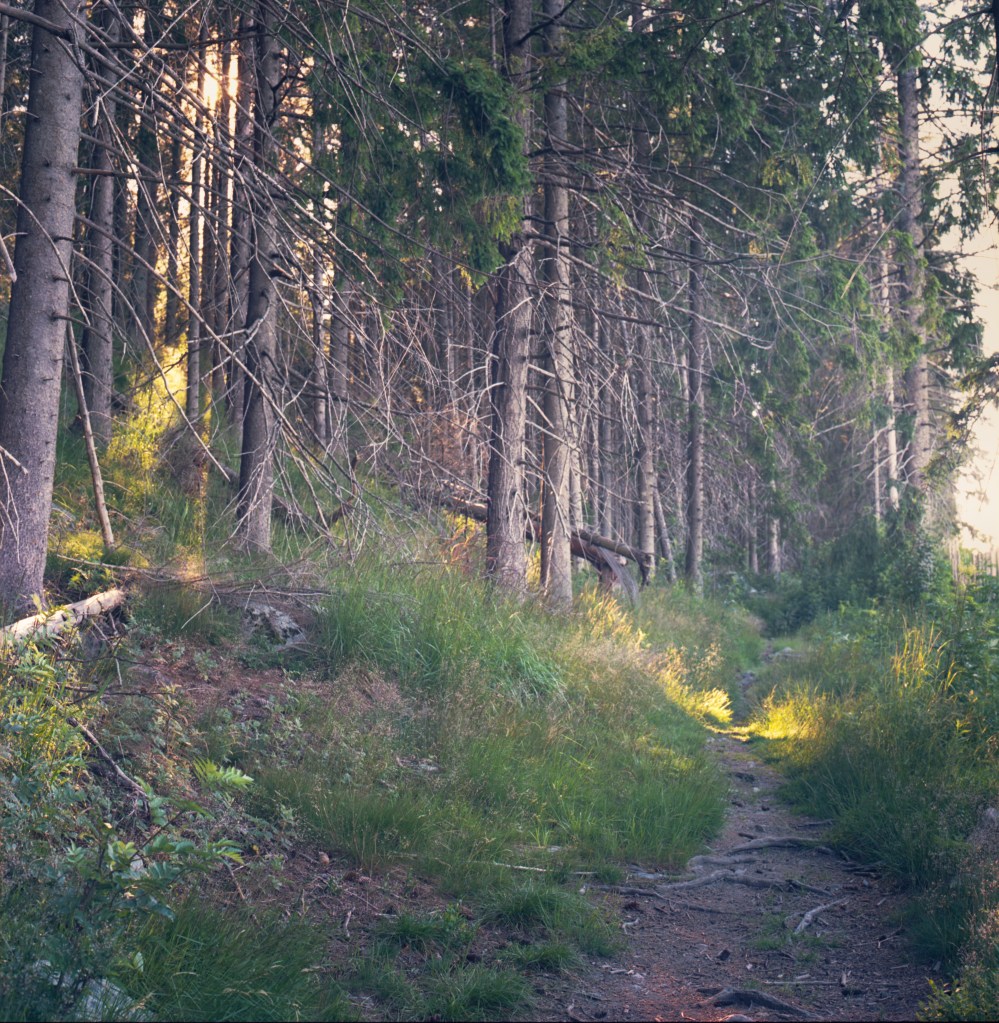
As we stopped to have out coffee, I spotted a really lovely trail of light coming through the forest, illuminating the path and some grass around. I decided to make an attempt with the Ektar-back, attempting to make a square- image.

Light on the path – Hasselblad 500C – Kodak Ektar – Tetenal C41

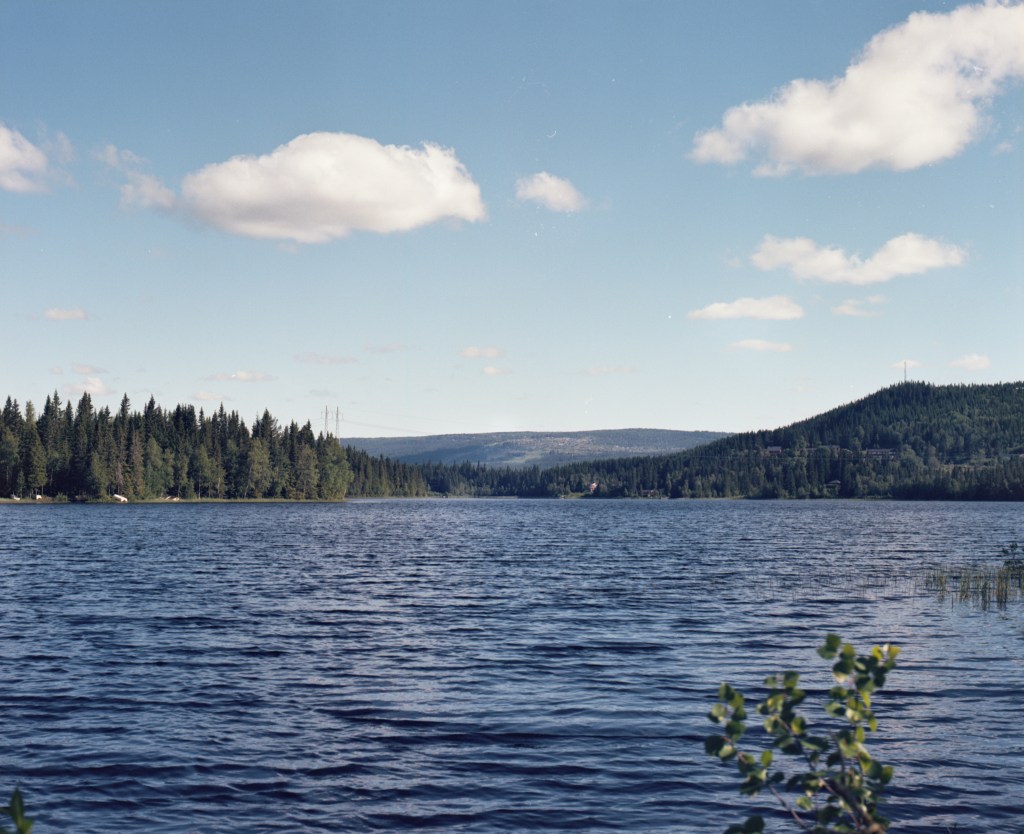
Our day concluded with a nice stop by another little pond that I am not going to name because it is more secluded and has a very fragile road going to it. We enjoyed another sip of coffee and had an absolutely lovely time out in nature this warm summers day.

I’ll include some more images in a gallery at the end, please enjoy

Misty Woodland

Spring is an incredible time of year in Norway. This spring has been incredibly cold and slow, and even now, in the middle of May, we are bothered with snow in the forest. The good thing about that is that you, as a photographer isn’t very bothered with other people along the paths and you in most cases have the place to yourself. Today, I went out into some local woodland that I know quite well. Yesterday was a very rainy day, and it rained all night, so I figured that the snow was most probably melted away in the forest by now. I was very wrong, and I was not able to walk further into the forest than about four hundred meters before the snow was too deep. Also, the path looked more or less like a stream, and I had the feeling that most people would go for a swim rather than a walk on a location like this.

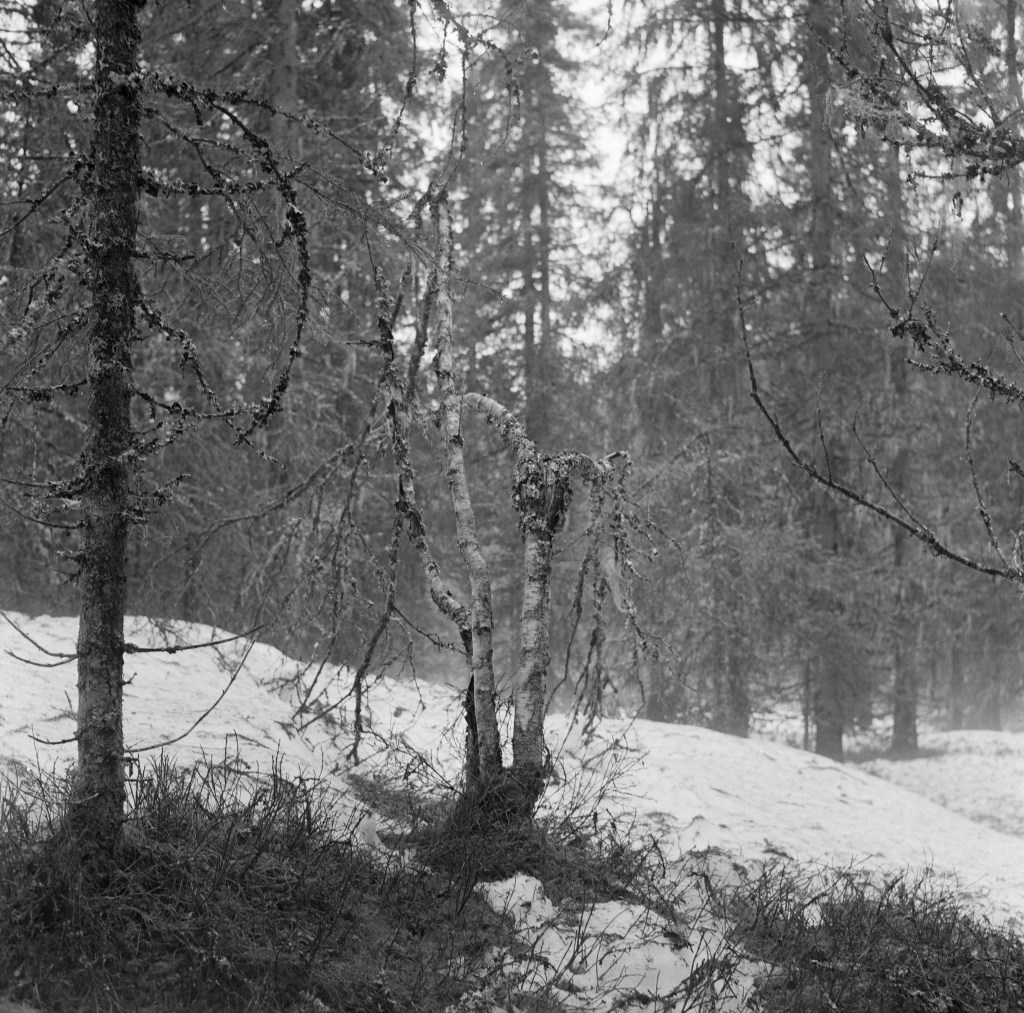
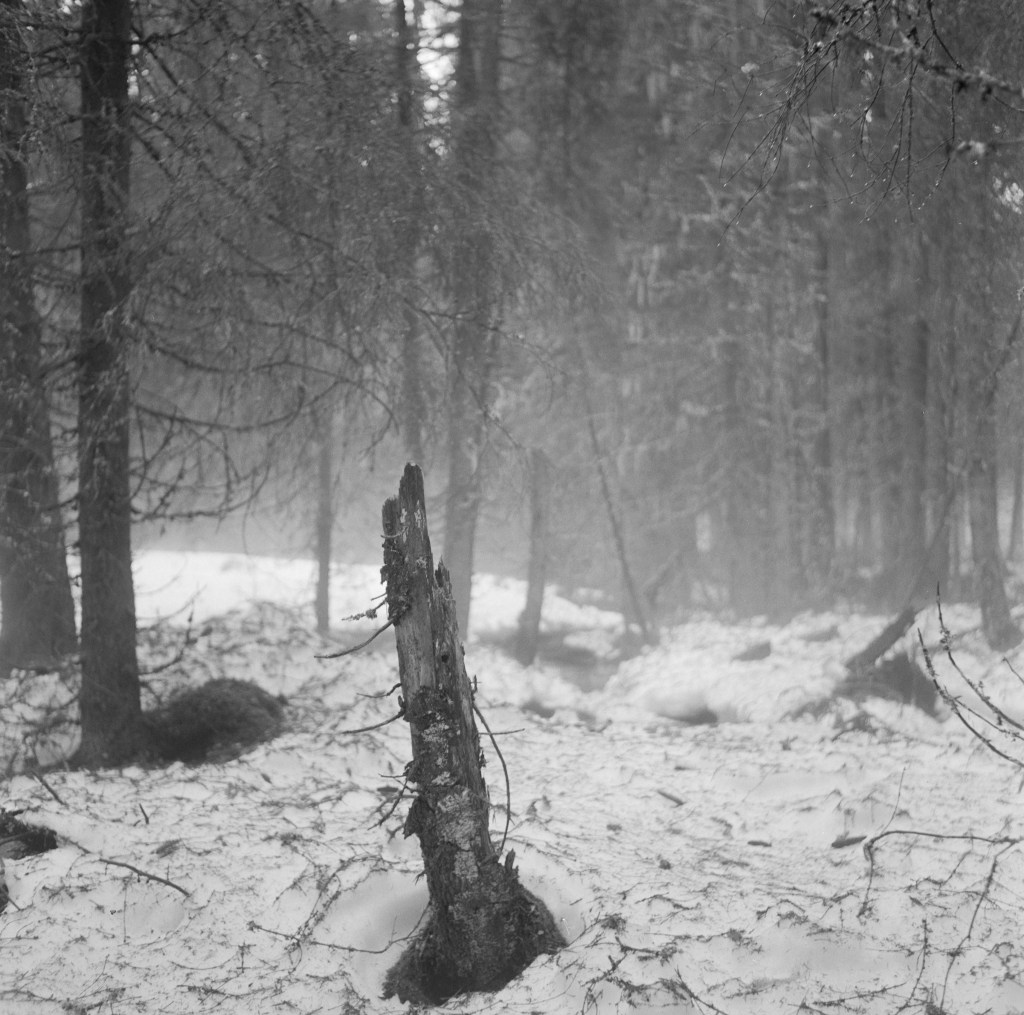
Traces of winter – Zeiss Ikon Ikoflex, Ilford HP5 plus, Ilfotec ID-11 1+1

Nevertheless, I went out this morning and waded myself through the soaking wet forest floor searching for nice woodland-compositions. These kind of conditions, grey, wet and misty days, are the conditions that inspire me the most. They makes the location stand out in a very different way than you would see it on sunny days, and you spot details and areas you wouldn’t see if the light was brighter.

On this particular outing, I went for the Zeiss Ikon Ikoflex, a TLR-camera that I have owned for a while, and that I absolute love using. There is something about this camera that inspire me. The world looks very nice through the waist-level viewfinder on the Ikoflex, and there is something about the way the lens renders the images that really suits my eye. I chose to shoot at shallow depths of field in this particular outing for two different reasons.

First of all, I wanted to emphasis the relaxing bokeh-feeling this lens gives and how smooth the sharpness of this lens is at around f3.5 and f4. It gives a very relaxed feeling to the scene. Secondly, my particular Ikoflex has some faults with its slower shutter-speeds and below 1/50th can give a very unpredictable result when used. From no activity at all, to just a random shutter-speed. I should probably have it serviced, but I guess fixing this one would be too expensive compared to its value, and it serves me well as it is at this point.

Scene of melting – Zeiss Ikon Ikoflex, Ilford HP5 plus, Ilfotec ID-11 1+1

For that last reason, I chose to go with a very flexible film to give me some wiggle-room with my exposures. I went for a roll of Ilford HP5 plus that I shot at its box-speed of ISO 400. After seeing the conditions in the forest when I came there, with that layer of mist that I didn’t expect to find there due to the conditions in general, I was very happy about this choice of film for that reason as well. Ilford HP5 plus is fantastic at capturing the mood of a misty forest.

Old mans beard – Zeiss Ikon Ikoflex, Ilford HP5 plus, Ilfotec ID-11 1+1

Even though the walk this time wasn’t that long, and the way there was rather wet and unpleasant; I actually had to jump across a stream of melting-water to reach the path; I got some images that I am very happy with. I also really enjoyed my little adveture into the wet and misty forest, and I will certainly be out again in these kinds of conditions soon.

Really pushing it with portraits

Sometimes you come across settings and situations where there just isn’t sufficient lighting to go smooth and grain free photography with reasonable shutter speeds and settings. Especially with living subjects, like people, you need to allow for some «life» in your model and hence use 4 seconds shutter speed. In these situations, an option is to push the film. However, when pushing film, you will lose some of the detail get increased contrast added to your images.

For this entry, I created a situation where I had very limited light, and I went for two 400 speed films which I pushed. My initial Idea was to push both of the two stops to 1600 and see what differences I could spot, but due to a change in lighting conditions, I had to do one of them at 3200, a three stop push.

Ilford HP5+@1600

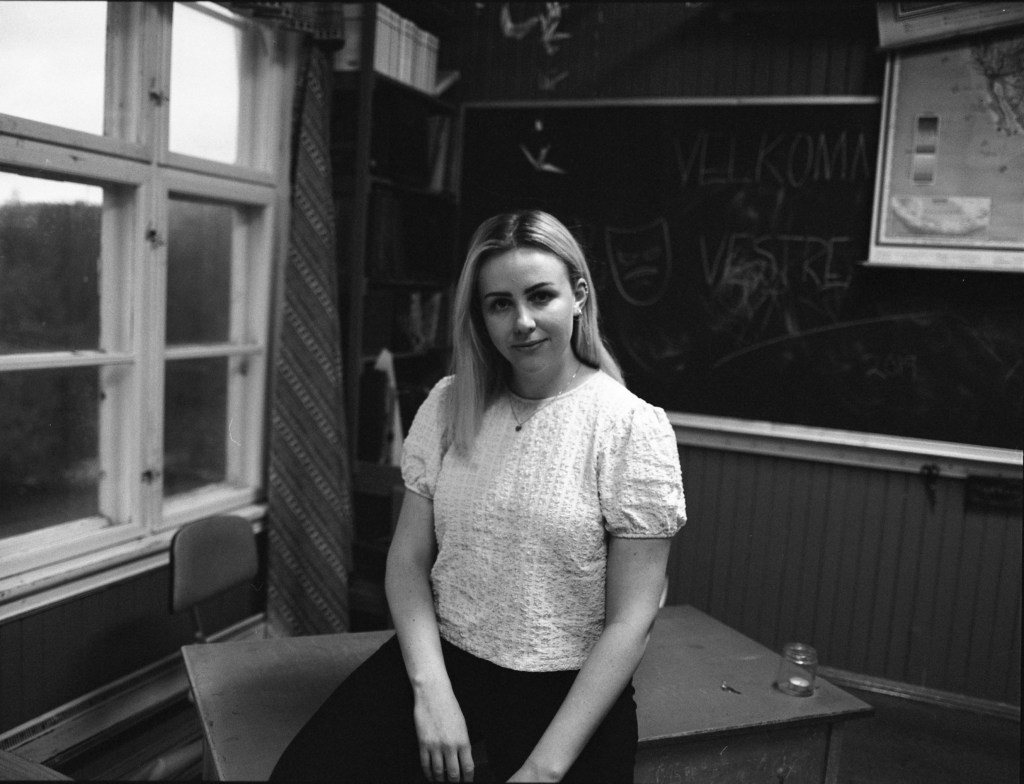
My first film for this photoshoot was a roll of Ilford HP5+ Medium format film. This is a film I regularly shoot, and I am very familiar with the characteristics of this film at both 400 and 800, but I have never pushed it further than that before. Therefore, I was curious how it would deal with the extra stop of push, both in terms of grain and contrast.

The only lighting used for this shoot was the available light in the old derelict class-room and what I could reflect back using the «sunfire»side of my reflector. I shot as close to F4 as I could and got shutter speeds around 1/60th of a second.

Reklamer

I was surprised to see the negatives when I pulled them out of the tank. I expected a very punchy-looking negative with a substantial lot of contrast and severe loss of detail, but the negatives looked reasonably good. The push was obviously visible, but not as prominent as I would have guessed. My quick scans also turned out some nice images. Although grainy, I like the look of these pictures.

I see that I got a bend mark on one of the images, I clearly was a bit unlucky when reeling the film for development.

Kodak Tri-X400@3200

If I expected grain and heavy contrast on the HP5+, I did not expect much of the images from the three stop pushed one. On my way home, I actually doubted my move and was already drafting my apology letter to the model, who friendly joined me for this experiment. I was, however surprised in two different ways.

Even though I followed the guidelines for a three stop push found in the massive dev-chart and had fresh and well tempered chemistry (20 degrees) some of these negatives came out very thin. I metered in the same way all the way through the shoot, and I obviously developed the whole roll at the same time so the big difference surprised me. I must have made a mistake with my metering at some of these images.

However, some of the negatives looked really nice. Although they were obviously very contrasty and punchy they looked to have kept at least some of the detail I looked for. As you can see in the pictures the push is very visible, and I would not go for a three stop push if it could be avoided.

This shoot was a real gamble, and I am thankful for the model who helped me on this. Although I couldn’t really compare the two films because I had to do different pushes, I must say that I am surprised how well both films coped. However, I would say that the grain and latitude of the HP5+ appeals more to me than the TRI-X. But this is a personal observation.

I have decided to try out these negatives in the darkroom at some point, and I will post my results and workflow from that at a later point.