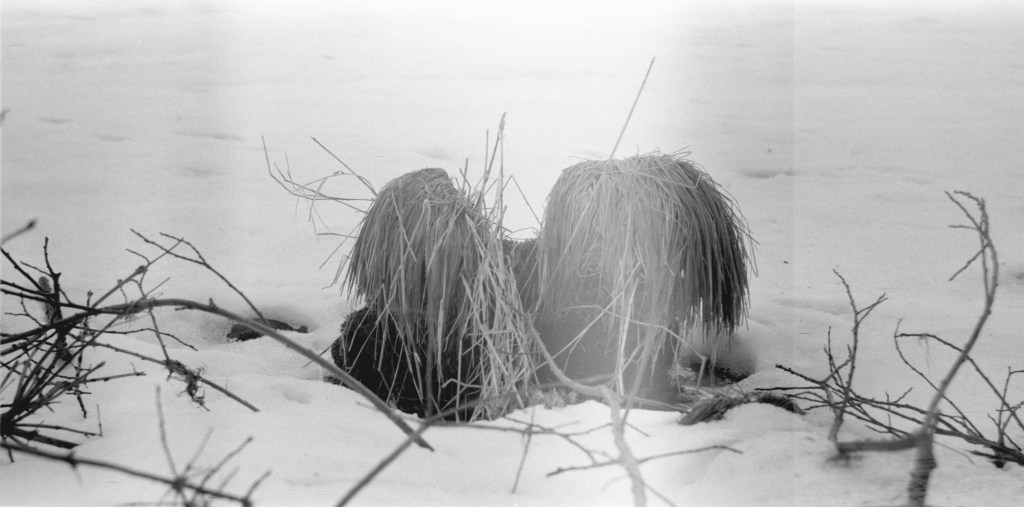
Shooting the beast

Sometimes you are really lucky. A few weeks ago, I signed up for the news-letter from a Youtube-channel run by a Canadian photographer named Azreal Knight. If you have not heard about his channel, you should really check it out. A lot of interesting content about analog photography. By signing up to this news letter, I also entered into a little «lottery» or whatever you would call it, and I won. When the price arrived, the box was rather big and I was curious what was in the box.

The content of the box was: One roll of Ilford HP5 plus, one roll of Kodak Gold 200, a selection of stickers, a really cool box-set of darkroom prints of the best Azreal Knight images of 2020… AND… A weird and huge BEAST of a 35mm camera. An Olympus iS-1.

This camera did not make sense to me at all when I first held it in my hand. It was huge and bulky, heavier than my Hasselblad 500C, has a plastic feel to it and the design is best described with the word hideous. At the same time, I am a big fan of Olympus and their lenses never let me down, so I was curious to try it out.

Loading the camera was actually rather fiddly. The take up spool is in the back-door of the camera, in a purpose built box on the back making up most of the bulky design of the back side of the camera. This sounds like a great idea as you would not ruin your whole roll if you should be unlucky and open the back door mid-roll. At the same time, getting the film to load properly is difficult because the motion of closing the door makes the film curl up and away from the take-up spool.

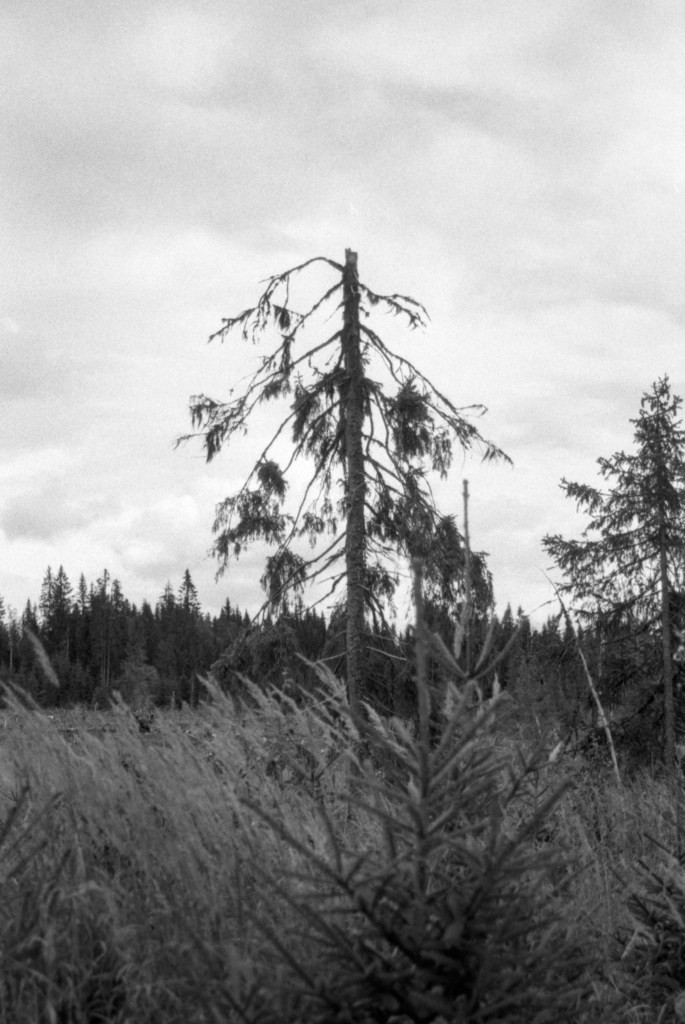
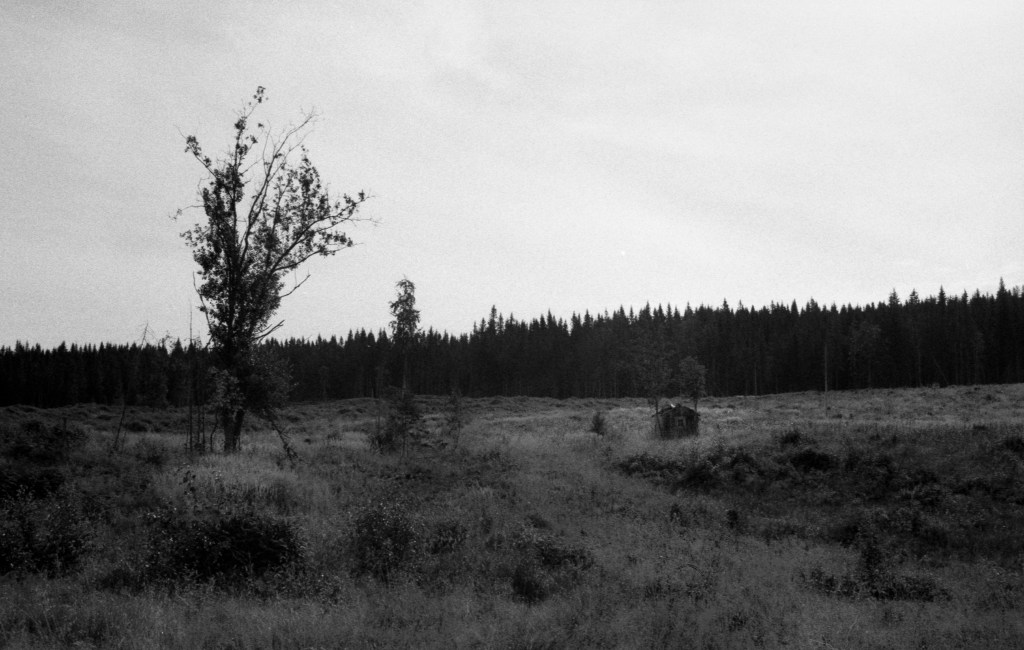
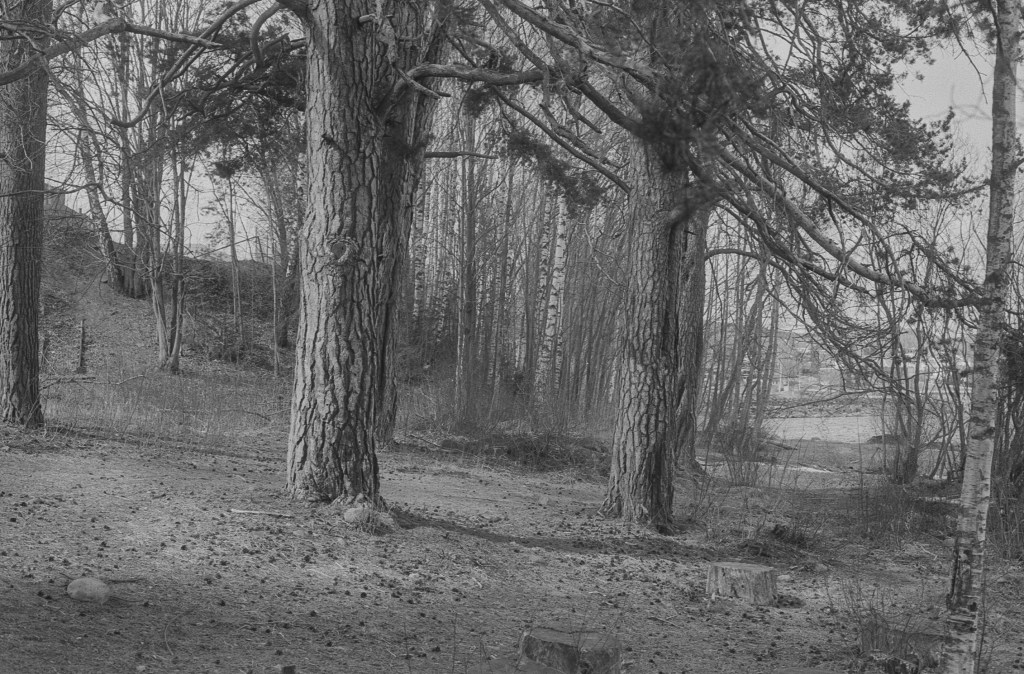
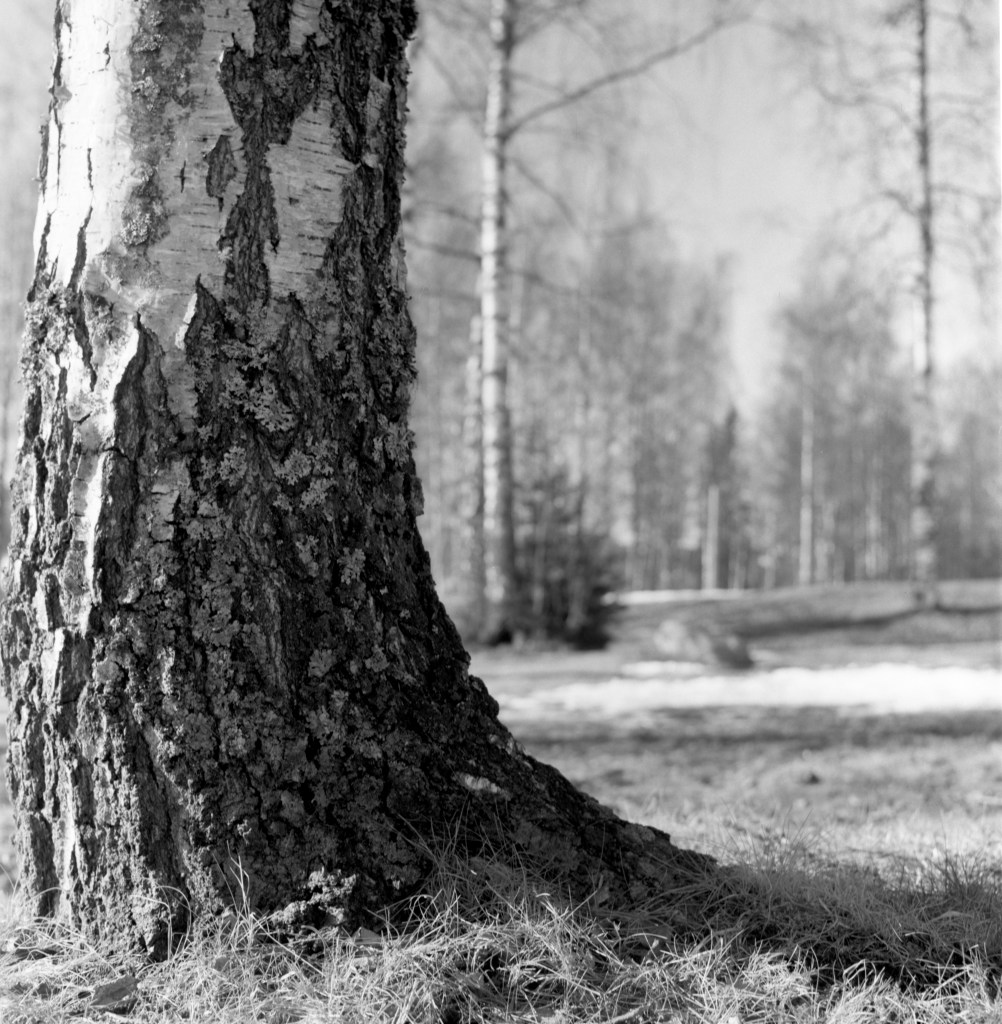
A tree – Olympus iS-1 – Ilford HP5 plus – Ilford ID-11 1+1

In use, the camera is an interesting experience. Even though I don’t really feel that this is a camera for me, I did enjoy using it. Not to be mistaken, there are a lot of small problems with this camera that I find to be very annoying, but using it is very different from using any kind of SLR og PaS-camera I have ever used. This belongs somewhere in the middle from my understanding.

First of all, the camera is heavy and bulky and does not really fit my hand very well. Especially the part about the ergonomics I fear would make me not bring the camera along.

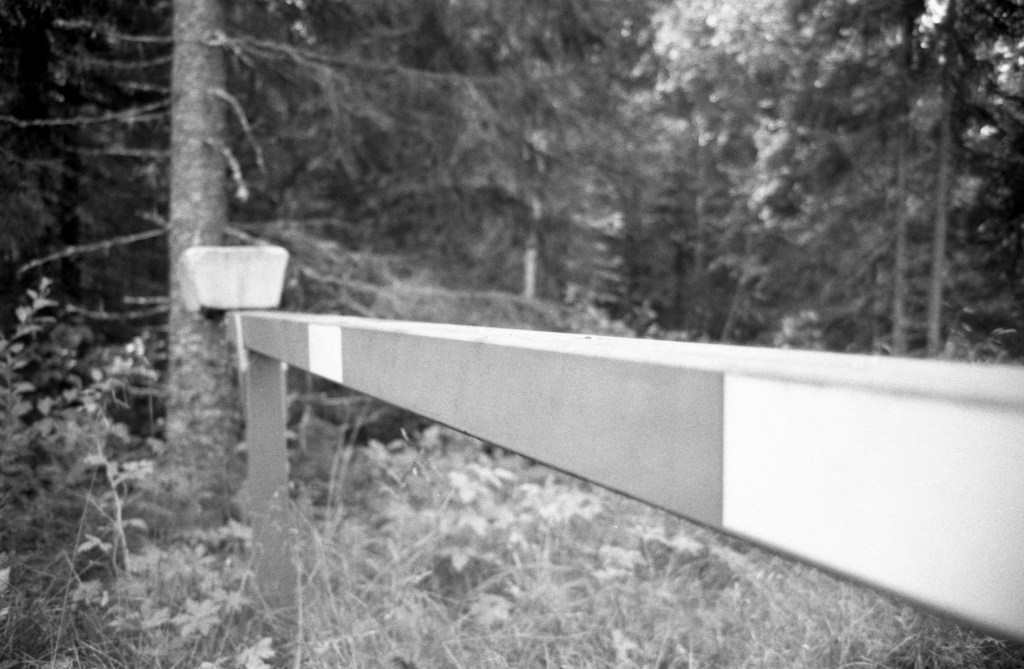
Second, the camera has one of the slowest and least precise AF-systems I have used in a long time, and focusing it manually is fiddly and difficult as well. I ended up doubling and sometimes tripling the shots on many occasions to be sure I had something usable at least.

Third, due to its size and weight, this camera is difficult to hand-hold even at shutter speeds around 1/100, and many of my images shows severe camera shake. Even images I know were shot at 1/100 and above.
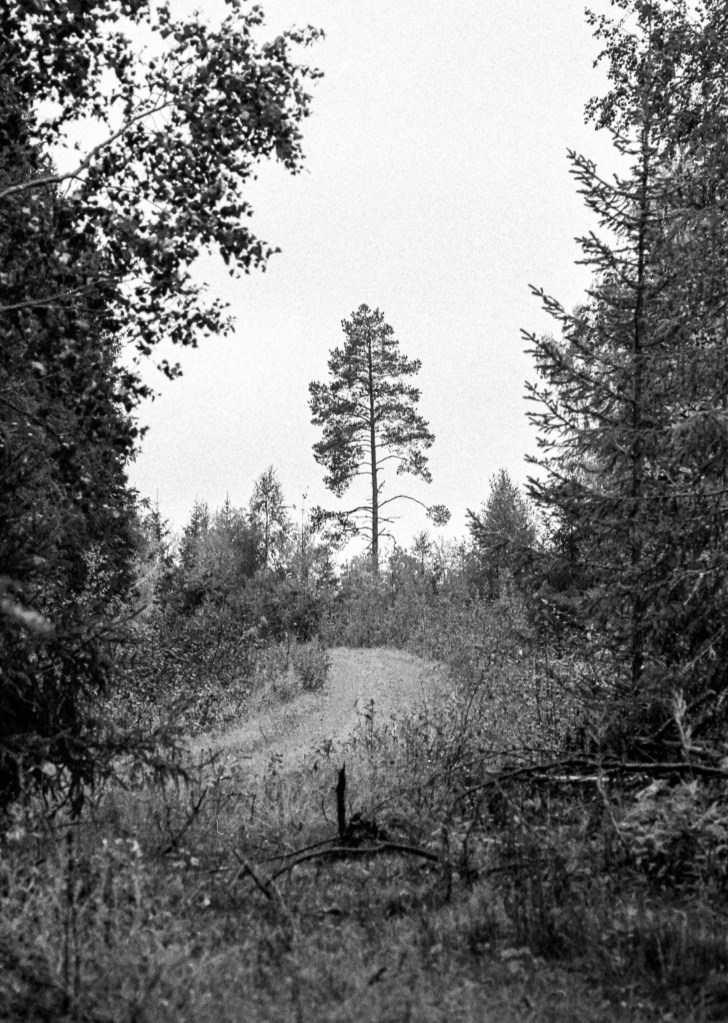
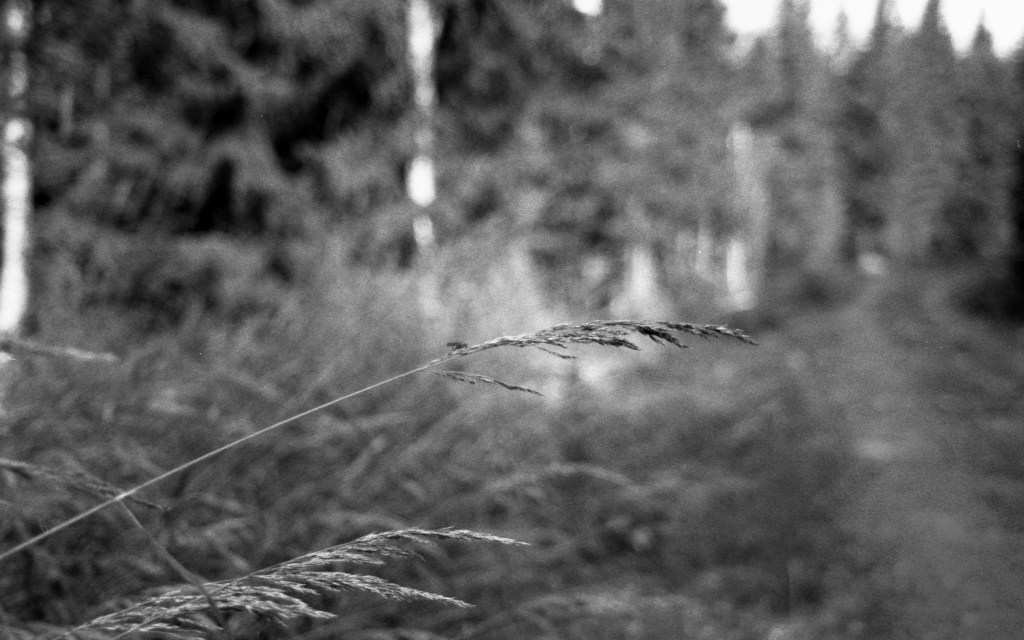
A tree – Olympus iS-1 – Ilford HP5 plus – Ilford ID-11 1+1

On the positive side, I must say that the lens is its Olympus name worthy. It performs very well both on its widest and longest settings and the when the AF hits it seems to be a very sharp lens.

As you can see through the images and their captions, I went for Ilford HP5-plus for my test this time. I actually used the roll that came with the camera. This is a film I use often and that I find works very well with the conditions like what I had on this day. Overcast with a bit of rain. I find that this film adds an extra element of texture to the images in a very nice way with its grain-structure which is visible, but pleasing. Even in 35mm shooting.

APX 100, another go!

Yet another time, I find myself out trying the ultra-cheap AGFA APX100 that I managed to buy 100 ft of earlier this year. This time, I loaded it into an old Delta 400-casette because I wanted to use it in one of my more automatic cameras. My initial thought was to use the Minolta Dynax camera I own, but since I loaded it a cartridge DX-coded 400, and the fact that I cannot override the ISO on the Minolta, I had to look another way for this outing, and I opted for the Nikon F80 with the Voigtländer Skopar 28-80mm Zoom lens I used in the last entry.

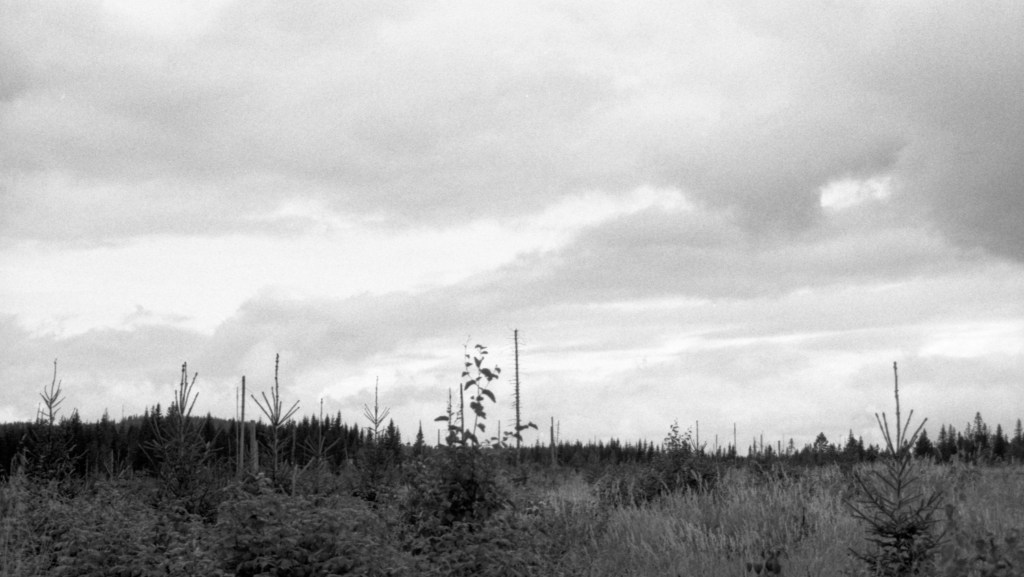
I have previously struggled quite substantially with making this film work for my type of photography, and for this time, I decided to go out to a logging area close to where I live. When you are cutting down trees in Norway, you have to let some trees stand to accommodate for the loss of animal homes, and this creates a rather interesting atmosphere where some trees really stand out. This very contrasty scene should help the film to get this contrasts out rather than creating some bland mushy mess, as it tends to do with very green scenes.

A lonely thistle – Nikon F80 w Voigtländer Skopar 28-80mm f3,5-5,6 – Agfa APX100@50 – Ilford ID-11 1+1

For positive things, I really found that the sky was brought out really well on these images, if that is due to the exposure or the film I am not sure, but it does create some extra mood and context to the images which I find really nice. Also, this time, I chose to overexpose the film a stop in exposure and develop for the full film speed of 100. Ive found that this gives me the best negatives with this setup and I chose to develop with ID-11. I am not sure if I find ID-11 to be a good match for this film as it seems to enhance the feeling of the grain somewhat. The film itself is extremely grainy for a 100 ISO film, and maybe the best idea is just to embrace the grainy feeling and go with Rodinal.

A lonely birch – Nikon F80 w Voigtländer Skopar 28-80mm f3,5-5,6 – Agfa APX100@50 – Ilford ID-11 1+1

As you can see in the sky on this image, the grain structure of this film is very coarse and raw even with a fine-grain developer like ID-11, and I actually find it rather unpleasant in these images. Just to rule out the fact that this could be down to my scanner, Epson V600, I went for a quick dark-room session making a print of the Thistle-image, and the grain is very prominent even in relatively small enlargements such as 4×5 or 10×8. This film might not really work very well for landscape-photography in any way, and I think my next experiment with this film will be more in the fields or architecture or urban details and embracing the rawness and graininess of these negatives.

Tree-lines – Nikon F80 w Voigtländer Skopar 28-80mm f3,5-5,6 – Agfa APX100@50 – Ilford ID-11 1+1

I actually really like the composition of the image above, but it is clear that it does not really work with this setup of film, camera and lens. I like that centered slightly diagonal stem and the upright spruce behind it, bit I do not care that much for the mushy gray grassy-area where one cannot really distinguish what is grass and what is small spruces. Also, the sky shows the raw grain that I feel is rather unpleasant even though it makes for somewhat of a moody feeling.

Shooting with zoom

Many years ago, when I was given my first analog SLR camera as a gift from my uncle, I got my interest for photography sparked immediately. This was a time where digital cameras weren’t a thing, and Kodak was a company as famous as Coca-Cola to me and my friends. If I talk to children and teenagers today, they might not even have heard of Kodak as a company.

My first SLR camera was a Nikon F60 and with it came a Voigtländer Skopar 28-80mm f3,5 lens. This isn’t by any means the sharpest or best lens in the world, but at the time I was given this package, it was my first try of a real camera with a proper lens on it. I was indeed very happy with it and I shot dusins of rolls of film with it. Usually Fuji C200 or Kodak Gold 200, with the occasional Agfa-film. From that time, I have changed cameras, medias and formats many times, but I have still kept the F60 and this lens. Sadly, the F60 does not work anymore, but I do have a Nikon F80, and I decided to give the old lens a try.

This idea struck me after I tried this lens on my D750, and I was rather underwhelmed by the results I got from that. I then figured it was worth giving it a go, once again with a film and see if it would work.

A little birch – Nikon F80 w Voigtländer Skopar 28-80mm f3,5 – Ilford Delta 400 – Ilford ID-11 stock

I then figured that I would take another old friend out for a spin as well. The Ilford Delta 400. I have never really got the love for this film because I often tend to prefer the look of HP5+ to the look of the Delta 400. This however, doesn’t mean that the Delta 400 isn’t a brilliant film, and since I was going in rather bright conditions, I figured the finer grain structure would make my images shine more in the highlights. I also went for a development cycle in ID-11 to really give it the finest grain possible with the developers I currently own.

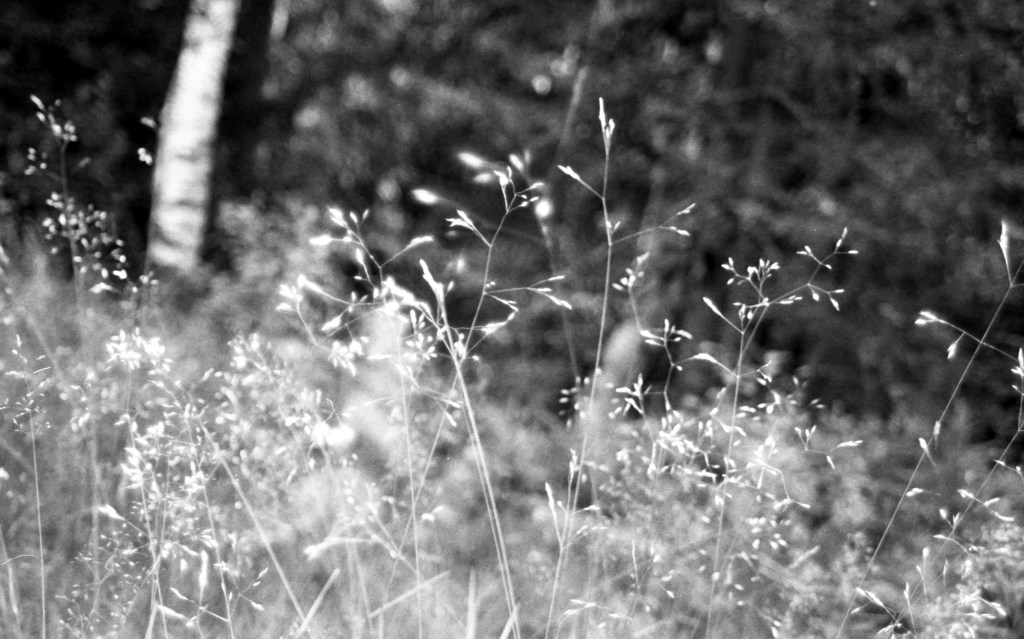
Some grass – Nikon F80 w Voigtländer Skopar 28-80mm f3,5 – Ilford Delta 400 – Ilford ID-11 stock

I went mainly for what I refer to as «small landscape» for this shoot. I define most of my landscape photography work into the two categories «small» and «big» landscape. A big landscape photo is a view, a mountain, a lovely lake and so on. Small landscape are more details and small snippets of wheat my surroundings look like. This category is often easier to find and work on in the East of Norway where I live, where most of the landscape is forest and rather flat areas.

Some more grass – Nikon F80 w Voigtländer Skopar 28-80mm f3,5 – Ilford Delta 400 – Ilford ID-11 stock

All in all, I had an enjoyable little outing with my old lens and the F80. It is clear though, that my eyes for lenses have changed somewhat over the years, and I am not blown away by the sharpness I see in these images, but it could also be down to my rather «simple» scan process for these images and my general preference for medium format negatives.

Misty Woodland

Spring is an incredible time of year in Norway. This spring has been incredibly cold and slow, and even now, in the middle of May, we are bothered with snow in the forest. The good thing about that is that you, as a photographer isn’t very bothered with other people along the paths and you in most cases have the place to yourself. Today, I went out into some local woodland that I know quite well. Yesterday was a very rainy day, and it rained all night, so I figured that the snow was most probably melted away in the forest by now. I was very wrong, and I was not able to walk further into the forest than about four hundred meters before the snow was too deep. Also, the path looked more or less like a stream, and I had the feeling that most people would go for a swim rather than a walk on a location like this.

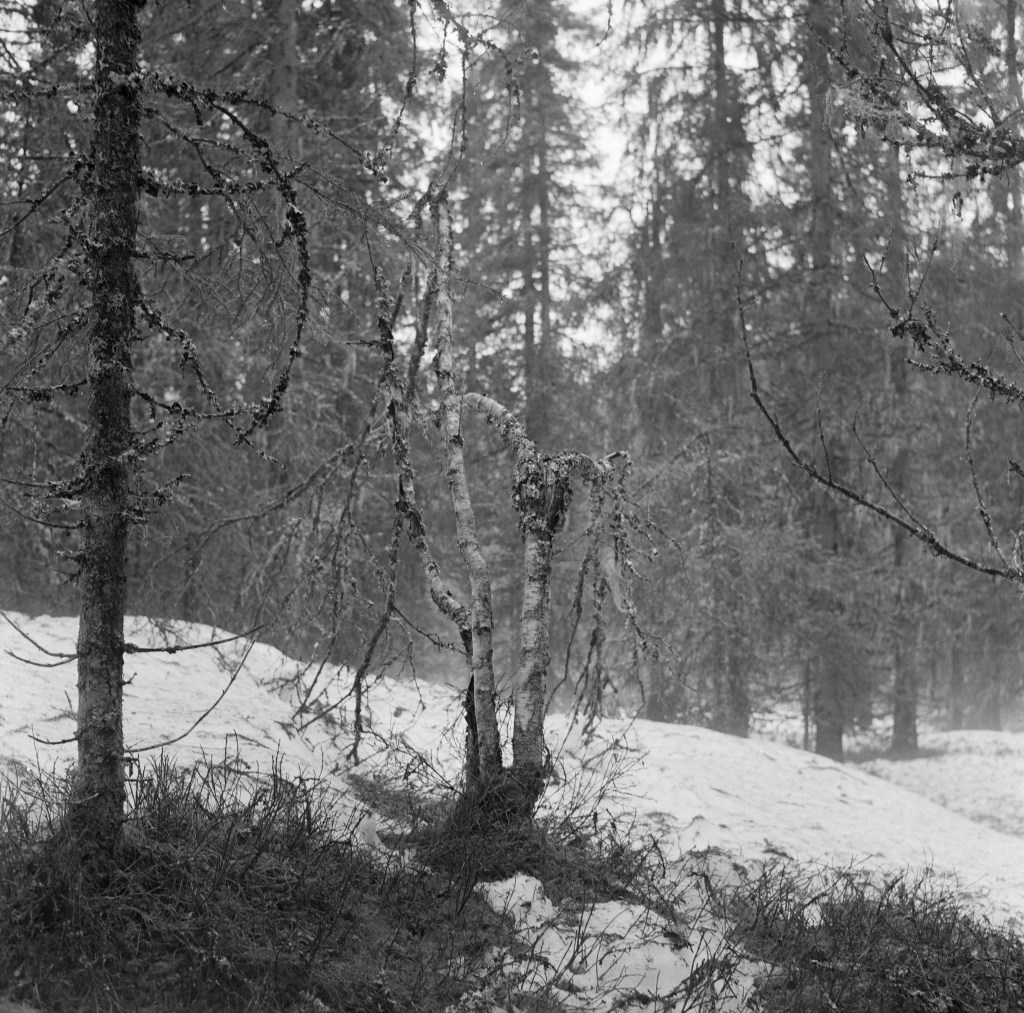
Traces of winter – Zeiss Ikon Ikoflex, Ilford HP5 plus, Ilfotec ID-11 1+1

Nevertheless, I went out this morning and waded myself through the soaking wet forest floor searching for nice woodland-compositions. These kind of conditions, grey, wet and misty days, are the conditions that inspire me the most. They makes the location stand out in a very different way than you would see it on sunny days, and you spot details and areas you wouldn’t see if the light was brighter.

On this particular outing, I went for the Zeiss Ikon Ikoflex, a TLR-camera that I have owned for a while, and that I absolute love using. There is something about this camera that inspire me. The world looks very nice through the waist-level viewfinder on the Ikoflex, and there is something about the way the lens renders the images that really suits my eye. I chose to shoot at shallow depths of field in this particular outing for two different reasons.

First of all, I wanted to emphasis the relaxing bokeh-feeling this lens gives and how smooth the sharpness of this lens is at around f3.5 and f4. It gives a very relaxed feeling to the scene. Secondly, my particular Ikoflex has some faults with its slower shutter-speeds and below 1/50th can give a very unpredictable result when used. From no activity at all, to just a random shutter-speed. I should probably have it serviced, but I guess fixing this one would be too expensive compared to its value, and it serves me well as it is at this point.

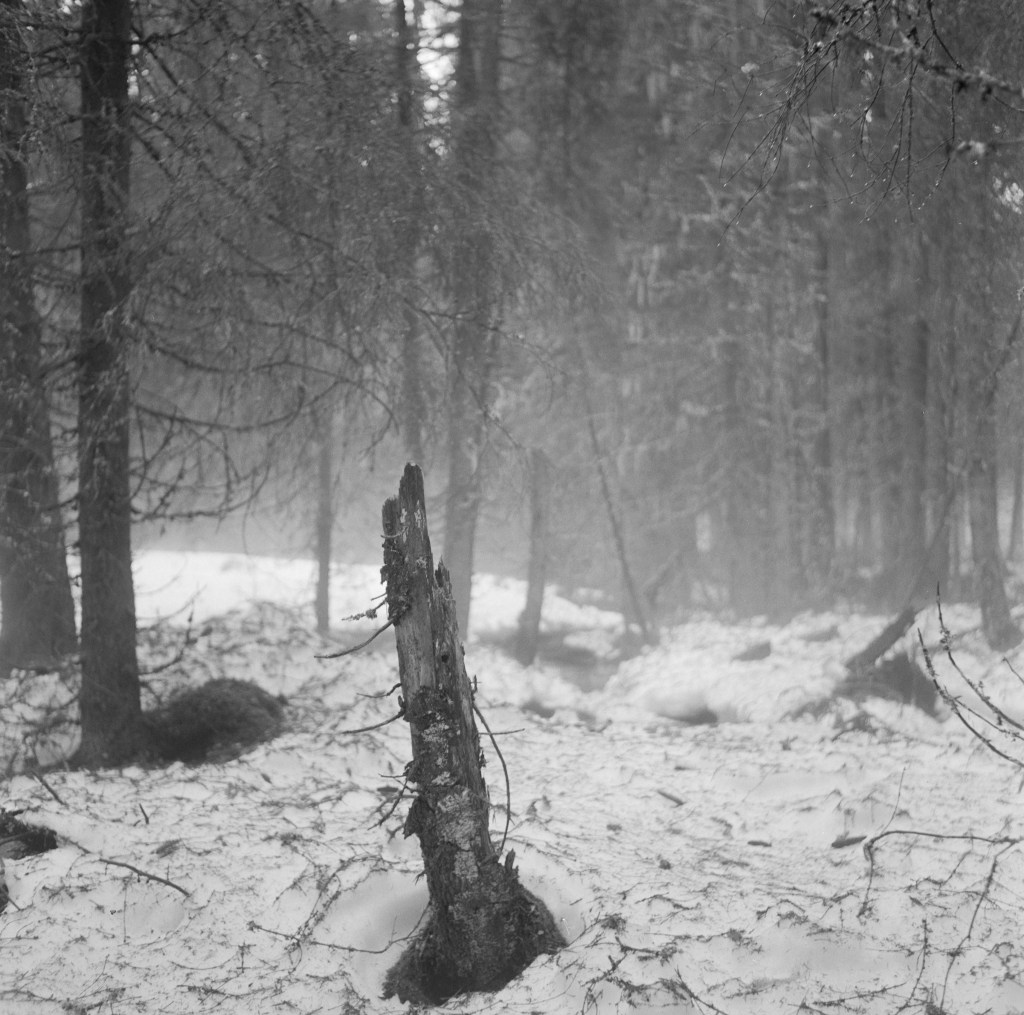
Scene of melting – Zeiss Ikon Ikoflex, Ilford HP5 plus, Ilfotec ID-11 1+1

For that last reason, I chose to go with a very flexible film to give me some wiggle-room with my exposures. I went for a roll of Ilford HP5 plus that I shot at its box-speed of ISO 400. After seeing the conditions in the forest when I came there, with that layer of mist that I didn’t expect to find there due to the conditions in general, I was very happy about this choice of film for that reason as well. Ilford HP5 plus is fantastic at capturing the mood of a misty forest.

Old mans beard – Zeiss Ikon Ikoflex, Ilford HP5 plus, Ilfotec ID-11 1+1

Even though the walk this time wasn’t that long, and the way there was rather wet and unpleasant; I actually had to jump across a stream of melting-water to reach the path; I got some images that I am very happy with. I also really enjoyed my little adveture into the wet and misty forest, and I will certainly be out again in these kinds of conditions soon.

Testing out some cheap film

I am not usually bulk-rolling film, but not long ago, I got hold of a 100ft roll of Agfa APX100 for very cheap money. I decided to give it a go, as I have previously been very fond of affordable films like the Fomapan 100 which I also tend to bulk-load, as it is relatively inexpensive to do. I have found my way of exposing and developing Fomapan 100 that gives me the results I want. This method includes exposing at EL 50 and shave 20% off the recommended development time with Kodak Xtol 1+0.

As the Agfa APX100 is a brand new film for me, I decided to shoot it at box-speed and develop as the massive development chart suggests. As Kodak Xtol have been out of stock in Norway for a very long time now, I decided to use Ilford ID-11 to develop this film. I chose the dilution 1+1.

Winter leaves as Spring emerges – Konica Autoreflex TC – 50mm Hexanon f1.8 – Agfa APX100 Ilford ID-11 1+1

Immediately, when looking at the negatives and their scans, they appear slightly under-exposed, and it is clear to me that this film needs more exposure than I gave it at this first tryout. Especially definition in the darker areas is easily lost, and I think that a slight pull could give me a flatter negative that will be easier to work with in post-processing. My next roll will be tested with the method I use for Fomapan 100, and I will evaluate those results as well.

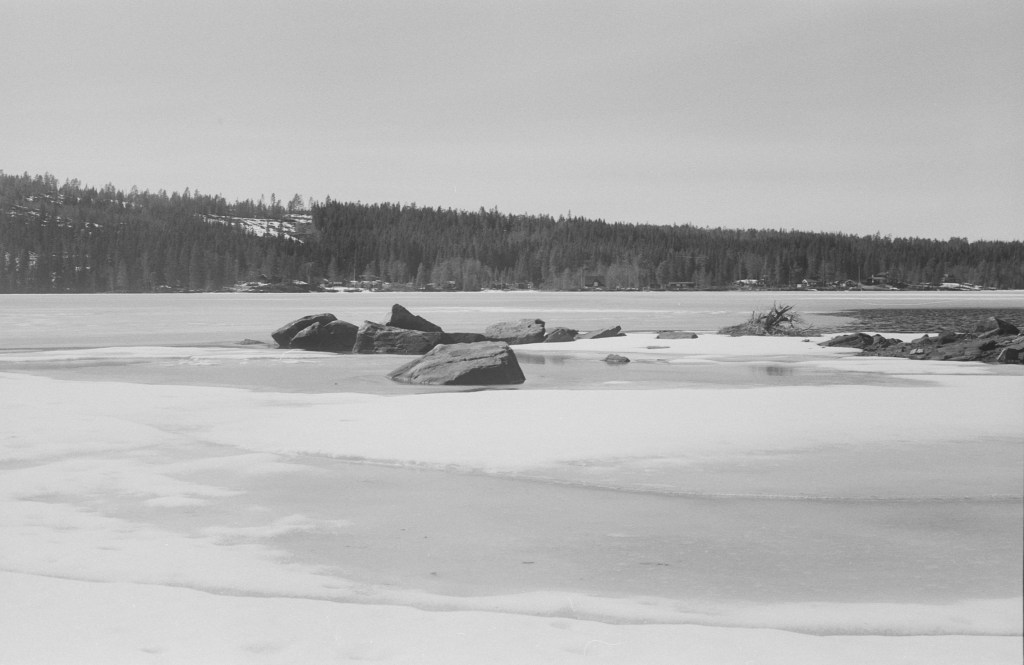
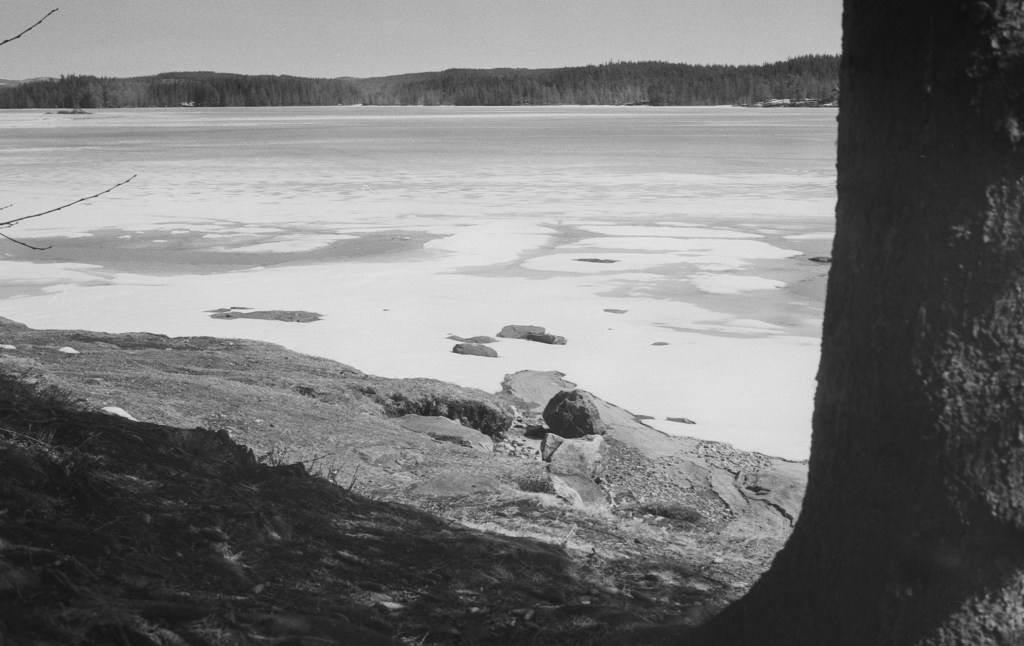
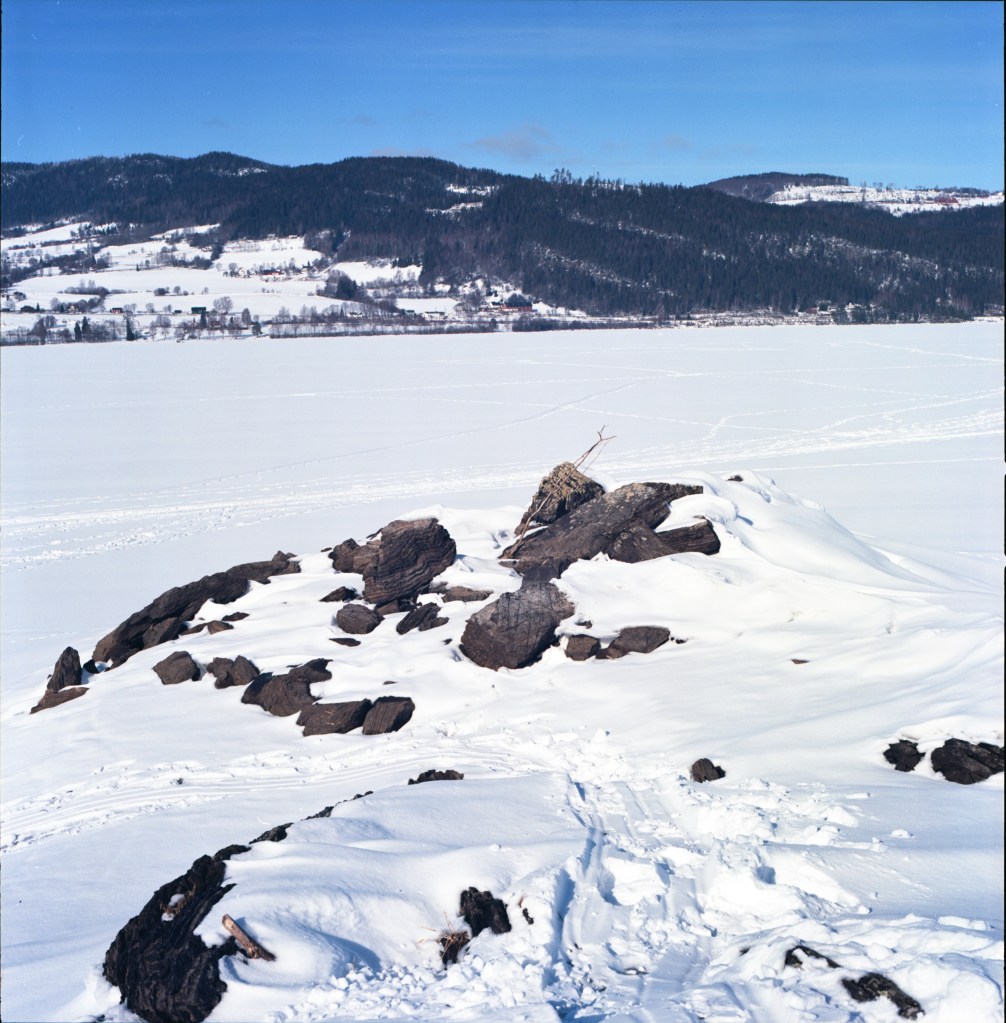
Spring by a frozen lake – Konica Autoreflex TC – 50mm Hexanon f1.8 – Agfa APX100 Ilford ID-11 1+1

For this test, I chose to go with the Konica Autoreflex TC. A camera I bought this autumn and that I have found to work very well and be reasonably accurate at shutter speeds faster than 1/60, which is the area in which I chose to shoot this time. The lens is a very standard Hexanon 50mm f1.8, a lens that is reasonably sharp and is easy to focus. Some of the images were shot using a yellow filter and some without the yellow filter.

The film has the amount of grain that I would expect from a 100 ISO traditional film and it seems to me as it behaves very much like the Fomapan 100 in its sensitivity. The lighting conditions on the day were quite contrasty, and I find that to be very clear from the negatives. They seem more contrasty than I would expect from these conditions with my standard go-to slow film, FP4 plus. That said though, it is important to clarify that I am basing this on just one outing and one roll of film, and that I by no means am a film-expert. I will use this film some more over the coming weeks, and find out how well it works for me and how I can get it to work for my style and preference.

Rocks in the ice – Konica Autoreflex TC – 50mm Hexanon f1.8 – Agfa APX100 Ilford ID-11 1+1

What I found when working with these scans in Lightroom, was that getting the correct contrast-levels was tricky. You cannot go to far before you lose your shadows and you easily blow out the whites. The images taken with the yellow filter in general give a better balance in the contrasts.

Darker areas are easily lost – Konica Autoreflex TC – 50mm Hexanon f1.8 – Agfa APX100 Ilford ID-11 1+1

An enjoyable walk

The other day, I went out for a little walk by the lake Mjøsa, biggest lake in Norway. Along me I brought the Canon T70 and a roll of Ilford FP4 Plus. It was a rather windy day and the weather was dull and overcast and with some threatening skies promising some downfall in some form. Whether it would come as snow or as rain was anyone’s guess at this point. Since the weather was rather unpredictable, I chose to not bring any video-equipment, so this is a blog-only post. For readers only.

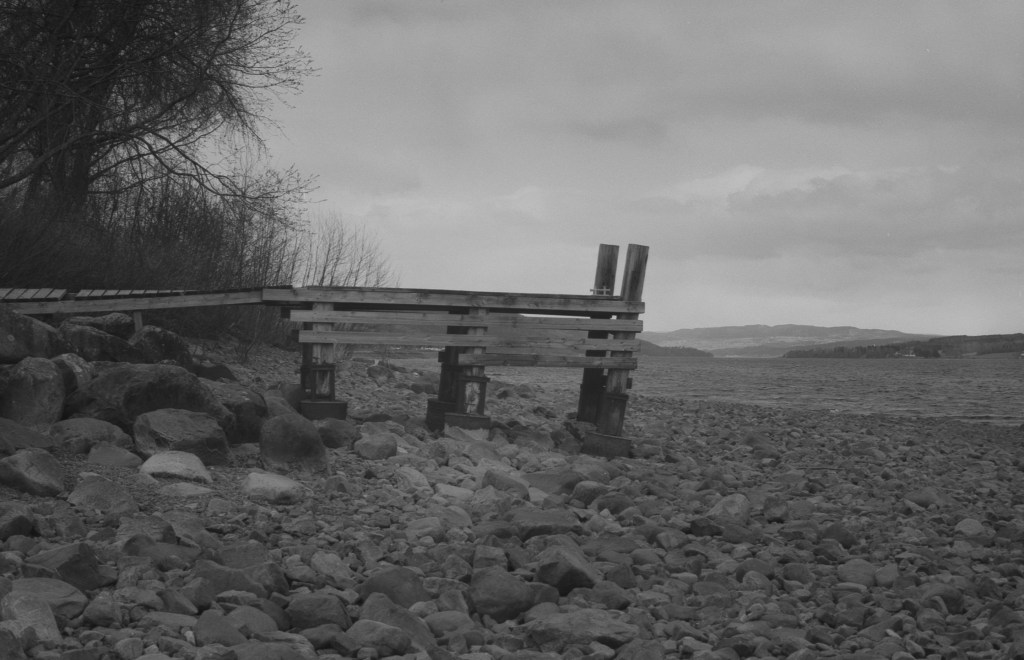
Threatening skies ahead – Canon T70 + Canon 50mm f1,8 FD lens – Ilford FP4 Plus – Adox Atomal 49

At this time of year the lake is still low and one can walk on what most of the year is submerged by the lake. Once the snow-melting in the mountains picks up some time in the middle of may the water level in the lake will rise and the are I photographed this time will noe be accessible.

Frozen water motion – Canon T70 + Canon 50mm f1,8 FD lens – Ilford FP4 Plus – Adox Atomal 49

I snapped some shots on my way along the lake towards a little woodland area not far from the main path along the lake. I noticed a lot of motion in the water, and I tried to freeze it in action with the higher shutter speeds on the Canon, and even though some of the ended up slightly under-exposed I also got a few decent exposures.

Once again I chose to develop this film with Adox Atomal 49, a developer I know gives me very fine grain and is very good at keeping shadow-details without blowing out the whites. Whether this is considered a compensating developer or not, I am uncertain, but I find it to give me relatively flat negatives that are easy to scan and work with in post-processing. After using 10 liters of this developer I have found that the dilution 1+1 is the right one for my taste. I also like the way you get Perceptol-grain without having to sacrifice film speed. In these times when Kodak Xtol seems to be in shot supply, I have used Atomal instead. However, for my next big-batch I am mixing Ilford ID-11 instead of Adox Atomal 49.

A bent tree – Canon T70 + Canon 50mm f1,8 FD lens – Ilford FP4 Plus – Adox Atomal 49

After a while I approached the trees and the little woodland-area which sadly has shrunk quite a bit over the last years due to construction of new residential areas closer to the lake, but some interesting trees are still left, and with the snow disappearing, it is once again accessible.

I find woodland-photography the most pleasant challenge for me as a photographer. Shooting a decent woodland composition can be very difficult, but at the same time, working in such an environment has a certain peace to it. The feeling you get from being in the woods is unlike anything else.

Better times ahead- Canon T70 + Canon 50mm f1,8 FD lens – Ilford FP4 Plus – Adox Atomal 49

Frames of Norway pt. 2

In this second entry in the series “Frames of Norway” I am walking towards the viewing point “Amlisberget” to get the view over the little town Moelv and the lake Mjøsa in the east of Norway. This area of Norway has a very different landscape to it than what one often thinks of as Norwegian landscape. Rather than steep mountains and dramatic valleys and fjords, this area has a calmer, more rounded mood to it. The calm landscape forms were eroded during the last ice-age. There are a huge number of lakes and ponds, and the area has a lot of glacial till and in summer time, the area is one of the lushest farming areas of Norway.

The lake Mjøsa is the biggest lake in Norway and I will feature it in a number of entries in this series, focusing on different aspects or areas around it. Living and working in this area, it is a rather difficult to “forget” about it due to its size, and the landscape around the lake changes a lot from south to north, as well as its history.

A view over Mjøsa from Amlisberget – Canon T70 w Canon 50mm f1.8 – Ilford FP4 Plus Adox Atomal 49

The area around Moelv, has a long history for its industry and being one of the centers for trade and communication in its part of the lake. Being the “mid-point” between the bigger towns around the lake, Gjøvik, Lillehammer and Hamar, just about 20 minutes to each of the bigger towns, Moelv was an ideal loading-area for steamboats doing the so-called “across-trafic” indicating that they were crossing the lake, rather than doing longer trips along the lake. Boats doing this “across-trafic” were in general smaller boats owned by locals or smaller companies, and they would carry goods from smaller ports to the bigger port in Moelv where the bigger boats and ships would take over.

This is an interesting point, today, when we have the bridge over Mjøsa, we see the lake as an obstacle in our travels, but back then, the lake  was the biggest and most efficient “highway” of the area with an incredible number of steam and motor boats sailing all over it. At some point, the church in Moelv served for a parish including farms and houses on both sides of the lake and having “church boats” to transport people across for sermons and so on. This connection between Moelv on the east-side of the lake and Redalen on the west side of the lake, is still strong today. This is also where the bridge is crossing the lake.

Woodland and farmland – Canon T70 w Canon 50mm f1.8 – Ilford FP4 Plus Adox Atomal 49

For this outing, I chose to go with a 35mm camera. I wanted to get a very “analog feel” to the images and I figured that being on a new location where I had never been before, I might get “shutter happy” and boom off a lot of shots. And I was right, I filled the whole roll in about half the trip.

A view towards Næroset – Canon T70 w Canon 50mm f1.8 – Ilford FP4 Plus Adox Atomal 49

I chose to go with the Canon T70, the revolutionizing first attempt from Canon on making a computerised camera. A camera loaded with different “safety features” such as sliders and buttons to make sure you don’t accidently open the camera mid-roll or accidentally rewind the film mid-roll. It also has a very good and accurate light-meter, and an apperture-priority setting that is working flawlessly. I also like the fact that this is a 100% Manual Focus camera and that you can focus manually without having to deal with the “sloppy” and “vague” feeling of an AF-lens. This is personal preference of course, but I prefer MF for this kind of use.

The Path – Canon T70 w Canon 50mm f1.8 – Ilford FP4 Plus Adox Atomal 49

I set out into a forest area where there are a lot of ski-tracks in the winter. I parked at Høgring, where the sports team Næroset IL has a little skiing cabin, and I walked from there. Forestry has meant a lot to this area, and previously Moelv had both a cellulose factory and a huge sawmill. The sawmill and its wood-workshop is still active and is one of Norways biggest providers of wood even today under the name of “MOELVEN”. The cellulose factory ceased operations in the late 1930’s due to the big depression in international trade.

A view over Mjøsa and Moelv – Canon T70 w Canon 50mm f1.8 – Ilford FP4 Plus Adox Atomal 49

Because the colours in the Norwegian nature is rather greyish and boring at this moment right after the snow melts, I decided to shoot black and white. I went for a traditional film, the Ilford FP4 plus, one of my absolute favourite films, and I used both yellow filter and a two-stop graduated orange filter. I was a but uncertain how the aperture-priority setting would deal with a soft-grad filter, but it seems to have correctly exposed the sky and overexposed the land-area, which was what I wanted it to do. Concidering the fact that the filter-thread on the lens is damaged, the images turned out rather well.

More forestry – Canon T70 w Canon 50mm f1.8 – Ilford FP4 Plus Adox Atomal 49

I chose to develop with Adox Atomal 49, a developer I have found myself to really like. Especially traditional films like FP4 and HP5 gives great results with this developer, and I find it to lift their abilities. It seems to be somewhat compensating and gives a rather flat negative and great shadow-detail even when the films are shot at box-speed. The down-side is its toxicity, and I find that even though I have loved my two first batches of it, I am hesitant to buy more of it because of this. I obviously collect the rest-developer and deliver it to a designated collection place where it is dealt with properly, but I still don’t like the thought of using something this toxic.

As you can see from many of the images, farming, as well as forestry is important for the area. Moelv was, and still is an important hub for the distribution and sale of grain and farming products in the area. Strand Brænneri was opened by the local farmers in the mid 1800s and was one of the first cooperative agricultural businesses in Norway, and became an important part of building Moelv and the surrounding area into the successful area it became in this time.

A lonely birch – Canon T70 w Canon 50mm f1.8 – Ilford FP4 Plus Adox Atomal 49

I am proud to live and have so easy access to an area with this amount of “cultural landscape”, and where you can really see how nature and man has lived together in peace over so many years.

A Bladventure

For the sake of balance, and because I happen to have some nice images, I am going to deviate slightly from the line of «cheap cameras» in this entry, and show some images taken with my, not by any means cheap, Hasselblad. Or in my case, some times a hassle-blad. The first thing my Hasselblad did to me after I bought it, was jamming up. And not the cute little sweet jam that can easily be mended, but the proper jammedy-jam-jam that has to be sent off for a very expensive repair abroad.

I recently got it back from repair, and I have brought it along for a few outings lately, and I really find myself to love using it. Not that it really makes any big difference to anyone an image is taken with an expensive or a cheap camera, but to me it has to do with inspiration. Some cameras inspire me to go out shooting and some do not. That’s why i often feature the Olympus, the Konica, Ikoflex and the Bronica ETR. For different reasons, these cameras make me «get out there» and «get the shutter finger active».

Reklamer

Here are some shots I did recently with my Hasselblad, that I find to inspire me a lot. The colour ones are taken with Kodak Ektar, and the BW ones are done with Ilford Pan F plus, that I pulled a stop. The Pan F is developed in Adox Atomal 49 stock for six minutes, which is 20% off the time for box speed. After having used Atomal 49 for a while, I have found this to be a developer I am very happy with, and it might replace Xtol as my number one developer.

The scent of spring

Nothing fills me with such joy and happiness as the day when I for the first time see grass being liberated from the firm fist of the winter-snow. Today was that day, and I immediately decided to go shooting. I loaded the Zeiss Ikon Ikoflex with a roll of Ilford FP4 plus, and went down to Kråkvika by Hov. A location where spring is often present early. And sure enough, there were a lot of spots and spaces where the snow was melted away, leaving the lifeless brownish colour of grass that has been buried for a while under the snowy carpet. The colours weren’t really spectacular, hence the choice of black and white-film.

To me, the Ikoflex is maybe one of the cameras that inspires me the most. There is something about the sensation of using something so brilliantly engineered and with a lens that sharp in a very light and beautiful box that appeals to me. I haven’t used it for a while because the winter was exceptionally cold this year, and I don’t think the Ikoflex would be too fond of the cold weather. Also, my Ikoflex has developed misfiring on lower shutter speeds, so I tend to keep it at 1/100th or 1/300th, which could be too short shutter speeds for winter-time. Whether I will have it repaired remains to be decided, but for my current use, the Ikoflex works well.

Spring landscape with melting snow – Zeiss Ikon Ikoflex – Ilford FP4plus – Adox Atomal 49

I find that filling the roll and finding the right compositions, is a very easy task with the Ikoflex. The inspiration comes naturally when using it, unlike the Zeiss Ikon Nettar, which I find that I can get bored when using. I have heard a lot said in negative ways about the Ikoflex and it being like an «over protective mother» or «insanely difficult and complicated to load», but I cannot understand how any of these can be true. If you read the manual, which I know is a very uncommon thing for people to do today, you will very easily understand that the advance wheel will turn freely when it reaches frame nr 12, and that you have to manually reset it for frame 1. Not at all difficult. I have a video on Youtube showing how it is done.

Reklamer
I am a rock – Zeiss Ikon Ikoflex – Ilford FP4plus – Adox Atomal 49

Walking around on a day where the snow is melting and the landscape comes back into sight, makes you notice objects or shapes that would normally either be removed or invisible in the greens and lush landscapes. There is something «rough and contrasty» about these snow-melting days that really appeals to my way of composing.

An object – Zeiss Ikon Ikoflex – Ilford FP4plus – Adox Atomal 49

All in all, I had a very joyful little day out in the sun and I enjoyed every minute of shooting with the Ikoflex again. It is such an amazing little camera and the images really speak for themselves.

Going Panoramic in the fog

I have never worked with any kind of panoramic equipment before. I have held a Hasselblad X-pan in my hand at one point, but I never tried shooting it. Even so, panorama photography is interesting, and I have wanted to give it a proper try. Not that I will really try it properly in this entry, but I recently bought some very cheap 3D-printed (I guess) plastic parts off eBay. Specifically, the small plastic parts that you use for using 35mm film in your medium format cameras. To be honest, I didn’t really expect much results from this. My anticipation was the following:

  1. The film will not be kept dark enough after exposure and will be fogged.
  2. The film might not be kept flat enough in the camera.
  3. Composing the image will be difficult not having a proper viewfinder for it.
  4. Unknown amount of images pr film and difficult to know how far to wind.
The plastic-stuff and a canister of film. Not the one I used for this test.

I decided to give it a try in my Zeiss Ikon Nettar. This because it is the only MF camera I have where the film is inserted in the horisontal direction, allowing me to easily shoot landscape without turning my camera into portrait. I decided to go for a roll of Ilford Delta 400 and go for a little walk while the fog was lifting over the lake. I was looking for wide compositions, which was a new experience for me, and I felt that I often reverted back to looking for squares or normal rectangles rather than the super wide compositions that this line-up would allow for.

Didn’t quite nail it with this one. See the light leaks that I got for most of the shots on the roll. Luckily not too bad in this shot.

First of all, I can confirm the first part of my assumption. Using this system, with the 3D-printed parts, will give you severe light leaks between the shots. I know for a fact that it is not the light seals acting up, because I used black tape to ensure no light-leaks would come from that area.

Reklamer

For the most part, I think that the film stayed flat in the camera, and that the adapter kept it reasonably well aligned throughout the roll. I did; however, notice that the film was not as «in the middle» of the viewfinder as I had thought, and I shot a few of the frames «too high» losing parts of my intended compositions.

Over the rocks – Zeiss Ikon Nettar, Ilford Delta 400 Adox Atomal 49 Stock

Even though I like some of these images and the way they look and how they turned out, I am not certain I would use this adaptor system a lot. I will very likely do some more experiments with it and try it out at different occasions, and maybe I am luckier with my next rounds and avoid some light leaks. I find the system to be functional for shooting only one frame at a time. This would mean a lot of «cutting the film out of the camera» and «developing fragments of a roll». Not that I mind doing that, but it is a hassle.

Lifting fog – Zeiss Ikon Nettar, Ilford Delta 400 Adox Atomal 49 Stock