
One of the things I have been working with lately, is familiarizing myself with long super-tele lenses. I recently found and picked up a Vivitar 400mm lens for my Olympus OM-system and I also have a 75-300mm Tamron Zoom lens for my Nikon F-system. I have used the Tamron a little, but I have never explored it on the longest setting. For that reason, I decided to make this a project. I shot three different films. A Kodak ProImage 100, an expired Colorama 200 and a roll of Kentmere 100. The ones in-date were shot in the Olympus and the Colorama in the Nikon.
I first went out on an evening outing with the 400mm Vivitar. I shot a roll of Kodak ProImage that I had lab-developed my OsloFoto. I shot most of the shots on a tripod using a cable release. The lens is so long it cannot be safely hand helt by the camera without risks at the low shutter speeds I had to use. It was inspiring seeing how much was now suddenly a possible picture and seeing how I now had to think composition in a very different way.

I started looking for things that would usually not work as compositions. Like the top of the electrical masts at the location and some people out fishing in the lovely weather.

I then figured that a long lense like this would most likely produce a lovely bokeh and I chose to see if I could get some lovely macroesc shots of plants and flowers. The Bokeh is silky and looks really nice to my eyes.


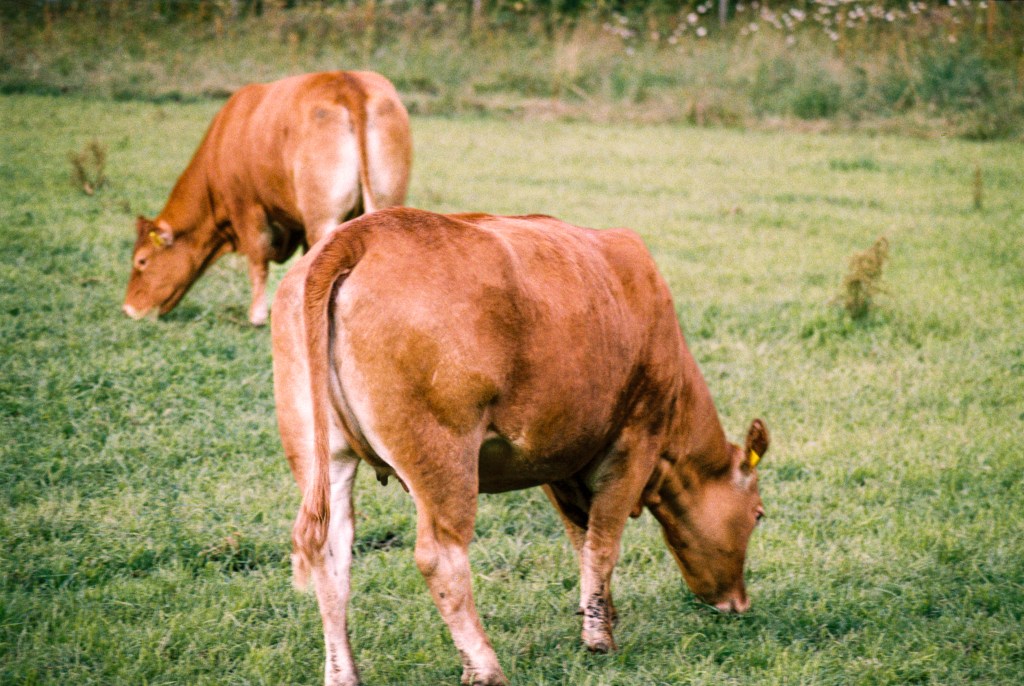
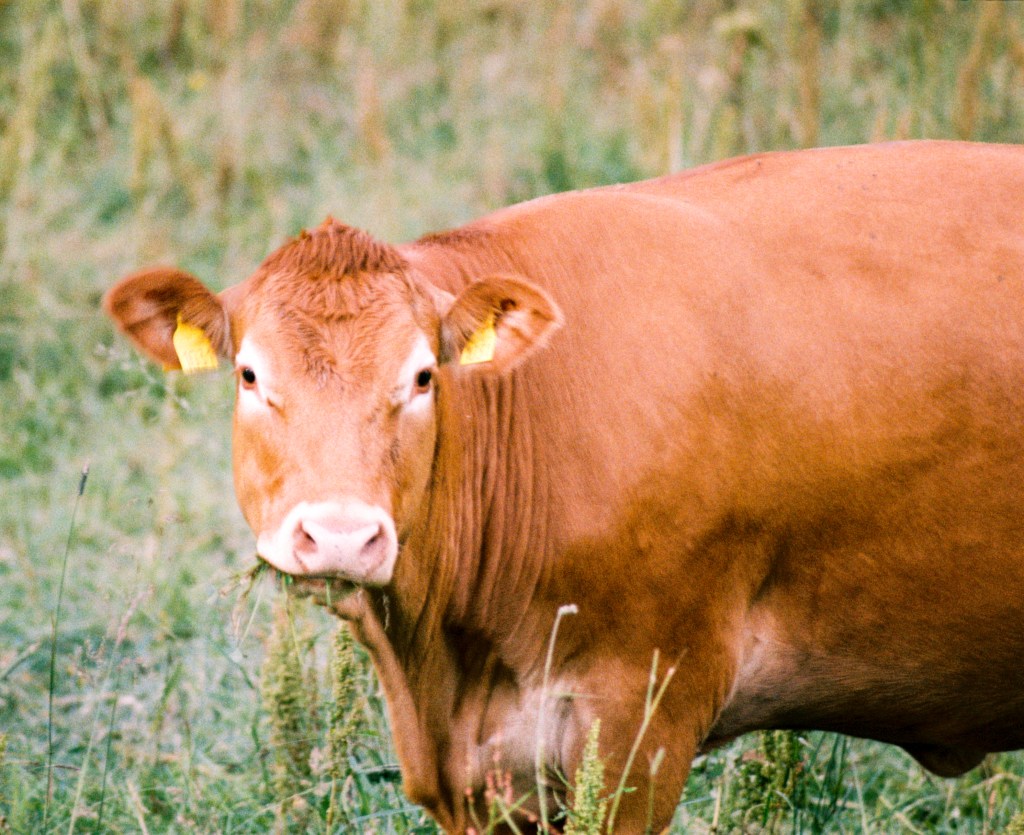
My next experiment was keeping a roll of expired Colorama 200. A consumer grade film made in the EU. My guess based on the colors is that we are talking about a repackaged Agfa Vista 200, but the film is expired and it is difficult to know what is attributes to the film and what is degradation over time. The film is 20 years expired and was shot at ISO 50. I managed to shoot it decently hand held on my Nikon F80 and I got a few interesting shots from this combination as well. My main focus for this film was some cows grazing in a field next to where I live. I made these shots when I was out strolling with my little daughter trying to get her to nap.


For the last outing I also shot some images with the 50mm f1.8 because I went to an interesting location I have visited a few times before.

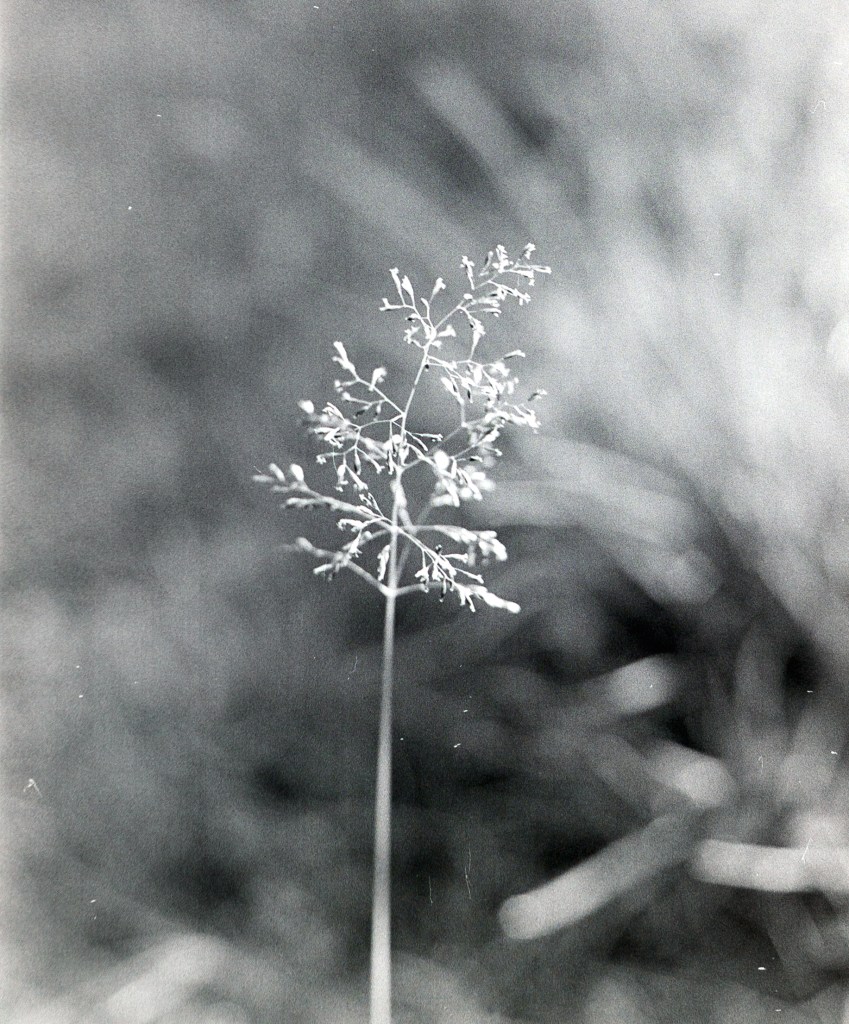

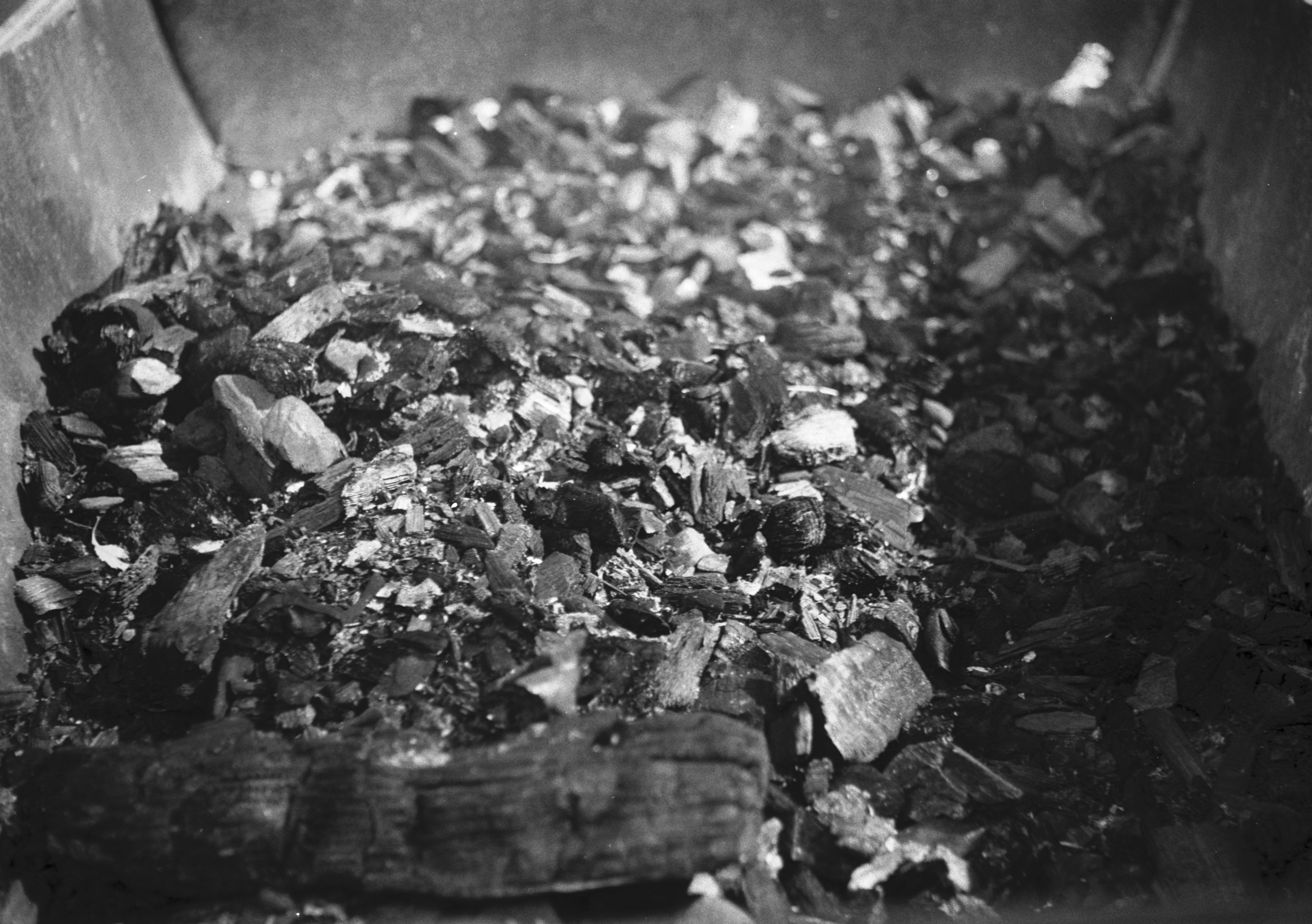
The images above are shot with the 50mm lens and a yellow filter for contrast. I didn’t find the same luck on this outing with the longer lens, and I have to go for another outing with black and white. These images are shot with the Olympus OM1 and a roll of Kentmere 100. I developed it myself with Adox Atomal 49. A fine grain developer that I have found to be fantastic. It has a bad reputation for being highly toxic, but so are most developers anyway. Considering that the SDS-sheets we look at are referring to the powder and not the stock of working solutions, I would argue that most developers are stock and working strength are reasonably safe when taking proper precautions. I always use gloves, eye protection and a dust mask when mixing the solutions. I also use gloves and eye protection when developing with a liquid solution.
My favorite image from the 400mm on this trip is this little spruce.

I have truly enjoyed working with this project and I will keep working on my long-lens skills. You might see more here in the coming months.






 Cheap Camera Adventures