Working with long lenses

One of the things I have been working with lately, is familiarizing myself with long super-tele lenses. I recently found and picked up a Vivitar 400mm lens for my Olympus OM-system and I also have a 75-300mm Tamron Zoom lens for my Nikon F-system. I have used the Tamron a little, but I have never explored it on the longest setting. For that reason, I decided to make this a project. I shot three different films. A Kodak ProImage 100, an expired Colorama 200 and a roll of Kentmere 100. The ones in-date were shot in the Olympus and the Colorama in the Nikon.

I first went out on an evening outing with the 400mm Vivitar. I shot a roll of Kodak ProImage that I had lab-developed my OsloFoto. I shot most of the shots on a tripod using a cable release. The lens is so long it cannot be safely hand helt by the camera without risks at the low shutter speeds I had to use. It was inspiring seeing how much was now suddenly a possible picture and seeing how I now had to think composition in a very different way.

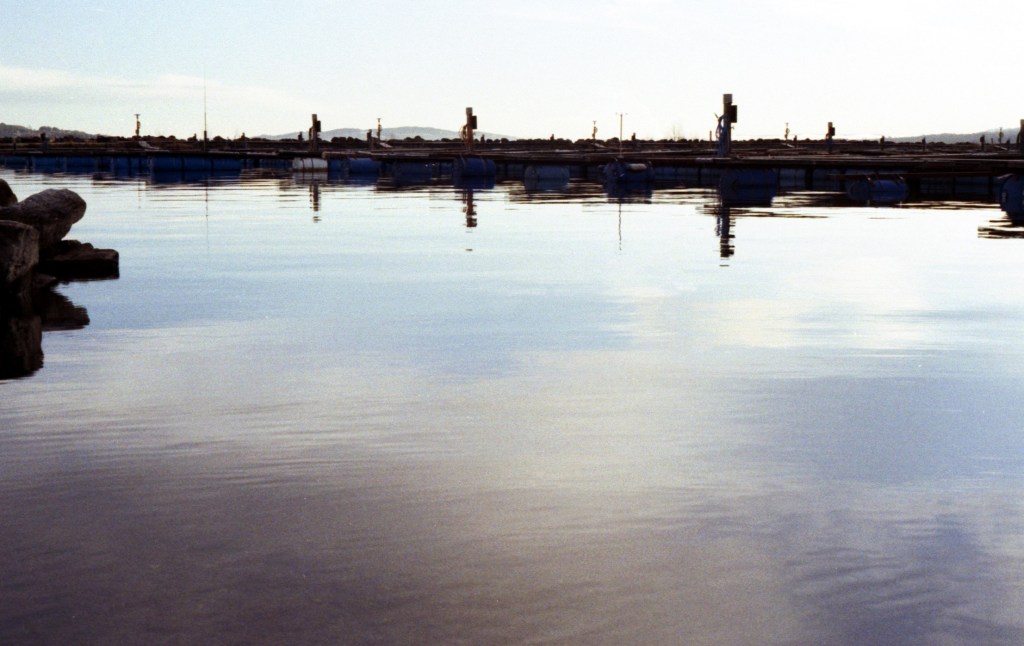
Olympus OM-1 + Vivitar 400mm f5.6 – Kodak ProImage 100

I started looking for things that would usually not work as compositions. Like the top of the electrical masts at the location and some people out fishing in the lovely weather.

Olympus OM-1 + Vivitar 400mm f5.6 – Kodak ProImage 100

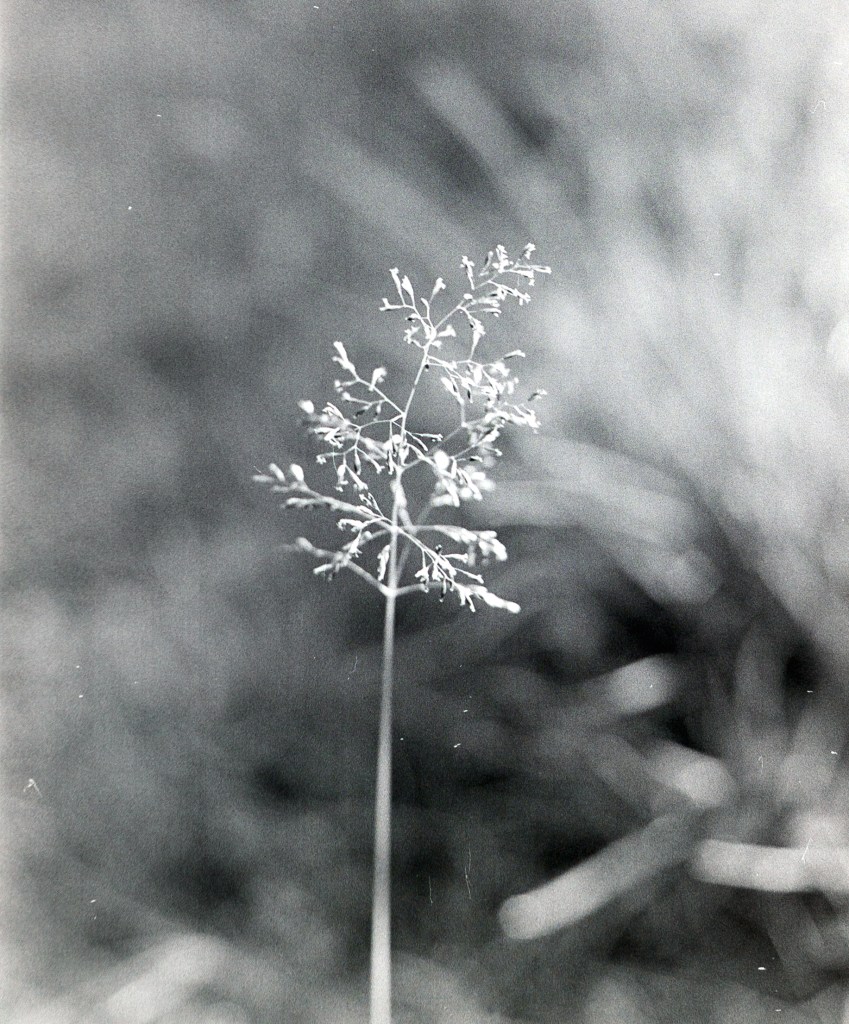
I then figured that a long lense like this would most likely produce a lovely bokeh and I chose to see if I could get some lovely macroesc shots of plants and flowers. The Bokeh is silky and looks really nice to my eyes.

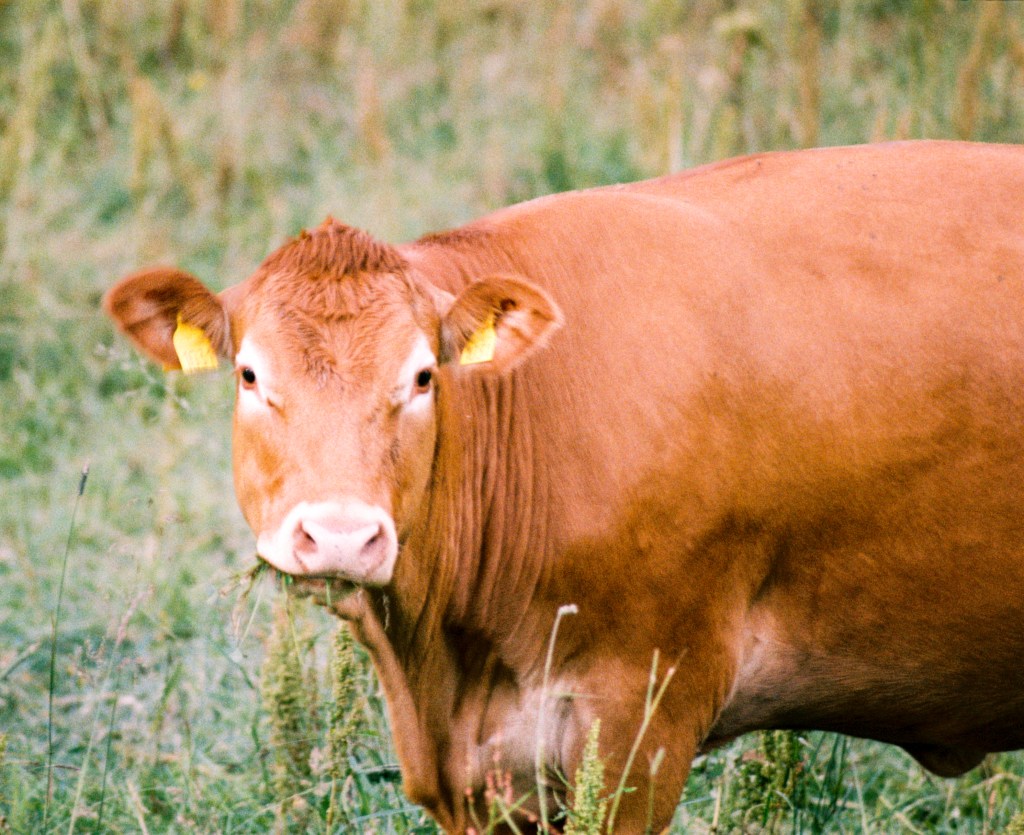
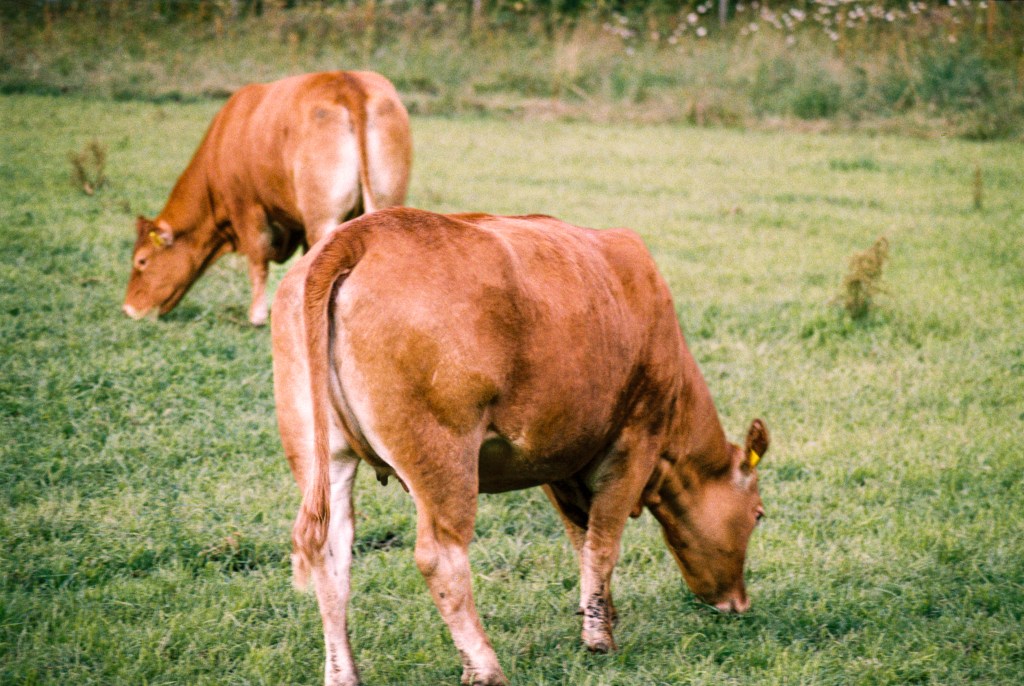
My next experiment was keeping a roll of expired Colorama 200. A consumer grade film made in the EU. My guess based on the colors is that we are talking about a repackaged Agfa Vista 200, but the film is expired and it is difficult to know what is attributes to the film and what is degradation over time. The film is 20 years expired and was shot at ISO 50. I managed to shoot it decently hand held on my Nikon F80 and I got a few interesting shots from this combination as well. My main focus for this film was some cows grazing in a field next to where I live. I made these shots when I was out strolling with my little daughter trying to get her to nap.

For the last outing I also shot some images with the 50mm f1.8 because I went to an interesting location I have visited a few times before.

The images above are shot with the 50mm lens and a yellow filter for contrast. I didn’t find the same luck on this outing with the longer lens, and I have to go for another outing with black and white. These images are shot with the Olympus OM1 and a roll of Kentmere 100. I developed it myself with Adox Atomal 49. A fine grain developer that I have found to be fantastic. It has a bad reputation for being highly toxic, but so are most developers anyway. Considering that the SDS-sheets we look at are referring to the powder and not the stock of working solutions, I would argue that most developers are stock and working strength are reasonably safe when taking proper precautions. I always use gloves, eye protection and a dust mask when mixing the solutions. I also use gloves and eye protection when developing with a liquid solution.

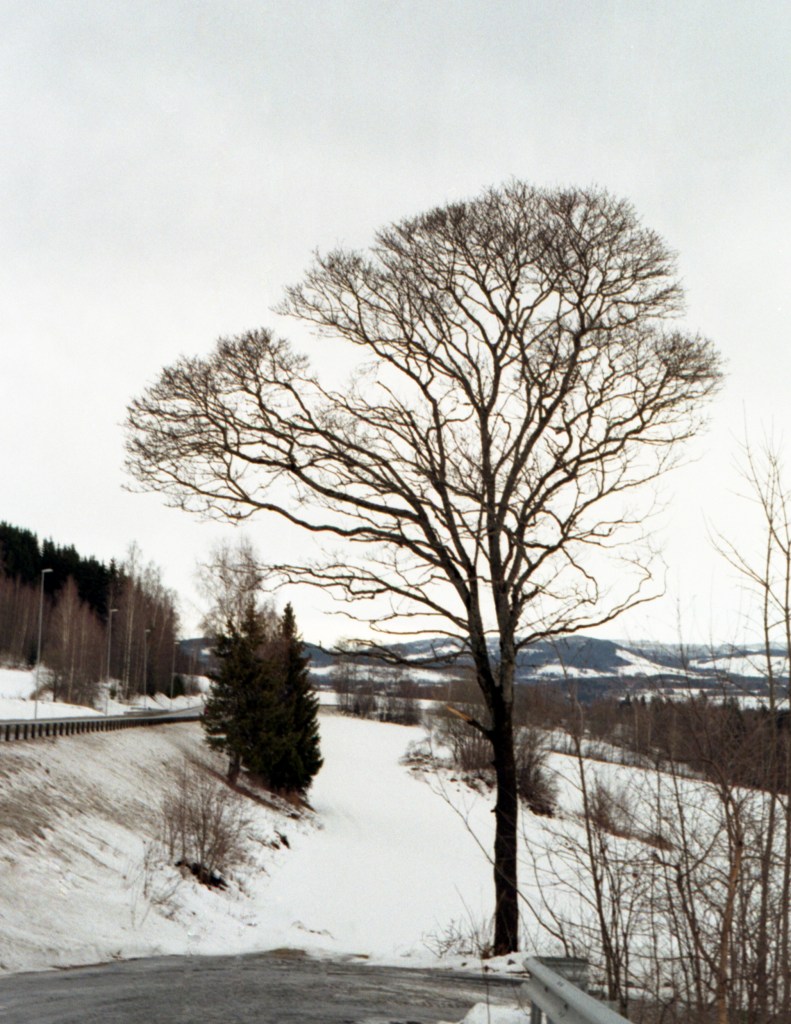
My favorite image from the 400mm on this trip is this little spruce.

I have truly enjoyed working with this project and I will keep working on my long-lens skills. You might see more here in the coming months.

Capturing bleak winter colours

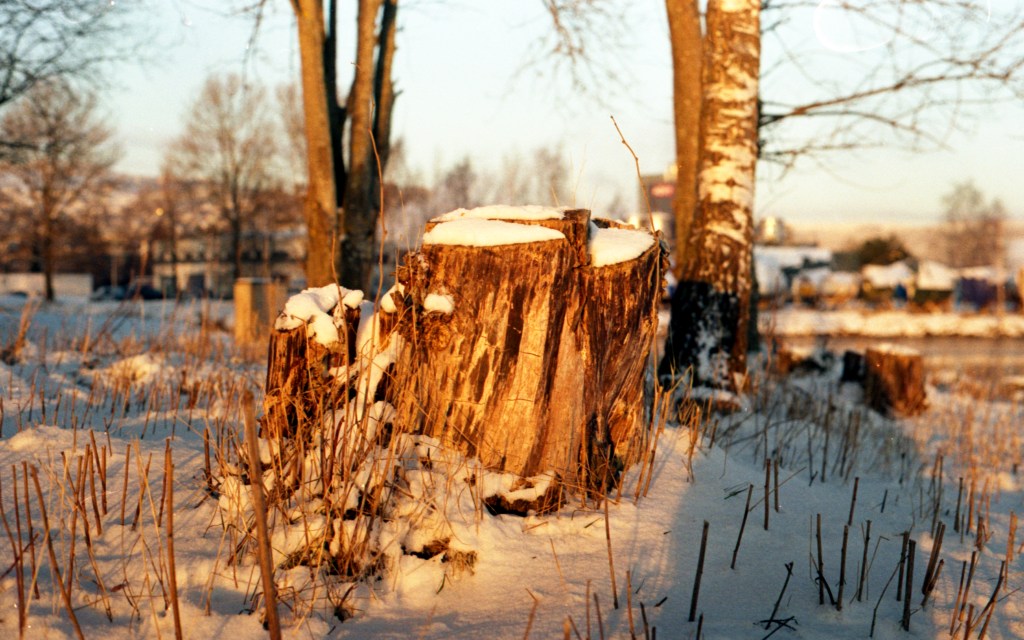
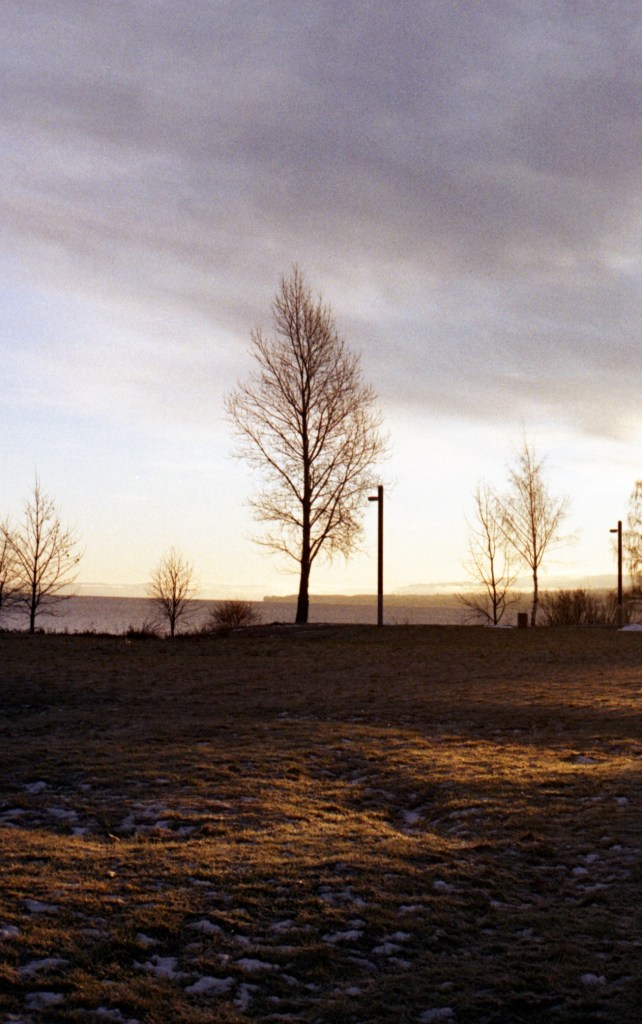
As I have previously written on my blog, I like shooting Kodak ProImage 100 in the winter. There is something about the colours and the subtlety of it, that I find to be exactly the right media for my style of winter-shooting. Some days ago, I gave the Konica a roll of ProImage and went for a little outing to some different locations where I could access the lake. The day were one of those days where it was clearing up after some dull and grey days, and there were very bleak, oranges and purples in the landscape.

Lith Print feel – Konica Autoreflex TC – Hexanon 50mm f1,8 – Kodak ProImage 100

I have also found myself to be very fond of the little Konica camera. Yes, it has a bit fewer shutter speeds than the OM-1 that inspired me to buy it, and indeed it hates cold weather. But the camera, and its lens is in mint conditions and takes beautiful images. The lens is very sharp and produces beautiful bokeh. It also feels very sturdy in the hand. From what I gather this is because mine is an early model where the whole body is a metal construction. It does not produce any light leaks at this point and I guess the light meter would work if I gave it a battery.

Tree root in snow – Konica Autoreflex TC – Hexanon 50mm f1,8 – Kodak ProImage 100

Based on the fact that this was marketed as an «entry level» SLR camera in its time, I must say that its performance is incredible. If I was to recommend an entry level SLR to anyone at this point, I would be very tempted to say Konica Autoreflex TC and just smile. I am very happy that I purchased this camera and I will probably keep it as one of my regular users over some time, along side with the Olympus OM-1.

Testing a Konica Autoreflex TC (Part 2)

This entry is a sequel of a previous entry where I shot a roll of Ilford FP4 plus trying out my new Konica Autoreflex TC camera, and where I, somewhat irrelevantly compared it to the Olympus OM-1 because I saw a video about it on Youtube. In retrospect, I regret that comparison because I find the cameras to be very different and not too comparable. I therefore cleared my mind, and I rolled the Konica up with a roll of Kodak ProImage 100, which is my preferred colour film for 35mm winter photography, and I went for a little walk.

My car needed to visit the garage that morning, and I had some time to walk around shooting the Konica handheld to get a good feeling about how it performed. Since the morning weather (The lovely thing about Winter-Norway around 10.00) was bright, colourful and vibrant I chose to go with Colour Shooting

A short time-lapse of the beautiful weather conditions this day.

Even though the Konica really dislikes the cold weather and can start to play up in different ways, I learnt from this last time, and this time, I chose to consider where it had issues last time before I started working. Fist of all, when the shutter gets cold, it tends to stick a little bit, therefore I tried to keep the cameras as close to my body, under my jacket, most of the time. This probably looked a bit strange, but it worked. I also avoided the lens fogging up due to this.

Another issue I found last time, was that the rewind button under the camera sticked and would not operate properly outside and the film ripped. I tried this button on multiple occasions indoors later, and it always worked. So this time, I did not rewind the film before I came home, and I did not have any issues with ripped film. That said, though. The take-up spool did in fact cut off the tip of the film leader in some weird way.

Konica Autoreflex TC w 50mm Hexanon f1,8 lens – f11 1/60th Kodak ProImage 100. Tetenal C41
Reklamer

I shot without filters this time, but I would probably have chosen to use a two stop polarizer if I had one for the ø55 filter tread. But when looking at the images, that was not really necessary after all. Working with the Konica camera is very pleasant, and it lies very well in the hand and has easy controls to operate. It also seems to be quite accurate in the normal shutter speeds that I have tried out, but then again, it doesn’t have shutter speeds between 1/8th and B.

What I really like, is that lovely Hexanon-lens. It has a very nice sharpness and it helps me render really vibrant colours and grey tones very well. I am looking forward to trying this one out with some Bokeh-shots with wide apertures at some stage. Stay tuned.

More Christmas decorations

This entry is a sequel of the FP4 shoot with the Advent decorations. If you haven’t seen that entry, please scroll down and find it. In this entry, I have once again done like a cat, playing with the Christmas decorations. This time, I played with the Christmas tree and a roll of Kodak ProImage 100 and I used the Olympus OM-1 with the same 50mm lens that I often use it with. Originally my plan was to shoot this with the Praktica MTL5 B and the Helios 44-2 lens, but it turned out that the lovely Praktica didn’t really appreciate being hooked up with the shutter release cable, and it therefore decided to jam. Not the kind of jammed that you can easily fix yourself, the properly jammed jam. Therefore, I had to restart the shoot with the Olympus, which handled the cable just fine.

I shot the Zuiko Lens fully open at its maximum aperture of f1,8, but I chose to let the Christmas tree lights be my only light source and ended up using longer shutter speeds, such as 1/2, 1/4 and even one and three seconds.

Christmas tree angel – Olympus OM-1 w 50mm Zuiko f1,8 lens. f1,8 shutter 1/2 seconds. Kodak Proimage 100

I know that there are many opinions on the Kodak ProImage 100 out and about. For my style and preference of photography, I find the ProImage to be brilliant for capturing winter colours where I often find Ektar too vibrant. Also, for indoor photography like this, I find this film to work perfectly, as I would often have to de-saturate Ektar in these situations. But again, this is personal preference. Personally, I like the «level between» Ektar and Portra as I see this film to be.

Reklamer

These images are slightly colour corrected in Photoshop after scanning, there were no colour shifts, but I found that the images got scanned with slightly different white balance. Not a big deal though, as it was easily correctable with Photoshop. The film was developed using the Tetenal Colortec C41 kit, which I find to work very well and be easily controllable. When using this kit, I cannot understand why it took me so long before I dared to try developing colour myself.

Thank you for reading and following me through 2020. Let us all hope for a better and less troublesome and pandemic 2021.

Capturing the winter colours

Shooting in winter time can sometimes be very uninspiring and difficult. There are no vibrant colours in the nature, and the weather is sometimes really and truly nasty. Therefore, I have made myself a project this winter. To capture the mood of the Norwegian winter with analog photography. I have not limited myself in terms of films, developers or styles. The goal with the project is to convey the Norwegian winter mood through my photography.

This is the second entry in the project, and in this one, I am working with one of the days where the weather is nice and where there are colours to work with.

To capture the colours, I chose to go with a very under-rated film that I find to work very well with the Norwegian winter tones. The Kodak Pro Image 100. I have used some rolls of this film previously, ordered on eBay as it was not sold in Europe. From what I have gathered online, this film was originally introduced in South America and Asia as an entry-level professional colour negative film. Based on the Kodak Gold, it was then altered, tweaked and improved to produce better skin tones, but keep the warm Kodak colour palette that the Kodak Gold is renown for.

Olympus OM-1 Zuiko Olympus 50mm f,18 w 1,6 stop Circular Polarizer. Kodak ProImage 100

When you google this film, you get a lot of «so-called experts in the field» who has written some kind of a review of this film based on their experience after shooting one roll of film. All of these conclude with something like «This film is so cheap, why would Kodak brand such a cheap film professional, Ektar is far better». I find this to be unfair to the Pro Image. KODAK Ektar is a brilliant film, and a film I use a lot myself, but I find it to be too vibrant for my winter shooting. I also mean, that you can never judge a film just by shooting one roll of it, and choice of film is a personal choice and relies heavily on personal preference. after fifteen rolls (three five-packs) of Pro-Image, I have found this film to work brilliantly for my preferences.

Reklamer

One of the lovely things about working in Norway in the winter, is that morning light happens at more comfortable times than in the summer. My «early morning shoot» started at 09.30 with a cup of coffee and ended around 11.00 with me rewinding the film back into the cassette and traveled home for development. Even so, I did not meet as many people as I expected on my little outing into the lovely lights and colours. And I find that I was able to capture the mood of this morning.

A sunny, cold winters day after many grey dull days, with some lovely almost purple colours in the skies and a yellowish tone on the ground near the lake.

Olympus OM-1 Zuiko Olympus 50mm f,18 w 1,6 stop Circular Polarizer. Kodak ProImage 100

I then ended my day with doing a C41 process. I had fresh chemicals which were mixed right before, and the cycle went like a dream. I see a slight cyan-cast in the scans. This could be because I had to pause the development between the Developer and the Blix due to a temperature fall in the Blix. I then left the films in the tank with some 38 degrees clean water for some minutes, while the Blix heated up again.