Old Wood

One of my favorite subjects for my photography is driftwood and other types of old wood, such as dry tree-roots or fallen branches that has been lying around for a while and gotten touched and greyed by the elements. To me, this represents a strength and a a token of persistence shown by nature. Yesterday, I was out very early in the morning, before sunrise with just the colours trying to capture them with my Hasselblad. Once my roll of KODAK Ektar was filled, I broke out my Olympus OM-1 with its incredible 50mm Zuiko lens and a roll of Kodak Tri-X in search of some driftwood.

Just a little sneak-in from the Hasselblad because I absolutely love this image – Hasselblad 500C – Planar 80mm f2,8 – KODAK Ektar

My location for the morning was Husodden in Søndre Land. A secluded little headland in the lake Randsfjorden, home to amazing sunrise-light and a wide selection of birds and forest colours in the summer. It is also the home of a little air-strip used by the local flying enthusiasts. I didn’t meet any of them this morning, but I made sure not to be in their way if they were coming.

Reklamer

After sunrise, but when the light was still rather bleak, I got soft and nice contrasts, but seeing the conditions become more and more contrasty, I decided to shoot tie Tri-X at 200 instead of 400. The only filter on the lens was a Hoya UV-filter, that I find to be helpful on this lens. Although it is supposed to be Multi-coated, I have found it to react somewhat with haze if used without. (Could be anything else as well, I am no lens expert)

Details in the old bark – Olympus OM-1 – 50mm Zuiko f1,8 – Kodak Tri-X @ 200 – Adox Atomal 49 1+1

It never ceases to fascinate me how incredibly nice the textures in old wood can be. The image above here was taken of a very small detail on a bigger log, but really shows the worn details in that old bark and how incredibly beautiful that is if you isolate it like this. I also thin that pulling the film a stop was the correct choice for this occasion, as it gave me the opportunities to shoot wider apertures such as this f2,8 with the shutter speed 1/250th. I don’t trust the Olympus at 1/1000th after having some uneven exposures with that shutter-speed. Also, I do appreciate the extra shadow detail, but I don’t think that would have been an issue with Tri-X at this shot anyway.

For development, I chose to go with Adox Atomal 49. A developer I have used a lot the last months. I bought it after having some «bad» experiences with my usual Kodak X-tol where it didn’t mix properly (two batches) and I was curious about trying something new. Ive found Atomal to be a brilliant match with many of the films I use, especially Tri-X and FP4 plus, but also HP5 plus and Fomapan 100. It gives me very fine grain and seems to give very nice grey-tones and full film speed. Trouble is, it is somewhat cumbersome to mix and consists of three bags of powder rather than two. It has also «coloured» my 5L-container red and I will have to get a new jug for the next batch.

This old log – Olympus OM-1 – 50mm Zuiko f1,8 – Kodak Tri-X @ 200 – Adox Atomal 49 1+1

The image above is taken at f 5,6 and shutter speed 1/125. I just love the lines and how it almost seems charred in the dark-area to the right bottom. The balance in this image is very soothing I find, and it really shows why I find the Olympus to be my favorite 35mm Camera.

Since I was at an airfield – Olympus OM-1 – 50mm Zuiko f1,8 – Kodak Tri-X @ 200 – Adox Atomal 49 1+1

I shot 36 images of drift-wood in different ways and I only included my top-picks here. However, on my way back to the car, I spotted the wind-indicatorthingie (whatever it is called) and decided that I would attempt a 37th frame. I find that the «last image» don’t always come out, but I figured it was worth giving it a shot. I think this was f8, but it did not take any notes about this shot.
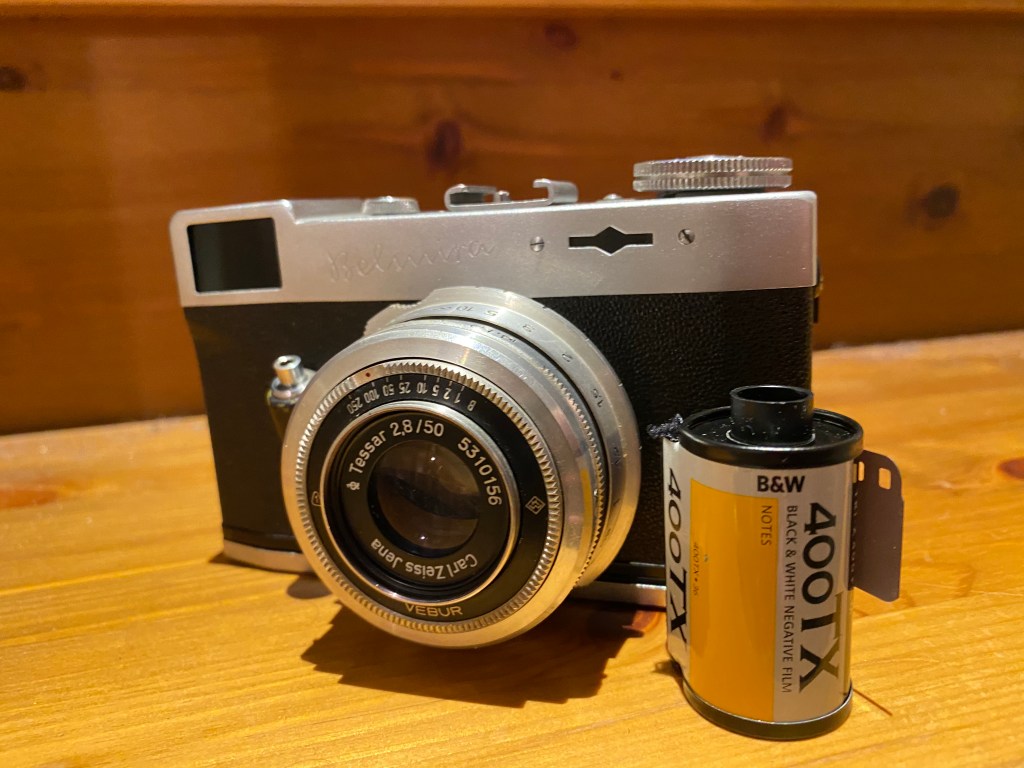
A DDR Rangefinder camera

We all have our weak-spots as photography enthusiasts. I certainly have a weak spot for the lovely Carl Zeiss Jena Tessar lens. I will not in any way claim that I am even close to a lens and optics expert, but this lens, with its four elements in three groups, gives a sharpness and tone to the images I just love. I had one of these lenses for my M42 cameras, but this lens would benefit from some servicing as the aperture blades keeps jamming when stopping down further than f8, and the focusing ring is very heavy to operate.

A little while back, I read about a little rangefinder camera from East Germany that was said to be magnificent value for money and deliver splendid image quality and sharpness. The camera was called «Welta Belmira» and was, believe it or not, equipped with a lovely Carl Zeiss Jena Tessar 50mm f2,8 lens. I started looking for one of these cameras to try out, and it was not difficult to find them. However, they were often in very varying condition and it was clear that getting the right and good one would take a while. And so sure it did, but after some months of searching and looking, I found one in decent condition. Yes, it was a bit dusty, and yes it had a dim rangefinder, but the camera in itself seemed to work really well.

My lineup for this test – a Welta Belmira and a roll of Kodak Tri-X400. I also used an external rangefinder unit, because the inbuilt one is very dim and only usable if the light is bright.

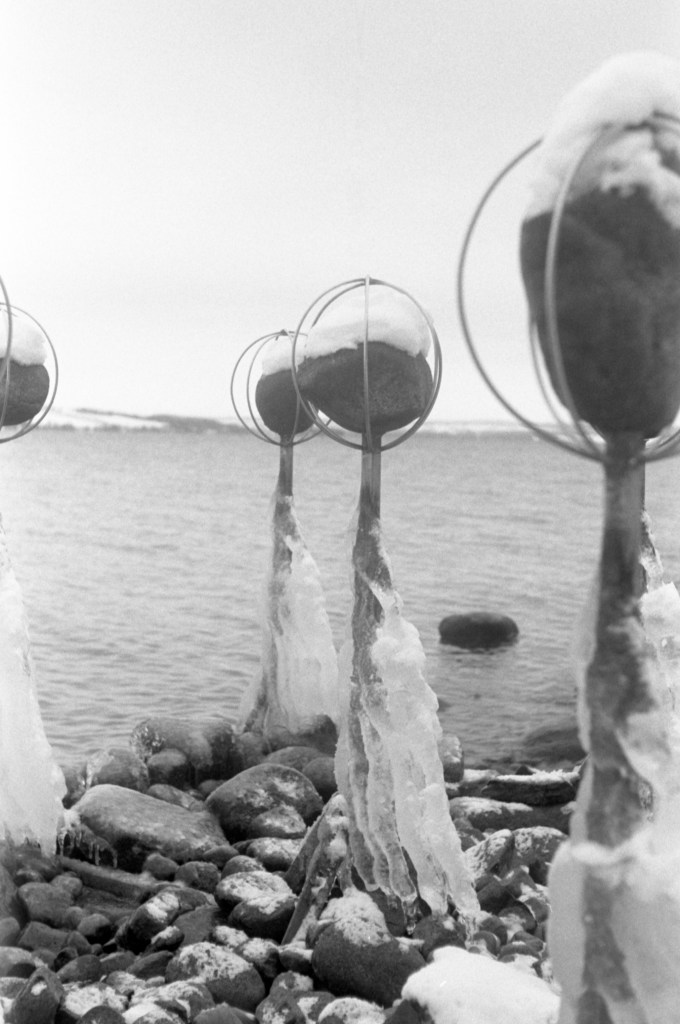
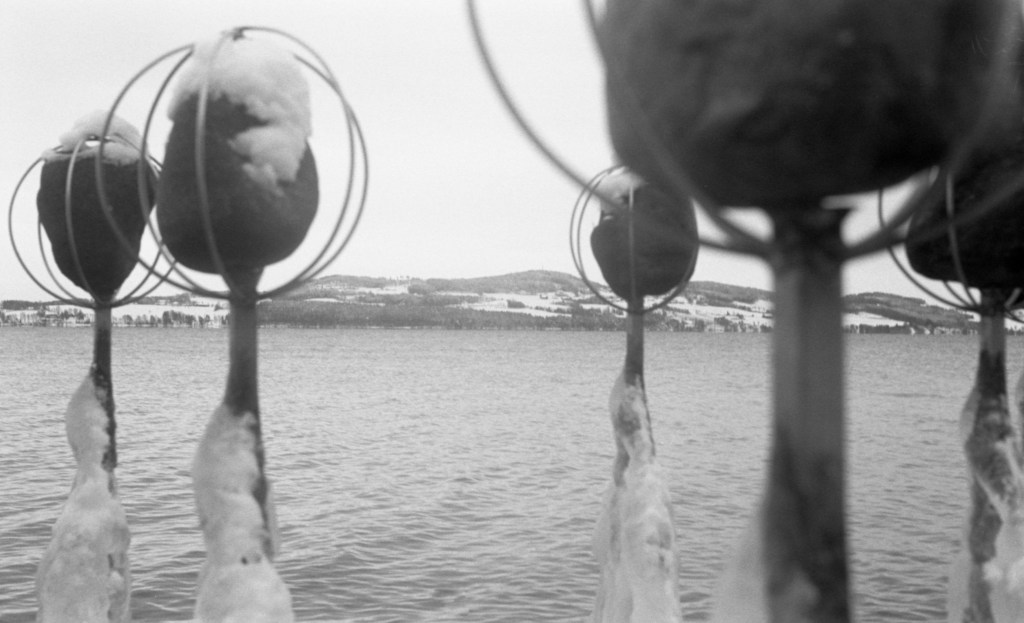
I went out to a location where there is a lovely artistic installation close to the lake, and I have thought for a while to experiment with some photography around this location. The origin of this artwork is unknown to me, but it is only accessible in the winter and spring time, as it will be submerged by the lake most of the summer time.

Welta Belmira – Kodak Tri-X 400 Adox Atomal 49 1+1
Reklamer

I also with this outing, made my first test of the Adox Atomal 49 developer. I read a bit about it online and saw some images developed in it, and I got curious to try it out myself. Atomal 49 is a very fine grain developer that gives you full film speed unlike Perceptol that will eat some of your speed. For that reason alone, I bought a 5L package of it and decided to give it a try. And based on these results with Tri-X at 35mm, I am very happy with what it looks like. This might well become a developer of preference to me, but I will obviously have to make more tests before deciding.

Back to the camera. I really enjoyed using the camera. It has a very special and differently engineered slider instead of the usual advance lever. It is a bit fiddly to use and has a tendency to stick at different points, but it works faultlessly. The dim rangefinder is not really an issue as long as you have an external one, and the focus ring seems to be pretty much accurate. However, I believe the camera «drags» the shutter speeds a little bit, but slight overexposure is not any issue with any negative film really.

Trying out 645

For a while I have been looking to buy a 645 camera. Preferably a SLR of some kind and many different options have been considered. Both Mamiya 645, Pentax 645 and even some Hasselblads. However, some days ago, I came across a very reasonably priced Zenza Bronica ETR. I have had my experiences with Bronica. I once owned an Zenza Bronica S2 fitted with a beautiful Nikkor 80mm lens. I only sold this because it had the habit of giving me half frames a few times on each roll and I cannot afford wasting expensive film and possibly losing a strong shot due to a camera issue.

I contacted the seller on the ETR and we came to an agreement and got a deal together. Very reasonable and rather quick.

Zenza Bronicas are beautifully designed Japanese cameras, with incredibly sharp lenses and a rugged feel to it. The camera is heavy, about two kilos, and you can get them in different configurations. Later ones are more plasticky and lighter, but I don’t really mind the weight, as I often shoot on a tripod. My ETR came with a prism, eye-level viewfinder and a razor sharp 50mm f2,8 Zenzanon lens.

I went out the other day to test the camera, and I made some really beginner mistakes.

Fist of all, I used the wrong film. I loaded the camera with a Fomapan 100, because I had one lying around about to expire, and I found I could «waste that one» if the camera did not work properly. The biggest problem was that I went out on a very dull and overcast day where there was not really sufficient light to shoot 100 ISO. Because of this I had to shoot around 1/30th of a second, and I forgot to bring a tripod. A lot of motion blur later, I decided to discard the test and go out for another go with a different film.

Reklamer

This second time, I went out in the morning as the fog was lifting from the lake (Mjøsa) and went for a short session Trying to capture some magic. Wiser than last time, I loaded the camera with a roll of Kodak Tri-X 400, a film I don’t use that often but had lying around and went down to the docks in Gjøvik.

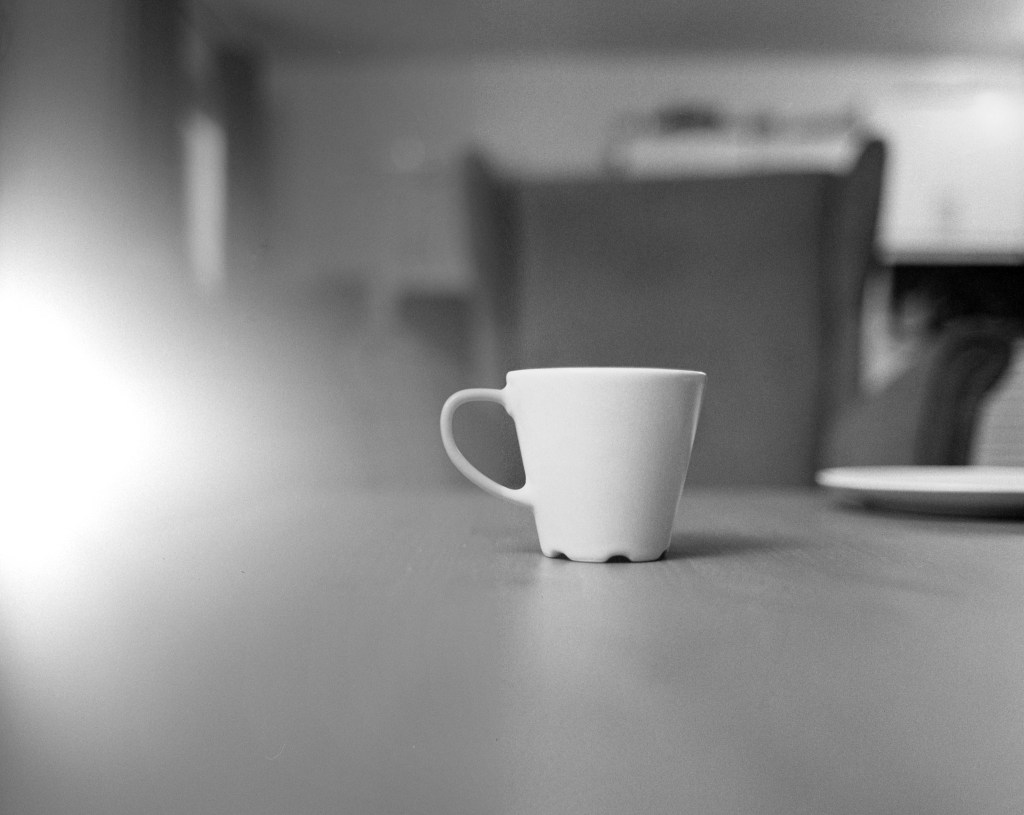
Before I went out, I had a coffee. I documented my coffee with an image taken at f2,8, maximum aperture at 1/15th of a second.

Zenza Bronica ETR w 50mm Zenzanon 2,8. Kodak Tri-X400@400 Fomadon Excel 1+1 9 minutes

I am really surprised with the smooth bokeh the Zenzanon lens gives me, and I find that the Tri-X grain and contrast gives the image a really nice tone. A tone I don’t often find with Tri-X as I find it a bit to punchy in the contrasts for my taste. Similarly I like the way it handled my location by the lake.

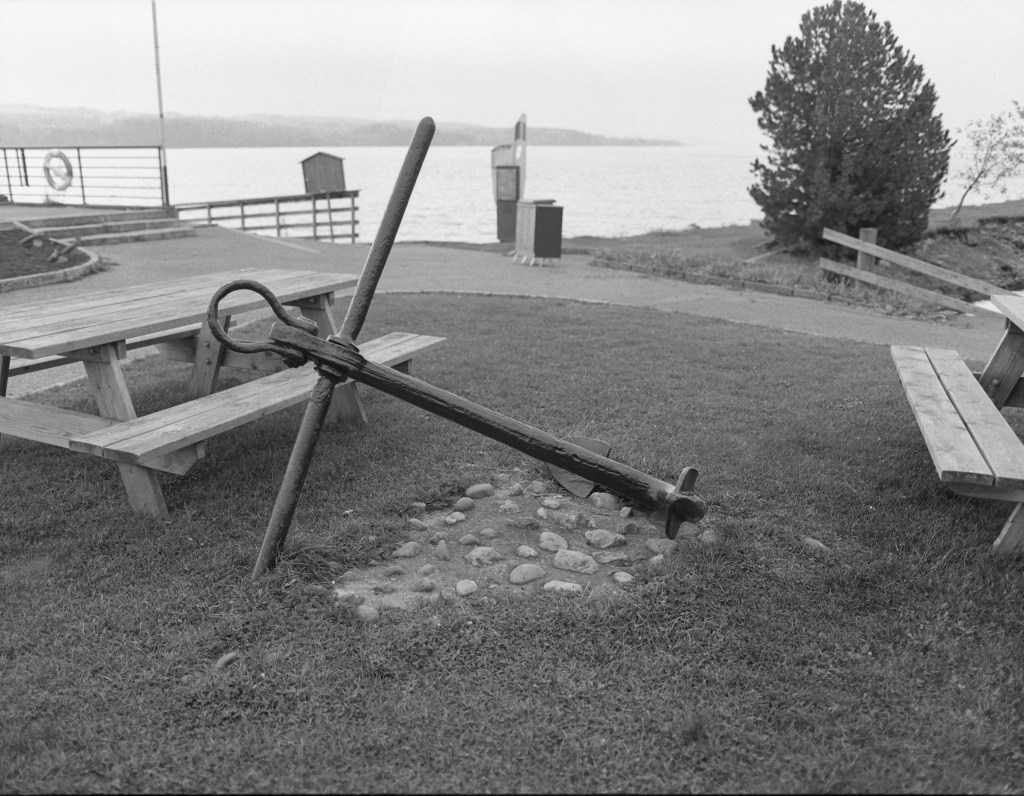
I appreciate the tones I got in the picture of the anchor. Shot at f4, it gave me a perfect depth of field for this image and the Tri-X tones gives the smooth tones. I also love the way the background disappears into the fog behind.

In a slightly under exposed image of some birds fleeing away from the Norwegian winter which is approaching in a months time. I find this image to be a bit «gritty» but I will attempt to make a beautiful print of this image in the darkroom.

All in all, I am very happy with my new Zenza Bronica ETR, as well as my expedition into 645 format, and will shoot it regularly in the future.

Stay tuned

Reklamer