Two rolls of Ferrania Solaris

I have been interested in photography since I was a very young boy. I remember back when I got my first camera, an old Ricoh Point and Shoot camera, how I would walk around and try to find things that I could photograph. Cars, People, animals, buildings… Anything really. In what I think must have been 2002 I got my first own SLR camera as a gift from my uncle who was a journalist. The camera was a Nikon F60. This camera is sadly faulty now, and fixing it would cost more than the camera is worth.

Around the same time, 2003 or 2004, I went to Italy for a summer holiday with my family. Back then, I was a young aspiring photographer who was part of a photography club in my local town of Gjøvik in Norway. On this trip to Italy, I came across a film stock that I had never heard of, and obviously, I bought some rolls and tried it out. The film in question is the Ferrania Solaris 200. A consumer grade film with a lovely lush and vibrant color palette and maybe a bit more grain than other films I had tried. I absolutely loved the results I had on my rolls that I had developed in Italy and on my way home, I picked up a 3pk of Ferrania Solaris 200 on the Airport. I can still remember finding it very cheaply at Ciampino Airport. I bought them without thinking about anything else. Only once I came home, and put one in the camera and went shooting, I figured that the films only had 12 frames. Which to me back then was nothing. I would see that differently today. I was very disappointed and forgot the two last rolls in the basement. I found them when tidying up there this summer. Expired in 2008, stored in a heated basement since 2003 or 2004. What could possibly go wrong here?
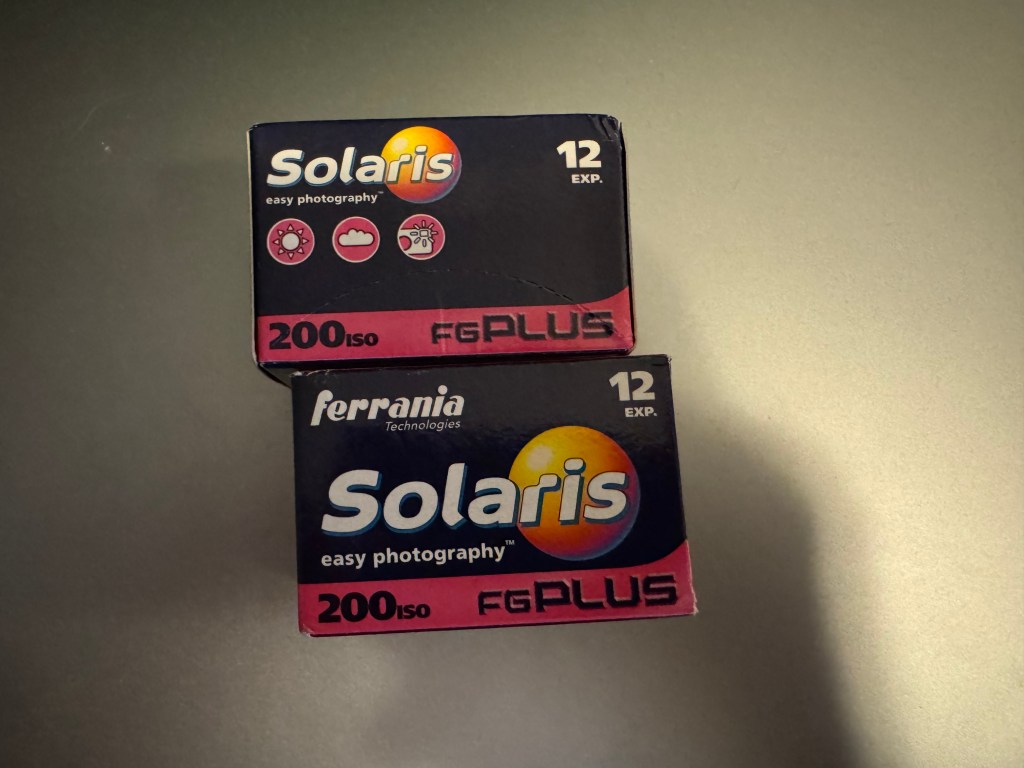
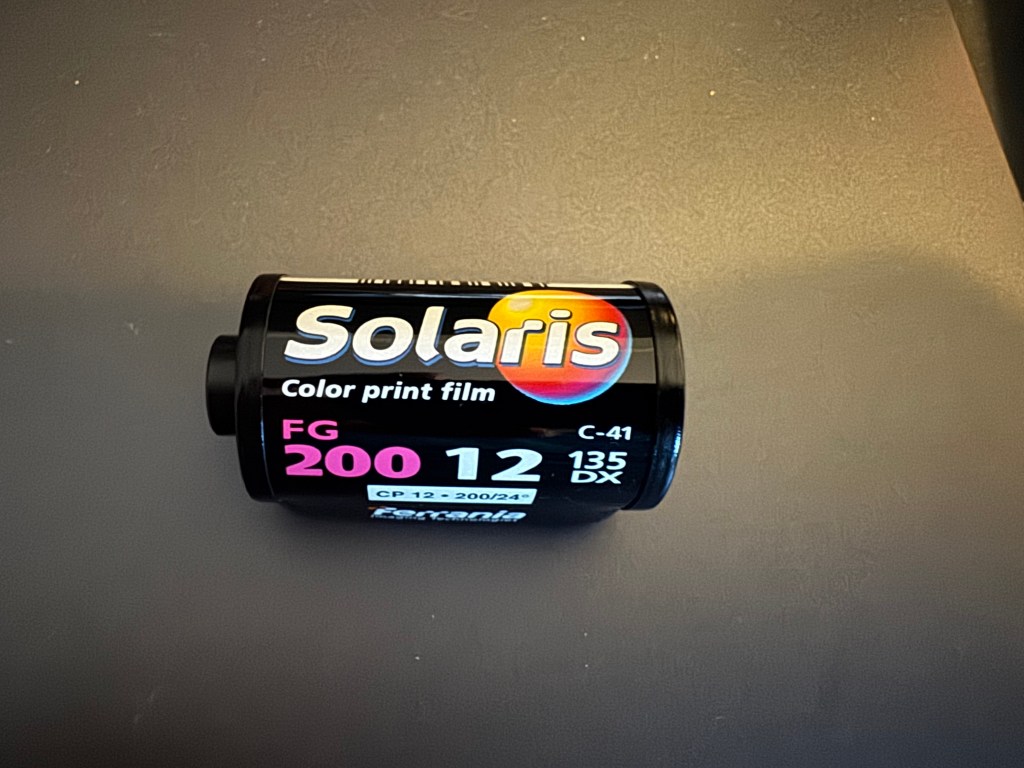
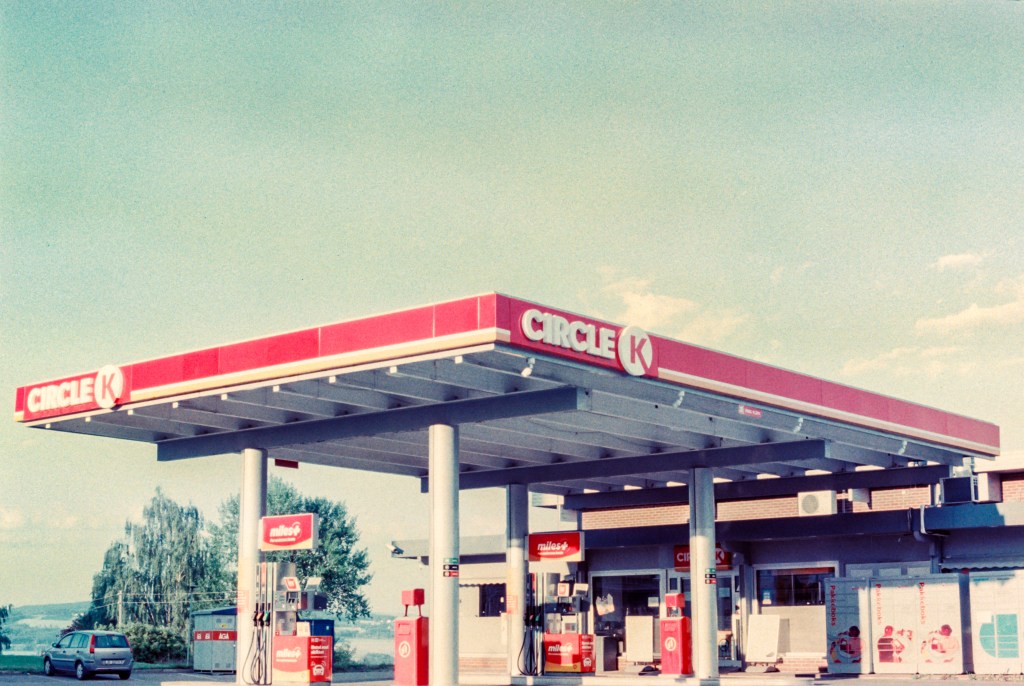
Since I had two rolls, I decided to use them differently. One of them, I decided to treat as I would normally with expired film, overexpose by 1 stop pr decade, meaning I shot this one at ISO 50. The camera I chose, the Olympus OM-1, does not have half or thirds of stops as an alternative, so metering at something like 64 doesn’t really make much of a difference to shooting at 50. Since I was already going a trip down memory lane with the choice of film, I also chose to go to a location that to me is filled with memories. The local petrol station that was recently closed down. To me, this was a place to go and buy ice cream as a child, and I do remember being sent there by my father to buy the news paper back in the days. I bought an ice cream that was too expensive and couldn’t afford the news paper and had to go back and beg for more money. A bit embarrassing to say the least. Anyway. This was my choice of location because of its vibrant Circle K colors. The evening was bright and warm and I got those Ferrania colors that I remembered from my rolls in Italy.

I had two frames left and decided to just photograph a tree by the lake, before I went on to the other film. I managed to capture some cyclists passing the tree, which made for some lovely motion blur.

Motion Blur and tree – Olympus OM-1 with Zuiko 50mm f1.8 – Ferrania Solaris 200@50 (expired 2008) Developed by Oslo Foto

For the second film, I decided to experiment a bit. Since the film is rather sensitive to blue and has a relatively light base, I decided to attempt red-scaling it. I mean, when you’re already shooting at ISO 50 with a tripod you can easily compensate three extra stops for red-scaling.

Now, I like the look of red-scaled film. I think it gives a level of abstraction that makes «boring» conditions more interesting. However, I do prefer to compensate three stops because it gives some light to the blue layer, making the blues visible. To me, this gives a more interesting effect than shooting the film for red and black images.


Depending on how well I hit the exposure, the film did really well in red-scale. I like how the warmth of the film shines through and makes it look like a slightly tilted color palette, and not just black and red. The middle photo was slightly under exposed and had more reds in it.

Overall, I find it a bit sad that this film is off the market now. It was a lovely film and I would love to still have it in my arsenal.

Morning mist and APX100

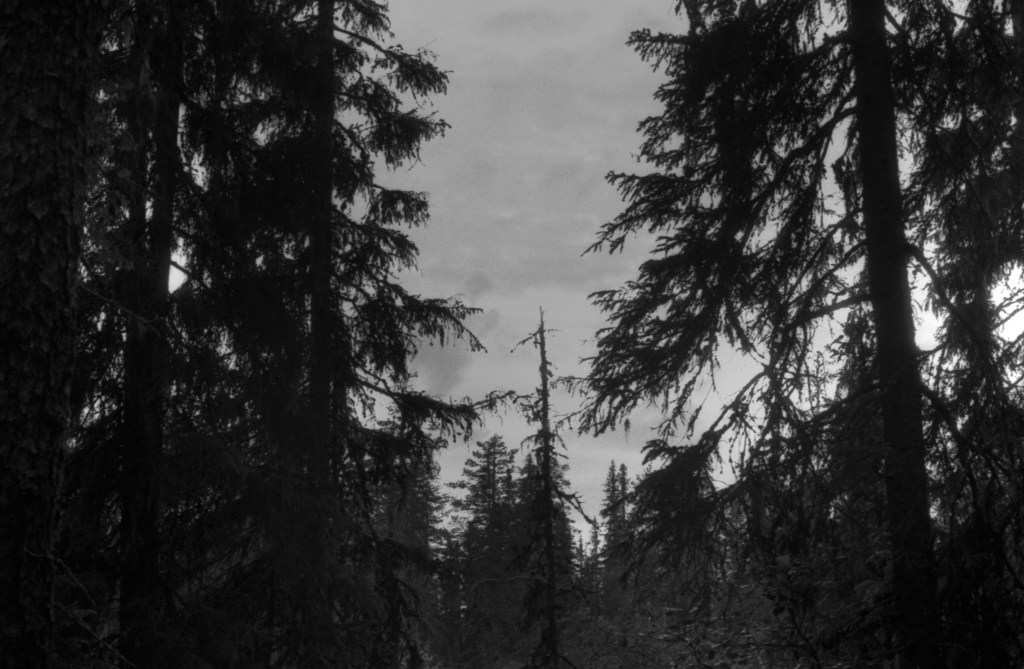
This last week has had really beautiful mornings and the other day, I decided to go for another tryout with the bulk of Agfa APX100. I bought this bulk a while back as I found that it was the cheapest bulk-film on the market and I was curious about its performance and capabilities. So far, I have not been really sold on this film. I find it grainy, slow and to lack latitude. I also find that, even with a very sharp lens and a very accurate camera, I get very inconsistent results. In this entry, I paired it up with my Olympus OM-1 and the 50mm Zuiko f1,8 lens.

From my previous experience with this film, I have found that metering it at 50 – a whole stop over-exposure – and developing for box-speed typically gives me the best results. Also, the yellow filter usually gives me a bit more contrast and definition in my negatives. This was also my tactic for this outing, and my results were just as inconsistent as they have been previously.

Since it was very early in the morning, and I wanted to travel very light, I chose to leave the light meter at home and rely on the light metering app I have on my phone. This is a very simple light meter, but I can easily meter at different places in the scene to get a decent exposure. I have done this in many instances before and never had any issues with poor exposures. If hesitant, I double up with an additional exposure just to be sure that I have at least one usable one. I’ll honestly say, that I only got one out of my 15 exposures this time to be anything that I would refer to as a decent image and what I had in mind while composing.

Over the misty hill. Olympus OM-1 w 50mm Zuiko f1.8 & yellow filter – Agfa APX100@50 Ilford ID-11 1+1

In this first image, which is the only one that I am actually happy with, the film manages the masterpiece of being both over and underexposed at the same time when the range was within about 4 stops. Even so, I find this image to really convey the mood of this morning very well and I like its dark gloominess. However, I know that this image would have looked far better on both Fomapan 100 and FP4 plus, which both are very affordable alternatives to the Agfa APX100, and that gives me more consistent results.

For my second composition, I wandered into the woods looking for a slow-flowing river passing under a very simple bridge. This image did not turn out in any way the way I thought it would. To me, this image is just a grey mesh with a lot of grain and lacking definition on what the real subject was. Even with heavy dodging and burning, I still am not convinced with this result. I also made three bracketed images of this, and all of them are severely lacking on definition.

Crossing the river – Olympus OM-1 w 50mm Zuiko f1.8 & yellow filter – Agfa APX100@50 Ilford ID-11 1+1

In the two upcoming images, you see the main issue with this film, completely lost shadow-detail even with a full stop over-exposure and metered for the shadows. I will keep trying this film for different purposes, but I must say, that it does not look like this film is for me and my use. I’ve read about people using this film for one or two stop push-processes, but I cannot for the life of me figure out why, when I have these issues when overexposing it.

Checking the bulk

Around a week ago, I went out shooting with the Canon T70 and a bulk-loaded Agfa APX 100 film. When I pulled the negatives out of the tank, I realized that it had somehow gotten exposed to light at some point and that there were a lot of different light leaks that could not have come from the camera. After inquiring around online, I found that the most likely explanation would be that the bulk-loader itself was not light tight and that it might have impacted the film either when stored inside the bulk-loader, or when rolled. I therefore decided to take the bulk loader into the darkroom, and I rolled up one little roll of film (approximately 12 frames) just to check whether there was a problem with the whole bulk, indicating a problem with the light seals on the loader.

To make sure there were no other differences, I used the same cassette when rolling, and I used the same techniques, only that I did everything in the dark. I then put the roll of film into my Olympus OM-1, which I know have good light seals, and set off to make some test shots.

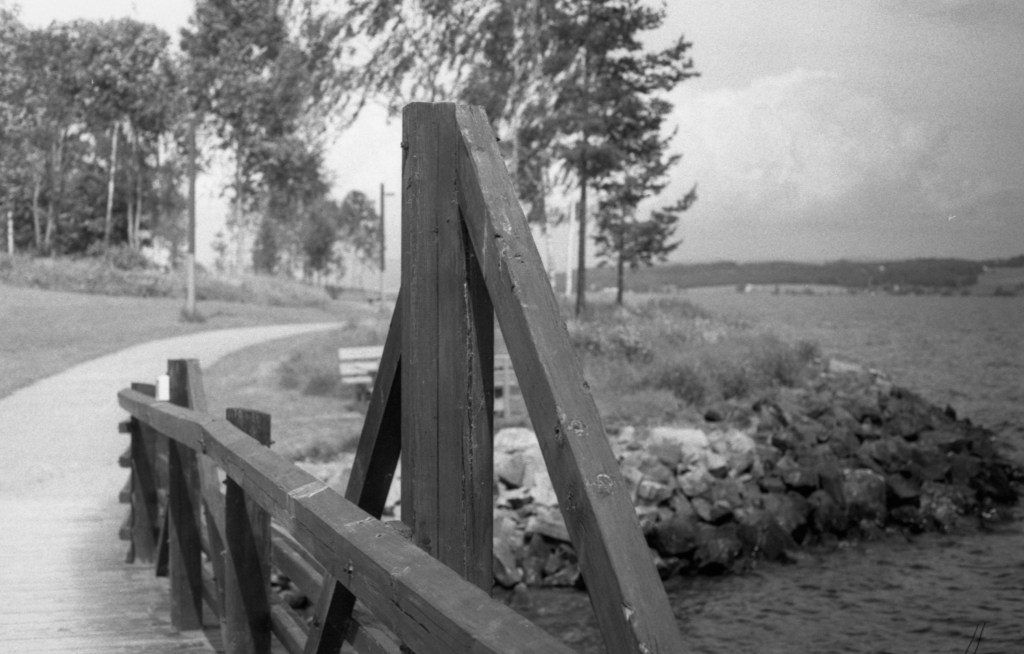
A bench and a field – Olympus OM-1 Agfa APX 100 – Rodinal 1+100 1 hour

I spotted some light leaks on this roll as well, especially on the last shots on the roll, the one that had been closest to the previous loaded film, but the frames from «deeper in the bulk» seemed untouched by the light leaks. The light leaks were also consistent to one end of the frames vertically, so it cannot be anything with the shutter or light seals on the camera. I guess my experiment showed me that the bulk-loader is not 100% light tight, and I will apply black tape to it next time I fill it with a new roll.

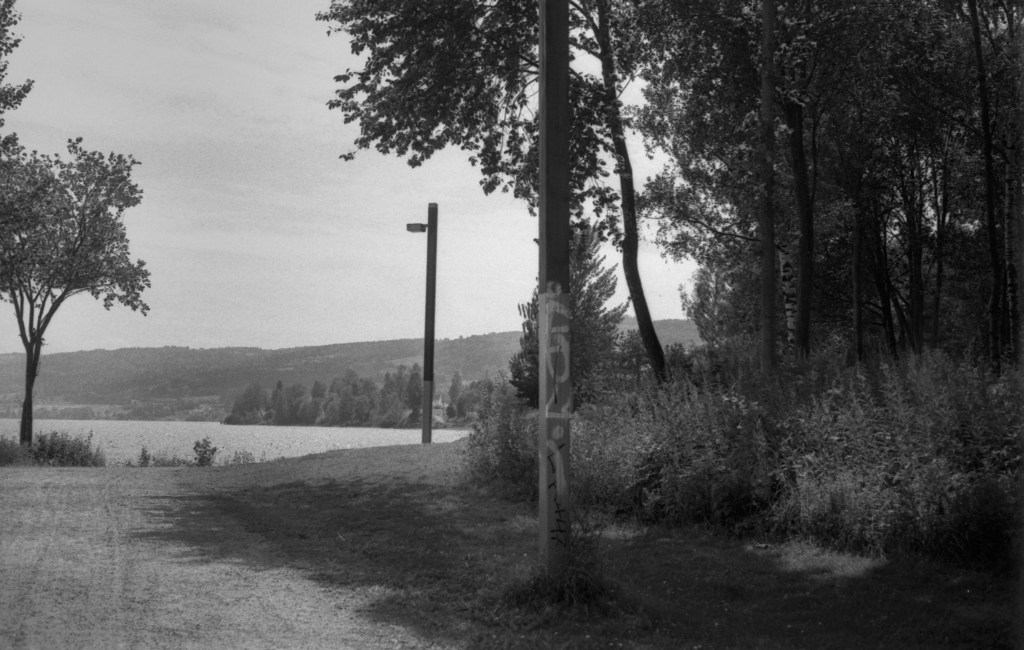
For the film itself. I have found that what works for me, is shooting this film at 50 (or even lower) and using a yellow filter. This gives me the shadow details and a decent spread of greys. However, I will probably not buy this film again. To me, it is grainier than Kentmere 400 and I expect finer grain and more shadow-details at box-speed for a 100 speed film than what I get from the Agfa APX100.

Windy summers day – Olympus OM-1 Agfa APX 100 – Rodinal 1+100 1 hour

I also this time shot the Agfa at 50, but since I used a yellow filter, I set my light meter to ISO 25, giving an additional stop of compensation for the filter. I chose to go with Rodnial stand development on this particular test, because I wanted to see how the Agfa film would look with this kind of «lazy» development process. I think the process got some grain out of the film, and that if used on a rainy og foggy day, that this combination could work really well. It does really set the «moody» tone in the images. I would, however, get a rather similar result with pushing Tri-X, and this is a film with far broader applications.

Old Wood

One of my favorite subjects for my photography is driftwood and other types of old wood, such as dry tree-roots or fallen branches that has been lying around for a while and gotten touched and greyed by the elements. To me, this represents a strength and a a token of persistence shown by nature. Yesterday, I was out very early in the morning, before sunrise with just the colours trying to capture them with my Hasselblad. Once my roll of KODAK Ektar was filled, I broke out my Olympus OM-1 with its incredible 50mm Zuiko lens and a roll of Kodak Tri-X in search of some driftwood.

Just a little sneak-in from the Hasselblad because I absolutely love this image – Hasselblad 500C – Planar 80mm f2,8 – KODAK Ektar

My location for the morning was Husodden in Søndre Land. A secluded little headland in the lake Randsfjorden, home to amazing sunrise-light and a wide selection of birds and forest colours in the summer. It is also the home of a little air-strip used by the local flying enthusiasts. I didn’t meet any of them this morning, but I made sure not to be in their way if they were coming.

Reklamer

After sunrise, but when the light was still rather bleak, I got soft and nice contrasts, but seeing the conditions become more and more contrasty, I decided to shoot tie Tri-X at 200 instead of 400. The only filter on the lens was a Hoya UV-filter, that I find to be helpful on this lens. Although it is supposed to be Multi-coated, I have found it to react somewhat with haze if used without. (Could be anything else as well, I am no lens expert)

Details in the old bark – Olympus OM-1 – 50mm Zuiko f1,8 – Kodak Tri-X @ 200 – Adox Atomal 49 1+1

It never ceases to fascinate me how incredibly nice the textures in old wood can be. The image above here was taken of a very small detail on a bigger log, but really shows the worn details in that old bark and how incredibly beautiful that is if you isolate it like this. I also thin that pulling the film a stop was the correct choice for this occasion, as it gave me the opportunities to shoot wider apertures such as this f2,8 with the shutter speed 1/250th. I don’t trust the Olympus at 1/1000th after having some uneven exposures with that shutter-speed. Also, I do appreciate the extra shadow detail, but I don’t think that would have been an issue with Tri-X at this shot anyway.

For development, I chose to go with Adox Atomal 49. A developer I have used a lot the last months. I bought it after having some «bad» experiences with my usual Kodak X-tol where it didn’t mix properly (two batches) and I was curious about trying something new. Ive found Atomal to be a brilliant match with many of the films I use, especially Tri-X and FP4 plus, but also HP5 plus and Fomapan 100. It gives me very fine grain and seems to give very nice grey-tones and full film speed. Trouble is, it is somewhat cumbersome to mix and consists of three bags of powder rather than two. It has also «coloured» my 5L-container red and I will have to get a new jug for the next batch.

This old log – Olympus OM-1 – 50mm Zuiko f1,8 – Kodak Tri-X @ 200 – Adox Atomal 49 1+1

The image above is taken at f 5,6 and shutter speed 1/125. I just love the lines and how it almost seems charred in the dark-area to the right bottom. The balance in this image is very soothing I find, and it really shows why I find the Olympus to be my favorite 35mm Camera.

Since I was at an airfield – Olympus OM-1 – 50mm Zuiko f1,8 – Kodak Tri-X @ 200 – Adox Atomal 49 1+1

I shot 36 images of drift-wood in different ways and I only included my top-picks here. However, on my way back to the car, I spotted the wind-indicatorthingie (whatever it is called) and decided that I would attempt a 37th frame. I find that the «last image» don’t always come out, but I figured it was worth giving it a shot. I think this was f8, but it did not take any notes about this shot.

Scouting a location and shooting slow film

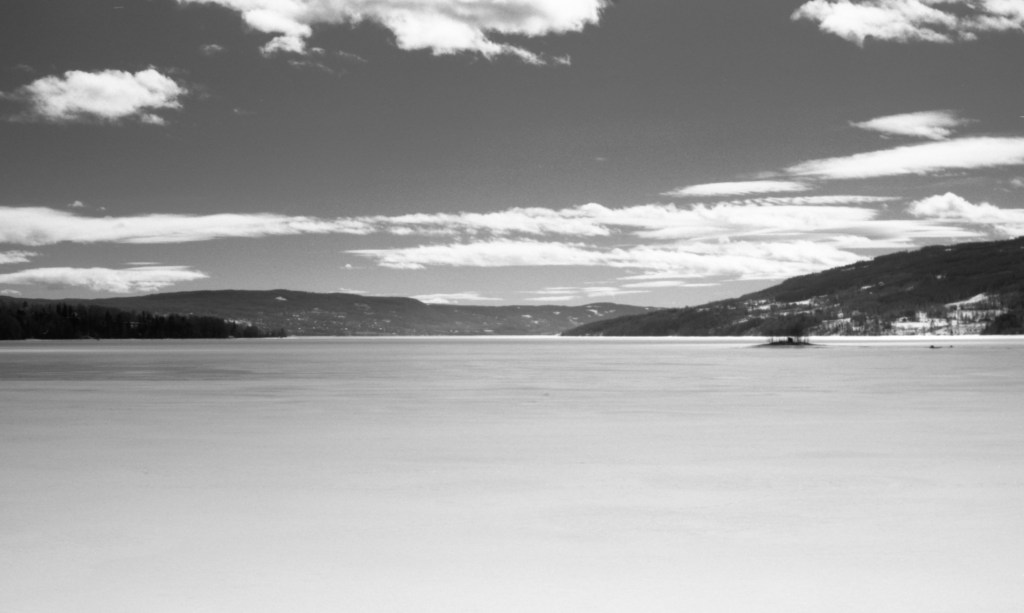
Today I was out and about with one of my lovely analog cameras again looking for locations for some early-morning sunrise photo trips. I came across this lovely location called «Husodden» not too far away from where I live. Being sensible and staying local is an important part of the world we currently live in. While I was walking around Husodden to shout for possible locations, I did some photographs with the Olympus OM-1 and a roll of Rollei RPX25. I metered it at around ISO 18 (My light meter goes to ISO25, so I opened the aperture slightly more) and shot with an orange filter to get the popping effect in the sky and boost the contrasts a bit.

Randsfjorden, the lake, was still frozen and it became a white carpet in many of my images, and gave some extra contrast as well.

Sky-pop over Randsfjorden – Olympus OM-1 Rollei RPX25@18 Kodak HC110 Dil-B

I tried to use the remainders of the snow as a lead-in line in many of my images, and I aimed for a very large separation between snow and sky. In retrospect, some of these images would have benefited more from being shot with a graduated filter rather than a fill orange one.

Sky-pop over Randsfjorden – Olympus OM-1 Rollei RPX25@18 Kodak HC110 Dil-B
Reklamer

I decided to develop the film with «an old friend». Kodak HC110. I have not used this developer for a very long time, but there was something about the shots I took today, that made me bring out the golden syrup and mix Dilution B. HC110 used to be my favorite developer and, it is very economical and gives really nice greys. Also, there is something about it that I just like. I don’t really know what it is, but there is something about using that thick concentrate and stirring it properly that really wakes the «geek» in me.

A quick and pleasant day out for me today, and I am really looking forward to visiting this location again at some point in the near future. Both for woodland detail work and for early morning sunrise-shots.

Capturing snow and fog

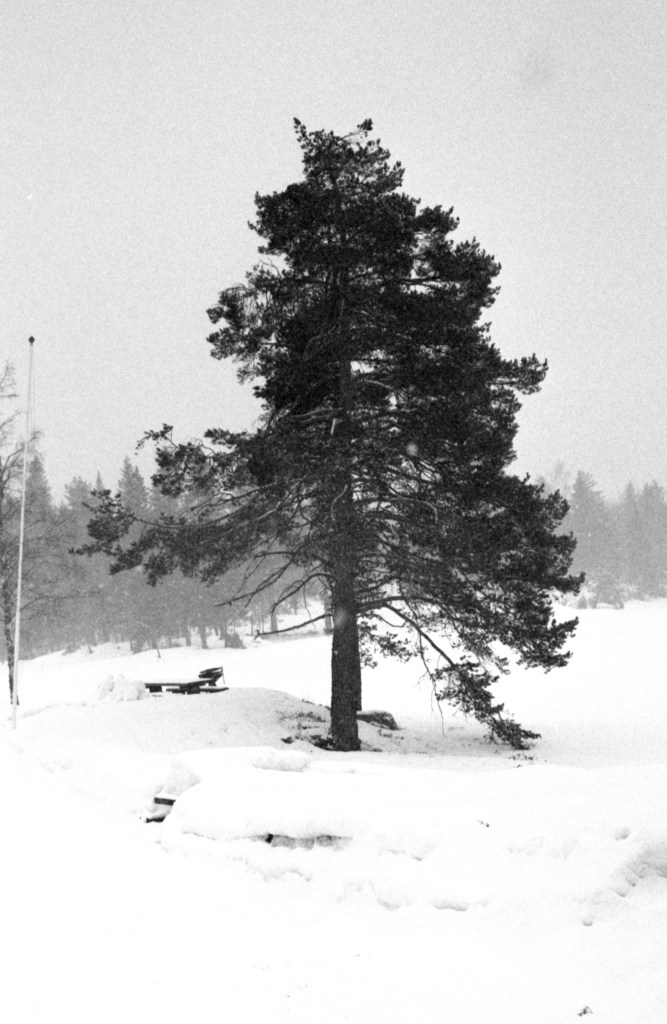
Yet again, the persistent winter of 2021 struck  back at us with all its wreath. After a few weeks of impeccable weather and a really pleasant spring mood, we were once again confronted with the face of King Winter. When I went out yesterday, it was blowing a gale and the snow flew thick in the air. Thicker than horse-flies at a swamp in the summer. The weather was bland and uninspiring  and being out there was nasty and uncomfortable. Yet, I had something in mind.

I wanted to capture the foggy and snowy day with a gritty and grainy mood. I chose to go for a BW film. The Rollei Retro 400s, which is a film I have used a bit before and that I find to suit my way of shooting very well. My thinking was that the 400 ISO film would give me just the right amount of grain and contrast, as well as giving me the opportunity to shoot hand-held, which is very handy in windy conditions, where camera-shake due to wind is a real danger, even with  a sturdy tripod.

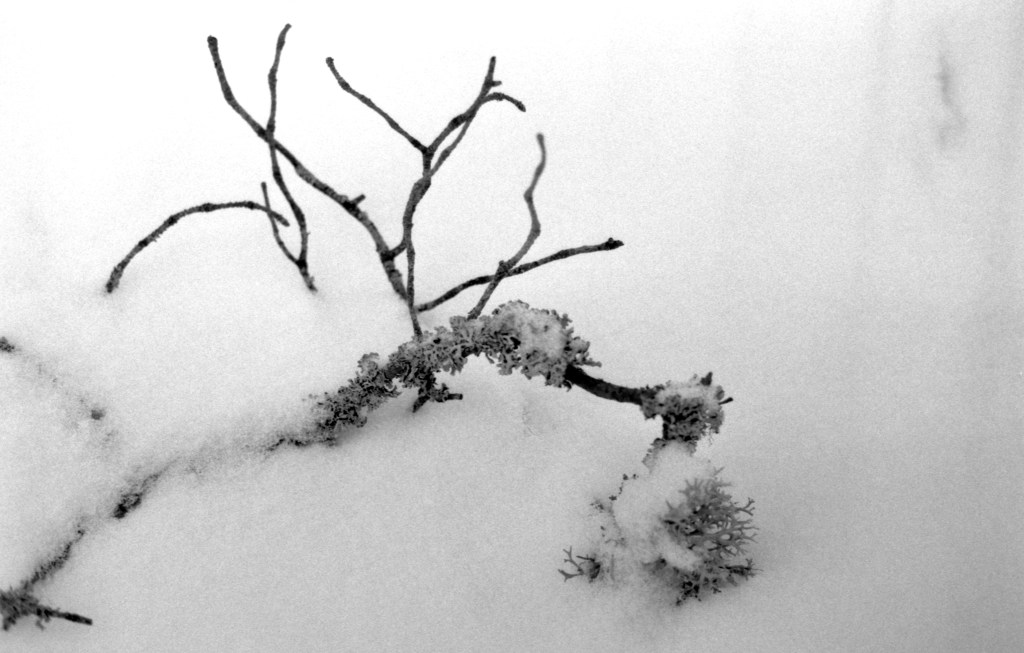
A fallen branch – Olympus OM-1 w 50mm Zuiko f1,8 – Rollei Retro 400s – Rodinal 1+100

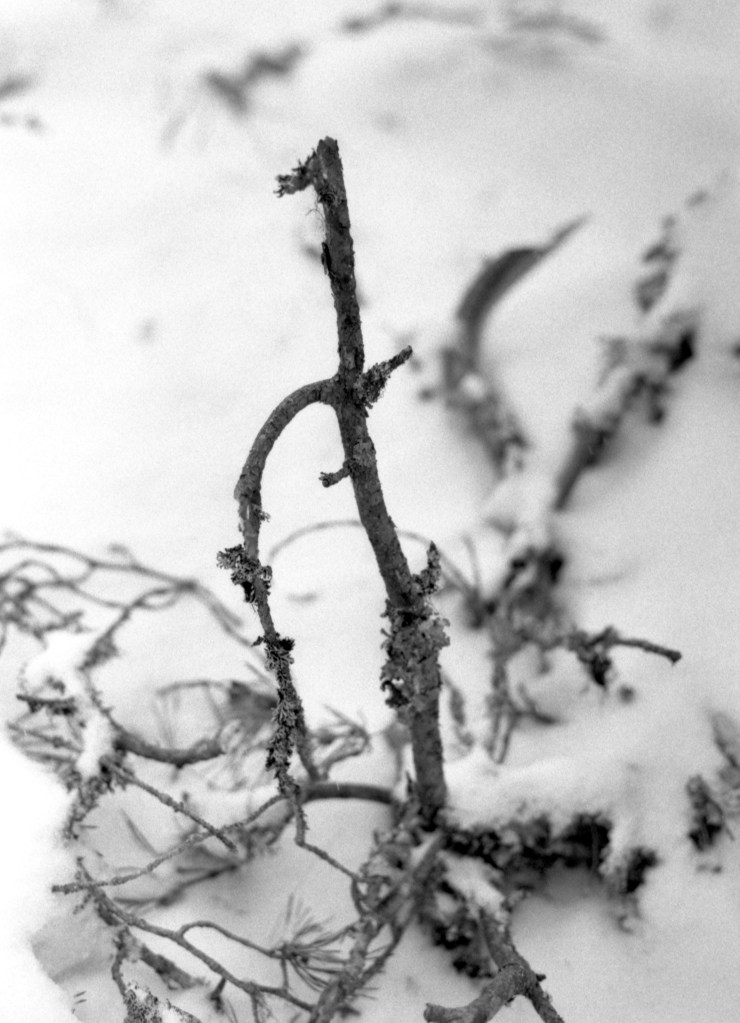
I shot about half a roll of film, focussing on making quick compositions around branches that, over the winter with heavy snow, has broken off bigger trees. The foggy and snowy conditions makes these branches stand out as interesting shapes, and shows them for the beauty they are. WIth the added grain from the film and the additional grain and contrast from the use of Rodinal 1+100 Semi-Stand gave that somewhat “raw” look I was going for.

Reklamer

The camera I chose to use, was my brilliant Olympus OM-1. This is a camera I trust at all shutter-speeds and that I know will work regardless of conditions. However, I noticed two issues on this particular outing. first and foremost, there was a little piece of dust that obstructed my view through the viewfinder. I used it as it was when out shooting, because I did not want to take the lens off in the middle of the show-storm. When I took the lens off, there was a little piece of dust on the focussing glass. How this ended up there is unknown to me, I have not taken the lens off this camera for months, and it has not been there before.

A fallen branch – Olympus OM-1 w 50mm Zuiko f1,8 – Rollei Retro 400s – Rodinal 1+100

It also seems to give uneven exposures at the highest shutter-speed 1/1000th, I even got a blank frame that I know was shot with this shutter-speed. This has also never happened to me before, and I will keep an eye on this in better conditions. 

All in all, I got the images I wanted, and all in the matter of around 15 minutes in the snowy gale. Thank you for following and reading, I hope you enjoy my images.

More Christmas decorations

This entry is a sequel of the FP4 shoot with the Advent decorations. If you haven’t seen that entry, please scroll down and find it. In this entry, I have once again done like a cat, playing with the Christmas decorations. This time, I played with the Christmas tree and a roll of Kodak ProImage 100 and I used the Olympus OM-1 with the same 50mm lens that I often use it with. Originally my plan was to shoot this with the Praktica MTL5 B and the Helios 44-2 lens, but it turned out that the lovely Praktica didn’t really appreciate being hooked up with the shutter release cable, and it therefore decided to jam. Not the kind of jammed that you can easily fix yourself, the properly jammed jam. Therefore, I had to restart the shoot with the Olympus, which handled the cable just fine.

I shot the Zuiko Lens fully open at its maximum aperture of f1,8, but I chose to let the Christmas tree lights be my only light source and ended up using longer shutter speeds, such as 1/2, 1/4 and even one and three seconds.

Christmas tree angel – Olympus OM-1 w 50mm Zuiko f1,8 lens. f1,8 shutter 1/2 seconds. Kodak Proimage 100

I know that there are many opinions on the Kodak ProImage 100 out and about. For my style and preference of photography, I find the ProImage to be brilliant for capturing winter colours where I often find Ektar too vibrant. Also, for indoor photography like this, I find this film to work perfectly, as I would often have to de-saturate Ektar in these situations. But again, this is personal preference. Personally, I like the «level between» Ektar and Portra as I see this film to be.

Reklamer

These images are slightly colour corrected in Photoshop after scanning, there were no colour shifts, but I found that the images got scanned with slightly different white balance. Not a big deal though, as it was easily correctable with Photoshop. The film was developed using the Tetenal Colortec C41 kit, which I find to work very well and be easily controllable. When using this kit, I cannot understand why it took me so long before I dared to try developing colour myself.

Thank you for reading and following me through 2020. Let us all hope for a better and less troublesome and pandemic 2021.