A little success

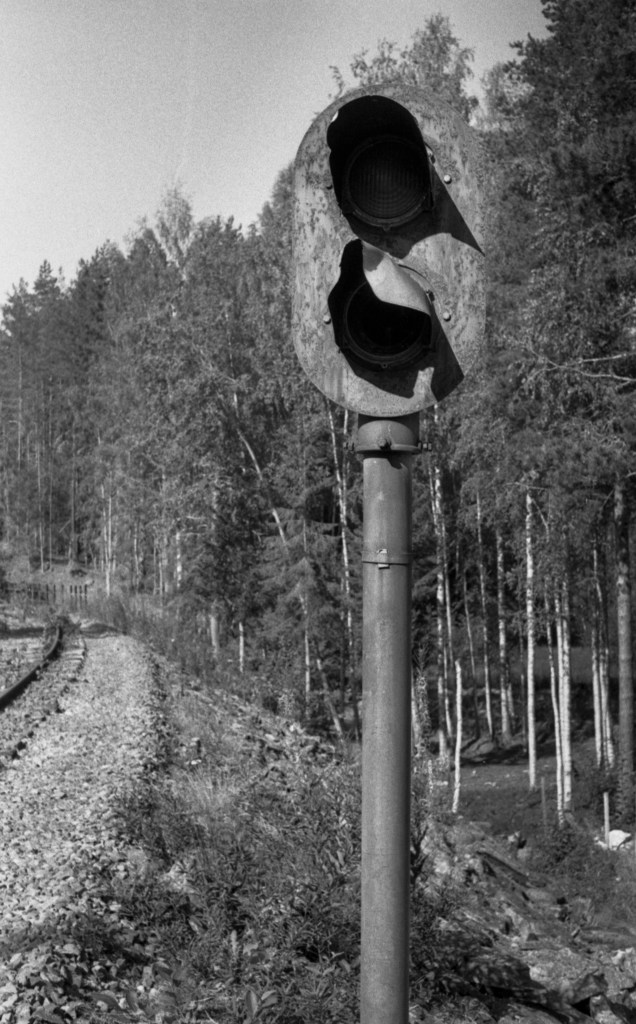
If you have followed me over the last months, you know that I bought a 100ft roll of Agfa APX100 a while back. It was the cheapest film available on the market and I was curious about how the film would work for me and my type of photography. So far, I have not really had a lot of success with it. I have studied the data-sheet for the film and I have tried it out in different situations. Some of the unlucky shoots have been due to poor bulk-loading skills or bad cassettes, and some has been due to my lack of understanding of how the film works. This time, however, I went a completely different direction. Instead of shooting landscapes, I went for an abandoned railroad track and I chose a very sunny and contrasty day to get deep contrasts and shadows in my images.

After many headaches with very grainy images, even when using fine grain developers such as ID-11, I chose to just embrace the grain and develop with Rodinal. I have used Rodinal with this film before, and I must say that from my experience with this film, after shooting it in different conditions and with different subjects, I find Rodinal to be the best developer with it. It actually produces a finer and less pronounced grain with Rodinal 1+100 than it does with ID-11.

Petri Racer – Agfa APX100 – Rodinal 1+100 1 hour.

Shooting vegetation with this film is not the best idea. It seems to be rather over sensitive to certain tones of green and gives a very mushy feel on all types of vegetation without any real separation. However, when shooting metal and dead objects, the film seems to produce rather beautiful contrast and lovely sharpness. I would think this film would be ideal for street photography with good light as it really works for this kind of shoot. It does benefit from a slight overexposure of one stop and the development process with Rodinal seems to get the most out of the contrasts in this film. Not that I am in any way pretending to be a master film reviewer.

I chose the Petri Racer for this outing. This camera is a small rangefinder camera made in the 1960s by the Japanese company Petri. A much forgotten brand today, they are really nice and quirky little cameras with mostly working rangefinder units even after about 60 years of use. The Petri was also the first camera I featured on this blog back in 2018 when the blog was new. I find that the world looks really nice through the lens of a Petri Racer, and it is a camera that I really enjoy using.
Petri Racer – Agfa APX100 – Rodinal 1+100 1 hour.

Shooting railroad track details is not something I do very often, but I really enjoyed the outing. I also found that finally I had some decent results with the Agfa film, where I was actually happy with the images I captured. My initial goal for the trip was to make three darkroom prints that I was happy with. And this time, I did succeed.

Petri Racer – Agfa APX100 – Rodinal 1+100 1 hour.

Shooting a very cheap film with a very simple camera does indeed make sense as well. I would think that most users of simple cameras like this would generally use cheaper films such as Kodak Colorplus and Fuji C200 for color and Fomapan or Agfa for black and white. For my personal taste, I find the Fomapan to be the better option of the latter, but as I mentioned earlier, I can see that the Agfa would make sense to use if you were shooting a lot of urban, street and architecture and you want the raw effect of this film.

Would I recommend the APX100? To some extent. It for sure is a decent film and if you are mainly snapping around as you go, you would probably be very satisfied with this film. However, if you are shooting a lot of landscapes, I would rather go for the Fomapan 100 which I find to work better for vegetation. And yes, develop with Rodinal.
Experimenting with depth of field

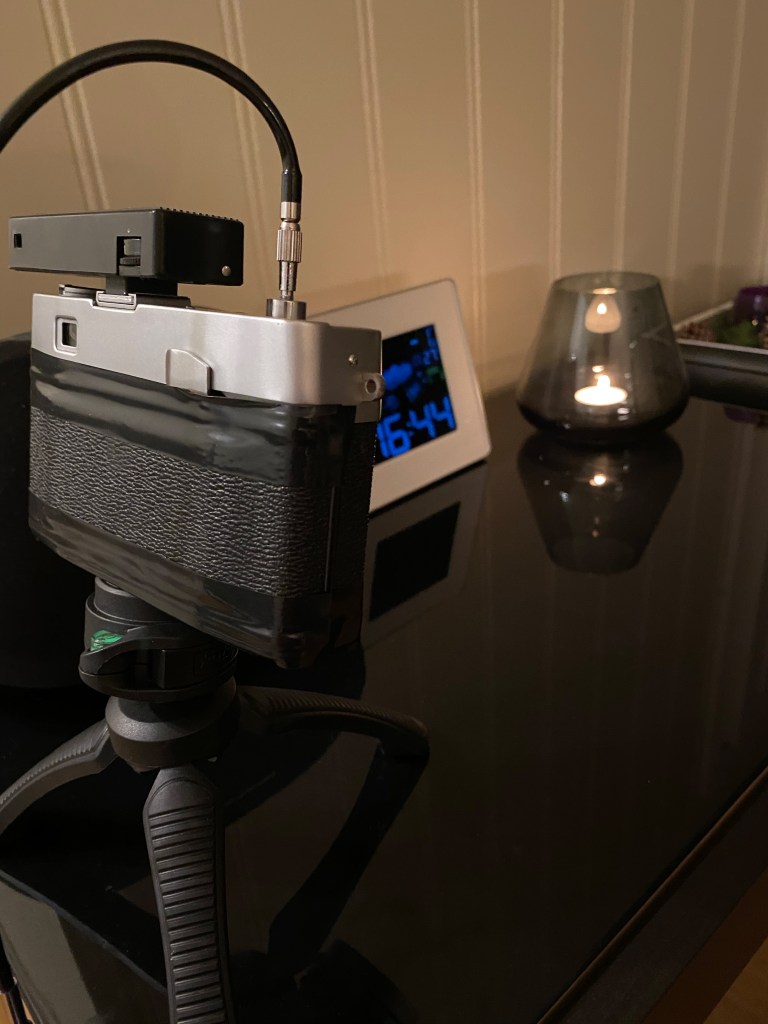
Playing with the Christmas decorations is not an activity reserved for cats. When I tested the Petri 7s for the first time in the beginning of December, I noticed how good the lens seemed to be. Even though my test then showed that the camera had seen better days, the f1,8 lens turned out to give very nice, details and I decided to shoot some frames to test it out. I decided to go with the Christmas, or actually Advent, decorations. I lit a candle in a glass candle holder, and let that work as a foreground, and I placed the rest of the decoration approximately 80cm away from the lens, which would be the closest focus length for this camera.

My setup. Petri 7s on a black glass plate with the decorations. I have taped the camera because the back has a tendency to «pop open» at any point.

I went with shots at f1,8, f4 and f16 to see how much difference there would be in sharpness and how they would turn out. I did not change the lighting conditions, but I adjusted my shutter speeds to compensate for the smaller aperture. for the f16 image, that was two and ha half minutes with compensation for the Schwarzschild effect.

All in all I think the lens gave me the results I anticipated. The f1,8 gives me a very nice bokeh, but the focus is a little bit off, so maybe the focus ring isn’t as accurate as I would hope for. The f4 image gives more sharpness and retains the nice bokeh feel, and the f16 gives a very sharp image.

The mood changes a lot between the images, and I am not sure which one is my favorite. You can make a judgement yourself, and I hope the images are to your liking.

Capturing the mood

Some days ago, I was tidying up my darkroom, and I found what I assume to be a previous test-roll. I assumed that the roll was around half, but it turned out to be around 24 exposures of HP5 plus. I then got the Idea of trying to capture the miserable weather we have had in the area lately. I figured HP5 plus would be brilliant at that, it has grain, but not too much and coarse. I also chose to go with Ilford’s Perceptol developer, to reduce the grain in the whites a bit, but not eradicate it. 

My aim was not to get razor sharp images, but rather to capture the feeling and mood of this time of year. I am thinking more in the direction of a charcoal drawing than a crystal clear image of the mood. I know some photographers would have gone with a Holga or something similar to that on an outing like this, but I have never really befriended my Holga camera, and I prefer the effect the Petri Racer gives.

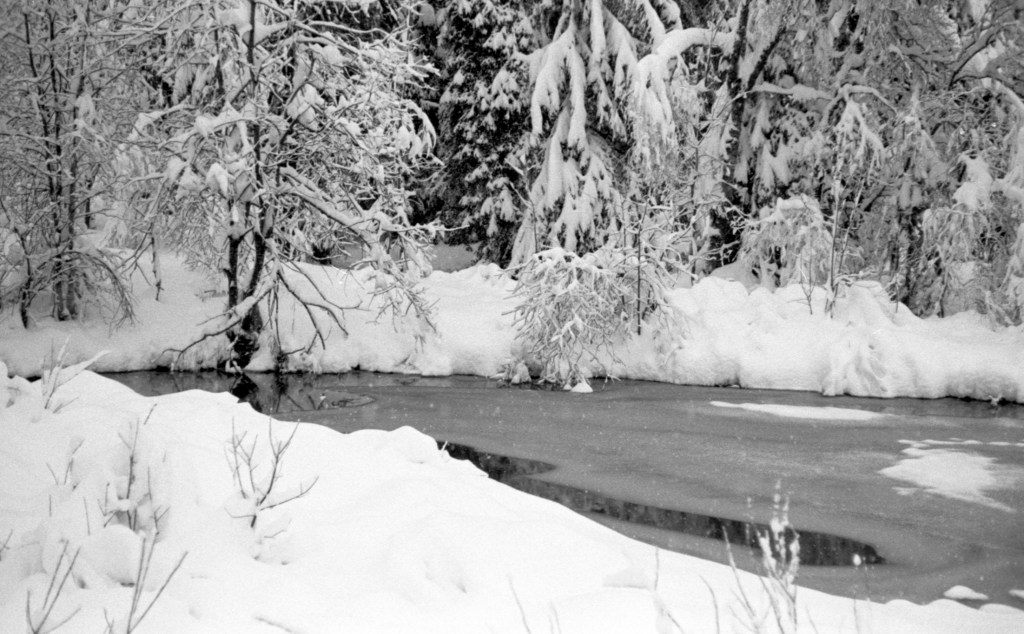
Snowy and wet December day – Petri Racer w Ilford HP5 plus@250. F8 1/60s – Ilford Perceptol stock

For that reason, I chose to bring along the Petri Racer. For long term readers of this blog, you know the Petri Racer camera very well. It was the first camera I bought for this blog, and the camera that inspired me to make a blog about cheap cameras, hence CCadventures – Cheap Camera Adventures. Not that all cameras featured on this blog is «Cheap», but they are reasonable and affordable alternatives that in some way sparks my interest.

Reklamer

The day was very snowy and it was unpleasant walking around in the snowy weather. I also had to wipe and dry the Petri a few times during the outing, to make sure it was not soaking or that the lens got fogged up. The camera had been in the car for a few hours before the shoot to «climatize» somewhat, but the wet snow and humidity made it fog up slightly anyway. I therefore let the film reach room-temperature before developing it. I often do this when the weather is cold to avoid swift temperature changes during the process. Not that the weather this day was very cold, only around -2 degrees, but it never hurts to be on the safe side.

Even capturing the snow falling – Petri Racer w Ilford HP5 plus@250 f8, 1/4 sec – Ilford Perceptol stock

The whole outing took me around half an hour, and I was soaked afterwards after wading in deep snow to reach a dam with view over the little lake Skumsjøen close to Gjøvik.

For the images, I am quite satisfied with the images as I find that they convey the mood and feeling I was aiming at conveying. These are not my strongest photographic moment by any means, but in terms of conveying the unpleasant Norwegian December-wet snow, I think I did a decent job.

Playing around with a Petri 7s

If you have followed this blog for a while, or read some of my posts, you may know that I have a Petri Racer that I really love shooting. I find the little Petri to be very reliable, accurate, light and handy as well as giving the images some character. I can’t really put my finger on why I like that particular camera so much, it is just a camera I enjoy shooting. A few weeks ago, I came across a Petri 7s on an auction online, and I won it on a very low bid.

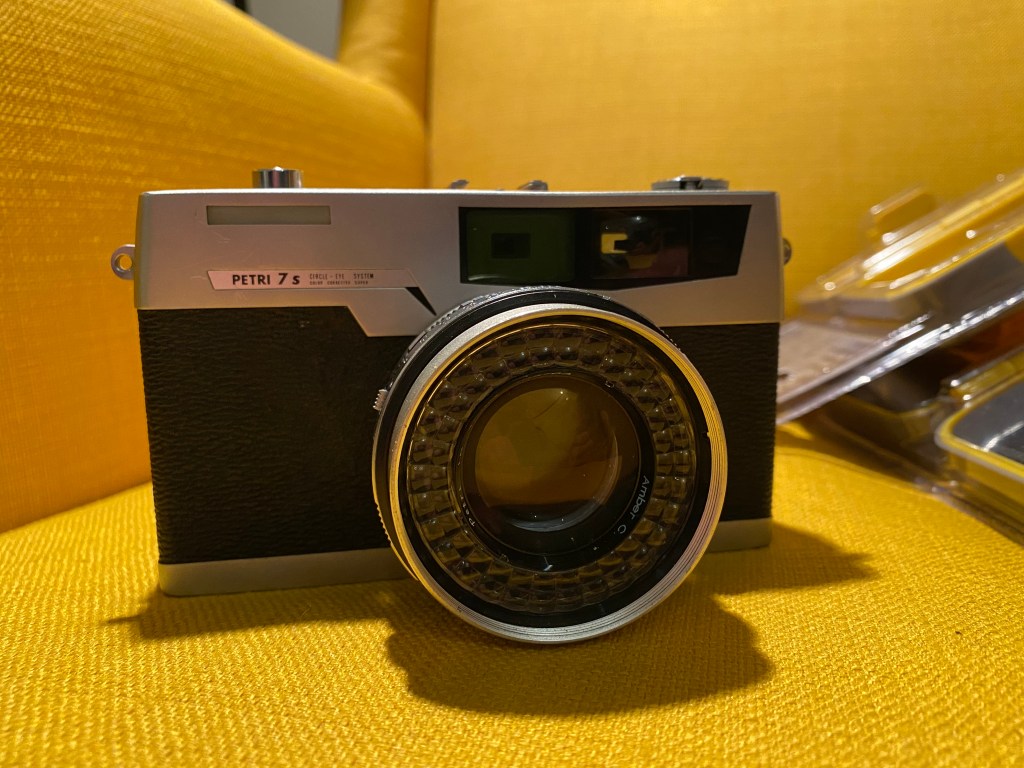
The reason I was interested in this particular 7s was that it had the f1,8 lens, which some sources claim to be a six element lens with an interesting bokeh-pattern. Whether it is six element or four, as the f2,8 version, does not necessarily mean that much to me, but I do love nice bokeh and sharpness. For the very low price that I payed, it was worth the gamble at any rate.

The Petri 7s f1,8 Rangefinder camera w. amber coated lens

A gamble it surely was as this camera has a few personality traits that is very specific to this particular one. First of all. The Rewind-knob is loose, and you cannot turn the camera on its head without risking the film to lose tension as the rewind knob disengages. Another interesting «asset» this camera has, is a dodgy lock on the back. This means you will get the luxury of using electrical tape to secure it from opening mid-roll. In addition to this, the camera invites to a creative approach to focussing, with a rangefinder (although rather dim and dodgy) that jumps in and out of «sanity» a few times pr shot. I ended up guesstimating my focus because I trusted my own eyes more than the rangefinder unit.

Reklamer

These faults aside though, the aperture settings and shutter speeds are fairly accurate. When I took it to Lillehammer to try it out on the newly fallen snow, I got very good negatives. My test was done with half a roll of Fomapan 200, which I because of the lighting conditions shot at 100. I shaved 20% off the development time compared to box-speed, and ended up at 6 minutes with Xtol Stock.

As you can see, in some of my images, my lens fogged over. However, this is not lens-haze, but rather an issue of a swift temperature change and a forgetful photographer who didn’t remember to wipe the lens before shooting against the sun.

Aiming at contrast and grain

I haven’t really done any contrasty BNW-stuff for a while, and the other day I loaded a roll of StreetCandy ATM400 into my little Petri Racer and brought it with me for some days, aiming at whatever caught my eye wherever I was at the time. I haven’t used the Petri Racer for a while, and I found this was an option to use it and its little, interesting lens.

The Petri Racer is a little rangefinder camera that I have used a lot on this blog. It was the camera that made this blog happen and the camera I used for my first two entries. I am very happy with the way the Petri makes the world look. It has a special tone to it that I cannot really put my finger on.

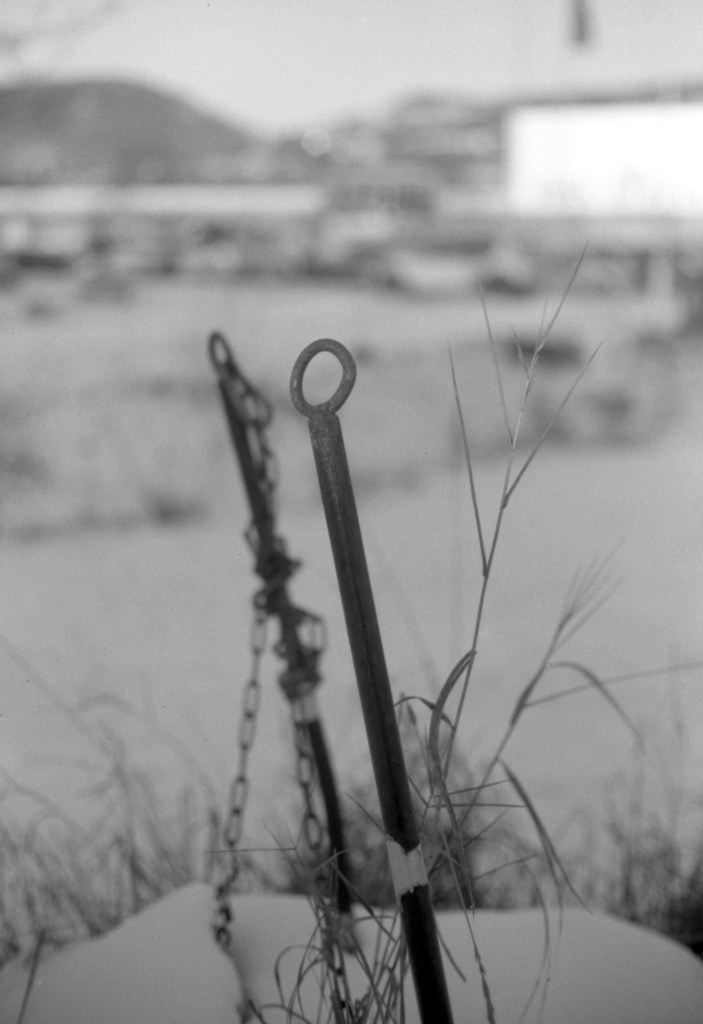
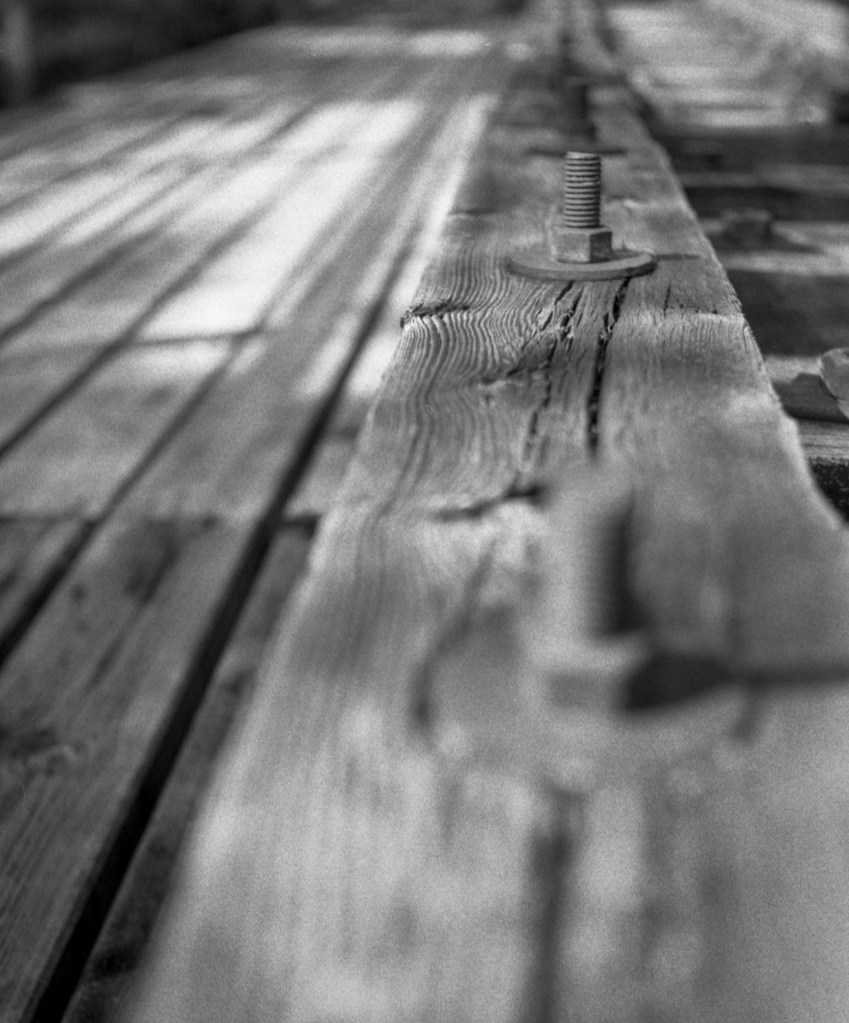
My first pictures for this entry were taken a few minutes after it stopped raining at a car-park when I filled my coffee-cup in the nearby petrol station. I experimented somewhat with the DOF on these images, and they are shot around f4 on the little 40mm lens. My favorite one is here:

Petri Racer, StreetCandy ATM400@400 – Rodinal 1+25, 6 minutes

As I aimed for the contrasty and somewhat grainy look on this roll, I went for a pretty concentrated dilution of Rodinal; 1+25. I guessed this dilution to give me the maximum accutance and give me deep and sharp contrast as well as the lovely Rodinal grain. I don’t really mind the grainy structure of Rodinal, and I find it to suit these kinds of images as it gives them a raw impression.

Reklamer

A bit later that day, I went to an old, derelict school building to set up for the shoot mentioned in a previous entry. The first thing I noticed was the interesting lights in the old hallway. Filled with old chairs, a ladder, dirt and the smell of old building, it really gave an incredible shot. I shot this one on a tripod using f5.6 for 1/2 of a second, and I find that this shot shows the mood of the hallway well.

Petri Racer – Streetcandy ATM400@400 – Rodinal 1+25 6 minutes

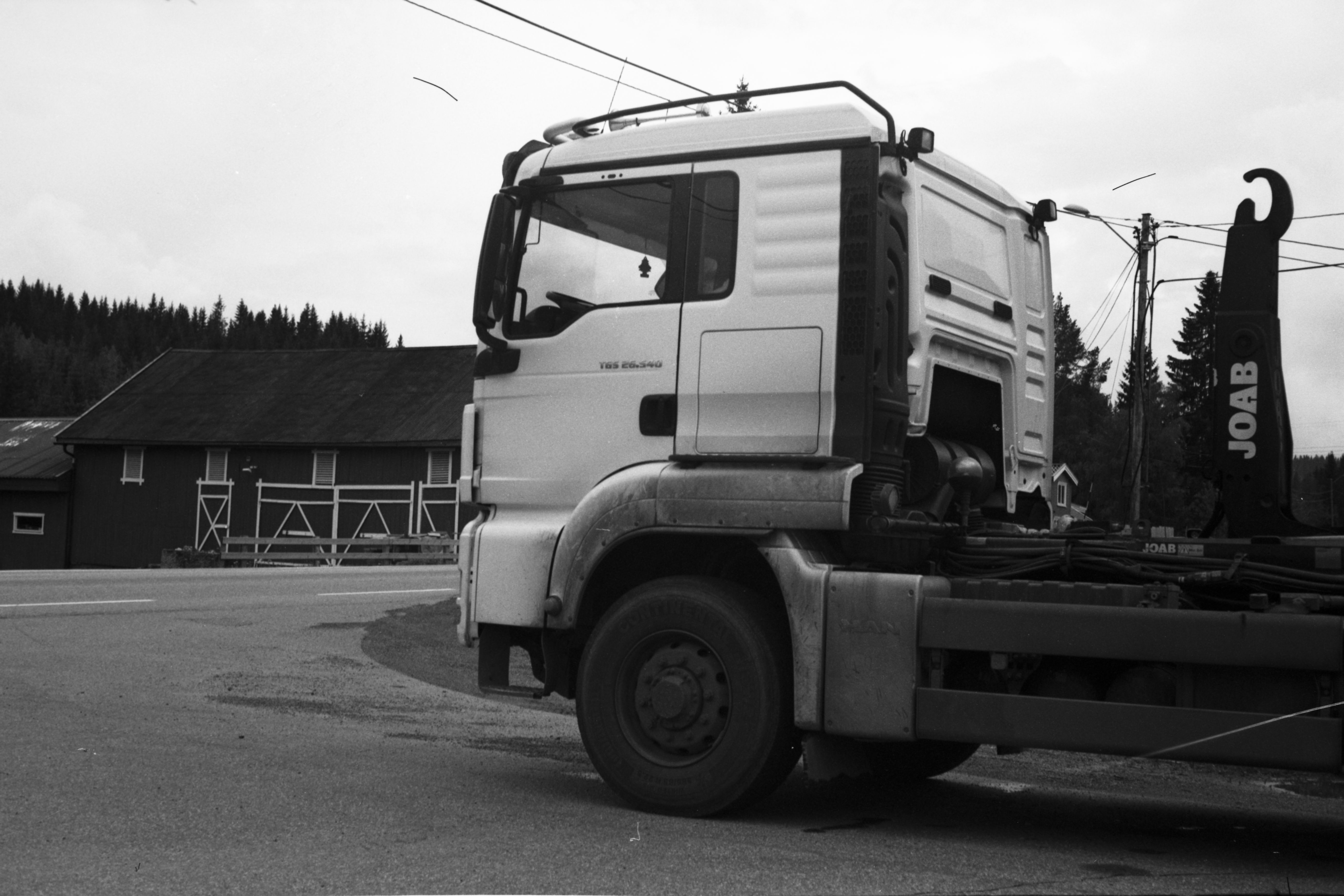
Then I went to an old museum where someone had backed their Tractor-trailer into a ditch. There were some interesting contrast to be captured there and I went for it.

Petri Racer – Streetcandy ATM400@400 – Rodinal 1+25 6 minutes

All in all I am very happy with this roll of film. I got the grain and the contrast that I wanted, and the little Petri got another run. Shame it hasn’t been used for a while. It will not sleep as long this time.

A little walk with the Petri

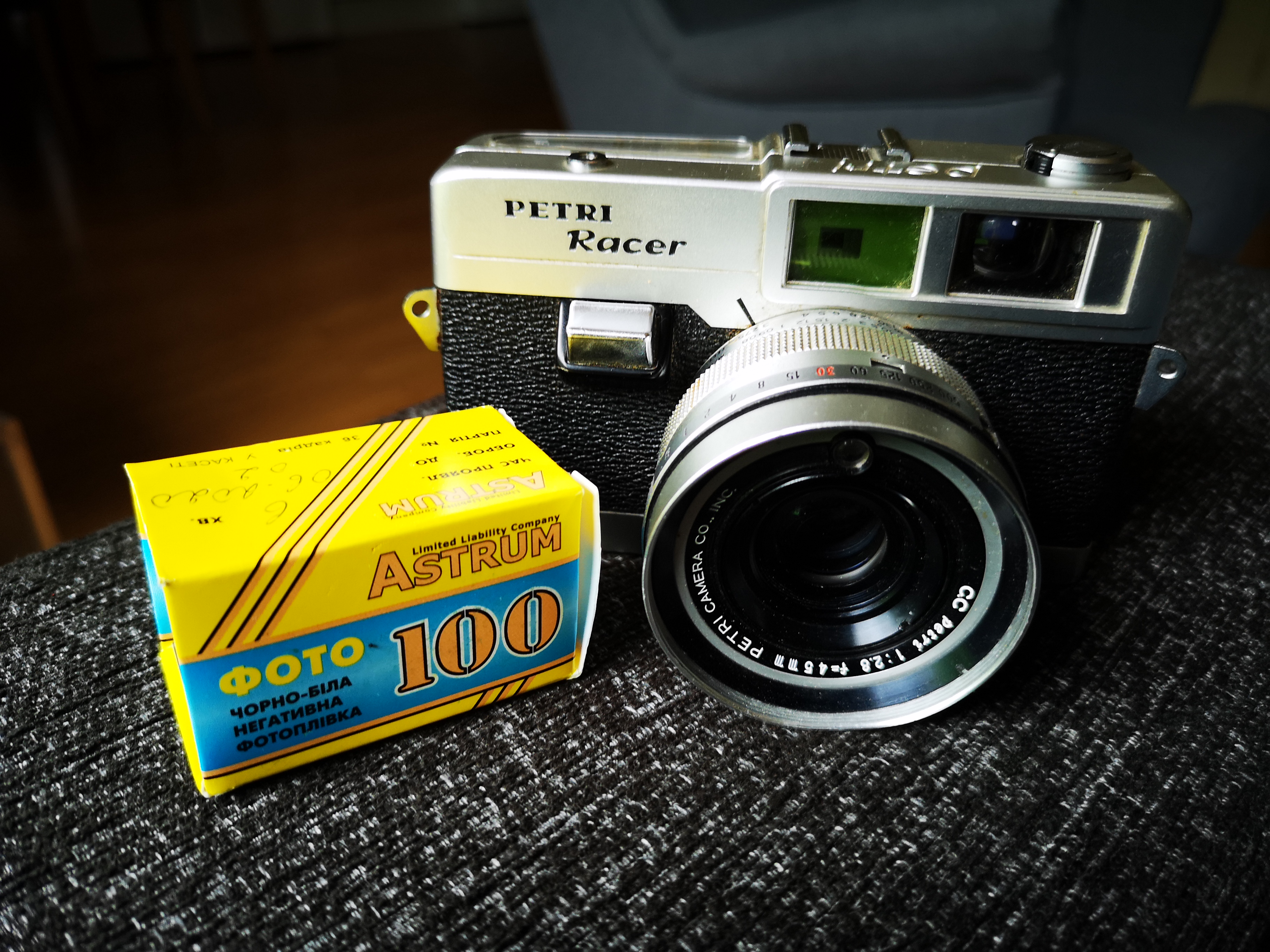
Today, I had a portrait assignment at a local museum ground, and I decided to arrive a bit early to have a little adventure with the Petri before my shoot. A few days ago I got a few interesting films in the mail, and i decided to try one of these films; an Astrum Foto100, from what I understand the company that bought Svema, when they ran out of business.

A documentation picture of the Petri and the Astrum.

I was curious about the Astrum-film, since I had never heard about the brand. Also I could not find development instructions anywhere for Kodak HC110 and Astrum Foto100. After some browsing I found a very interesting blog, where the time 9.45 was suggested for 20 degrees water. My water was 21 degrees, so I ended with 9.02 for the developer.

I shot the film using the sunny 16 rule, or as is more appropriate in Norway, the sunny 11, rule. Our sunlight is not as bright as some other places in the world.

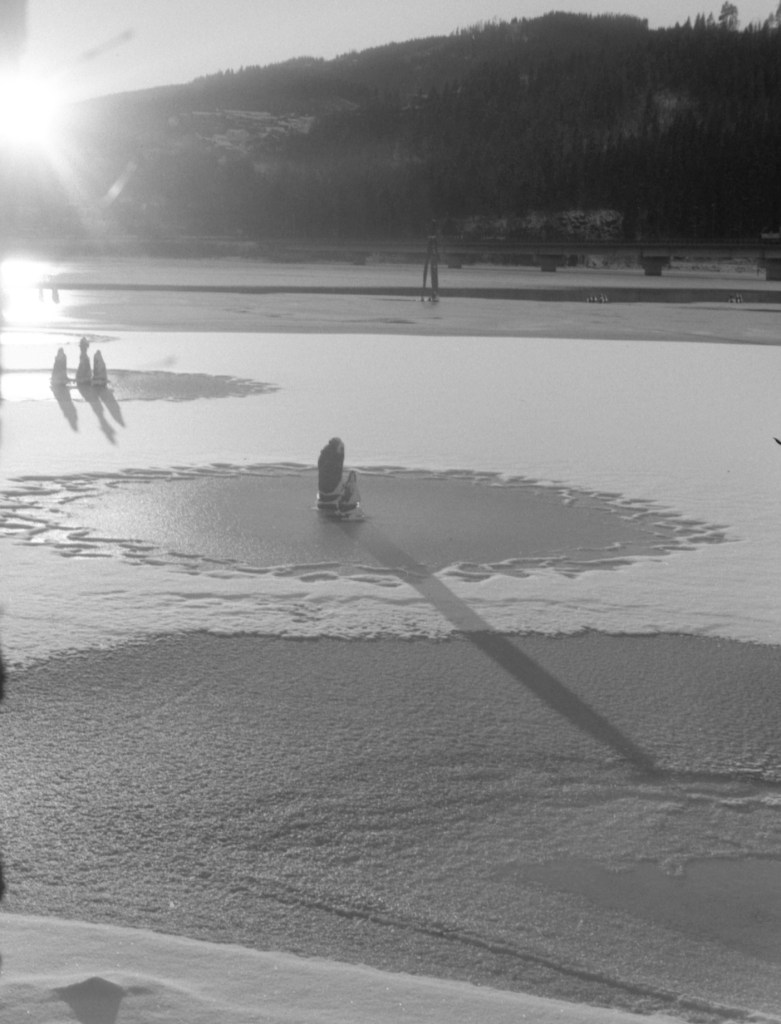
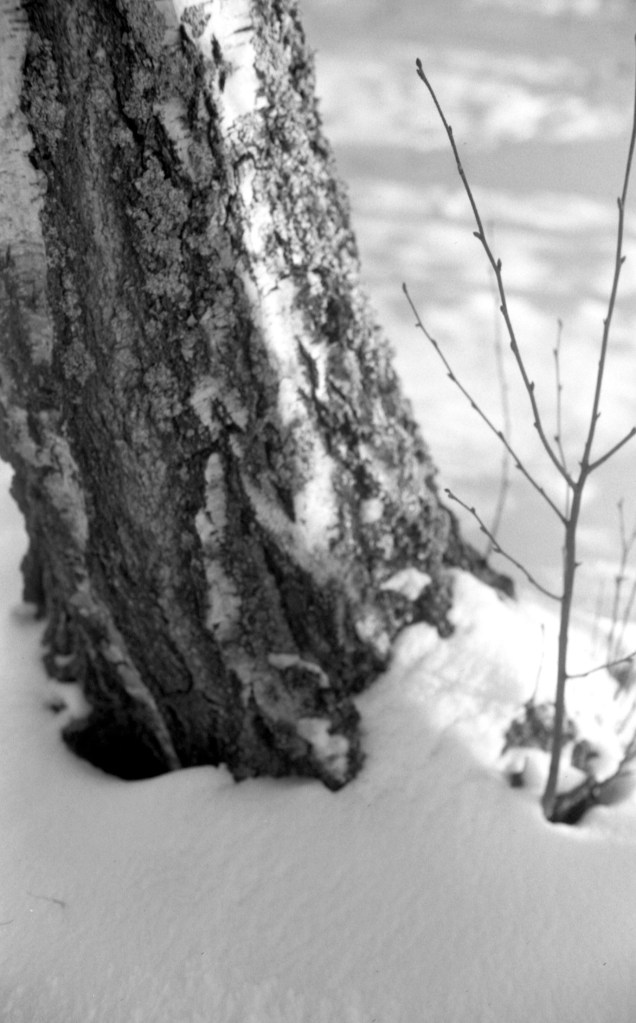
I fired mostly landscape photos, using apertures between f8 and f16, and had a really nice little walk around enjoying the sunshine and the Petri’s company. And when removing the negatives from the tank, I was amazed of the fine grain, range and general quality of the images. Also, the negatives were crystal clear.

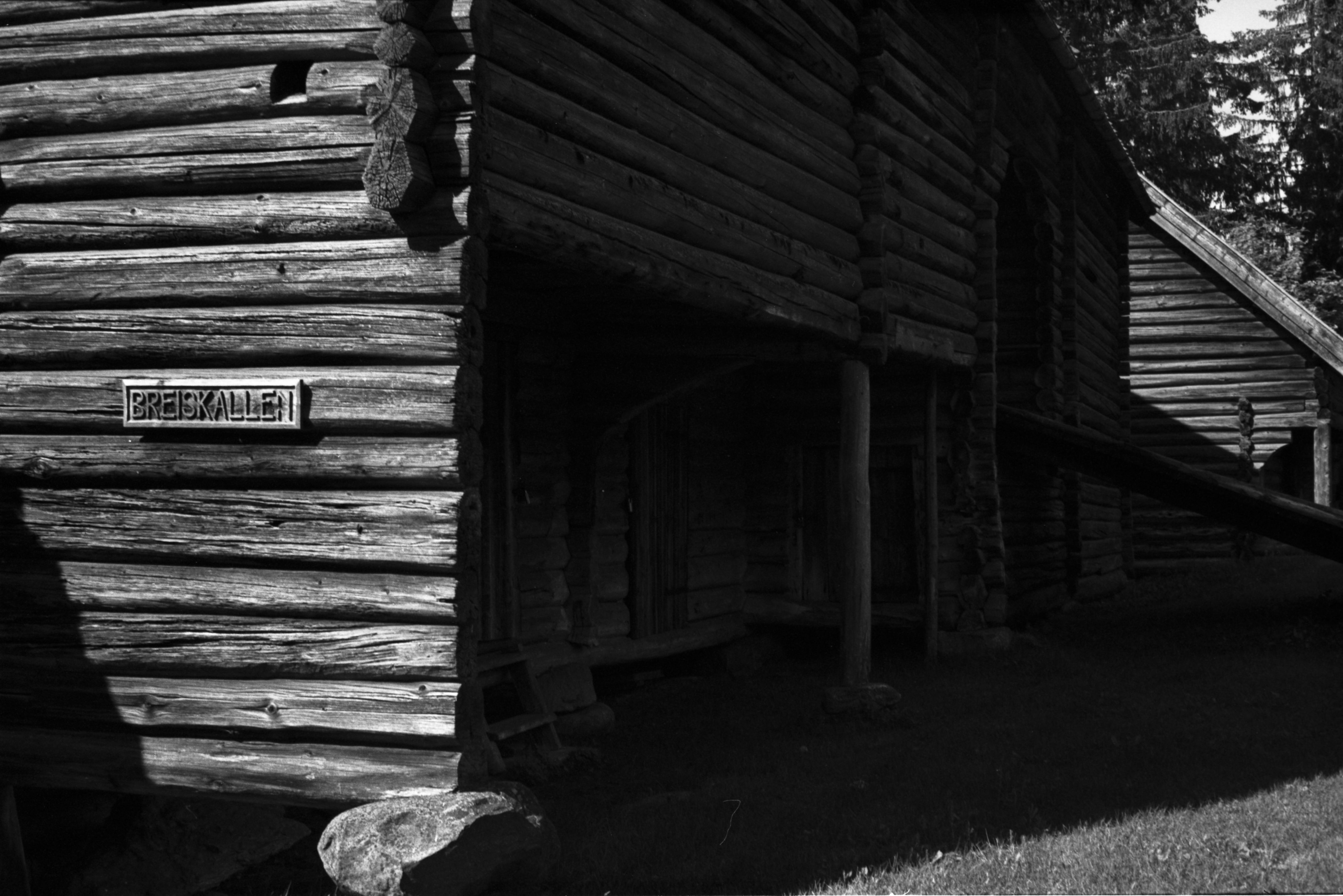
A sample photo.

The Astrum Foto100 is definitly a film I will use again, and I’m very surprised that HC110 is not listed as a recomended developer with this film. I have to say I am very happy with my results, and would use this combination again. I am also curious to test a film this great with X-tol or Rodinal.

“Color is everything, black and white is more.”

Dominic Rouse