A little success

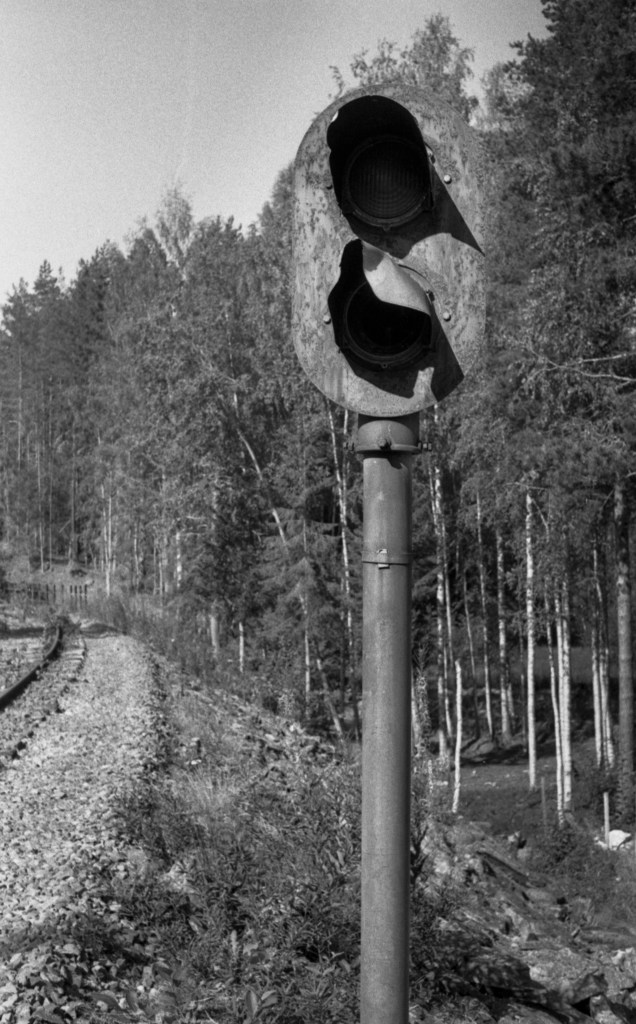
If you have followed me over the last months, you know that I bought a 100ft roll of Agfa APX100 a while back. It was the cheapest film available on the market and I was curious about how the film would work for me and my type of photography. So far, I have not really had a lot of success with it. I have studied the data-sheet for the film and I have tried it out in different situations. Some of the unlucky shoots have been due to poor bulk-loading skills or bad cassettes, and some has been due to my lack of understanding of how the film works. This time, however, I went a completely different direction. Instead of shooting landscapes, I went for an abandoned railroad track and I chose a very sunny and contrasty day to get deep contrasts and shadows in my images.

After many headaches with very grainy images, even when using fine grain developers such as ID-11, I chose to just embrace the grain and develop with Rodinal. I have used Rodinal with this film before, and I must say that from my experience with this film, after shooting it in different conditions and with different subjects, I find Rodinal to be the best developer with it. It actually produces a finer and less pronounced grain with Rodinal 1+100 than it does with ID-11.

Petri Racer – Agfa APX100 – Rodinal 1+100 1 hour.

Shooting vegetation with this film is not the best idea. It seems to be rather over sensitive to certain tones of green and gives a very mushy feel on all types of vegetation without any real separation. However, when shooting metal and dead objects, the film seems to produce rather beautiful contrast and lovely sharpness. I would think this film would be ideal for street photography with good light as it really works for this kind of shoot. It does benefit from a slight overexposure of one stop and the development process with Rodinal seems to get the most out of the contrasts in this film. Not that I am in any way pretending to be a master film reviewer.

I chose the Petri Racer for this outing. This camera is a small rangefinder camera made in the 1960s by the Japanese company Petri. A much forgotten brand today, they are really nice and quirky little cameras with mostly working rangefinder units even after about 60 years of use. The Petri was also the first camera I featured on this blog back in 2018 when the blog was new. I find that the world looks really nice through the lens of a Petri Racer, and it is a camera that I really enjoy using.
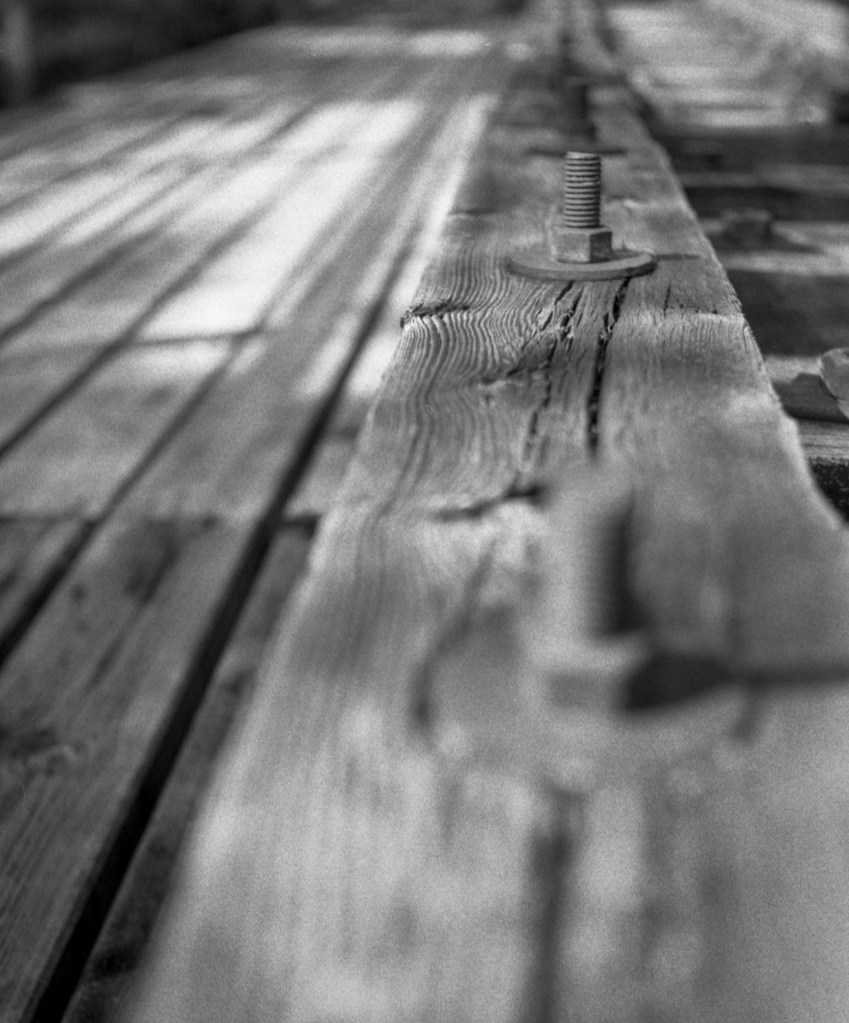
Petri Racer – Agfa APX100 – Rodinal 1+100 1 hour.

Shooting railroad track details is not something I do very often, but I really enjoyed the outing. I also found that finally I had some decent results with the Agfa film, where I was actually happy with the images I captured. My initial goal for the trip was to make three darkroom prints that I was happy with. And this time, I did succeed.

Petri Racer – Agfa APX100 – Rodinal 1+100 1 hour.

Shooting a very cheap film with a very simple camera does indeed make sense as well. I would think that most users of simple cameras like this would generally use cheaper films such as Kodak Colorplus and Fuji C200 for color and Fomapan or Agfa for black and white. For my personal taste, I find the Fomapan to be the better option of the latter, but as I mentioned earlier, I can see that the Agfa would make sense to use if you were shooting a lot of urban, street and architecture and you want the raw effect of this film.

Would I recommend the APX100? To some extent. It for sure is a decent film and if you are mainly snapping around as you go, you would probably be very satisfied with this film. However, if you are shooting a lot of landscapes, I would rather go for the Fomapan 100 which I find to work better for vegetation. And yes, develop with Rodinal.
Capturing the mood

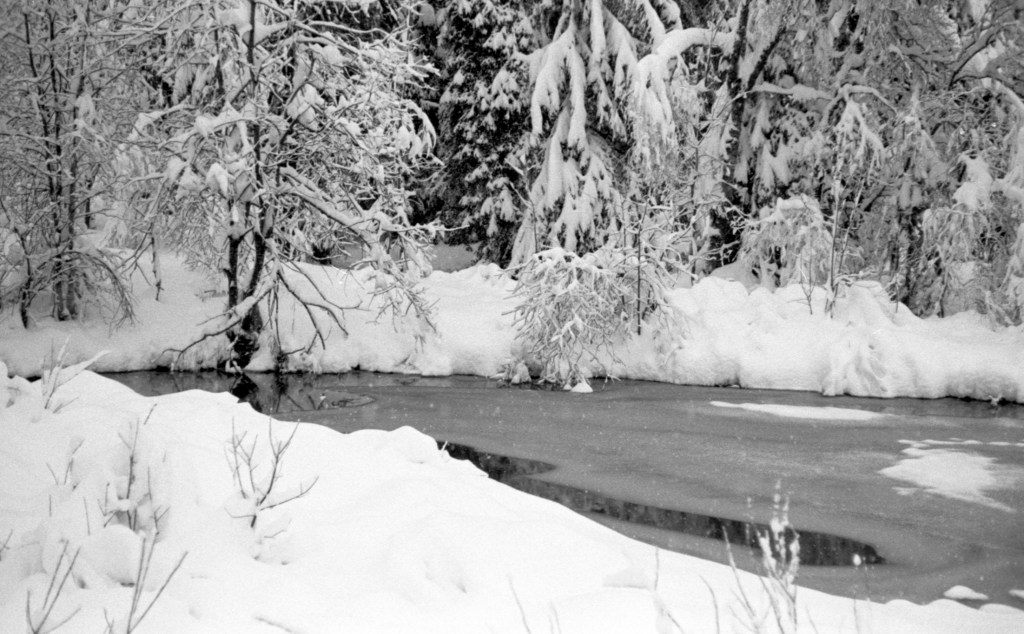
Some days ago, I was tidying up my darkroom, and I found what I assume to be a previous test-roll. I assumed that the roll was around half, but it turned out to be around 24 exposures of HP5 plus. I then got the Idea of trying to capture the miserable weather we have had in the area lately. I figured HP5 plus would be brilliant at that, it has grain, but not too much and coarse. I also chose to go with Ilford’s Perceptol developer, to reduce the grain in the whites a bit, but not eradicate it. 

My aim was not to get razor sharp images, but rather to capture the feeling and mood of this time of year. I am thinking more in the direction of a charcoal drawing than a crystal clear image of the mood. I know some photographers would have gone with a Holga or something similar to that on an outing like this, but I have never really befriended my Holga camera, and I prefer the effect the Petri Racer gives.

Snowy and wet December day – Petri Racer w Ilford HP5 plus@250. F8 1/60s – Ilford Perceptol stock

For that reason, I chose to bring along the Petri Racer. For long term readers of this blog, you know the Petri Racer camera very well. It was the first camera I bought for this blog, and the camera that inspired me to make a blog about cheap cameras, hence CCadventures – Cheap Camera Adventures. Not that all cameras featured on this blog is «Cheap», but they are reasonable and affordable alternatives that in some way sparks my interest.

Reklamer

The day was very snowy and it was unpleasant walking around in the snowy weather. I also had to wipe and dry the Petri a few times during the outing, to make sure it was not soaking or that the lens got fogged up. The camera had been in the car for a few hours before the shoot to «climatize» somewhat, but the wet snow and humidity made it fog up slightly anyway. I therefore let the film reach room-temperature before developing it. I often do this when the weather is cold to avoid swift temperature changes during the process. Not that the weather this day was very cold, only around -2 degrees, but it never hurts to be on the safe side.

Even capturing the snow falling – Petri Racer w Ilford HP5 plus@250 f8, 1/4 sec – Ilford Perceptol stock

The whole outing took me around half an hour, and I was soaked afterwards after wading in deep snow to reach a dam with view over the little lake Skumsjøen close to Gjøvik.

For the images, I am quite satisfied with the images as I find that they convey the mood and feeling I was aiming at conveying. These are not my strongest photographic moment by any means, but in terms of conveying the unpleasant Norwegian December-wet snow, I think I did a decent job.

A little walk with the Petri

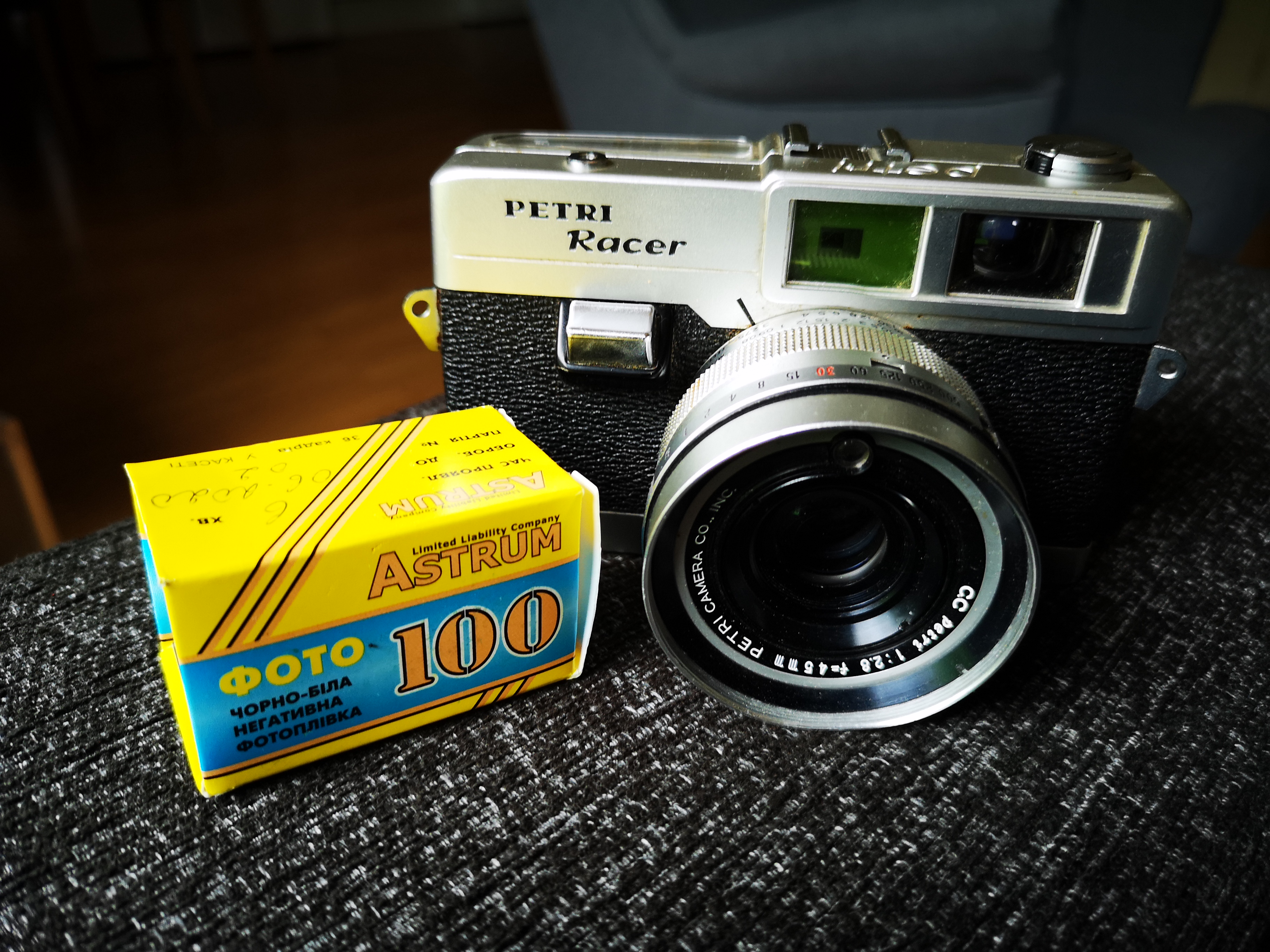
Today, I had a portrait assignment at a local museum ground, and I decided to arrive a bit early to have a little adventure with the Petri before my shoot. A few days ago I got a few interesting films in the mail, and i decided to try one of these films; an Astrum Foto100, from what I understand the company that bought Svema, when they ran out of business.

A documentation picture of the Petri and the Astrum.

I was curious about the Astrum-film, since I had never heard about the brand. Also I could not find development instructions anywhere for Kodak HC110 and Astrum Foto100. After some browsing I found a very interesting blog, where the time 9.45 was suggested for 20 degrees water. My water was 21 degrees, so I ended with 9.02 for the developer.

I shot the film using the sunny 16 rule, or as is more appropriate in Norway, the sunny 11, rule. Our sunlight is not as bright as some other places in the world.

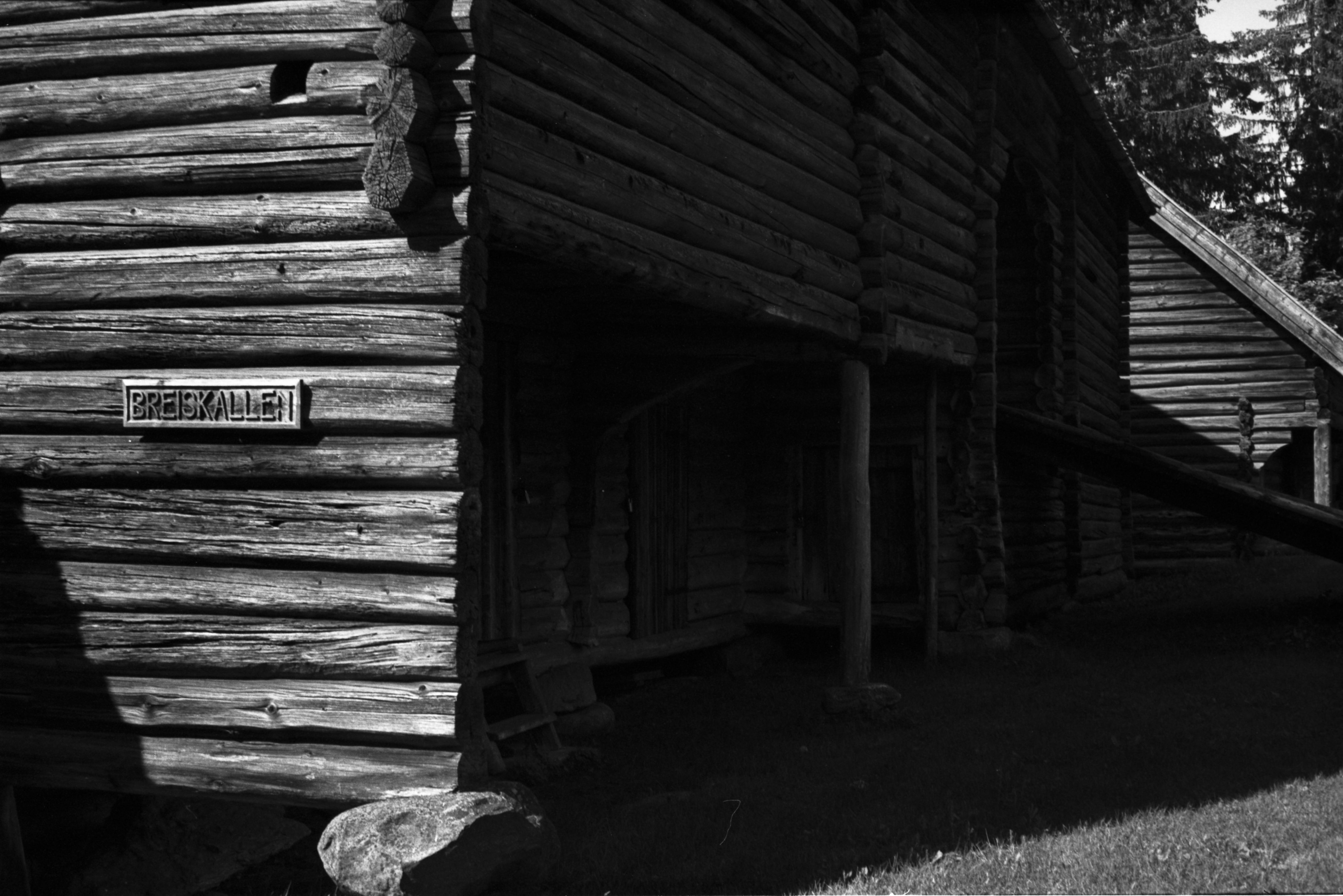
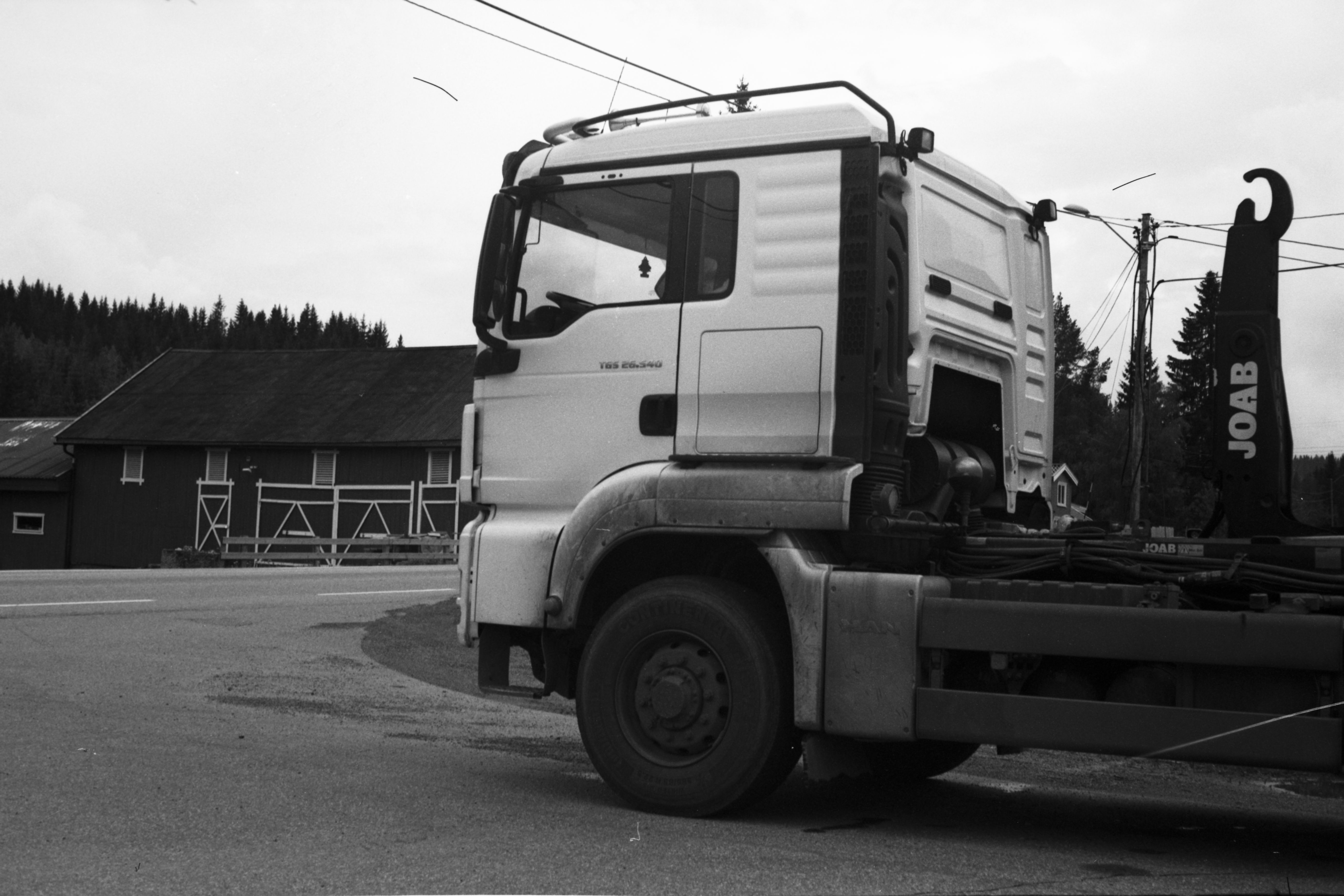
I fired mostly landscape photos, using apertures between f8 and f16, and had a really nice little walk around enjoying the sunshine and the Petri’s company. And when removing the negatives from the tank, I was amazed of the fine grain, range and general quality of the images. Also, the negatives were crystal clear.

A sample photo.

The Astrum Foto100 is definitly a film I will use again, and I’m very surprised that HC110 is not listed as a recomended developer with this film. I have to say I am very happy with my results, and would use this combination again. I am also curious to test a film this great with X-tol or Rodinal.

“Color is everything, black and white is more.”

Dominic Rouse