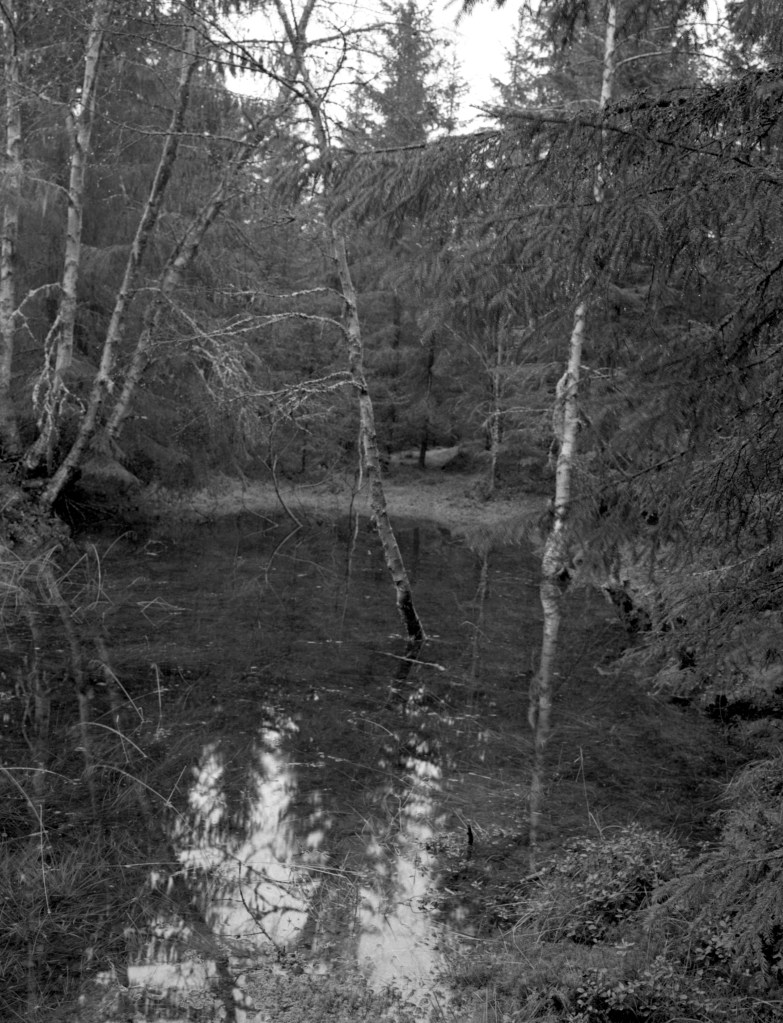
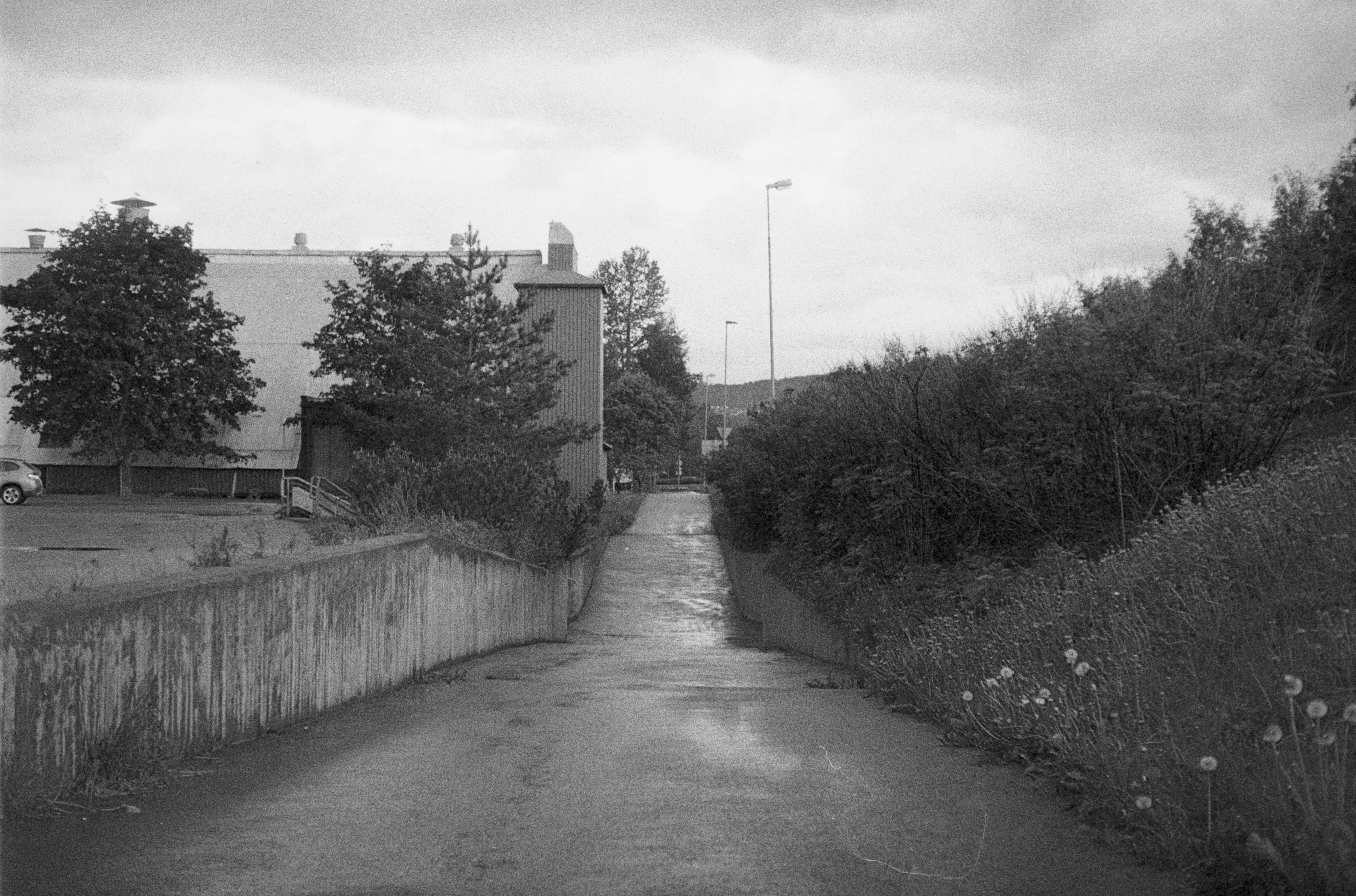
A little success

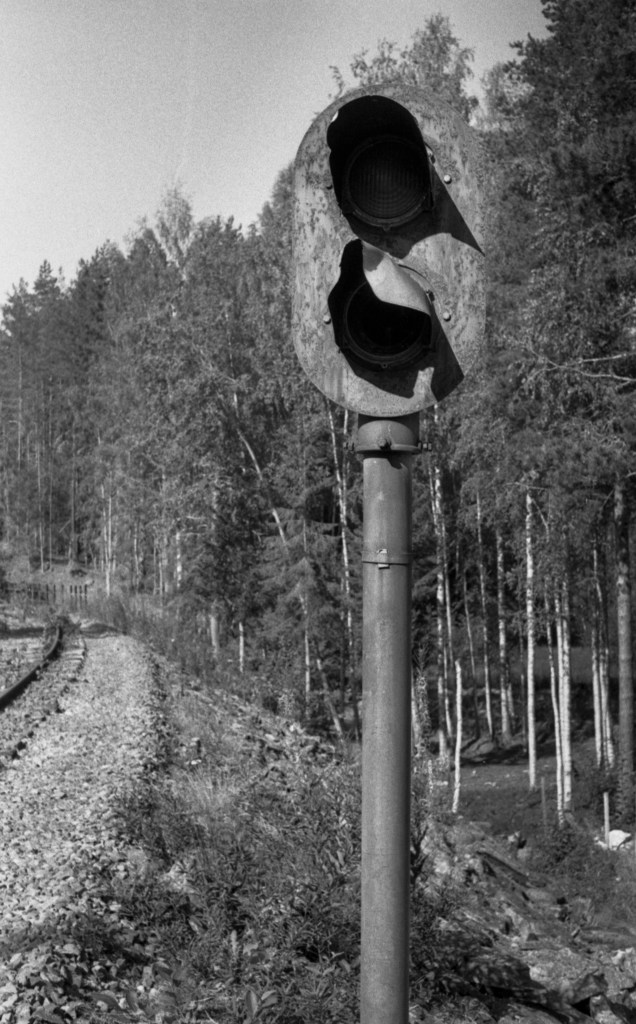
If you have followed me over the last months, you know that I bought a 100ft roll of Agfa APX100 a while back. It was the cheapest film available on the market and I was curious about how the film would work for me and my type of photography. So far, I have not really had a lot of success with it. I have studied the data-sheet for the film and I have tried it out in different situations. Some of the unlucky shoots have been due to poor bulk-loading skills or bad cassettes, and some has been due to my lack of understanding of how the film works. This time, however, I went a completely different direction. Instead of shooting landscapes, I went for an abandoned railroad track and I chose a very sunny and contrasty day to get deep contrasts and shadows in my images.

After many headaches with very grainy images, even when using fine grain developers such as ID-11, I chose to just embrace the grain and develop with Rodinal. I have used Rodinal with this film before, and I must say that from my experience with this film, after shooting it in different conditions and with different subjects, I find Rodinal to be the best developer with it. It actually produces a finer and less pronounced grain with Rodinal 1+100 than it does with ID-11.

Petri Racer – Agfa APX100 – Rodinal 1+100 1 hour.

Shooting vegetation with this film is not the best idea. It seems to be rather over sensitive to certain tones of green and gives a very mushy feel on all types of vegetation without any real separation. However, when shooting metal and dead objects, the film seems to produce rather beautiful contrast and lovely sharpness. I would think this film would be ideal for street photography with good light as it really works for this kind of shoot. It does benefit from a slight overexposure of one stop and the development process with Rodinal seems to get the most out of the contrasts in this film. Not that I am in any way pretending to be a master film reviewer.

I chose the Petri Racer for this outing. This camera is a small rangefinder camera made in the 1960s by the Japanese company Petri. A much forgotten brand today, they are really nice and quirky little cameras with mostly working rangefinder units even after about 60 years of use. The Petri was also the first camera I featured on this blog back in 2018 when the blog was new. I find that the world looks really nice through the lens of a Petri Racer, and it is a camera that I really enjoy using.
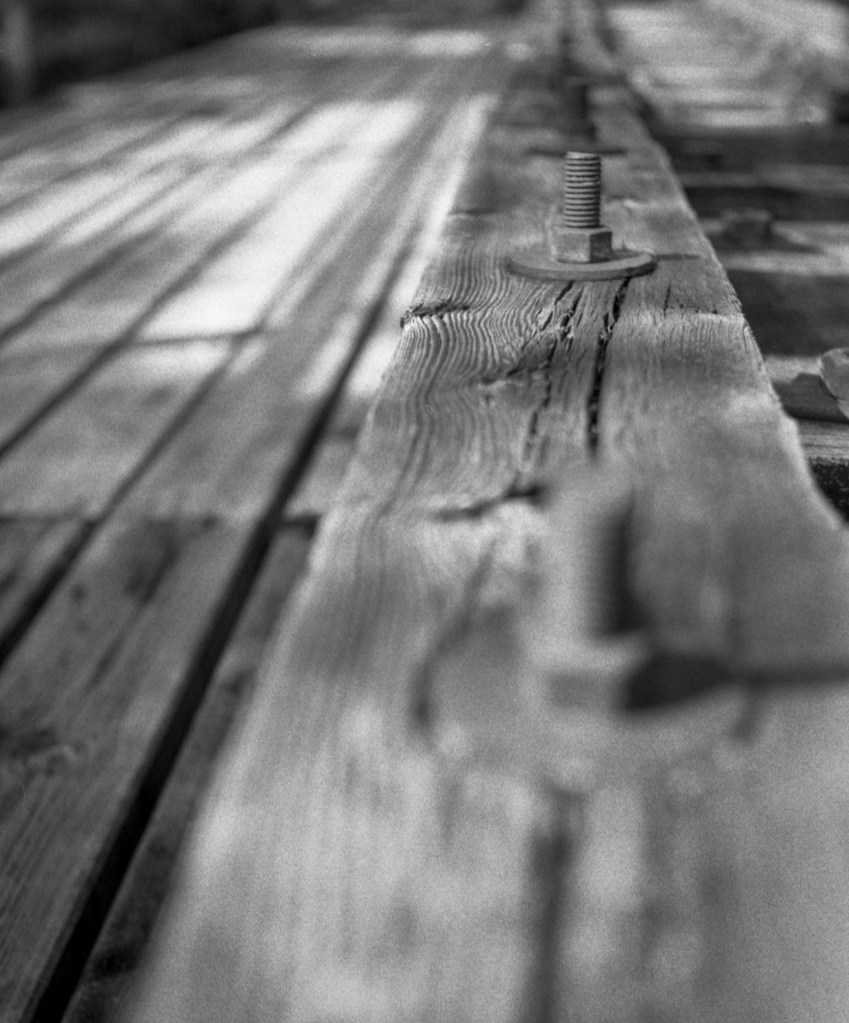
Petri Racer – Agfa APX100 – Rodinal 1+100 1 hour.

Shooting railroad track details is not something I do very often, but I really enjoyed the outing. I also found that finally I had some decent results with the Agfa film, where I was actually happy with the images I captured. My initial goal for the trip was to make three darkroom prints that I was happy with. And this time, I did succeed.

Petri Racer – Agfa APX100 – Rodinal 1+100 1 hour.

Shooting a very cheap film with a very simple camera does indeed make sense as well. I would think that most users of simple cameras like this would generally use cheaper films such as Kodak Colorplus and Fuji C200 for color and Fomapan or Agfa for black and white. For my personal taste, I find the Fomapan to be the better option of the latter, but as I mentioned earlier, I can see that the Agfa would make sense to use if you were shooting a lot of urban, street and architecture and you want the raw effect of this film.

Would I recommend the APX100? To some extent. It for sure is a decent film and if you are mainly snapping around as you go, you would probably be very satisfied with this film. However, if you are shooting a lot of landscapes, I would rather go for the Fomapan 100 which I find to work better for vegetation. And yes, develop with Rodinal.
Checking the bulk

Around a week ago, I went out shooting with the Canon T70 and a bulk-loaded Agfa APX 100 film. When I pulled the negatives out of the tank, I realized that it had somehow gotten exposed to light at some point and that there were a lot of different light leaks that could not have come from the camera. After inquiring around online, I found that the most likely explanation would be that the bulk-loader itself was not light tight and that it might have impacted the film either when stored inside the bulk-loader, or when rolled. I therefore decided to take the bulk loader into the darkroom, and I rolled up one little roll of film (approximately 12 frames) just to check whether there was a problem with the whole bulk, indicating a problem with the light seals on the loader.

To make sure there were no other differences, I used the same cassette when rolling, and I used the same techniques, only that I did everything in the dark. I then put the roll of film into my Olympus OM-1, which I know have good light seals, and set off to make some test shots.

A bench and a field – Olympus OM-1 Agfa APX 100 – Rodinal 1+100 1 hour

I spotted some light leaks on this roll as well, especially on the last shots on the roll, the one that had been closest to the previous loaded film, but the frames from «deeper in the bulk» seemed untouched by the light leaks. The light leaks were also consistent to one end of the frames vertically, so it cannot be anything with the shutter or light seals on the camera. I guess my experiment showed me that the bulk-loader is not 100% light tight, and I will apply black tape to it next time I fill it with a new roll.

For the film itself. I have found that what works for me, is shooting this film at 50 (or even lower) and using a yellow filter. This gives me the shadow details and a decent spread of greys. However, I will probably not buy this film again. To me, it is grainier than Kentmere 400 and I expect finer grain and more shadow-details at box-speed for a 100 speed film than what I get from the Agfa APX100.

Windy summers day – Olympus OM-1 Agfa APX 100 – Rodinal 1+100 1 hour

I also this time shot the Agfa at 50, but since I used a yellow filter, I set my light meter to ISO 25, giving an additional stop of compensation for the filter. I chose to go with Rodnial stand development on this particular test, because I wanted to see how the Agfa film would look with this kind of «lazy» development process. I think the process got some grain out of the film, and that if used on a rainy og foggy day, that this combination could work really well. It does really set the «moody» tone in the images. I would, however, get a rather similar result with pushing Tri-X, and this is a film with far broader applications.

Capturing snow and fog

Yet again, the persistent winter of 2021 struck  back at us with all its wreath. After a few weeks of impeccable weather and a really pleasant spring mood, we were once again confronted with the face of King Winter. When I went out yesterday, it was blowing a gale and the snow flew thick in the air. Thicker than horse-flies at a swamp in the summer. The weather was bland and uninspiring  and being out there was nasty and uncomfortable. Yet, I had something in mind.

I wanted to capture the foggy and snowy day with a gritty and grainy mood. I chose to go for a BW film. The Rollei Retro 400s, which is a film I have used a bit before and that I find to suit my way of shooting very well. My thinking was that the 400 ISO film would give me just the right amount of grain and contrast, as well as giving me the opportunity to shoot hand-held, which is very handy in windy conditions, where camera-shake due to wind is a real danger, even with  a sturdy tripod.

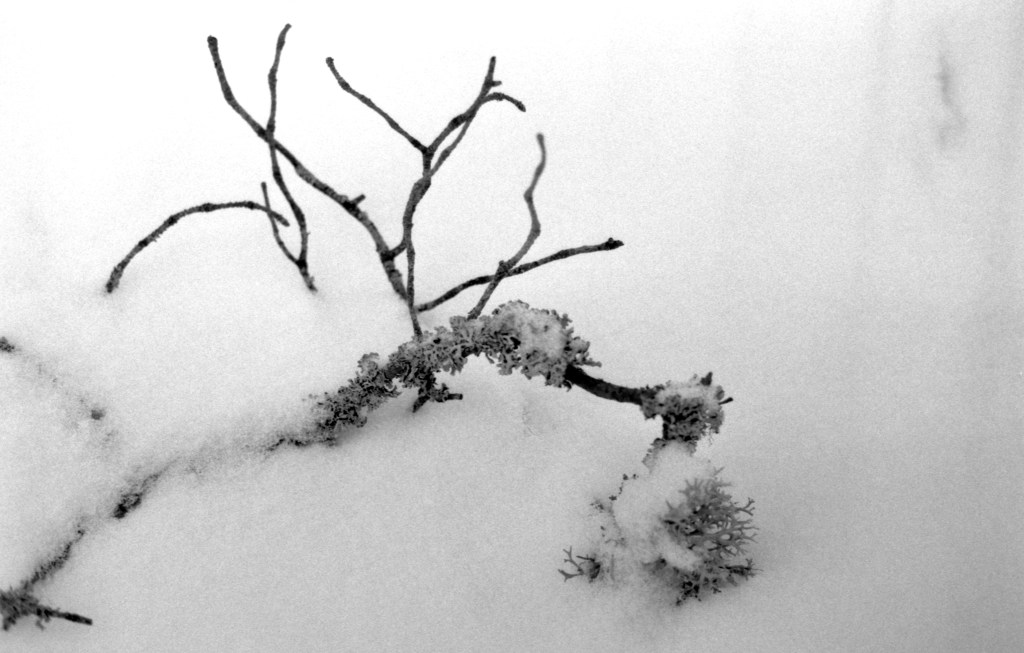
A fallen branch – Olympus OM-1 w 50mm Zuiko f1,8 – Rollei Retro 400s – Rodinal 1+100

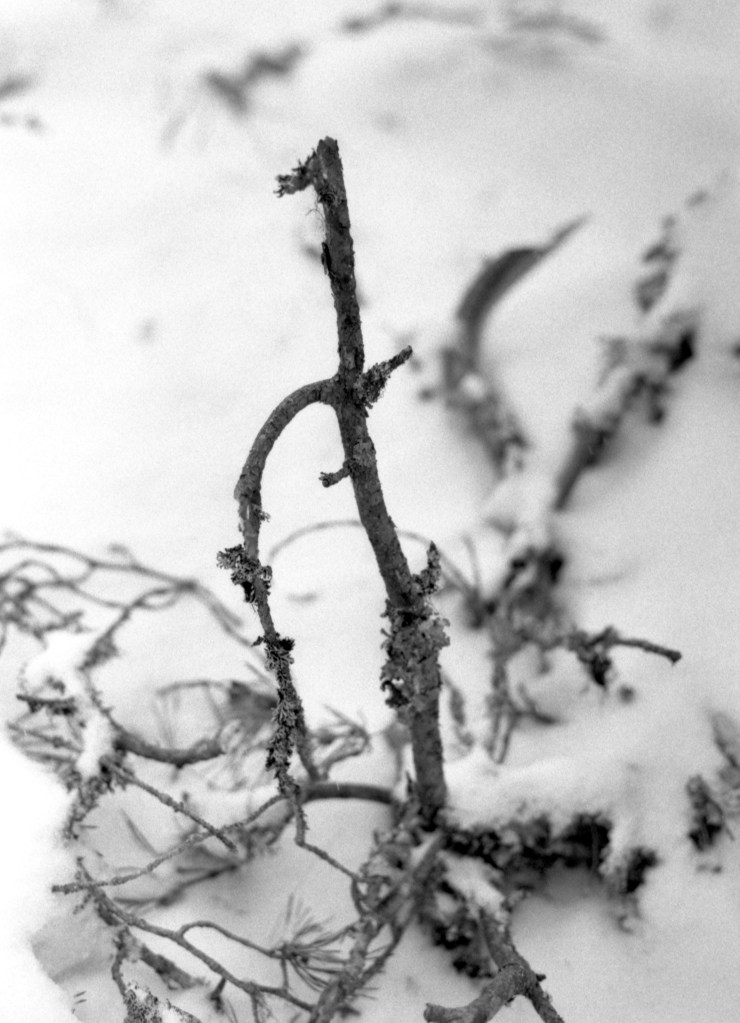
I shot about half a roll of film, focussing on making quick compositions around branches that, over the winter with heavy snow, has broken off bigger trees. The foggy and snowy conditions makes these branches stand out as interesting shapes, and shows them for the beauty they are. WIth the added grain from the film and the additional grain and contrast from the use of Rodinal 1+100 Semi-Stand gave that somewhat “raw” look I was going for.

Reklamer

The camera I chose to use, was my brilliant Olympus OM-1. This is a camera I trust at all shutter-speeds and that I know will work regardless of conditions. However, I noticed two issues on this particular outing. first and foremost, there was a little piece of dust that obstructed my view through the viewfinder. I used it as it was when out shooting, because I did not want to take the lens off in the middle of the show-storm. When I took the lens off, there was a little piece of dust on the focussing glass. How this ended up there is unknown to me, I have not taken the lens off this camera for months, and it has not been there before.

A fallen branch – Olympus OM-1 w 50mm Zuiko f1,8 – Rollei Retro 400s – Rodinal 1+100

It also seems to give uneven exposures at the highest shutter-speed 1/1000th, I even got a blank frame that I know was shot with this shutter-speed. This has also never happened to me before, and I will keep an eye on this in better conditions. 

All in all, I got the images I wanted, and all in the matter of around 15 minutes in the snowy gale. Thank you for following and reading, I hope you enjoy my images.

Trying out an expired film

I am normally not too enthusiastic about expired films. For me photography is more about precision and less about experimenting. However, a while back I bought a camera online, and with it came a full package of Svema Foto65 expired in 1986. As this package was full and dust-free, I guessed they had been stored properly, maybe frozen or refrigerated over time. Therefore I decided to give these films a go.

As they are 120 films, I rolled one of them into my Bronica ETR, and went back to my favorite old derelict train station. If you have followed my blog for a while, you will have seen me shooting at that location before. I chose to rate the film at ISO 20 and bracket one stop in each direction. As it turned out, ISO 10 would have been my best pick for this outing. The films original box-speed was once ISO 80, and with the «one stop pr decade» 10 would be the correct speed I guess.

Because I feared very low contrast in the images, I chose to shoot with an orange filter to give the film some extra contrast boost. It seems to have worked out the way I expected it to.

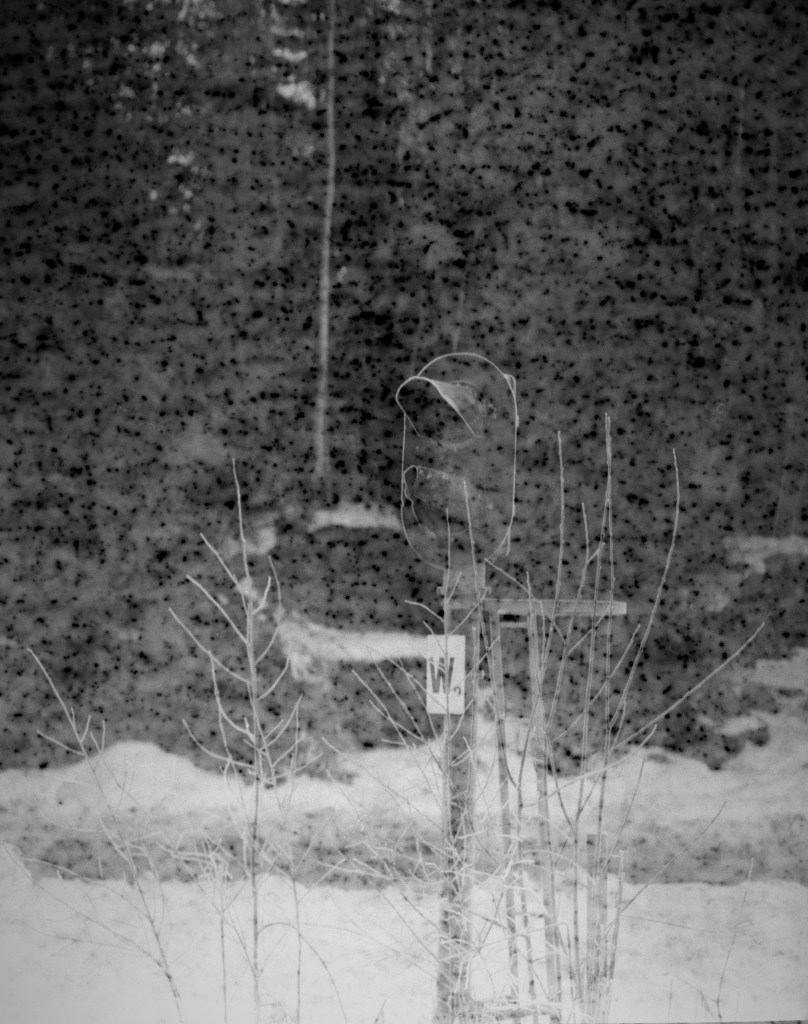
Bronica ETR w 150mm Zenzanon f3,5 – Orange filter – Svema Foto65 @Iso10 – Rodinal 1+100 70min

Despite the nasty mottling all over the frame, the Svema Foto65 seems to have been a very fine grain and sharp film once. My guess is that this mottling has come off the backing paper, there are visible discoloration on both the negatives and the backing paper. If I am mistaking, please let me know in the comments. All in all, the Svema performed acceptably I find, and maybe a well kept roll of this film would still make really nice images, despite its age.

Reklamer
Bronica ETR w 150mm Zenzanon f3,5 – Orange filter – Svema Foto65 @Iso10 – Rodinal 1+100 70min

Emptying the roll of RPX25

In my last entry, and video, I tried out the very slow Rollei RPX25 film. I shot it with my Olympus OM-1 and I used a yellow filter because of the lightning conditions that I found to be ideal for yellow filter. Also, I must say that I got images that I am very pleased with. I only shot half a roll of the film, and cut it out of the camera, much because I was not sure what to expect in terms of contrast and metering.

Today, I rolled up the rest of the RPX25 in the OM-1, and went for a little outing to shoot the rest of the roll. The weather was absolutely horrendously nasty, with snow/rain blend and temperatures around 0. A typical nasty early winter day in Norway, and I went to a location I know very well. A little lake close to where I live, Skumsjøen, and looked for something that would allow me to shoot wide-open, at f1,8 with the 50mm Zuiko lens.

Tree root abstraction – Olympus OM-1 w Olympus Zuiko 50mm f1,8. Shot wide open f1,8 with Rollei RPX25. Semi-stand development Rodinal 1+100 70 minutes, agitated beginning and midle of cycle.

I went for some very abstract close-ups of tree roots near the frozen water. I even took the risk of walking on the newly formed ice, as it felt safe, to get the best angles. Luckily I did not fall through.

From my last outing with this film, I remembered that I got very hard contrasts in the negatives, and I gave it a whole stop of over exposure to retain more grey-tones in the details. Another measure I chose to reduce some of the contrast while retaining the sharpness, was a cycle of stand-development with Rodnial 1+100. This is not a type of process I often use, but for slower films, I have found it to work well with my style. It also gives a certain «character» to the shots, that I find to suit my eye.

Reklamer

I am not in anyway competent to comment on the performance of this film, nor its abilities. I have not used it enough to know how to handle it properly yet, and I am no film expert. However, I find it rather enjoyable to play with this filming trying to rethink my exposures to get the results I want. Also, I have only shot the film in dull, overcast weather, but I find that the Rollei RPX25 gives me a fun challenge to work with. In short, this film is fun to work with.

A video will be available on Youtube soon. Search for Ccadventures.

Contrast and foggy landscape

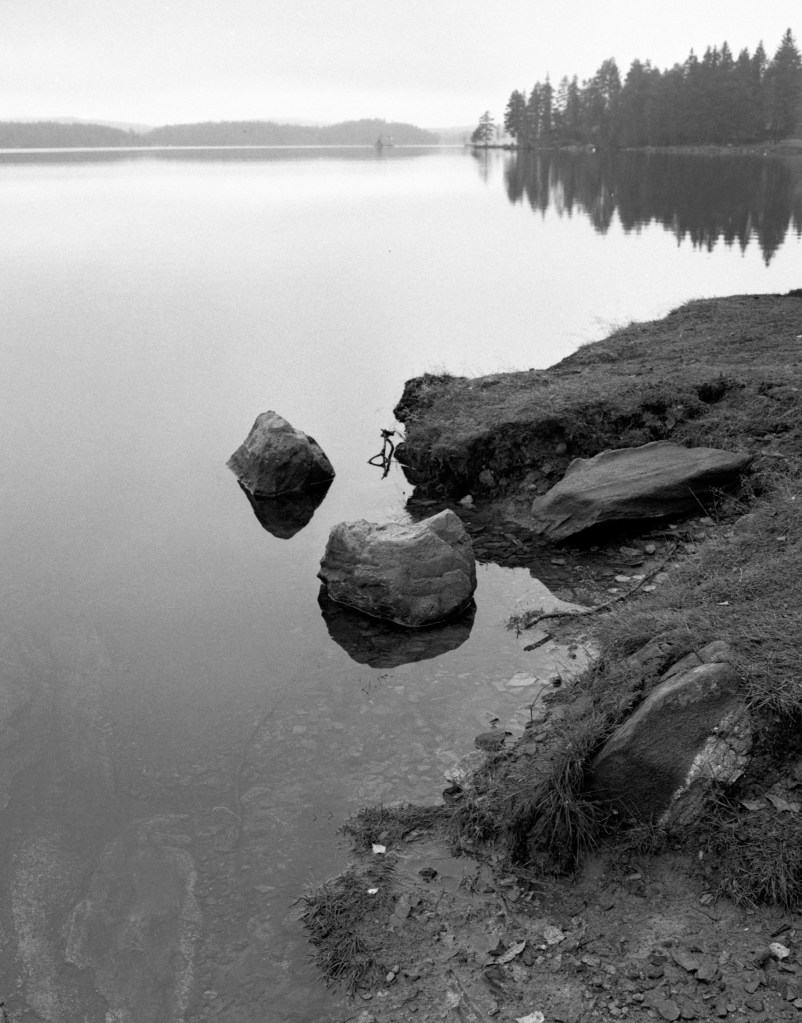
Today was a wet, unpleasant and foggy day in Norway. No real need and point in going out, but there was some interesting fog, and a very white sky that lured me out anyway. The conditions were almost black and white anyway, so I chose to go with a Black and White film. Because of the verylow level of natural contrast, I went with a slow film. Ilford FP4 Plus. I also chose to stand-develop the film in Rodinal 1+100 for an hour, to get some extra contrast and find some beautiful grays.

I chose to use the Bronica ETR, because I wanted to do medium format and that it would give me 15 frames to a roll.

I also got to test out my new scanner. Thank you for the friendly photographer who pointed out to me that my old scanner was probably shot. My new one is far better and gives me lovely scans.

Aiming at contrast and grain

I haven’t really done any contrasty BNW-stuff for a while, and the other day I loaded a roll of StreetCandy ATM400 into my little Petri Racer and brought it with me for some days, aiming at whatever caught my eye wherever I was at the time. I haven’t used the Petri Racer for a while, and I found this was an option to use it and its little, interesting lens.

The Petri Racer is a little rangefinder camera that I have used a lot on this blog. It was the camera that made this blog happen and the camera I used for my first two entries. I am very happy with the way the Petri makes the world look. It has a special tone to it that I cannot really put my finger on.

My first pictures for this entry were taken a few minutes after it stopped raining at a car-park when I filled my coffee-cup in the nearby petrol station. I experimented somewhat with the DOF on these images, and they are shot around f4 on the little 40mm lens. My favorite one is here:

Petri Racer, StreetCandy ATM400@400 – Rodinal 1+25, 6 minutes

As I aimed for the contrasty and somewhat grainy look on this roll, I went for a pretty concentrated dilution of Rodinal; 1+25. I guessed this dilution to give me the maximum accutance and give me deep and sharp contrast as well as the lovely Rodinal grain. I don’t really mind the grainy structure of Rodinal, and I find it to suit these kinds of images as it gives them a raw impression.

Reklamer

A bit later that day, I went to an old, derelict school building to set up for the shoot mentioned in a previous entry. The first thing I noticed was the interesting lights in the old hallway. Filled with old chairs, a ladder, dirt and the smell of old building, it really gave an incredible shot. I shot this one on a tripod using f5.6 for 1/2 of a second, and I find that this shot shows the mood of the hallway well.

Petri Racer – Streetcandy ATM400@400 – Rodinal 1+25 6 minutes

Then I went to an old museum where someone had backed their Tractor-trailer into a ditch. There were some interesting contrast to be captured there and I went for it.

Petri Racer – Streetcandy ATM400@400 – Rodinal 1+25 6 minutes

All in all I am very happy with this roll of film. I got the grain and the contrast that I wanted, and the little Petri got another run. Shame it hasn’t been used for a while. It will not sleep as long this time.

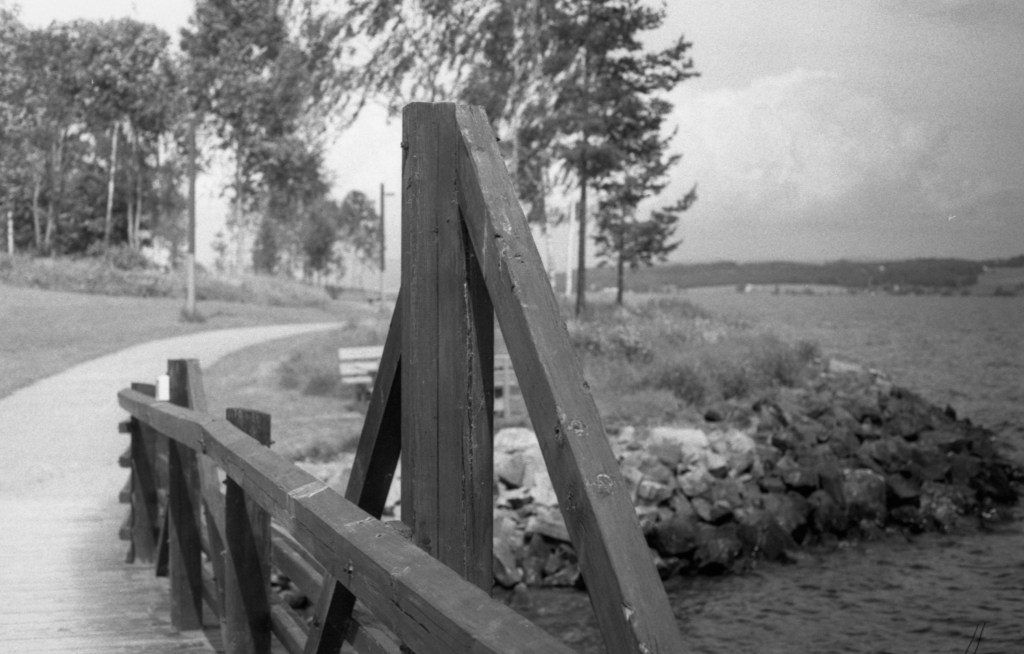
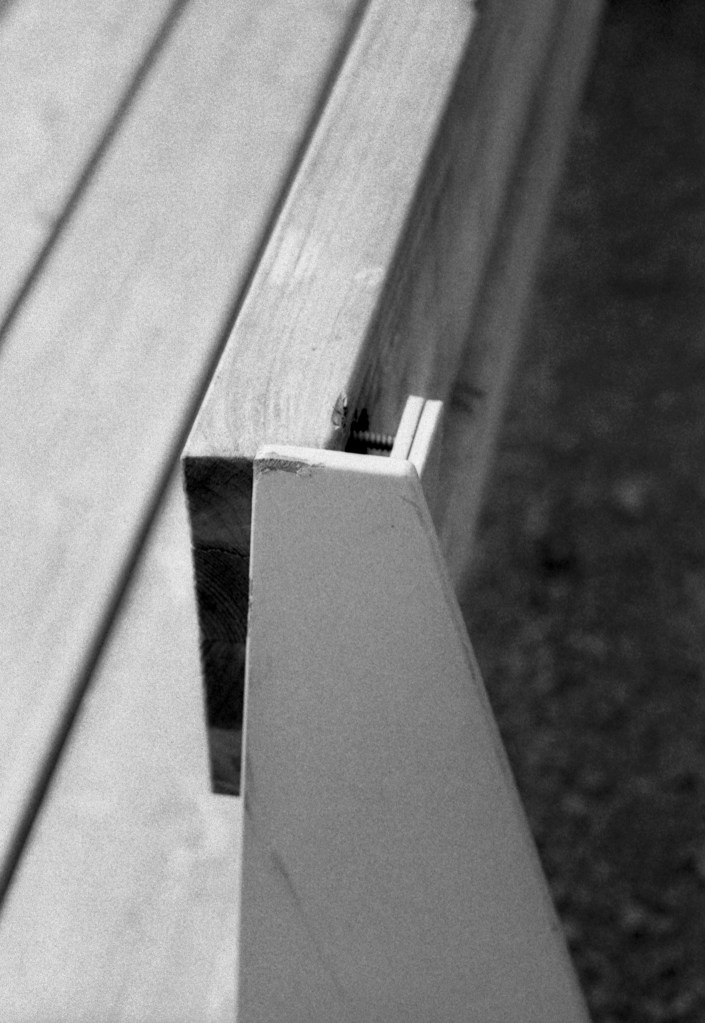
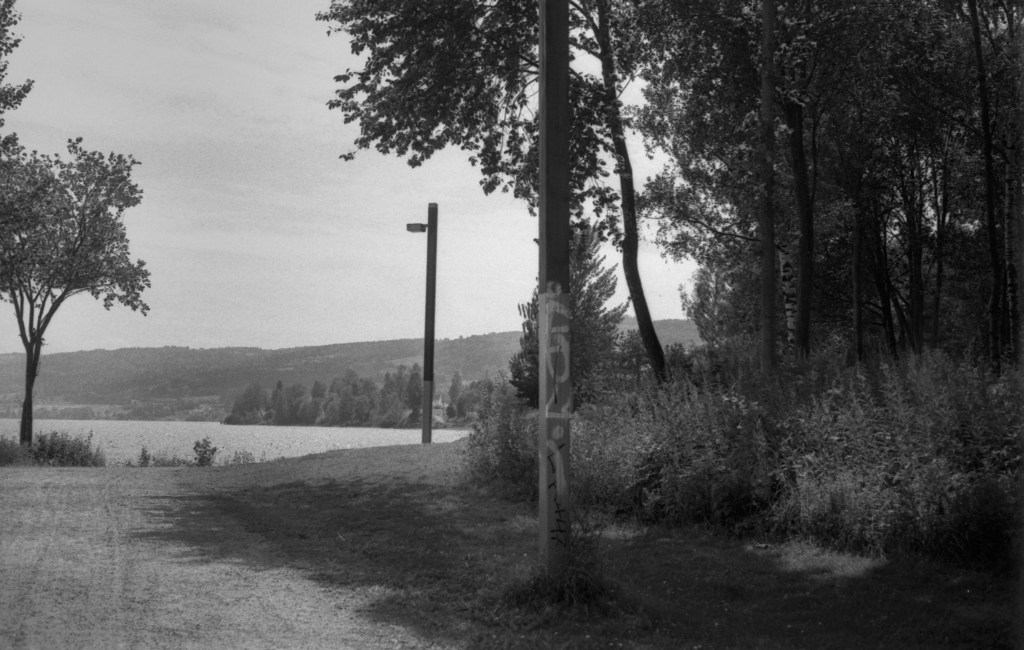
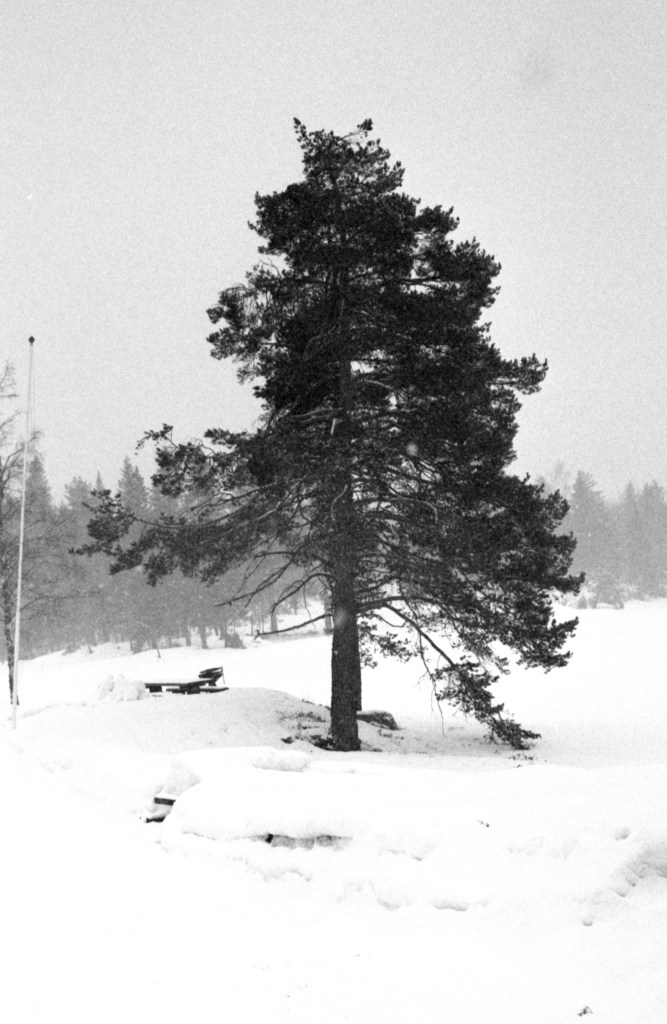
More from the first Petri-test

From the same roll of Ilford PAN 400 as the previous entry. Ilford PAN 400 shot at 800 in an old Petri Racer.

Development: 75 minutes in Rodinal 1+100 17 degrees, agitation first 20 seconds, then careful agitation after 45 minutes. Scanned with Plustek Opticfilm 8100.

«There’s something strange and powerful about black and white imagery.»

– Stefan Kanfer –