Eight frames of Retro 400s

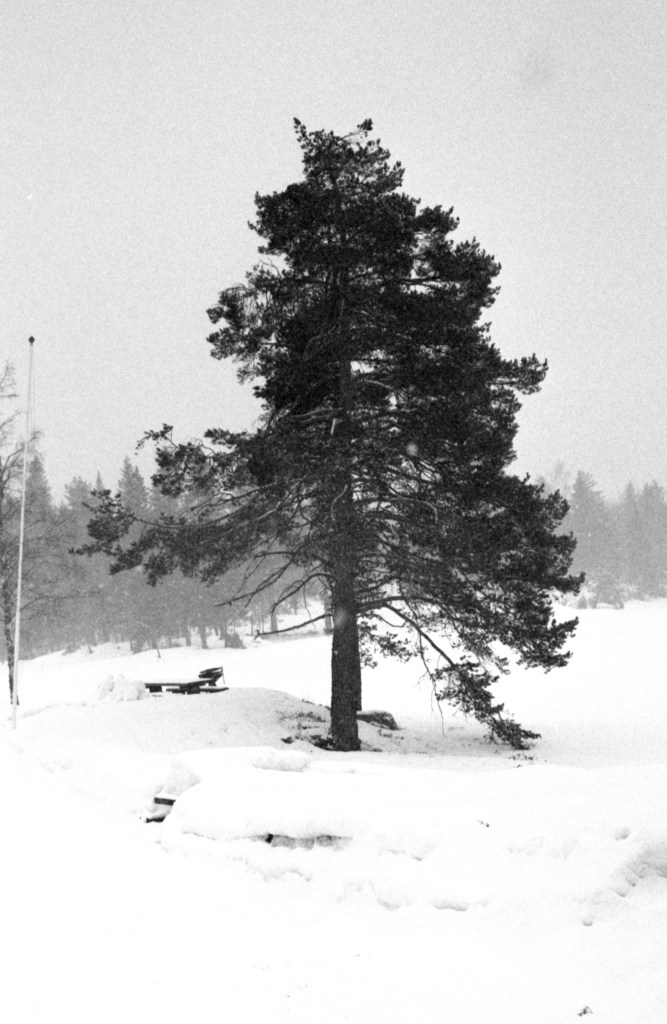
On a foggy, snowy day a short while ago, I shot about half a roll of Rollei Retro 400s with my Olympus OM-1, aiming at capturing the hard contrasts of the really nasty weathered day. I cut the outing short because it got very difficult and nasty to work in the wet and snowy gale. I cut the film out of the camera, and saved the rest for another day. That day came, and I put it into my Canon T70 and went to a local church that I find very interesting to shoot.

Because of the conditions on this particular day, I chose to overexpose the film by one stop to 200, and shave off 20% of the development time. Basically a one stop pull. This would give me more shadow-detail and give me more to play on with the apertures on a bright afternoon in the snow. I never got to use that last point, as it turned out that the total number of frames left on the film was EIGHT.

Aas church on a bright afternoon – Canon T70 – Rollei Retro 400s – Foma Fomadon Excel 1+0 7m30s

My negatives were more contrasty than I thought they would be, so I am very happy that I pulled the film one stop for this shoot. I mainly shot at f11 and f8 for this outing, and I have to say that I think the little 50mm Canon Lens performs rather well. For a standard kit-lens it is decently sharp and helps me capture the moods I want. I have, however, seen some diffraction on f22, and I avoid that aperture when using this camera.

Reklamer

The aperture-priority setting on the Canon seems to work very well. Even on these shots, where the sky was very bright, I managed to retain decent detail in the sky, showing the cloud-formations etc, without using any filters.

A naked graveyard tree – Canon T70 – Rollei Retro 400s – Foma Fomadon Excel 1+0 7m30s

I also have a hard time walking past an interesting looking trees, and I saw one at this grave yard by the fence by some graves. Because of the deep snow, I was not able to study the tree and identify what type of tree it was, but it made for a really lovely composition. I shot it from two different distances because I was uncertain which one that would be the most efficient. I will include both here.
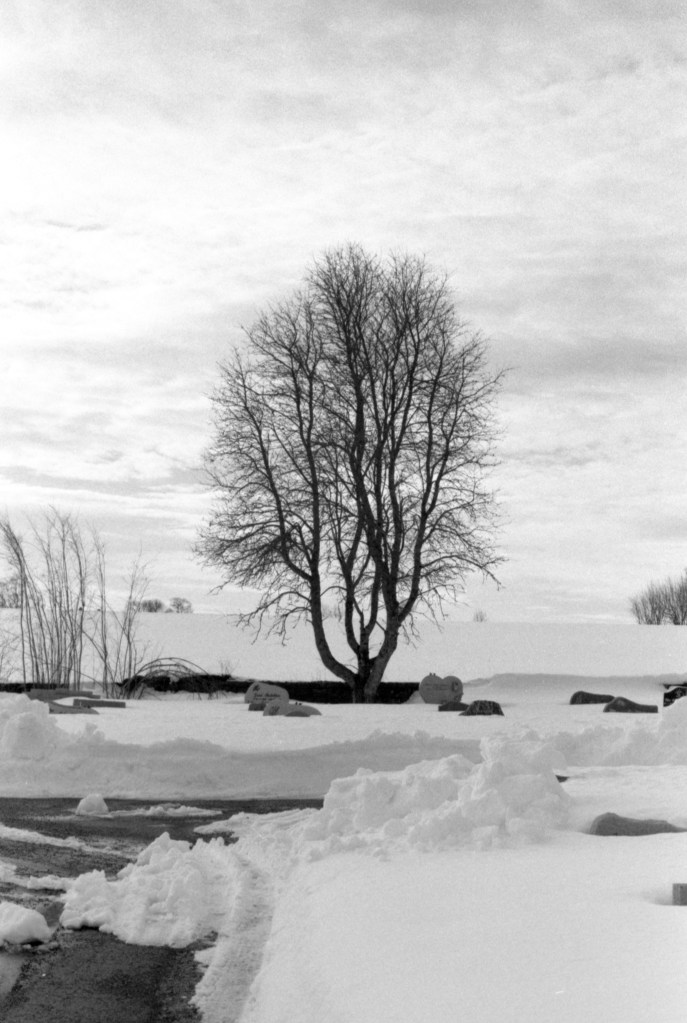
The same tree further away – Canon T70 – Rollei Retro 400s – Foma Fomadon Excel 1+0 7m30s

I also attempted a cool shot of the entry area of the church, but I am not very pleased with how it turned out. I find that it is a rather «bland» composition and that it does not either emphasis the contrast nor the shapes of the church in the way I imagined it would. This would probably have worked better if shot at box-speed.

Not very pleased with this one – Canon T70 – Rollei Retro 400s – Foma Fomadon Excel 1+0 7m30s

Capturing snow and fog

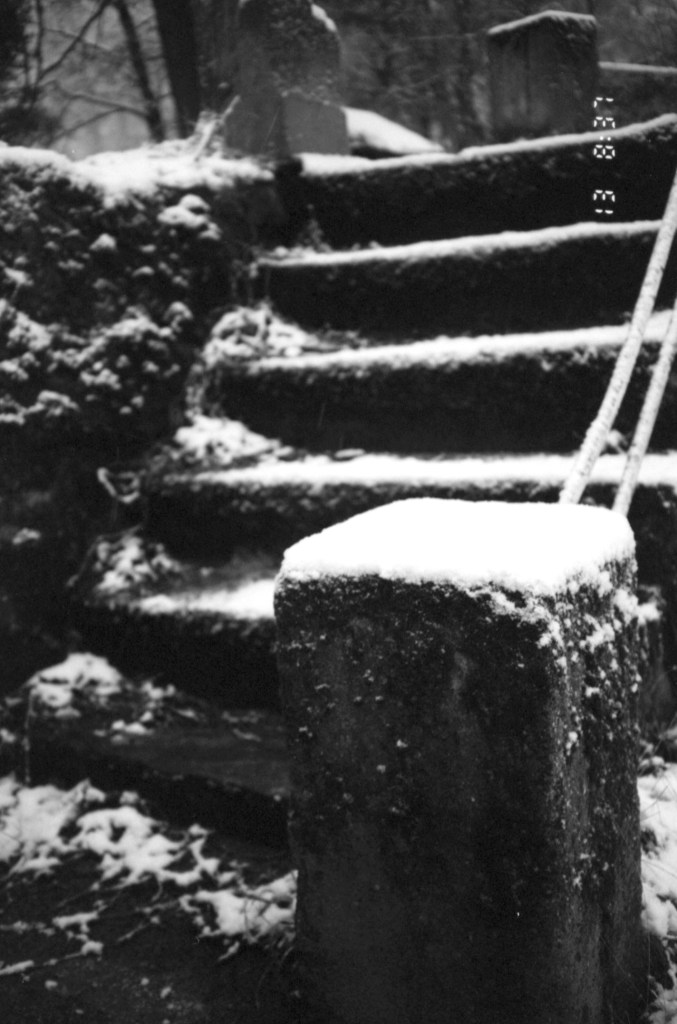
Yet again, the persistent winter of 2021 struck  back at us with all its wreath. After a few weeks of impeccable weather and a really pleasant spring mood, we were once again confronted with the face of King Winter. When I went out yesterday, it was blowing a gale and the snow flew thick in the air. Thicker than horse-flies at a swamp in the summer. The weather was bland and uninspiring  and being out there was nasty and uncomfortable. Yet, I had something in mind.

I wanted to capture the foggy and snowy day with a gritty and grainy mood. I chose to go for a BW film. The Rollei Retro 400s, which is a film I have used a bit before and that I find to suit my way of shooting very well. My thinking was that the 400 ISO film would give me just the right amount of grain and contrast, as well as giving me the opportunity to shoot hand-held, which is very handy in windy conditions, where camera-shake due to wind is a real danger, even with  a sturdy tripod.

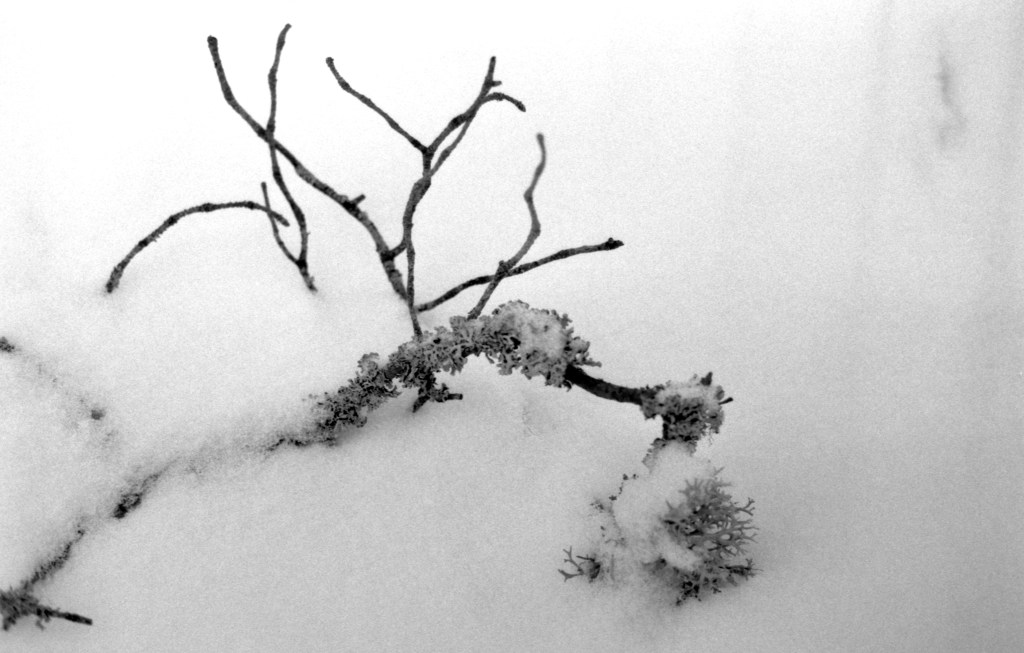
A fallen branch – Olympus OM-1 w 50mm Zuiko f1,8 – Rollei Retro 400s – Rodinal 1+100

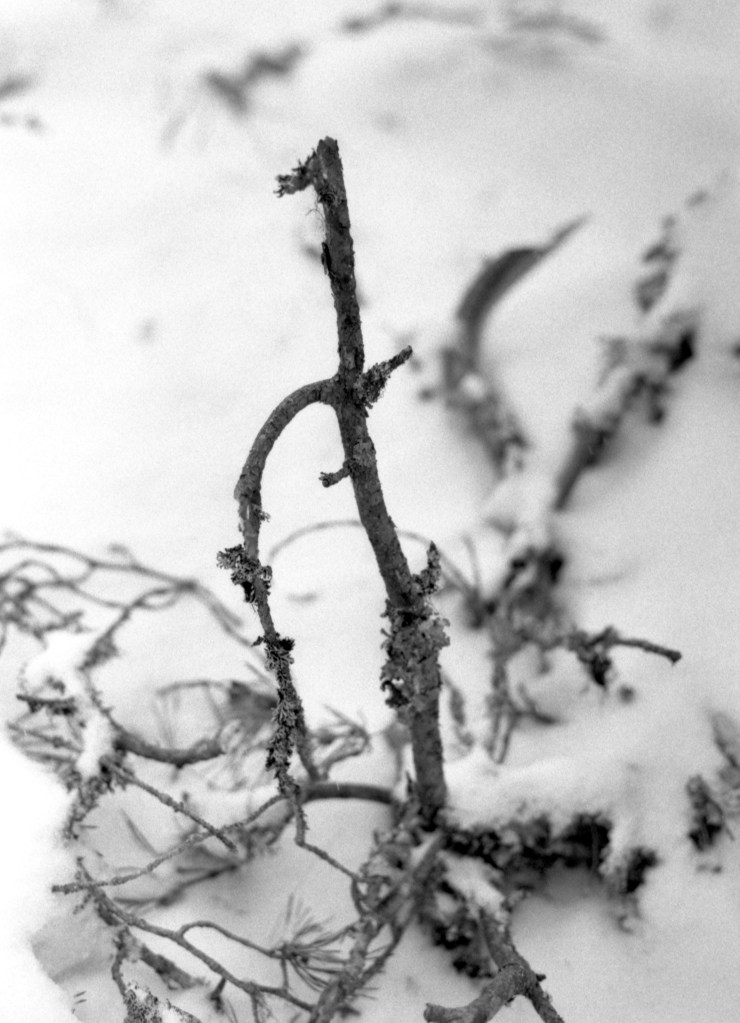
I shot about half a roll of film, focussing on making quick compositions around branches that, over the winter with heavy snow, has broken off bigger trees. The foggy and snowy conditions makes these branches stand out as interesting shapes, and shows them for the beauty they are. WIth the added grain from the film and the additional grain and contrast from the use of Rodinal 1+100 Semi-Stand gave that somewhat “raw” look I was going for.

Reklamer

The camera I chose to use, was my brilliant Olympus OM-1. This is a camera I trust at all shutter-speeds and that I know will work regardless of conditions. However, I noticed two issues on this particular outing. first and foremost, there was a little piece of dust that obstructed my view through the viewfinder. I used it as it was when out shooting, because I did not want to take the lens off in the middle of the show-storm. When I took the lens off, there was a little piece of dust on the focussing glass. How this ended up there is unknown to me, I have not taken the lens off this camera for months, and it has not been there before.

A fallen branch – Olympus OM-1 w 50mm Zuiko f1,8 – Rollei Retro 400s – Rodinal 1+100

It also seems to give uneven exposures at the highest shutter-speed 1/1000th, I even got a blank frame that I know was shot with this shutter-speed. This has also never happened to me before, and I will keep an eye on this in better conditions. 

All in all, I got the images I wanted, and all in the matter of around 15 minutes in the snowy gale. Thank you for following and reading, I hope you enjoy my images.

Playing with a Point and Shoot

The market for film cameras has changed substantially over the last two-three decades. In the 90s there were a range of very simple easy cameras that you could use to get some pictures without knowing anything about photography nor wanting to learn about it. They were simple, fully automatic and would give you acceptable images with minimum effort. These were the fully automatic point and shoot cameras. They’d set the film speed through DX coding on the cassette, they would set the aperture and shutter speed accordingly. The small catch, you had to press the shutter release button yourself. The bigger catch, you had no idea what the images would look like.

This morning, I played around with one of these cameras. I haven’t used one of them for a long time, and I was curious about what it would «bring to the table» of images and quality. The camera was bought cheaply online and arrived by Norwegian snail mail two weeks after it was posted from a town reasonably nearby. Well done Snail Mail. After this wait, I was the confused owner of a Chinon Pocket Zoom AF.

The Chinon Pocket-Zoom AF – 38-60mm lens (probably f8 or something like that as widest aperture)

I was eager to test it out, and I gave it a roll of Rollei Retro 400s. The electronic and automatic wind-on mechanism did its job and rolled on a few frames that could have been used, and the display on the back showed «1». The Chinon was ready. I went out in very dull weather and the Chinon did not seem to be too fond of dull and «boring» light. It constantly set off the flash, and I had to manually reset it to «flash off» every time I changed compositions, as it would have reverted to flash mode automatically. It is a bit like an overbearing parent, the security net is always there.

Reklamer

Shooting the Chinon was like shooting with your phone. You aim vaguely in the direction of what you want to photograph, you press the shutter button and wait for a while while the small elves inside the camera gets to work setting up your exposure. This takes a while, and you would probably not use this camera to photograph running animals or people in action. If you used it to photograph someone playing football, they would be done with their game and home for dinner before the camera takes a shot. After a while, when you hear the reassuring sound of the shutter and the winding mechanism, you are ready for your next shot.

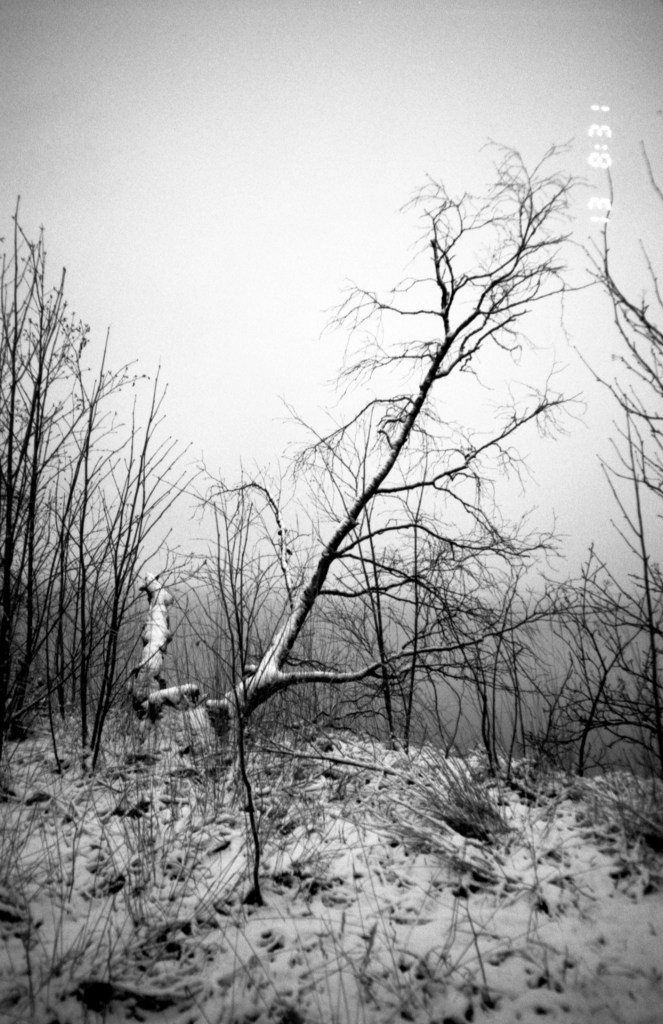
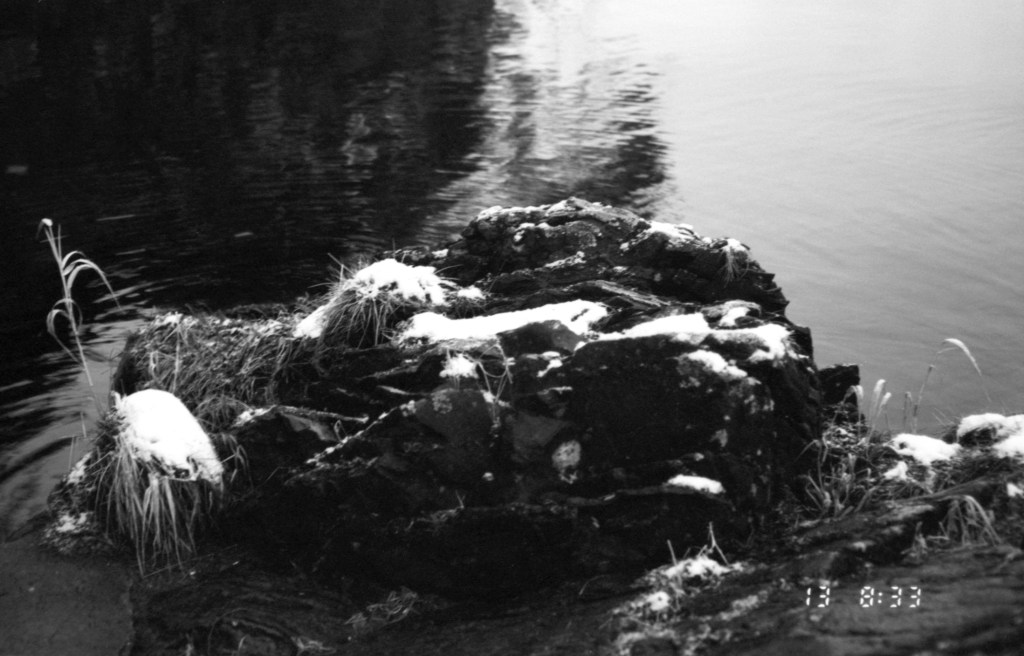
Chinon Pocket Zoom AF – Rollei Retro 400s – Xtol Stock

When looking at the final images, they are not that sharp and crisp as you would hope. But since I have not had any control in the making of there images other than pressing the shutter release button, I don’t really feel it is my fault.

Some issues I see. The lens is probably not that bright and certainly not very sharp, and the images seem all slightly under exposed. They have a strange vignetting, much like the one you get while shooting a Holga camera, and the lens perfomance isn’t that much better on this Chinon. Also, you get these imprinted numbers on all your frames, and I was not aware that it would be printing numbers on my frames. I have left them here in all their atrociousness.

My conclusion. I will sell this camera to someone who will use it. I will certainly not use this camera again and if anyone wants it, please contact me.

I like this image because of the mood, and that it is evenly blurry all the way over.
Chinon Pocket Zoom AF – Rollei Retro 400s – Xtol Stock