Checking the bulk

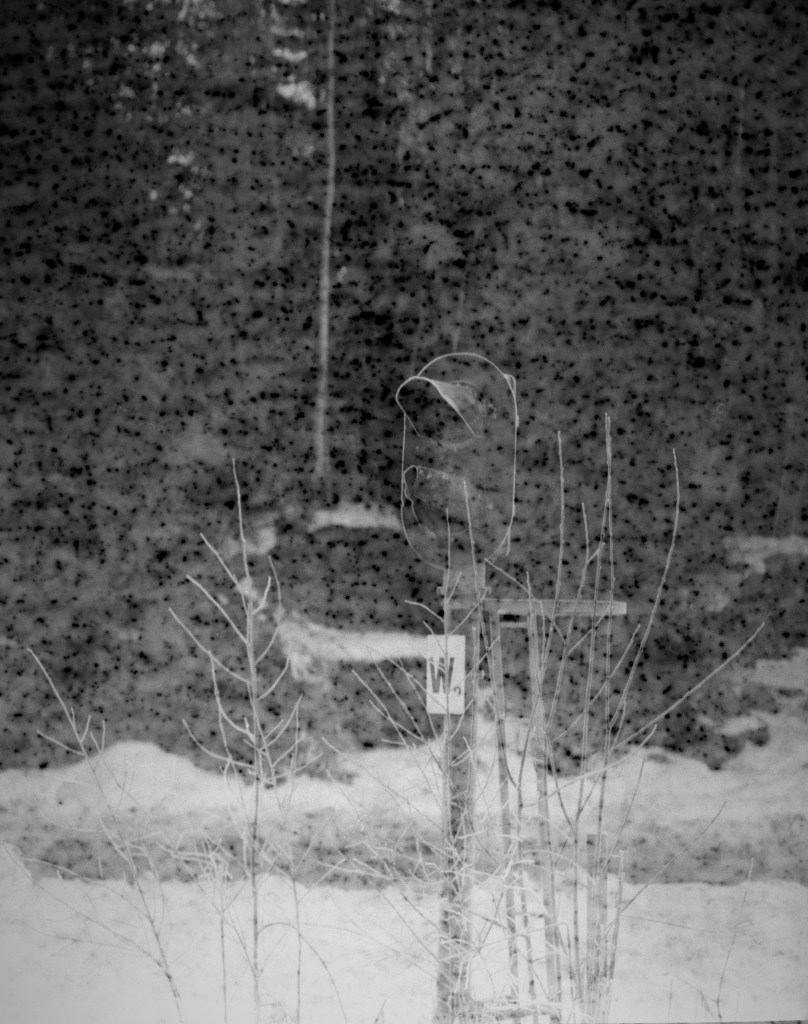
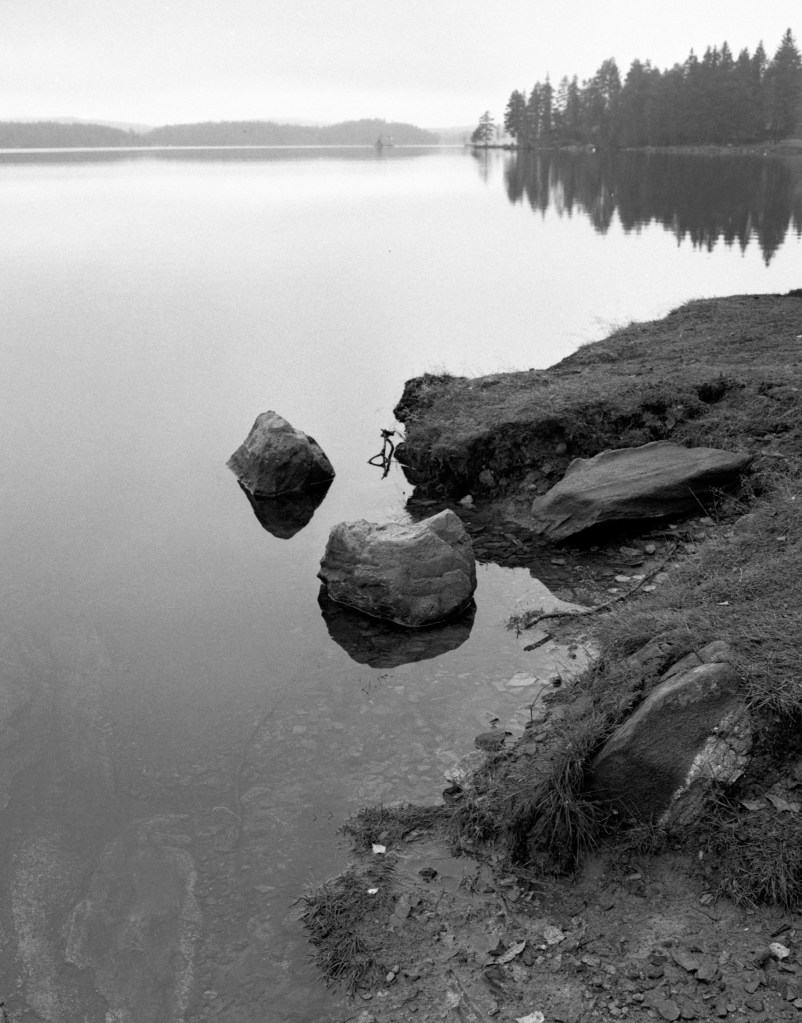
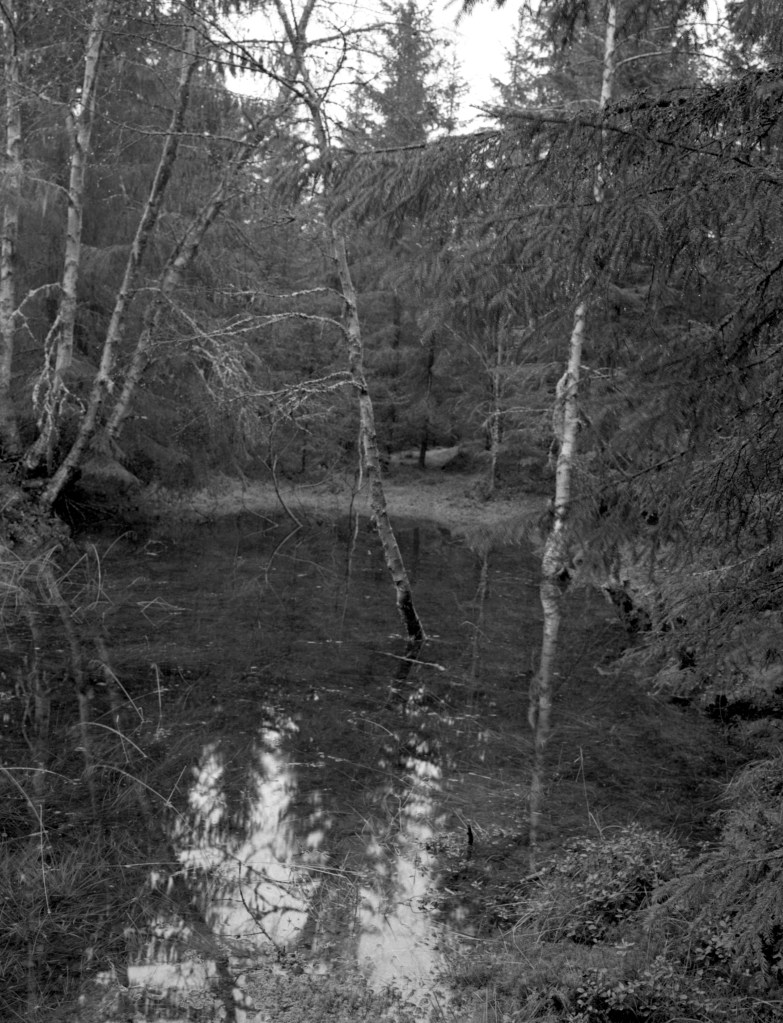
Around a week ago, I went out shooting with the Canon T70 and a bulk-loaded Agfa APX 100 film. When I pulled the negatives out of the tank, I realized that it had somehow gotten exposed to light at some point and that there were a lot of different light leaks that could not have come from the camera. After inquiring around online, I found that the most likely explanation would be that the bulk-loader itself was not light tight and that it might have impacted the film either when stored inside the bulk-loader, or when rolled. I therefore decided to take the bulk loader into the darkroom, and I rolled up one little roll of film (approximately 12 frames) just to check whether there was a problem with the whole bulk, indicating a problem with the light seals on the loader.

To make sure there were no other differences, I used the same cassette when rolling, and I used the same techniques, only that I did everything in the dark. I then put the roll of film into my Olympus OM-1, which I know have good light seals, and set off to make some test shots.

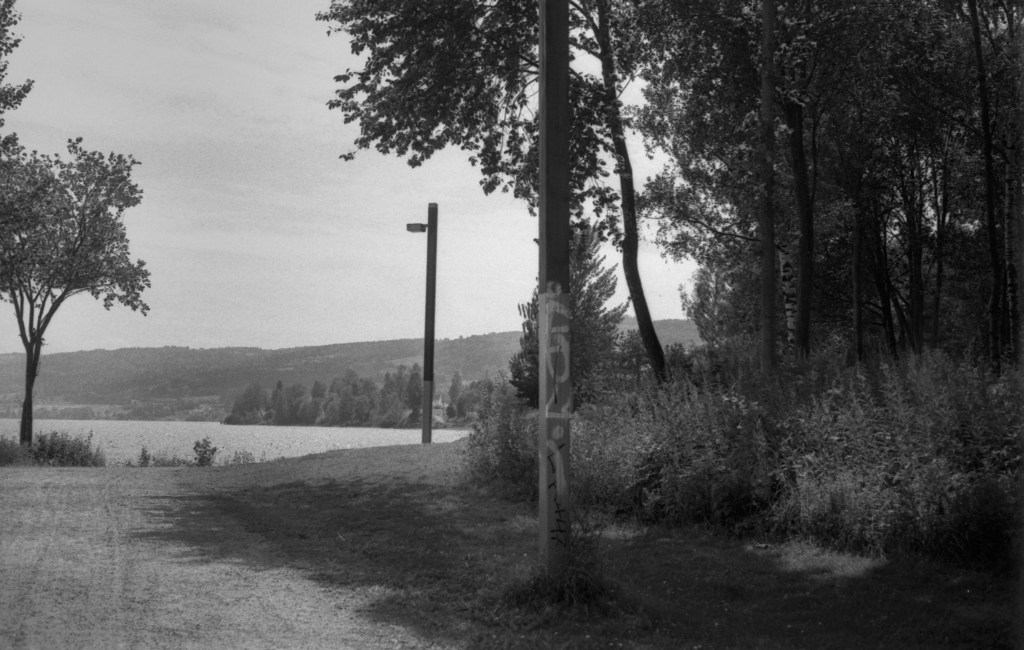
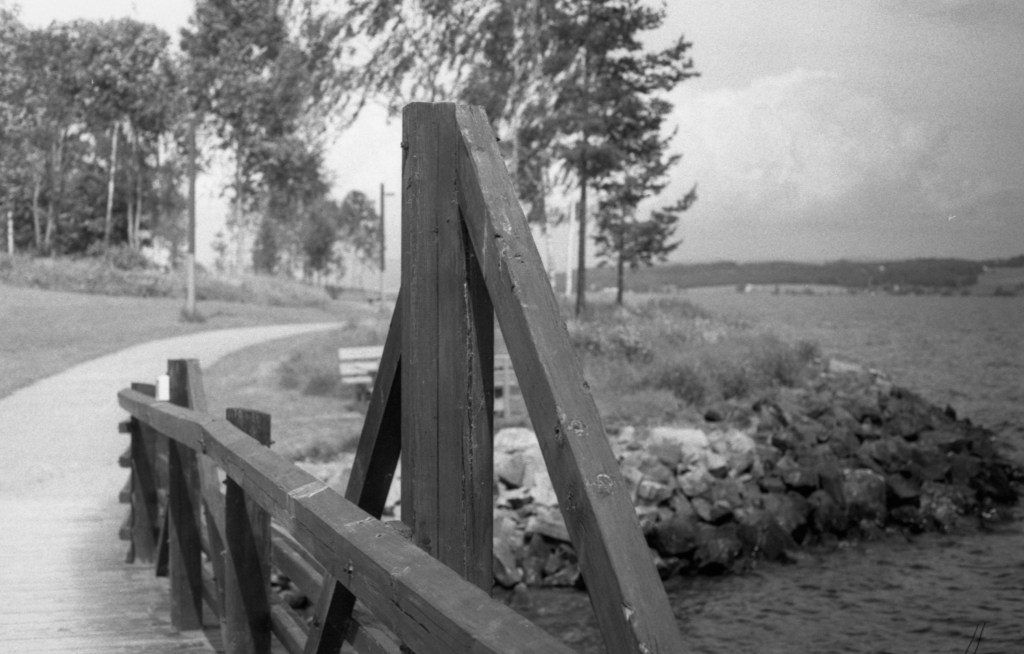
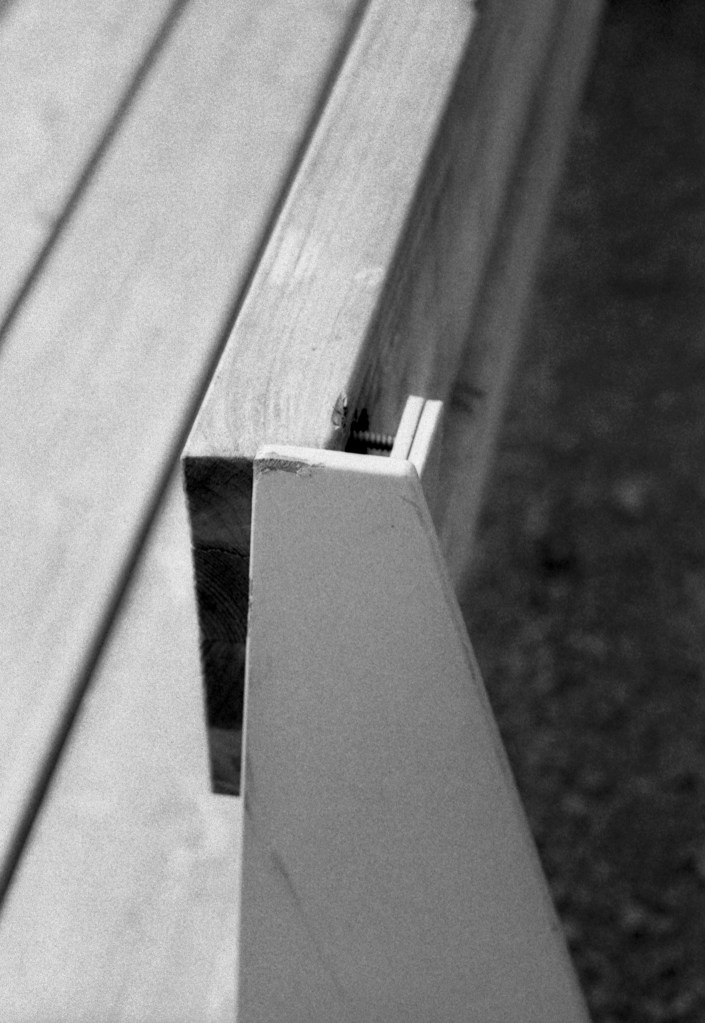
A bench and a field – Olympus OM-1 Agfa APX 100 – Rodinal 1+100 1 hour

I spotted some light leaks on this roll as well, especially on the last shots on the roll, the one that had been closest to the previous loaded film, but the frames from «deeper in the bulk» seemed untouched by the light leaks. The light leaks were also consistent to one end of the frames vertically, so it cannot be anything with the shutter or light seals on the camera. I guess my experiment showed me that the bulk-loader is not 100% light tight, and I will apply black tape to it next time I fill it with a new roll.

For the film itself. I have found that what works for me, is shooting this film at 50 (or even lower) and using a yellow filter. This gives me the shadow details and a decent spread of greys. However, I will probably not buy this film again. To me, it is grainier than Kentmere 400 and I expect finer grain and more shadow-details at box-speed for a 100 speed film than what I get from the Agfa APX100.

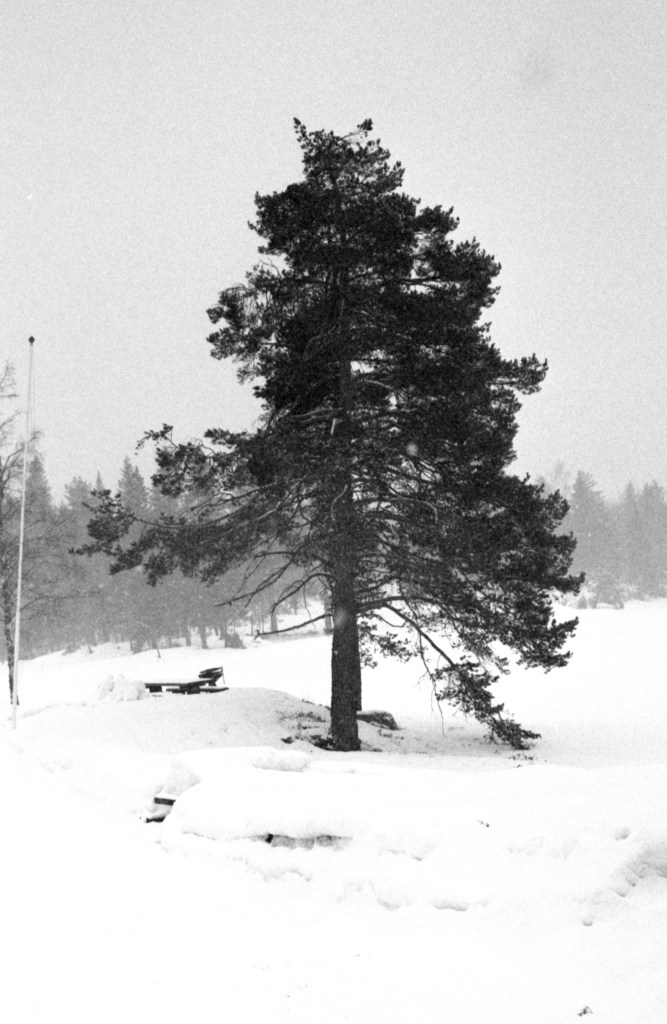
Windy summers day – Olympus OM-1 Agfa APX 100 – Rodinal 1+100 1 hour

I also this time shot the Agfa at 50, but since I used a yellow filter, I set my light meter to ISO 25, giving an additional stop of compensation for the filter. I chose to go with Rodnial stand development on this particular test, because I wanted to see how the Agfa film would look with this kind of «lazy» development process. I think the process got some grain out of the film, and that if used on a rainy og foggy day, that this combination could work really well. It does really set the «moody» tone in the images. I would, however, get a rather similar result with pushing Tri-X, and this is a film with far broader applications.
Capturing snow and fog

Yet again, the persistent winter of 2021 struck  back at us with all its wreath. After a few weeks of impeccable weather and a really pleasant spring mood, we were once again confronted with the face of King Winter. When I went out yesterday, it was blowing a gale and the snow flew thick in the air. Thicker than horse-flies at a swamp in the summer. The weather was bland and uninspiring  and being out there was nasty and uncomfortable. Yet, I had something in mind.

I wanted to capture the foggy and snowy day with a gritty and grainy mood. I chose to go for a BW film. The Rollei Retro 400s, which is a film I have used a bit before and that I find to suit my way of shooting very well. My thinking was that the 400 ISO film would give me just the right amount of grain and contrast, as well as giving me the opportunity to shoot hand-held, which is very handy in windy conditions, where camera-shake due to wind is a real danger, even with  a sturdy tripod.

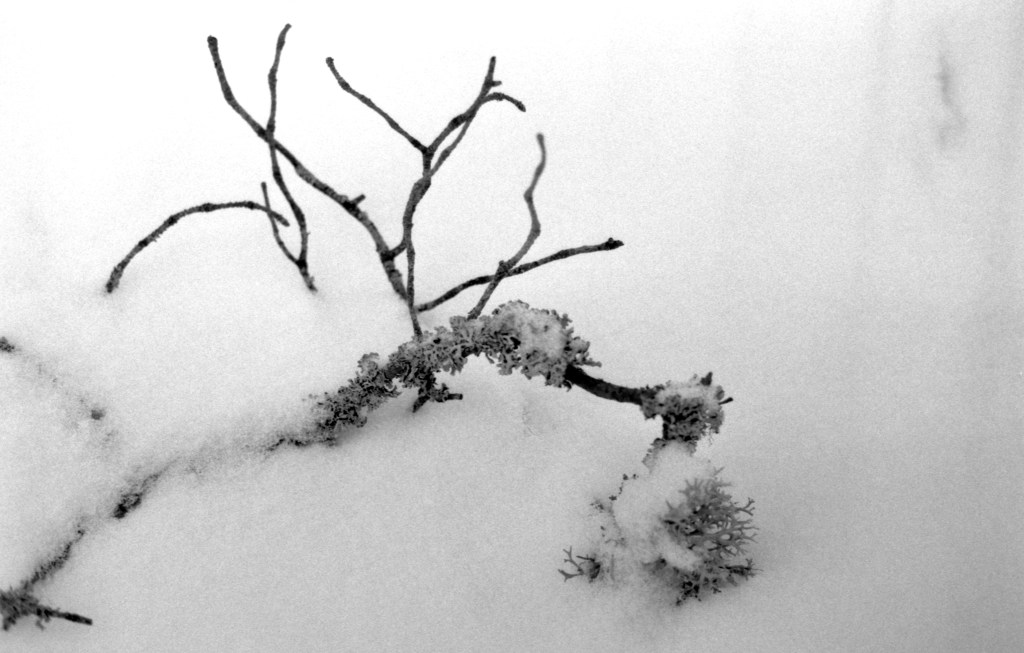
A fallen branch – Olympus OM-1 w 50mm Zuiko f1,8 – Rollei Retro 400s – Rodinal 1+100

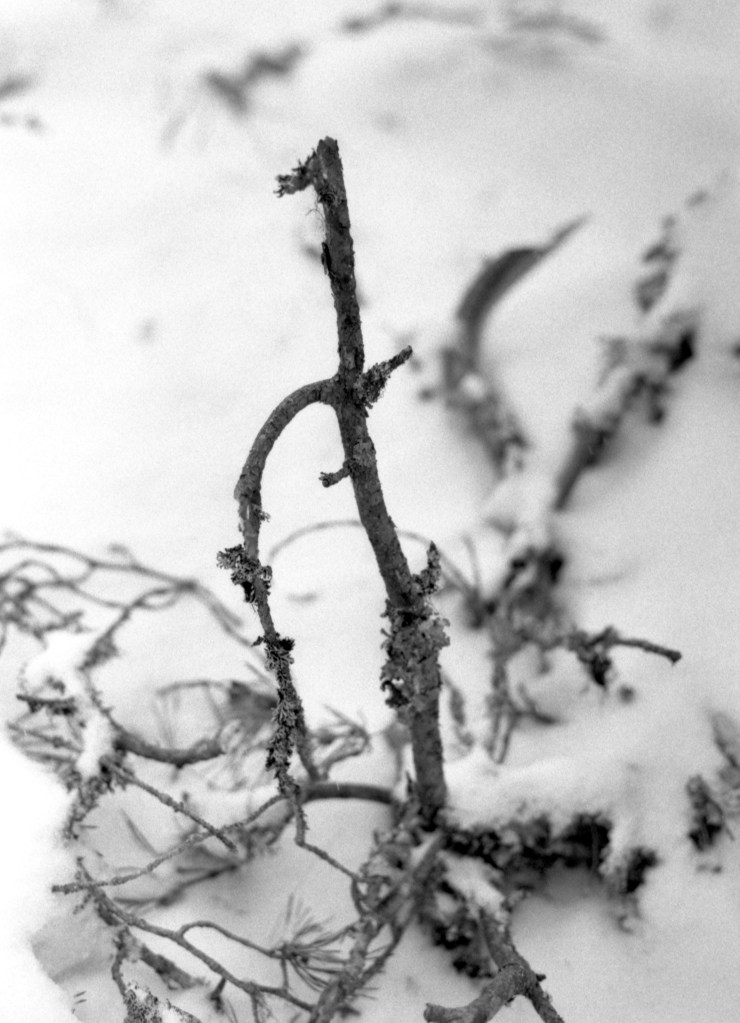
I shot about half a roll of film, focussing on making quick compositions around branches that, over the winter with heavy snow, has broken off bigger trees. The foggy and snowy conditions makes these branches stand out as interesting shapes, and shows them for the beauty they are. WIth the added grain from the film and the additional grain and contrast from the use of Rodinal 1+100 Semi-Stand gave that somewhat “raw” look I was going for.

Reklamer

The camera I chose to use, was my brilliant Olympus OM-1. This is a camera I trust at all shutter-speeds and that I know will work regardless of conditions. However, I noticed two issues on this particular outing. first and foremost, there was a little piece of dust that obstructed my view through the viewfinder. I used it as it was when out shooting, because I did not want to take the lens off in the middle of the show-storm. When I took the lens off, there was a little piece of dust on the focussing glass. How this ended up there is unknown to me, I have not taken the lens off this camera for months, and it has not been there before.

A fallen branch – Olympus OM-1 w 50mm Zuiko f1,8 – Rollei Retro 400s – Rodinal 1+100

It also seems to give uneven exposures at the highest shutter-speed 1/1000th, I even got a blank frame that I know was shot with this shutter-speed. This has also never happened to me before, and I will keep an eye on this in better conditions. 

All in all, I got the images I wanted, and all in the matter of around 15 minutes in the snowy gale. Thank you for following and reading, I hope you enjoy my images.

Trying out an expired film

I am normally not too enthusiastic about expired films. For me photography is more about precision and less about experimenting. However, a while back I bought a camera online, and with it came a full package of Svema Foto65 expired in 1986. As this package was full and dust-free, I guessed they had been stored properly, maybe frozen or refrigerated over time. Therefore I decided to give these films a go.

As they are 120 films, I rolled one of them into my Bronica ETR, and went back to my favorite old derelict train station. If you have followed my blog for a while, you will have seen me shooting at that location before. I chose to rate the film at ISO 20 and bracket one stop in each direction. As it turned out, ISO 10 would have been my best pick for this outing. The films original box-speed was once ISO 80, and with the «one stop pr decade» 10 would be the correct speed I guess.

Because I feared very low contrast in the images, I chose to shoot with an orange filter to give the film some extra contrast boost. It seems to have worked out the way I expected it to.

Bronica ETR w 150mm Zenzanon f3,5 – Orange filter – Svema Foto65 @Iso10 – Rodinal 1+100 70min

Despite the nasty mottling all over the frame, the Svema Foto65 seems to have been a very fine grain and sharp film once. My guess is that this mottling has come off the backing paper, there are visible discoloration on both the negatives and the backing paper. If I am mistaking, please let me know in the comments. All in all, the Svema performed acceptably I find, and maybe a well kept roll of this film would still make really nice images, despite its age.

Reklamer
Bronica ETR w 150mm Zenzanon f3,5 – Orange filter – Svema Foto65 @Iso10 – Rodinal 1+100 70min

Emptying the roll of RPX25

In my last entry, and video, I tried out the very slow Rollei RPX25 film. I shot it with my Olympus OM-1 and I used a yellow filter because of the lightning conditions that I found to be ideal for yellow filter. Also, I must say that I got images that I am very pleased with. I only shot half a roll of the film, and cut it out of the camera, much because I was not sure what to expect in terms of contrast and metering.

Today, I rolled up the rest of the RPX25 in the OM-1, and went for a little outing to shoot the rest of the roll. The weather was absolutely horrendously nasty, with snow/rain blend and temperatures around 0. A typical nasty early winter day in Norway, and I went to a location I know very well. A little lake close to where I live, Skumsjøen, and looked for something that would allow me to shoot wide-open, at f1,8 with the 50mm Zuiko lens.

Tree root abstraction – Olympus OM-1 w Olympus Zuiko 50mm f1,8. Shot wide open f1,8 with Rollei RPX25. Semi-stand development Rodinal 1+100 70 minutes, agitated beginning and midle of cycle.

I went for some very abstract close-ups of tree roots near the frozen water. I even took the risk of walking on the newly formed ice, as it felt safe, to get the best angles. Luckily I did not fall through.

From my last outing with this film, I remembered that I got very hard contrasts in the negatives, and I gave it a whole stop of over exposure to retain more grey-tones in the details. Another measure I chose to reduce some of the contrast while retaining the sharpness, was a cycle of stand-development with Rodnial 1+100. This is not a type of process I often use, but for slower films, I have found it to work well with my style. It also gives a certain «character» to the shots, that I find to suit my eye.

Reklamer

I am not in anyway competent to comment on the performance of this film, nor its abilities. I have not used it enough to know how to handle it properly yet, and I am no film expert. However, I find it rather enjoyable to play with this filming trying to rethink my exposures to get the results I want. Also, I have only shot the film in dull, overcast weather, but I find that the Rollei RPX25 gives me a fun challenge to work with. In short, this film is fun to work with.

A video will be available on Youtube soon. Search for Ccadventures.

Contrast and foggy landscape

Today was a wet, unpleasant and foggy day in Norway. No real need and point in going out, but there was some interesting fog, and a very white sky that lured me out anyway. The conditions were almost black and white anyway, so I chose to go with a Black and White film. Because of the verylow level of natural contrast, I went with a slow film. Ilford FP4 Plus. I also chose to stand-develop the film in Rodinal 1+100 for an hour, to get some extra contrast and find some beautiful grays.

I chose to use the Bronica ETR, because I wanted to do medium format and that it would give me 15 frames to a roll.

I also got to test out my new scanner. Thank you for the friendly photographer who pointed out to me that my old scanner was probably shot. My new one is far better and gives me lovely scans.