Misty Woodland

Spring is an incredible time of year in Norway. This spring has been incredibly cold and slow, and even now, in the middle of May, we are bothered with snow in the forest. The good thing about that is that you, as a photographer isn’t very bothered with other people along the paths and you in most cases have the place to yourself. Today, I went out into some local woodland that I know quite well. Yesterday was a very rainy day, and it rained all night, so I figured that the snow was most probably melted away in the forest by now. I was very wrong, and I was not able to walk further into the forest than about four hundred meters before the snow was too deep. Also, the path looked more or less like a stream, and I had the feeling that most people would go for a swim rather than a walk on a location like this.

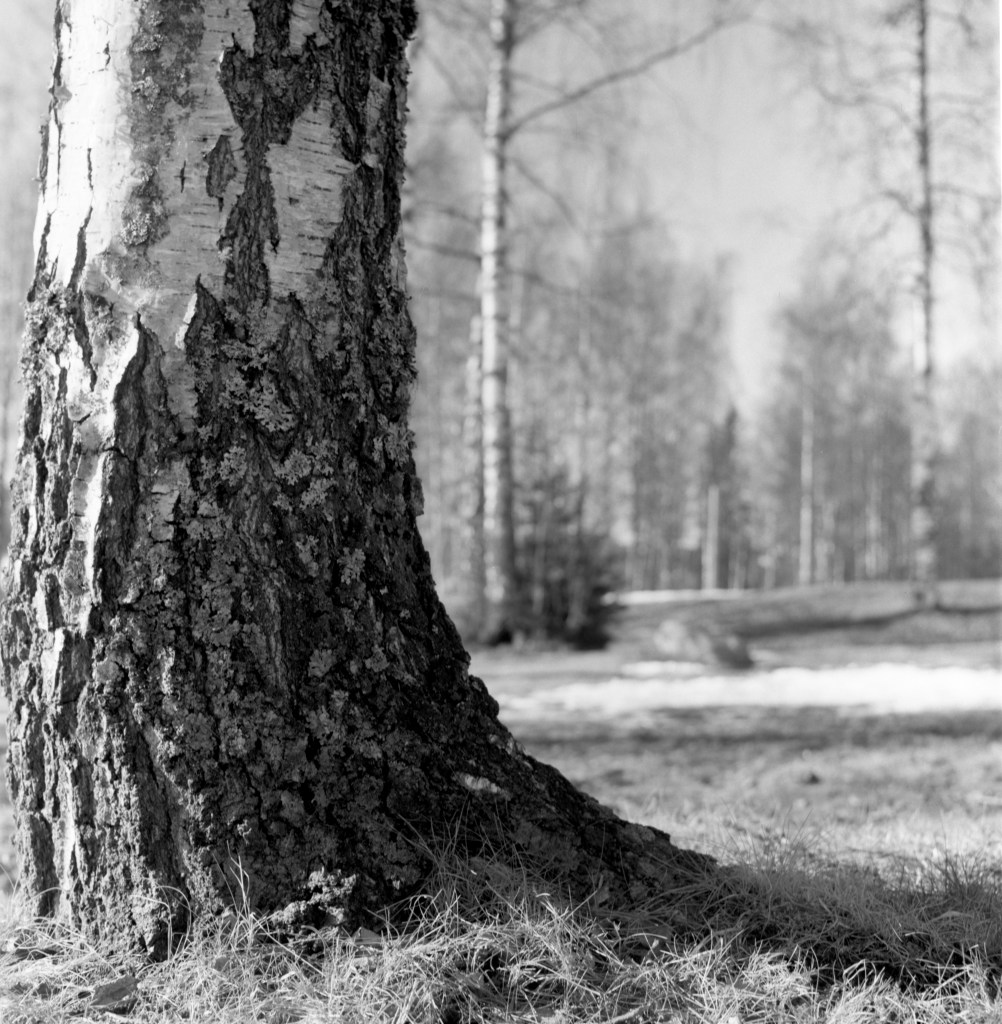
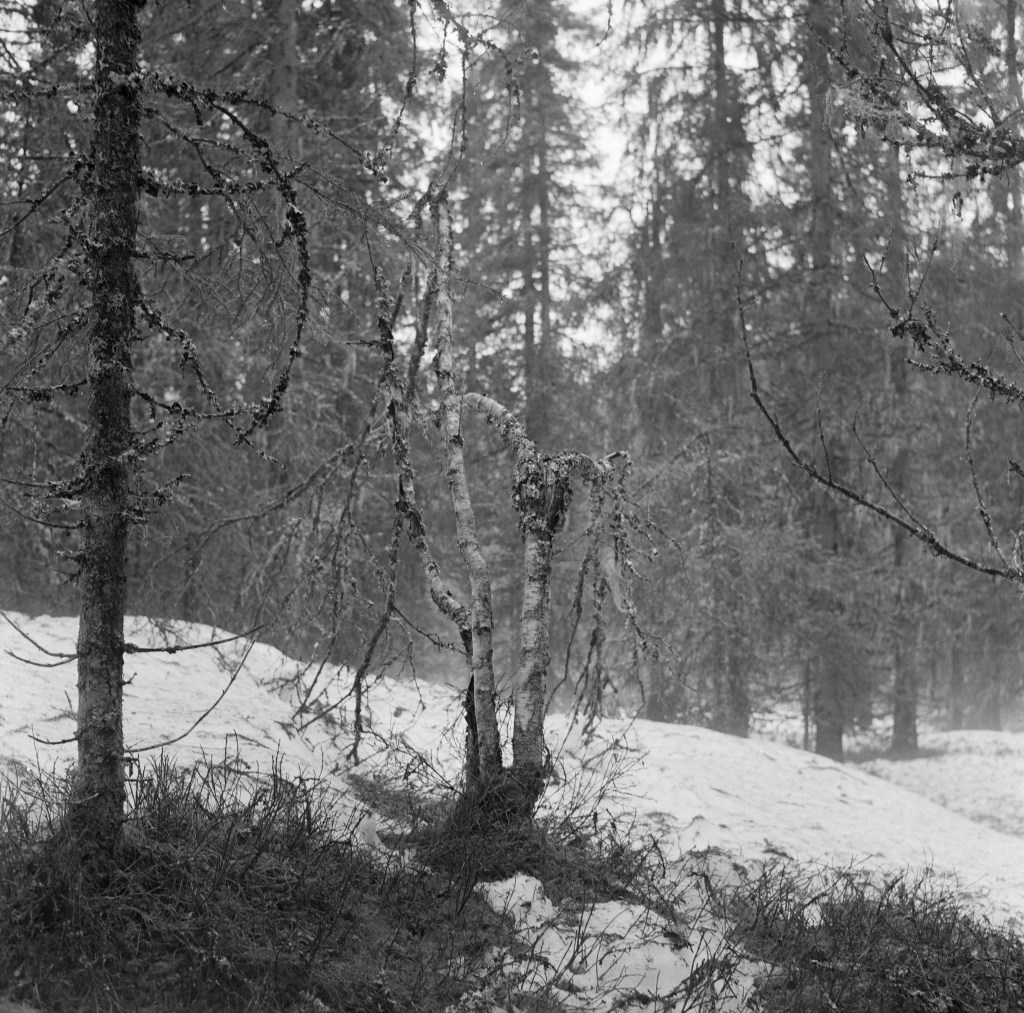
Traces of winter – Zeiss Ikon Ikoflex, Ilford HP5 plus, Ilfotec ID-11 1+1

Nevertheless, I went out this morning and waded myself through the soaking wet forest floor searching for nice woodland-compositions. These kind of conditions, grey, wet and misty days, are the conditions that inspire me the most. They makes the location stand out in a very different way than you would see it on sunny days, and you spot details and areas you wouldn’t see if the light was brighter.

On this particular outing, I went for the Zeiss Ikon Ikoflex, a TLR-camera that I have owned for a while, and that I absolute love using. There is something about this camera that inspire me. The world looks very nice through the waist-level viewfinder on the Ikoflex, and there is something about the way the lens renders the images that really suits my eye. I chose to shoot at shallow depths of field in this particular outing for two different reasons.

First of all, I wanted to emphasis the relaxing bokeh-feeling this lens gives and how smooth the sharpness of this lens is at around f3.5 and f4. It gives a very relaxed feeling to the scene. Secondly, my particular Ikoflex has some faults with its slower shutter-speeds and below 1/50th can give a very unpredictable result when used. From no activity at all, to just a random shutter-speed. I should probably have it serviced, but I guess fixing this one would be too expensive compared to its value, and it serves me well as it is at this point.

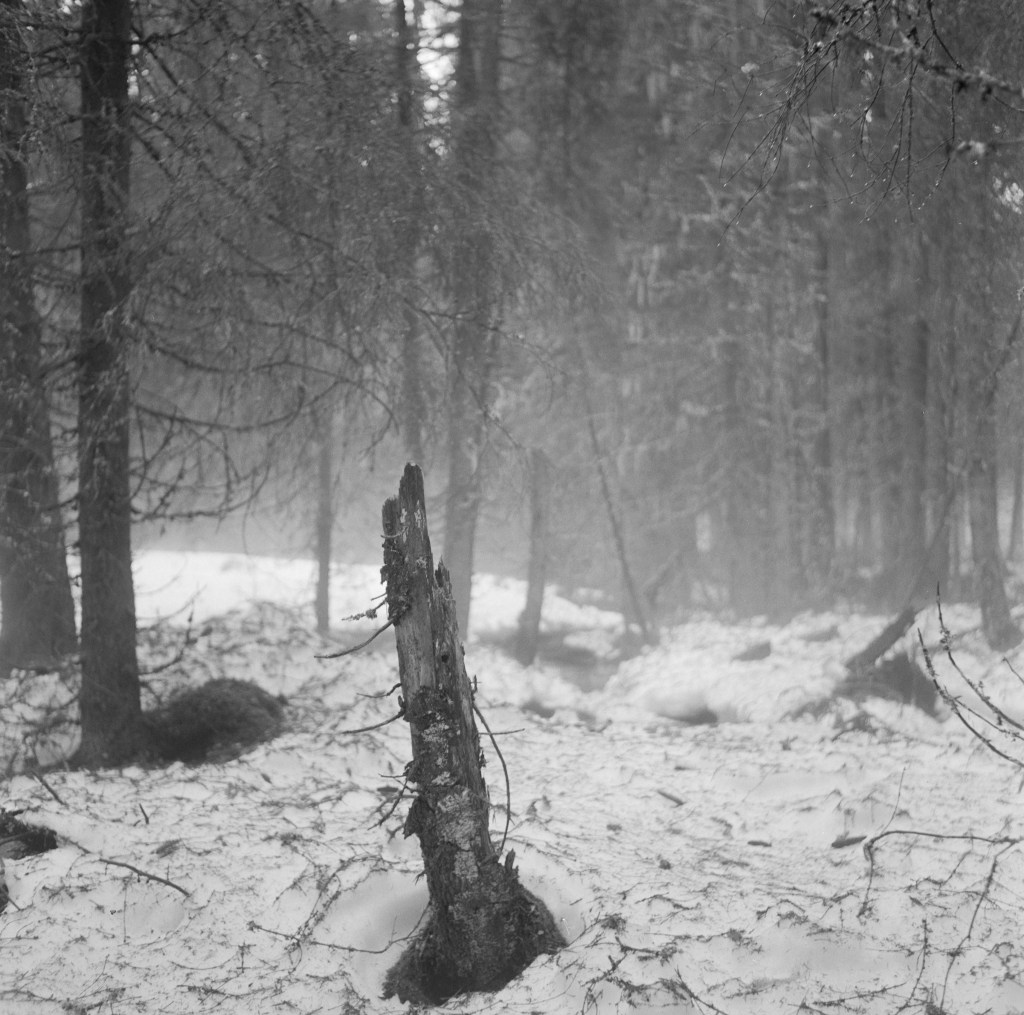
Scene of melting – Zeiss Ikon Ikoflex, Ilford HP5 plus, Ilfotec ID-11 1+1

For that last reason, I chose to go with a very flexible film to give me some wiggle-room with my exposures. I went for a roll of Ilford HP5 plus that I shot at its box-speed of ISO 400. After seeing the conditions in the forest when I came there, with that layer of mist that I didn’t expect to find there due to the conditions in general, I was very happy about this choice of film for that reason as well. Ilford HP5 plus is fantastic at capturing the mood of a misty forest.

Old mans beard – Zeiss Ikon Ikoflex, Ilford HP5 plus, Ilfotec ID-11 1+1

Even though the walk this time wasn’t that long, and the way there was rather wet and unpleasant; I actually had to jump across a stream of melting-water to reach the path; I got some images that I am very happy with. I also really enjoyed my little adveture into the wet and misty forest, and I will certainly be out again in these kinds of conditions soon.
The scent of spring

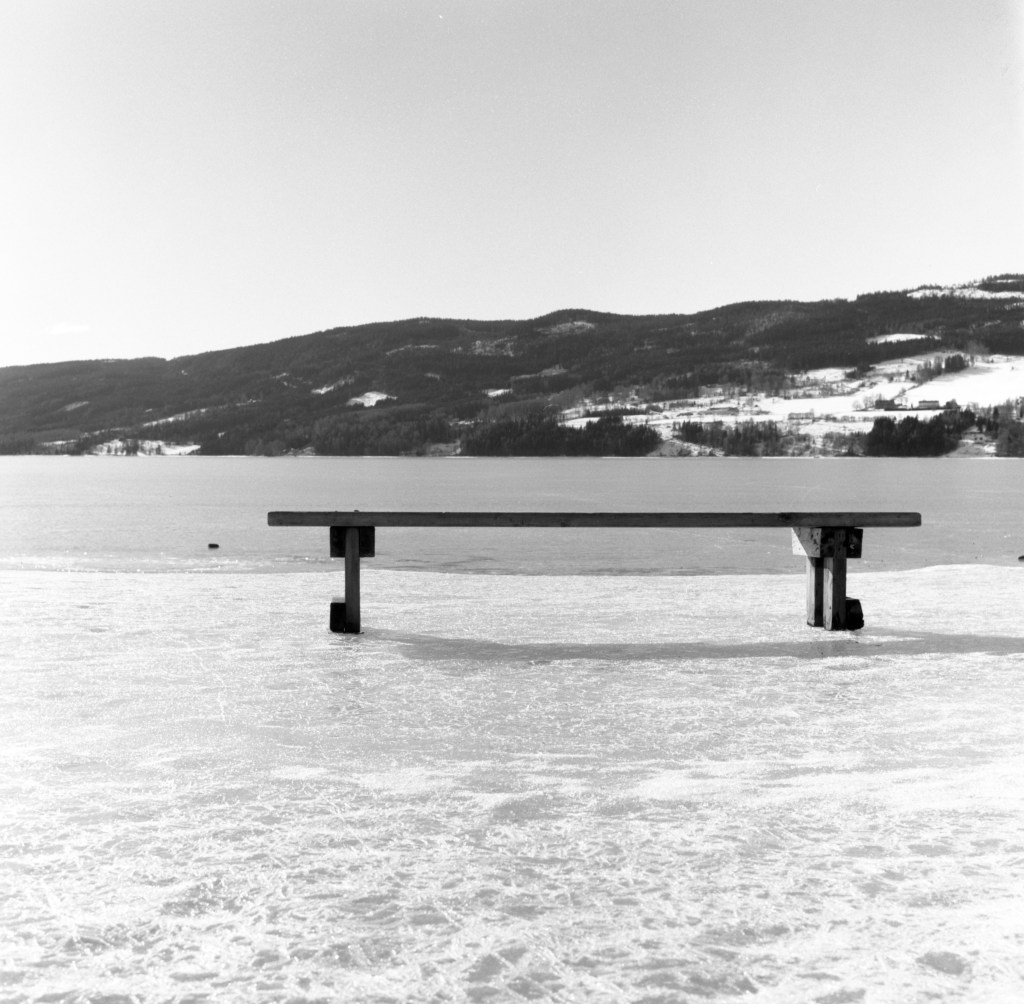
Nothing fills me with such joy and happiness as the day when I for the first time see grass being liberated from the firm fist of the winter-snow. Today was that day, and I immediately decided to go shooting. I loaded the Zeiss Ikon Ikoflex with a roll of Ilford FP4 plus, and went down to Kråkvika by Hov. A location where spring is often present early. And sure enough, there were a lot of spots and spaces where the snow was melted away, leaving the lifeless brownish colour of grass that has been buried for a while under the snowy carpet. The colours weren’t really spectacular, hence the choice of black and white-film.

To me, the Ikoflex is maybe one of the cameras that inspires me the most. There is something about the sensation of using something so brilliantly engineered and with a lens that sharp in a very light and beautiful box that appeals to me. I haven’t used it for a while because the winter was exceptionally cold this year, and I don’t think the Ikoflex would be too fond of the cold weather. Also, my Ikoflex has developed misfiring on lower shutter speeds, so I tend to keep it at 1/100th or 1/300th, which could be too short shutter speeds for winter-time. Whether I will have it repaired remains to be decided, but for my current use, the Ikoflex works well.

Spring landscape with melting snow – Zeiss Ikon Ikoflex – Ilford FP4plus – Adox Atomal 49

I find that filling the roll and finding the right compositions, is a very easy task with the Ikoflex. The inspiration comes naturally when using it, unlike the Zeiss Ikon Nettar, which I find that I can get bored when using. I have heard a lot said in negative ways about the Ikoflex and it being like an «over protective mother» or «insanely difficult and complicated to load», but I cannot understand how any of these can be true. If you read the manual, which I know is a very uncommon thing for people to do today, you will very easily understand that the advance wheel will turn freely when it reaches frame nr 12, and that you have to manually reset it for frame 1. Not at all difficult. I have a video on Youtube showing how it is done.

Reklamer
I am a rock – Zeiss Ikon Ikoflex – Ilford FP4plus – Adox Atomal 49

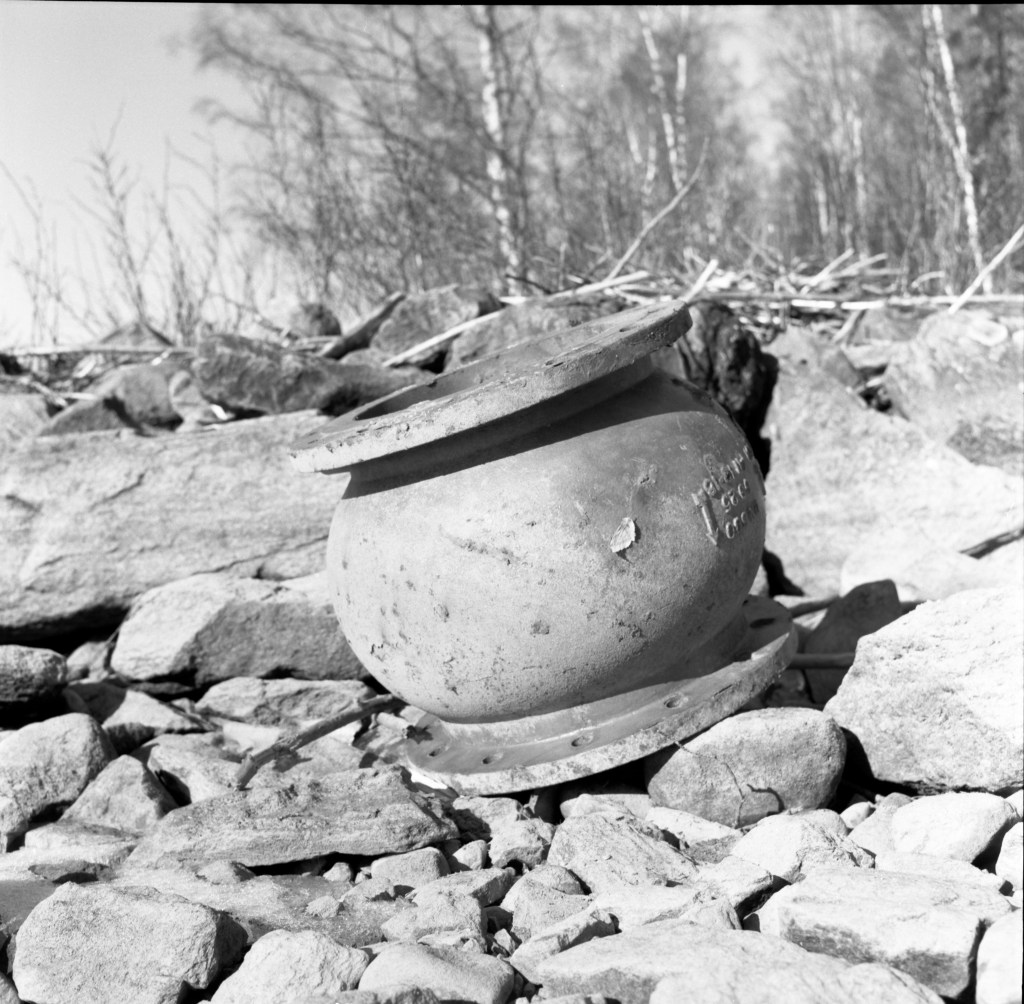
Walking around on a day where the snow is melting and the landscape comes back into sight, makes you notice objects or shapes that would normally either be removed or invisible in the greens and lush landscapes. There is something «rough and contrasty» about these snow-melting days that really appeals to my way of composing.

An object – Zeiss Ikon Ikoflex – Ilford FP4plus – Adox Atomal 49

All in all, I had a very joyful little day out in the sun and I enjoyed every minute of shooting with the Ikoflex again. It is such an amazing little camera and the images really speak for themselves.

More with Frida and the Ford

In my last entry I wrote about my vintage-style shoot with Frida and her 1950 Ford Shoebox and I added some black and white shots shot on Ilford FP4 plus. As I mentioned, I also ran a roll of Kodak Portra 160 through the Ikoflex to really get the Vintage colour feel on some of the images.

The Kodak Portra is a low-saturated colour-negative film specifically made for obtaining the absolute most beautiful skin tones, but I also adore the effect it gives on scenery and backgrounds. With its soft greenish pastel tones it gives the true feeling of a vintage colour shot. The current emulsion was launched in 1998 following the professional Vericolor-series, and it was intended to be used in the professional market by wedding photographers and portrait photographers.

Running a colour film through an old camera with an old lens is always interesting. You never know how the old lens will cope with the colour reflections. It can seem as my Ikoflex enhances green somewhat, and gives a nearly «marine» colour palette.

Reklamer

Again I am very thankful and happy to have a friend like Frida, who is as passionate about vintage and keeping the old alive as I am. Her outfit and car matches this shoot in the most exquisite way, and helps the Ikoflex make the Kodak Portra shine.

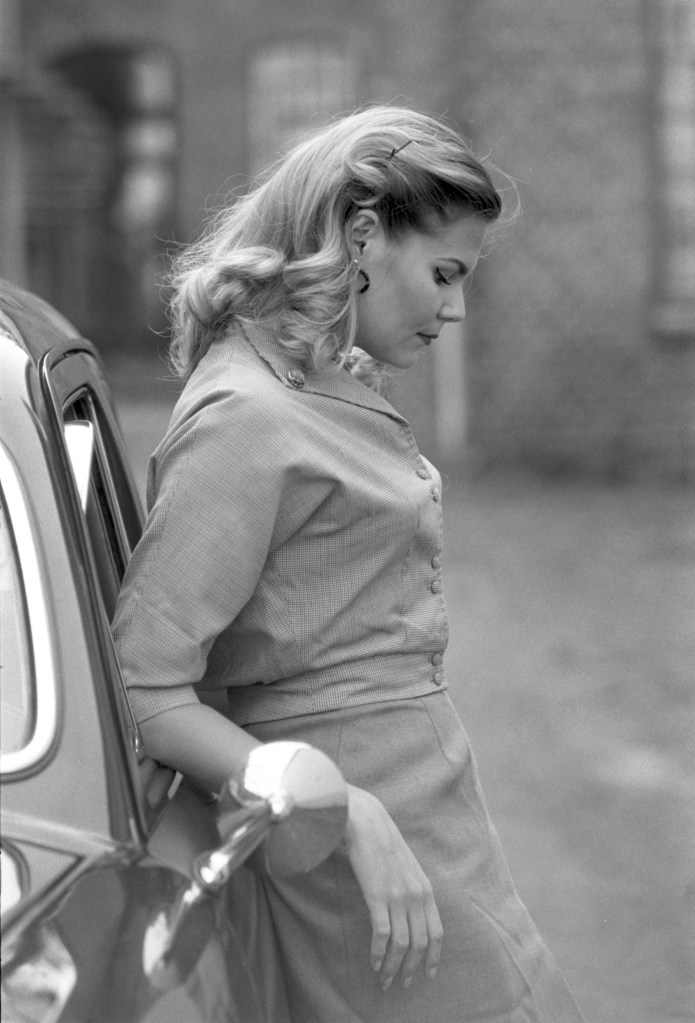
Based on the limited shutter speed on the Ikoflex, I had to set my apertures wisely. Because of age, My Ikoflex has only three properly working shutter speeds, 1/300, 1/100 and 1/50. I would also guess that the B-mode works, but I have not yet tried it. Because of this I had to shoot with smart apertures to get the pictures I wanted. The Through the window portrait is shot at maximum aperture F3,5 at 1/100, while the picture next to the car was taken at somewhere between f4 and f5,6 at 1/300 to keep some detail in the background.

No colour corrections are done after scanning. The shots are in colour as the Ikoflex shot them. My only corrections are some contrast correction, and obviously some dust removal.

Thank you for reading. Stay tuned for more fun stuff coming up soon.

Vintage shoot with Frida and her old Ford

Analog photography is has the loveliest tones imaginable for vintage style photography. The special look an old lens gives is an exquisite vibe to your photo that no digital preset can really copy, and the feeling of doing this with vintage equipment adds an extra element. Photography is not just about the picture, but the way to get there and the feeling of the process.

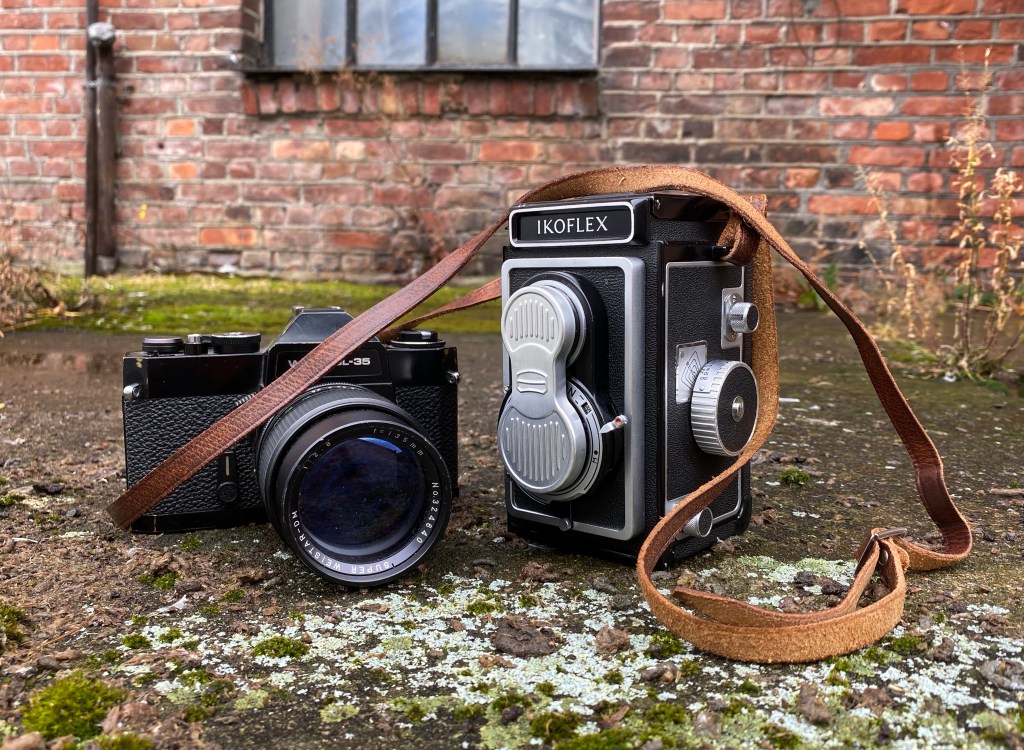
Yesterday I went out to photograph my friend Frida and her lovely 1950 Ford Shoebox. To go with me for this shoot, I chose two cameras. The Weist SL-35 and my lovely TLR, the Zeiss Ikon Ikoflex. Both these cameras are reasonably accurate and has sharp lenses that does really bring out that «vintage feel». I rolled up both cameras with Ilford FP4 Plus, A film that for me is my first choice when I want that «Vintage feel». This film has a really fine cubical grain structure, and has a more visible grain than other films around its speed, and I love how this grain structure affects the images.

My equipment for this shoot. Zeiss Ikon Ikoflex medium format TLR and the Weist SL-35, 35mm M42 SLR.

We met at a lovely location in Kapp just south of Gjøvik. This location used to be a condensed milk factory back in the days, but today it is used for cultural purposes among other things.

Reklamer

We first set off with the Ikoflex. I shot as close to f4 as I could get, and did some bracketing with f5,6 to be sure not to overexpose too wildly. I shot the Ikoflex at its highest shutter speed around 1/300th of a second, but my guess is that this shutter speed is a bit slower. Probably around 1/250th which is still very good for a 70 year old camera like this.

I refer to the Ikoflex as «the bird box» and this is one of my absolute favorite camera in use. When I bought it, it came from a Swedish Zeiss collectors house, and the seller did not believe that it worked. Probably because he didn’t really understand how it works. These cameras have their specific way of use, and you will not be able to shoot this camera if you don’t know how to load film in it and how to set it up.

When we were done with the film in the IKOFLEX, I changed it for some Kodak Portra 160, but these images are not included in this entry.

Reklamer

We then set off with the Weist and its exquisite Weistar 135mm lens. I also shot this one as close to F4 as I could to get that lovely bokeh you get from this lens. This is the first time I tried this camera and lens for a shoot with a model, and I am very happy with how it performed.

These are just quick scans of the negatives. This shoot will be finished as Darkroom prints. Whether the prints and the process of making them will be entered in this blog is yet to be decided.

All in all, I am very happy with how both cameras performed during this shoot and I feel humble and lucky for being allowed to with with people like Frida, who is on board with the analog nerdity.

Photographs open doors into the past, but they also alloq a look into the future

Sally Mann