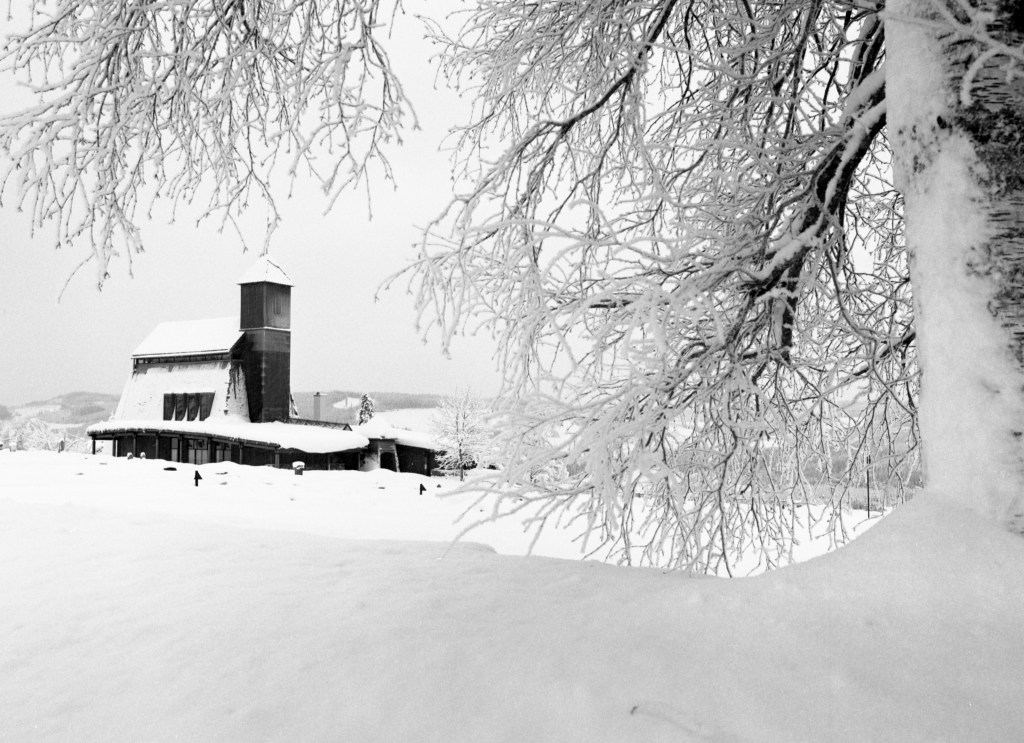
Not far from where I live, there is a modern, wooden church called Seegård. It was built in 1997, following the tragic fire in the old church during easter in 1994. The new church was raised in the same spot as the old one, and in an attempt to keep the cross structure of the old church and modernizing it, but at the same time make something that would suit its area. Not easy demands for an architect to meet, but I find that the architect Arne Thorsrud has pulled it off really well.
I have worked with this church on multiple occasions, mainly digital, but the other day, I decided to bring out my Bronica ETR, and make some black and white images of the church in winter time. I fitted the Bronica with the 50mm Zenzanon lens and a yellow filter to help balance the contrasts a bit.
Reklamer
To get the smooth results I wanted for this shoot, I decided to go with Ilford FP4 plus and combining it with Ilfotec Perceptol extremely fine grain developer. This is a combination I have found to work very well with winter conditions where snow and whites are prominent. However, you lose some film speed. In this instance, I shot the FP4 plus at ISO 50, and went for f11 which I find to be the sweet-spot of this lens. With a still standing subject like this church, which does not tend to move a lot, slower shutter speed is no real issue, and my shutter speeds were around 1/4th and 1/8th of a second with the correction for the yellow filter.
Seegård Church under the winter carpet. Zenza Bronica ETR w Zenzanon 50mm f2,8 and yellow filter. Ilford FP4 plus at 50 ISO – Ilfotec Perceptol 1+1
I did a few different angles and compositions, and a little bit of bracketing on a few of the compositions. After all, I ended with two images that I am very happy with, and they are the two I will share.
Seegård Church under the winter carpet. Zenza Bronica ETR w Zenzanon 50mm f2,8 and yellow filter. Ilford FP4 plus at 50 ISO – Ilfotec Perceptol 1+1
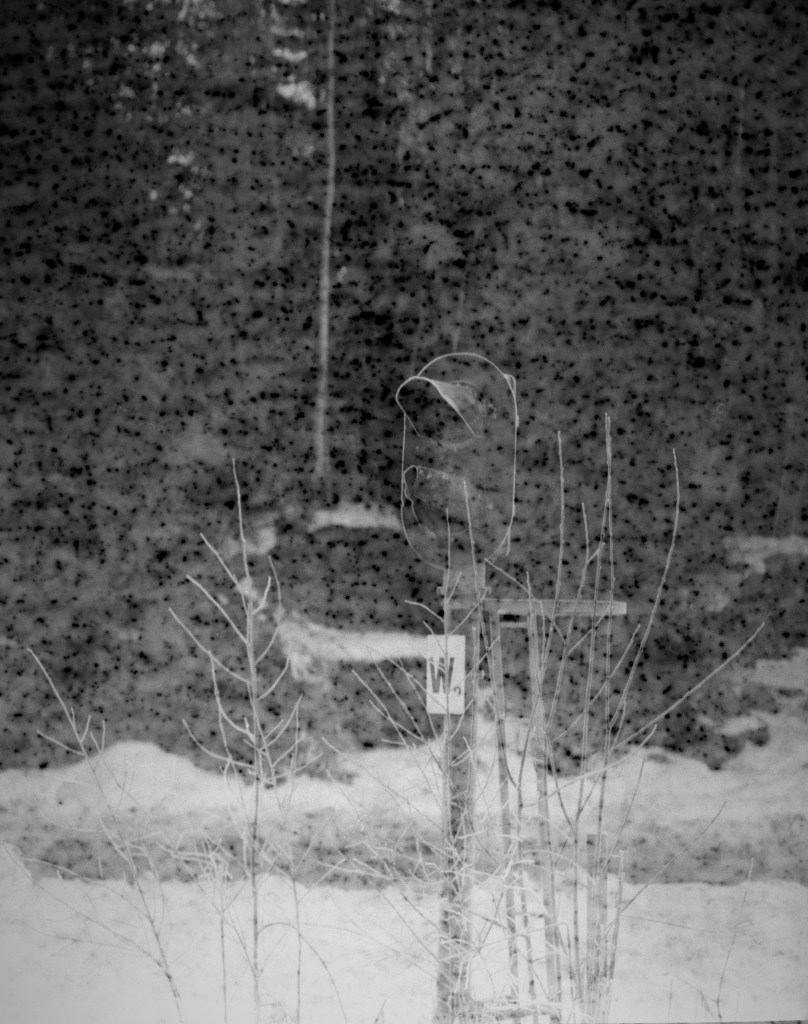
I am normally not too enthusiastic about expired films. For me photography is more about precision and less about experimenting. However, a while back I bought a camera online, and with it came a full package of Svema Foto65 expired in 1986. As this package was full and dust-free, I guessed they had been stored properly, maybe frozen or refrigerated over time. Therefore I decided to give these films a go.
As they are 120 films, I rolled one of them into my Bronica ETR, and went back to my favorite old derelict train station. If you have followed my blog for a while, you will have seen me shooting at that location before. I chose to rate the film at ISO 20 and bracket one stop in each direction. As it turned out, ISO 10 would have been my best pick for this outing. The films original box-speed was once ISO 80, and with the «one stop pr decade» 10 would be the correct speed I guess.
Because I feared very low contrast in the images, I chose to shoot with an orange filter to give the film some extra contrast boost. It seems to have worked out the way I expected it to.
Despite the nasty mottling all over the frame, the Svema Foto65 seems to have been a very fine grain and sharp film once. My guess is that this mottling has come off the backing paper, there are visible discoloration on both the negatives and the backing paper. If I am mistaking, please let me know in the comments. All in all, the Svema performed acceptably I find, and maybe a well kept roll of this film would still make really nice images, despite its age.
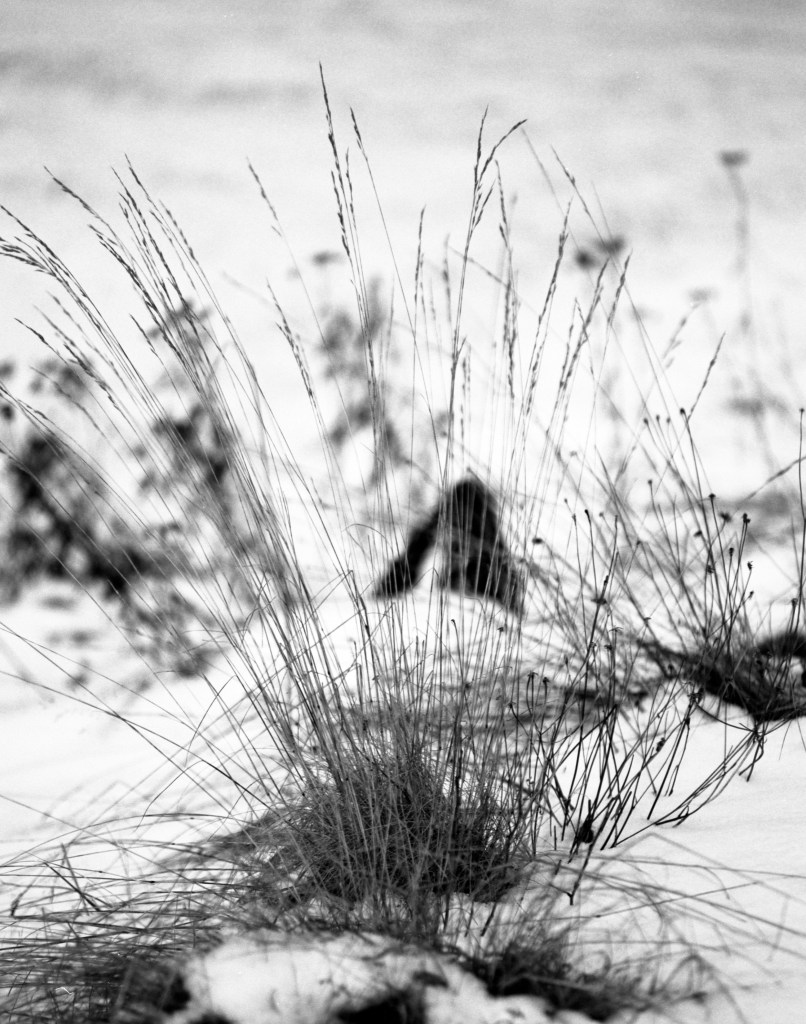
Today as I was relaxing, enjoying a cup of coffee, I looked out the window. The first fall of snow has just blessed us with its arrival, and this always brings new objects to my attention. Things that I maybe haven’t noticed because it is hidden in the November-browns.
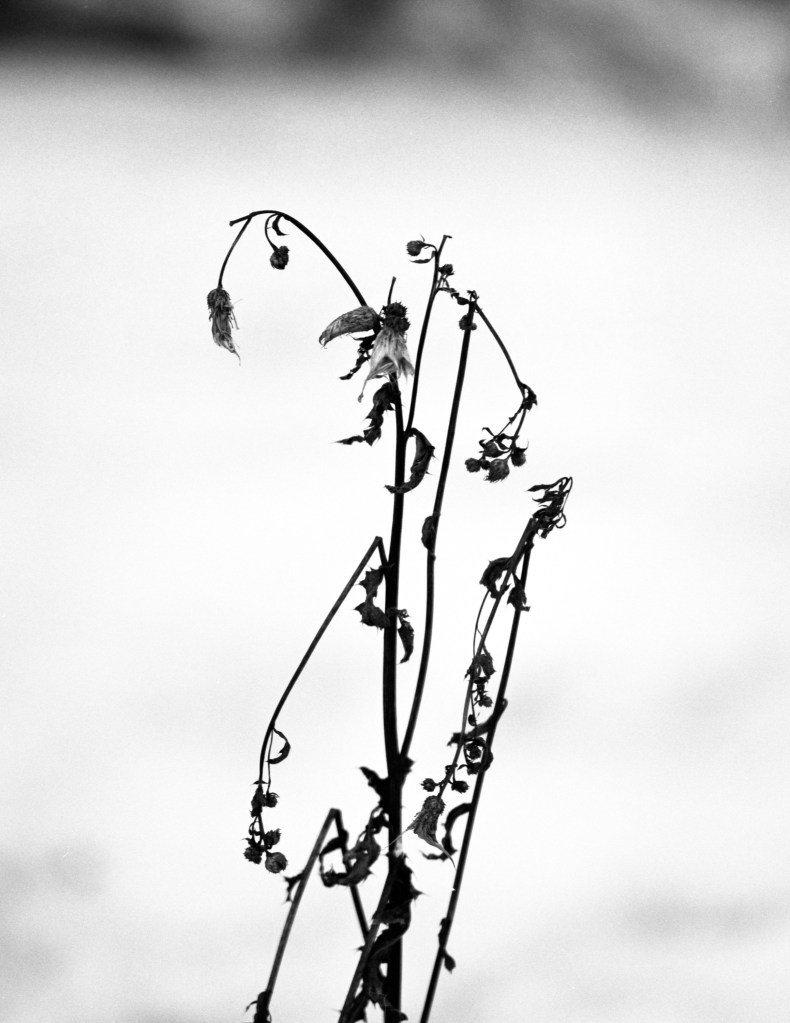
Today my attention was drawn towards some wilted plants. Their very dark brownish colors made a nice, almost minimalistic, tone towards the snowy background. I immediately ran to put a roll of Ilford Delta 100 into my Bronica ETR. I also fitted it with a lens I just bought. a Zenzanon 150mm f3,5. Equivalent to around 90mm at a 35mm camera, and used a yellow filter to get the minimalistic contrast that I was looking for.
I aimed to keep the snowy areas around zone 8-9, to not completely blow it out, and my dark areas around zone 3-4 to retain some shadow detail. I got fairly good negatives, but I would have loved to have retained some more detail, especially in the most contrasty images.
Reklamer
Once again I chose to develop Delta 100 in DD-X developer, and this time as well, it gave me fabulous negatives. I am really looking forward to working with some of these images in the darkroom, and I expect to use lower grade filters, or maybe some split grading to get the most out of the negatives. A spot on my wall is already prepared for one of these images.
In my previous entry, I went out in the grey, misty Norwegian November to take some calm and pleasant pictures with my Bronica ETR and a roll of Ilford Delta 100. I also tested a new developer, Ilford DD-X, and I was very pleased with one of the images. So pleased in fact, that I decided to take a trip into the darkroom to make myself a print for my own wall at home.
The picture I chose to work with.
I brought along my GoPro and made a very basic and amateur video coverage of the darkroom session. My video skills are not good, and this is actually the first time I have tried to mount together a video in this way. I might do more of these.
Some days ago, I was contacted by another Norwegian photographer who has a collaboration with Ilford Photo. He kindly sent med some rolls of Ilford Delta100, some DD-X developer, Fixer and Wetting agent to try out. Today I went out with my Bronica ETR to try it out. Before I go any further, visit his amazing gallery on Flickr and read his posts here.
When I heard that I would be sent Delta100, I was thrilled. When I took up analog photography again some years ago, Delta 100 was one of the films that really rekindled my interest in film-photography and I find it to be one of the best films I know about. The smooth and soft T-grain structure gives pleasant results. even when developed in Rodinal. In most cases I shoot Delta 100 at 50, but today I chose to go at box speed, because of the lighting conditions.
Reklamer
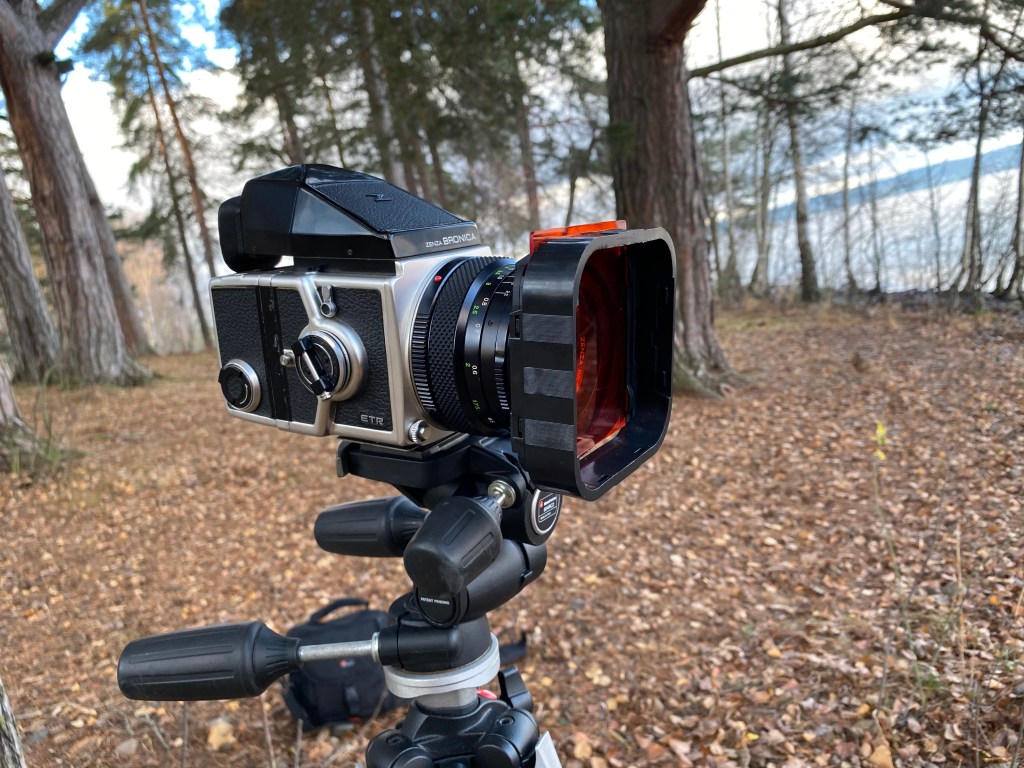
My location for this outing was Tallodden. A beautiful little place not too far from where I live, and I brought my Bronica ETR, some square filters and a tripod. I always mount the Bronica on a tripod. It is too heavy to shoot steadily by hand, especially at shallow apertures or longer shutter speeds.
My setup at the location.
There is something about walking around with a proper MF SLR like this. It makes people interested, and I had a shot chat with a nice elderly man who was out for a little stroll along the lake. He told me that he had not seen anyone with such equipment around that area for years, and asked me all sorts of questions about the camera, my lens, film, plans and where I would post my images for him to see.
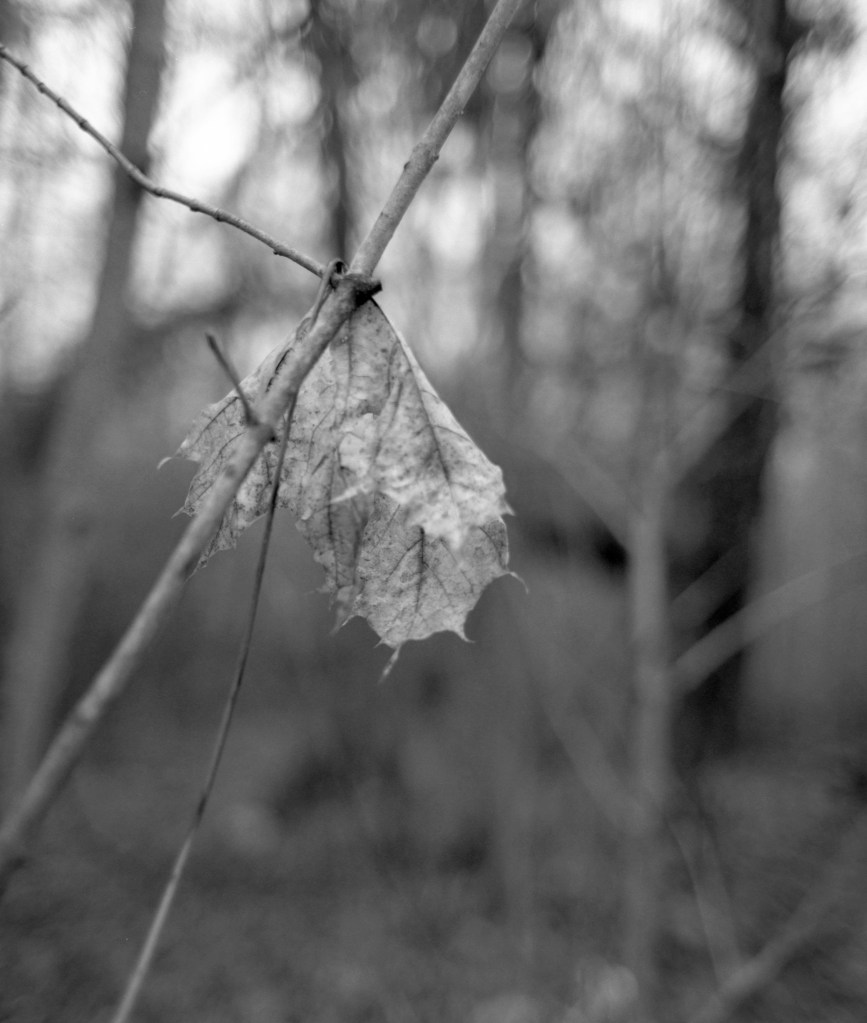
A lonely autumn leaf. Bronica ETR w 50mm Zenzanon f2,8. Shot at f2,8 1/30th with yellow filter. Developed in Ilford Ilfotec DD-X 1+4
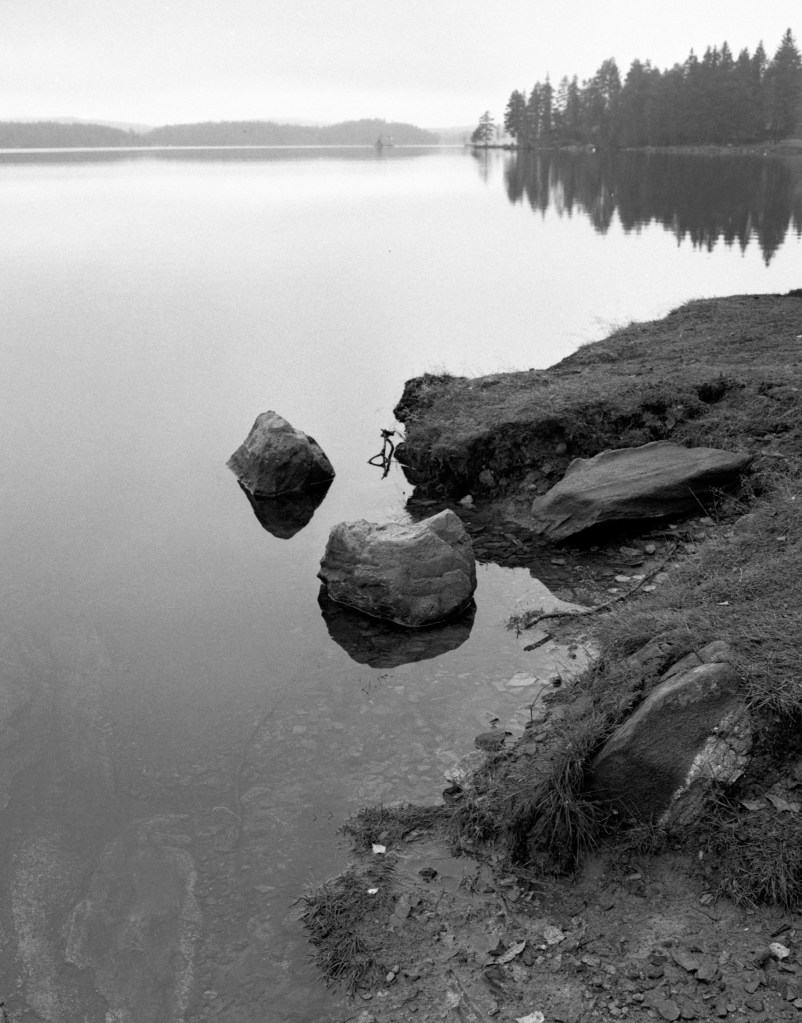
I spent some time scouting around for interesting subjects that would give me a smooth and calm mood to my images. I wanted the fine grain the Delta100 gives to be one of the main focus on my shots. I chose to use a yellow filter for most of the images to boost some contrast, and get the most out of the range. But I swapped for an orange filter for shots where I wanted the «silky water» effect, and more depth in the range.
I then went home and developed.
Reklamer
This is the first time I have ever used DD-X. Actually I have never used Ilford Developers before, so I was very excited to see what the grain structure and the range would be like. This is a shoot where I would normally have gone for Kodak Xtol, and I am comparing a bit to what I would have expected from Xtol.
I am very happy with my results, and I am happy to see the smooth and lovely grain in this shoot, and I think the DD-X brought it out beautifully. I still have more rolls to shoot and develop in this developer, so I will not come with any analysis of any kind based on my limited knowledge, but so far I am very happy.
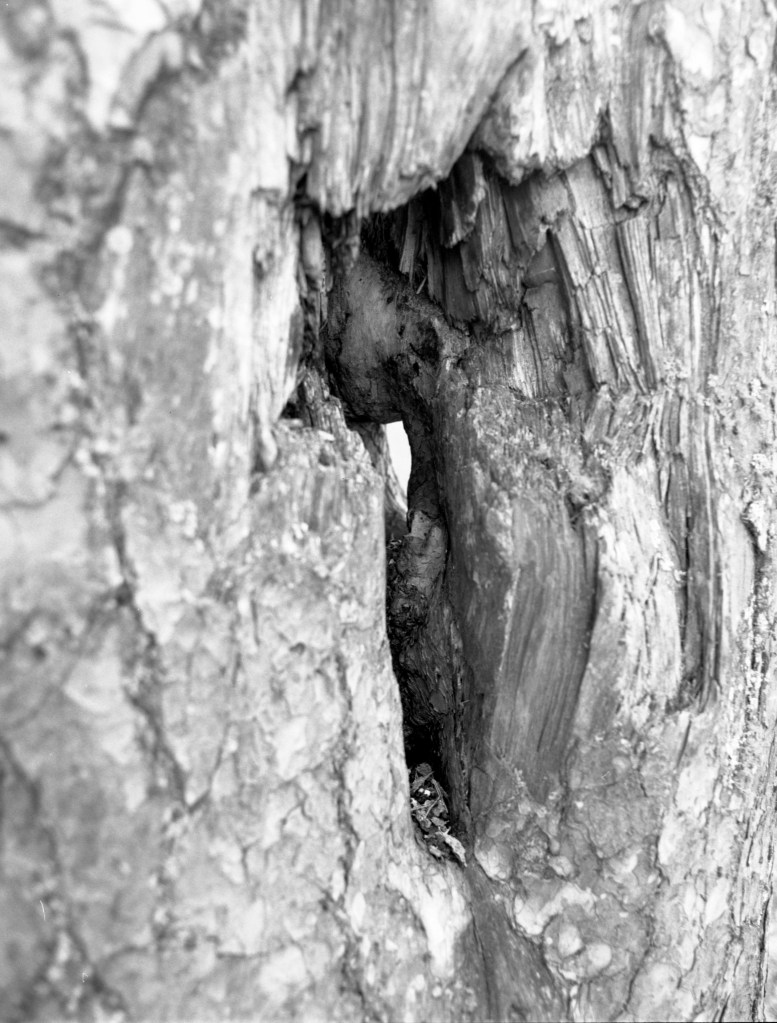
Bronica ETR w 50mm Zenzanon lens. yellow and orange filter. Ilford Delta 100, DD-X 1+4
Once again, thank you for sending me films and chemistry to try out. More entries with this film and developer will come. Also a video of me making darkroom prints of some of these images.
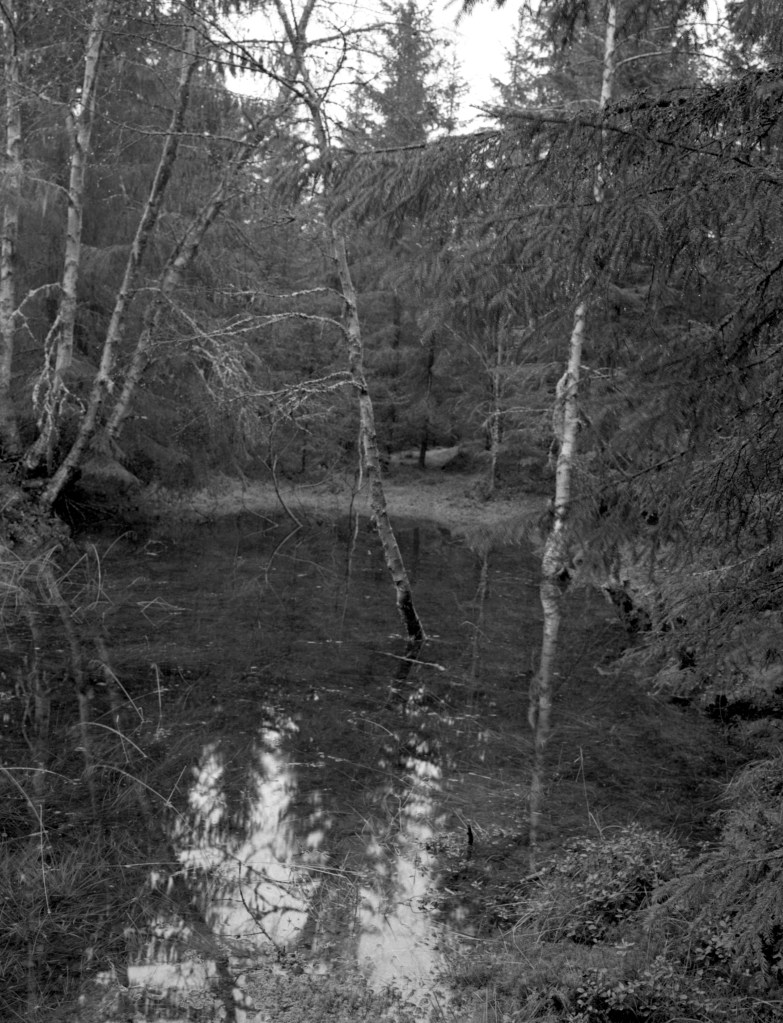
Today was a wet, unpleasant and foggy day in Norway. No real need and point in going out, but there was some interesting fog, and a very white sky that lured me out anyway. The conditions were almost black and white anyway, so I chose to go with a Black and White film. Because of the verylow level of natural contrast, I went with a slow film. Ilford FP4 Plus. I also chose to stand-develop the film in Rodinal 1+100 for an hour, to get some extra contrast and find some beautiful grays.
I chose to use the Bronica ETR, because I wanted to do medium format and that it would give me 15 frames to a roll.
Bronica ETR w 50mm Zenzanon f2,8. Ilford FP4 Plus@125 Rodinal Stand-development 1hour. Scanned with Epson V600
I also got to test out my new scanner. Thank you for the friendly photographer who pointed out to me that my old scanner was probably shot. My new one is far better and gives me lovely scans.
Late autumn in Norway is always beautiful. Thin layers of snow and frost on the ground makes it nearly look like someone has decorated the landscape with some icing sugar. However, today I was not really thinking I would get any of this magic in my shots. When I woke up this morning, it was a foggy and grey morning, and I decided to go for some contrasty shots with fog and artificial lighting from street-lights and and shop windows. I brought with me a selection of films, but planning on using Japan Camera Hunter, Street-pan 400, to get the deep blacks and some find Rodinal grain.
When I got to my chosen location, I had to rethink my whole idea and plan. just next to where I parked my car, and five minutes away from a cup of coffee, appeared this wonderful little lake, and the weather cleared beautifully.
Instead of using JCH Streetpan 400, I went for a roll of Kodak Ektar100. Ideally I would have shot this location with Provia, but since I am nearly never using slide-films anymore, I did not bring any. I rolled the Ektar into the Bronica and quickly came back with some compositions.
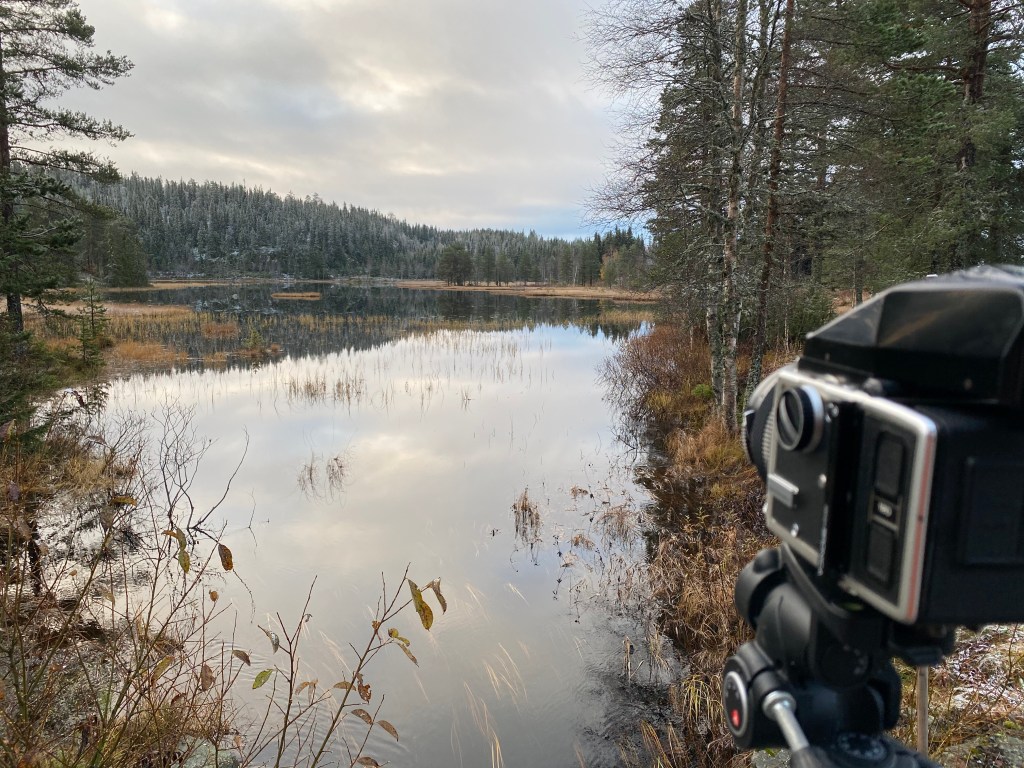
The beautiful view I found. Shooting a location like this with a fresh cup of coffee in my hand has to be considered luxury. (Phone-photo)
Reklamer
I have never shot colour film with this camera before, since it is a fairly new addition to my collection. So a new experience for me there. Kodak Ektar 100 with its vibrant range has been my go-to film for colour landscape photography the last years. It gives me nearly the tones of a Slide-film, and the convenience of a negative film when working.
What I would have wanted for this shoot; however, would be a short telephoto lens or maybe just a 75mm. Currently I only own one lens for my Bronica ETR, a 50mm (35mm equivalent in 35mm). This lens becomes too wide for many of my shots, and does not give me the bokeh I want for closer shots.
Bronica ETR w 50mm Zenzanon f4 1/4sec. Kodak Ektar 100, developed in Tetenal C41. Slightly edited in photoshop
For the shot above I would have wanted a longer lens. I lived the way the snow made the colors soft around the tree stump, however, I got too much clarity in the background for my liking.
Reklamer
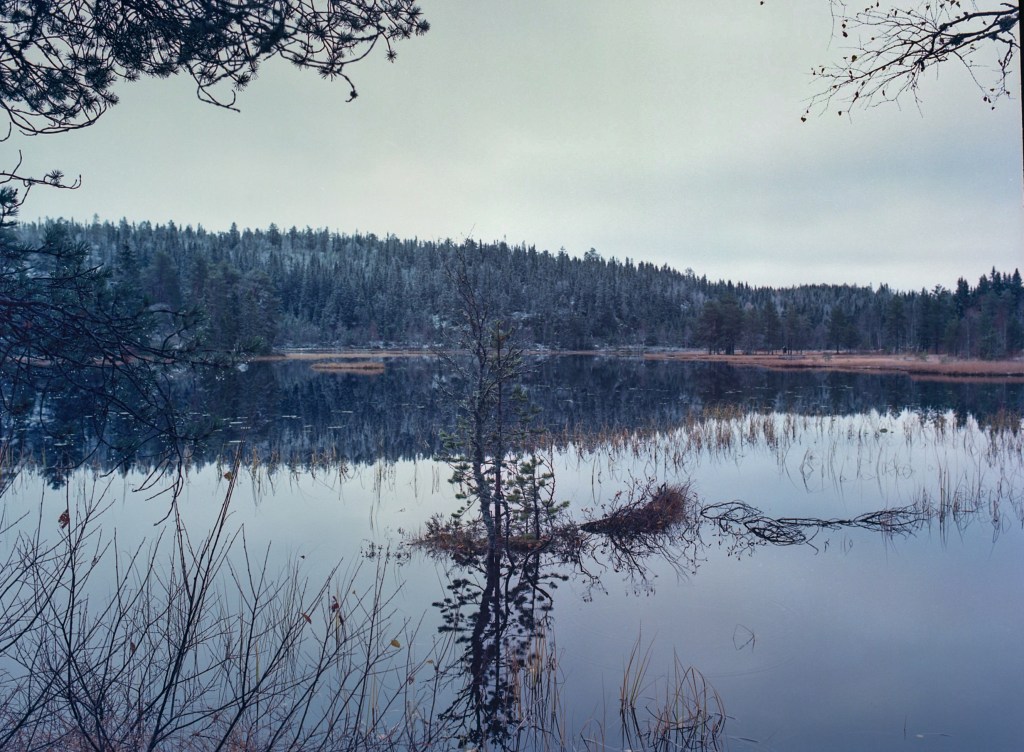
For the shots over the view of the lake. The 50mm was perfect. And for the last shot on the roll, I saw some beautiful grass that moved in the running water. I took a shot of those as well.
Bronica ETR w 50mm Zenzanon. Kodak Ektar 100, Tetenal C41
The late autumn in Norway is beautiful and can give you anything. Today it gave me these lovely shots (among others) next to a place where I could get a coffee. Tomorrow it might give me the foggy conditions I expected today.
For a while I have been looking to buy a 645 camera. Preferably a SLR of some kind and many different options have been considered. Both Mamiya 645, Pentax 645 and even some Hasselblads. However, some days ago, I came across a very reasonably priced Zenza Bronica ETR. I have had my experiences with Bronica. I once owned an Zenza Bronica S2 fitted with a beautiful Nikkor 80mm lens. I only sold this because it had the habit of giving me half frames a few times on each roll and I cannot afford wasting expensive film and possibly losing a strong shot due to a camera issue.
I contacted the seller on the ETR and we came to an agreement and got a deal together. Very reasonable and rather quick.
Zenza Bronicas are beautifully designed Japanese cameras, with incredibly sharp lenses and a rugged feel to it. The camera is heavy, about two kilos, and you can get them in different configurations. Later ones are more plasticky and lighter, but I don’t really mind the weight, as I often shoot on a tripod. My ETR came with a prism, eye-level viewfinder and a razor sharp 50mm f2,8 Zenzanon lens.
I went out the other day to test the camera, and I made some really beginner mistakes.
Fist of all, I used the wrong film. I loaded the camera with a Fomapan 100, because I had one lying around about to expire, and I found I could «waste that one» if the camera did not work properly. The biggest problem was that I went out on a very dull and overcast day where there was not really sufficient light to shoot 100 ISO. Because of this I had to shoot around 1/30th of a second, and I forgot to bring a tripod. A lot of motion blur later, I decided to discard the test and go out for another go with a different film.
Reklamer
From my second attempt of testing this camera.
This second time, I went out in the morning as the fog was lifting from the lake (Mjøsa) and went for a short session Trying to capture some magic. Wiser than last time, I loaded the camera with a roll of Kodak Tri-X 400, a film I don’t use that often but had lying around and went down to the docks in Gjøvik.
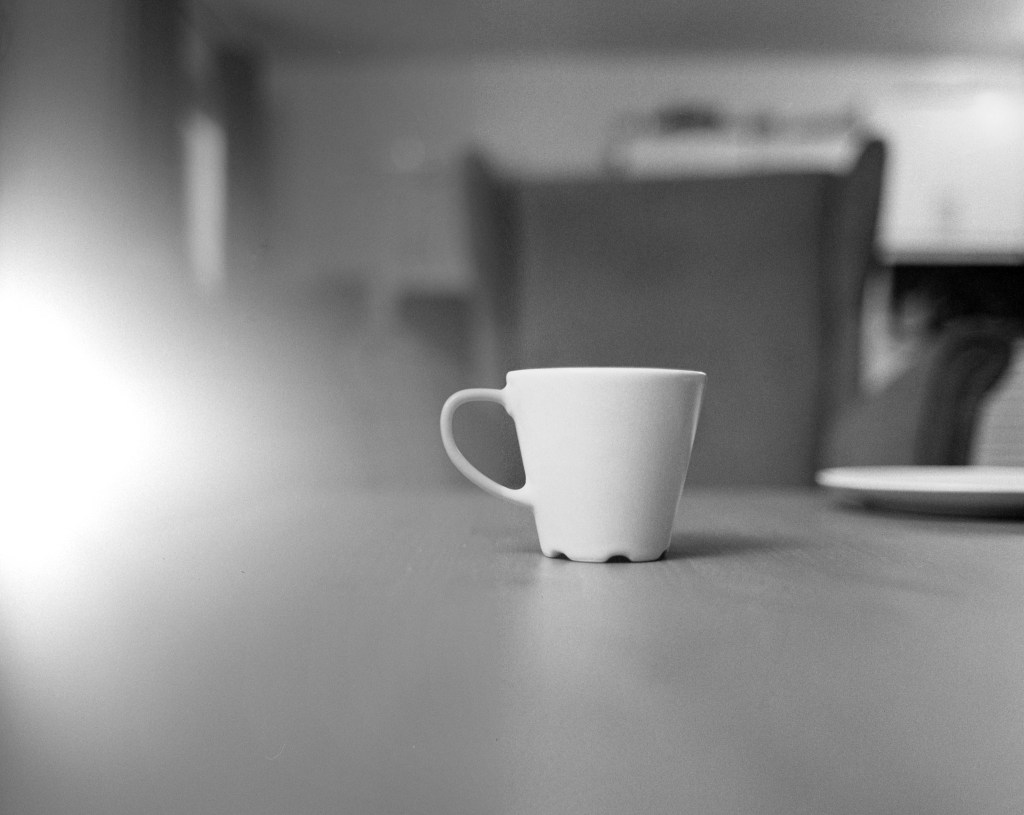
Before I went out, I had a coffee. I documented my coffee with an image taken at f2,8, maximum aperture at 1/15th of a second.
I am really surprised with the smooth bokeh the Zenzanon lens gives me, and I find that the Tri-X grain and contrast gives the image a really nice tone. A tone I don’t often find with Tri-X as I find it a bit to punchy in the contrasts for my taste. Similarly I like the way it handled my location by the lake.
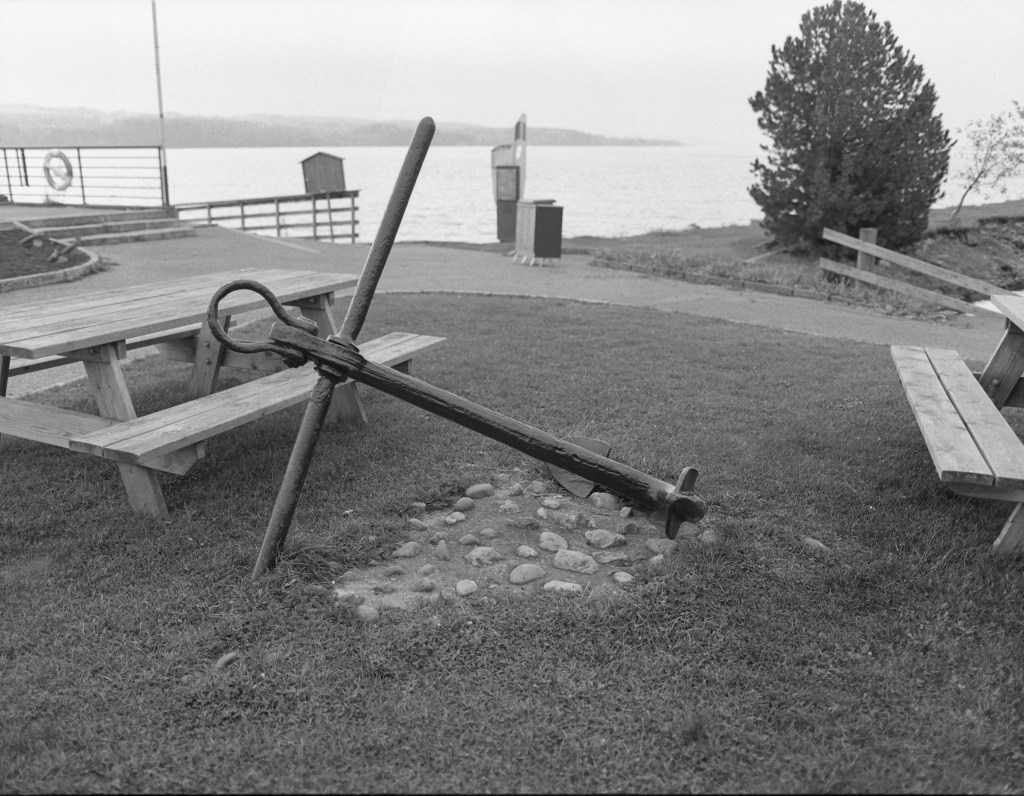
I appreciate the tones I got in the picture of the anchor. Shot at f4, it gave me a perfect depth of field for this image and the Tri-X tones gives the smooth tones. I also love the way the background disappears into the fog behind.
In a slightly under exposed image of some birds fleeing away from the Norwegian winter which is approaching in a months time. I find this image to be a bit «gritty» but I will attempt to make a beautiful print of this image in the darkroom.
All in all, I am very happy with my new Zenza Bronica ETR, as well as my expedition into 645 format, and will shoot it regularly in the future.















 Cheap Camera Adventures