
Yesterday, I went on a walk along the tracks at Valdresbanen. This railway was closed to traffic in 1989, but the tracks are still kept on a sizable portion of the line. The official closure of the tracks was as late as 2021. I have a fascination for railroads and for abandoned means of transportation from a historical perspective, and I am working on a project where I am doing Valdresbanen. This time, went for a walk from Eina to Holte, a walk of about 4 kilometers along these tracks. I was looking for leftovers from the its glory days. Things like tracks, signs, control boxes, whatever really. Along with me on the trip I brought the Olympus Trip Junior with a roll of Kentmere 100, and the Hasselblad 500C with a roll of Ilford Ortho Plus.

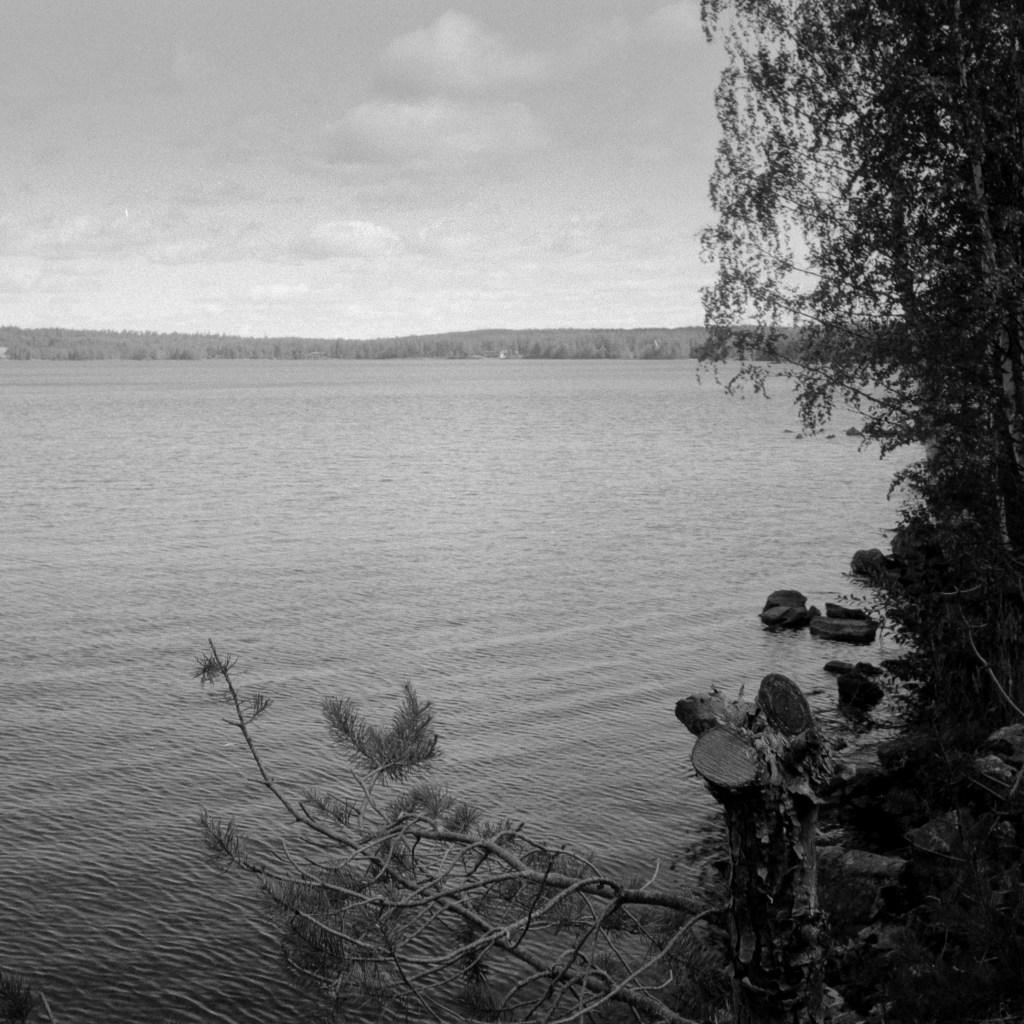
I realised after my last trip with the Olympus trip that it seems to underexpose the film a bit. For that reason I chose to push the Kentmere 100 two stops in development and it seems to have given me good negatives. As we were walking along the tracks from Eina, we came to the small peaceful lake called Skjellbreia. This is the main source of drinking water for the area and is kept very clean and is a quiet are without too many cabins. The tracks around Skjellbreia was also important in the operational days of the line because it was the main loading space for dangerous goods. I am not sure why it was placed there where there were no stations, but that might maybe be exactly why it was there.
After strolling for a few kilometers, I came across an interesting box that was locked. I could see some kind of connections and switches in there, but I have no idea what they might be for. The line was never electrified and there were no logical thing requiring controls such as traffic lights or a line switch on the line. The box, however, looked quite cool and I took an image of it with both the cameras.

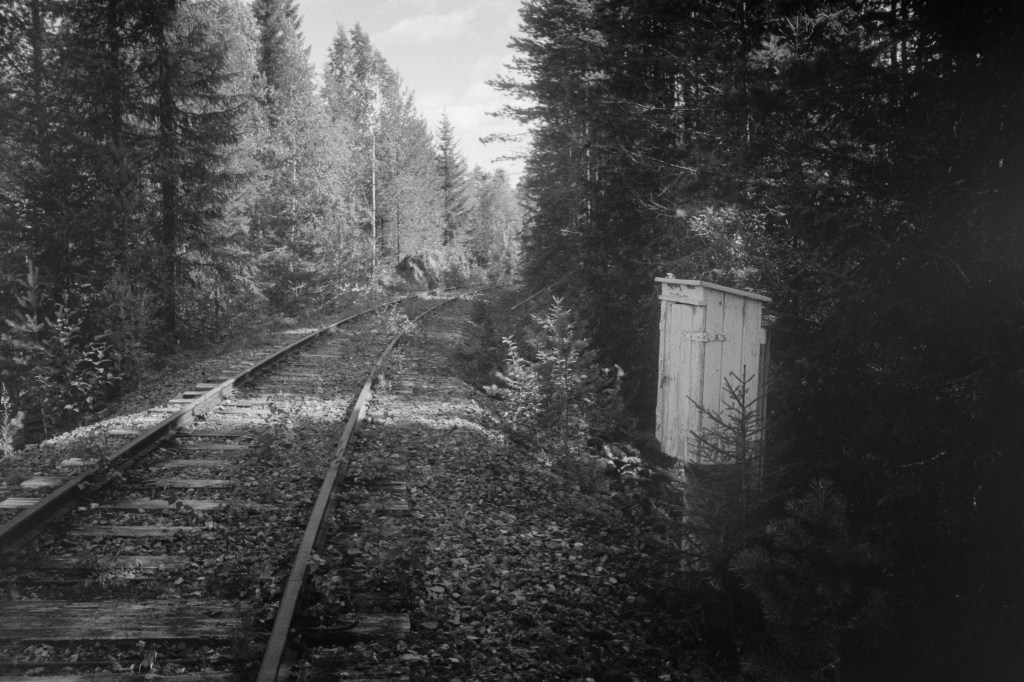

When it comes to the film in the Hasselblad. I have struggled massively getting good results with Ilford Ortho plus. I love the grain it produces and I love what it looks like when other people use it, but in my results, it tends to become very much black and white with very limited shadow detail. This time I tried it with Adox FX39 II and I am moderately happy with the results. I do much prefer how the Kentmere 35mm film came out to what I got with the Ortho Plus this time. I find the initial results with the Ortho were very contrasty and almost black and white. I did some tweaking, but I am still not very happy with them.
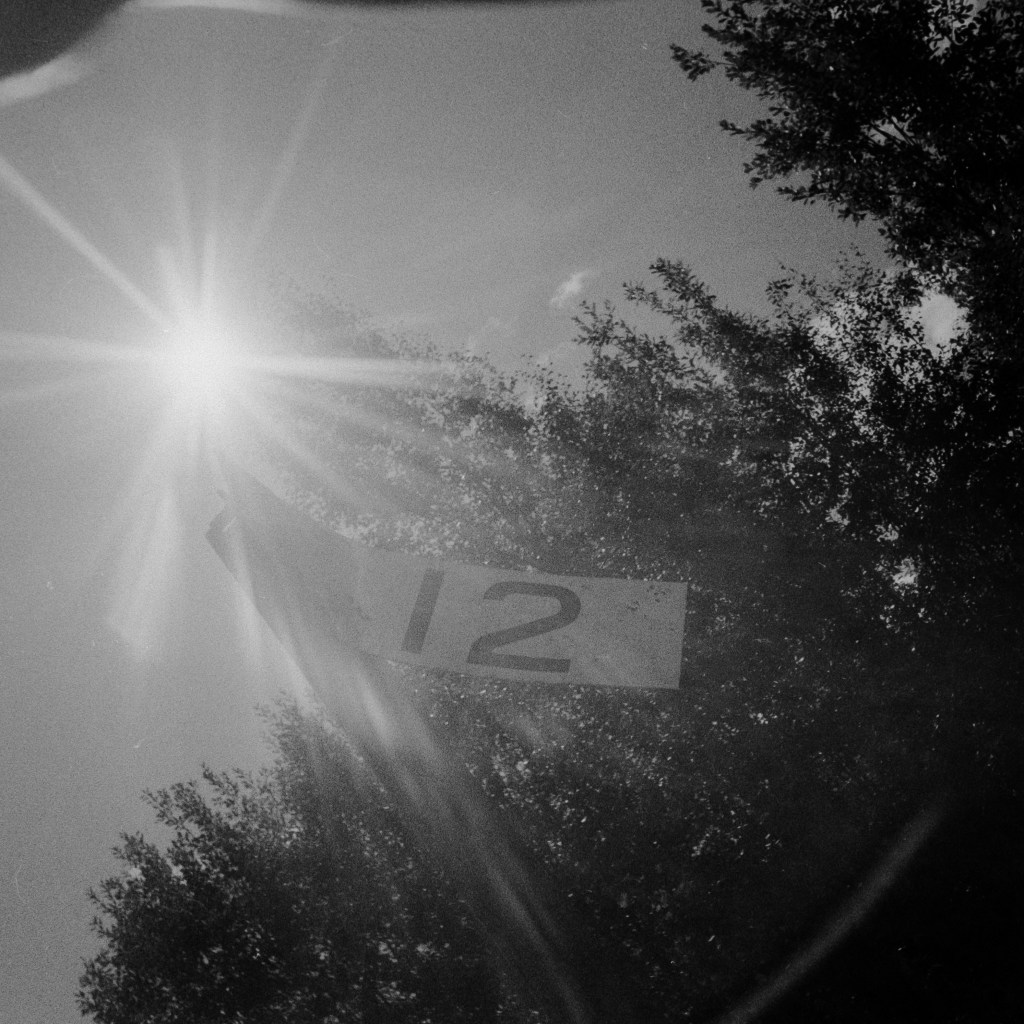
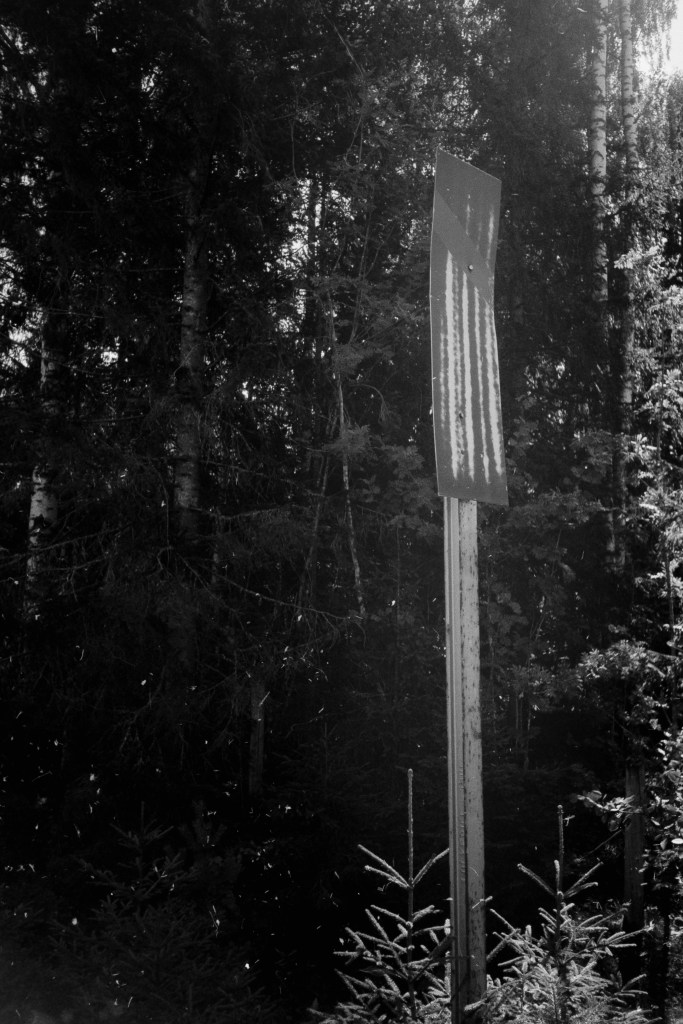
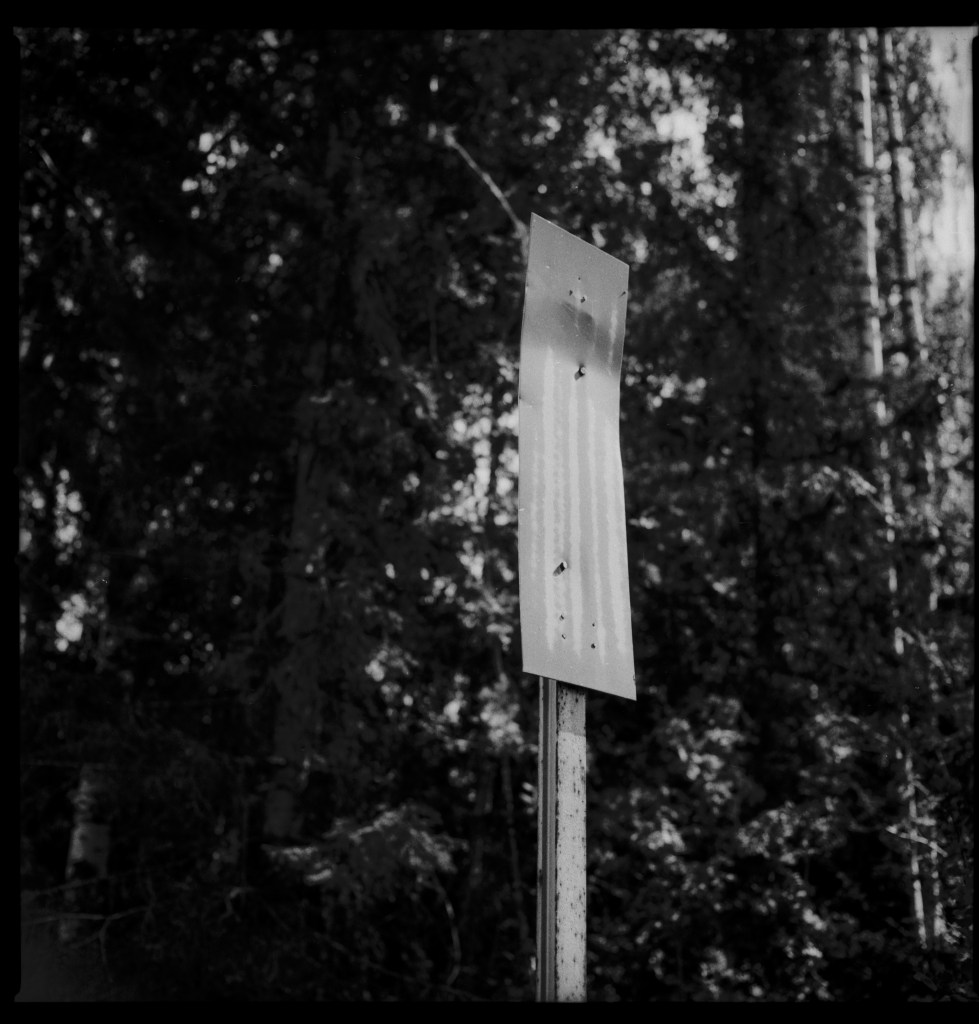
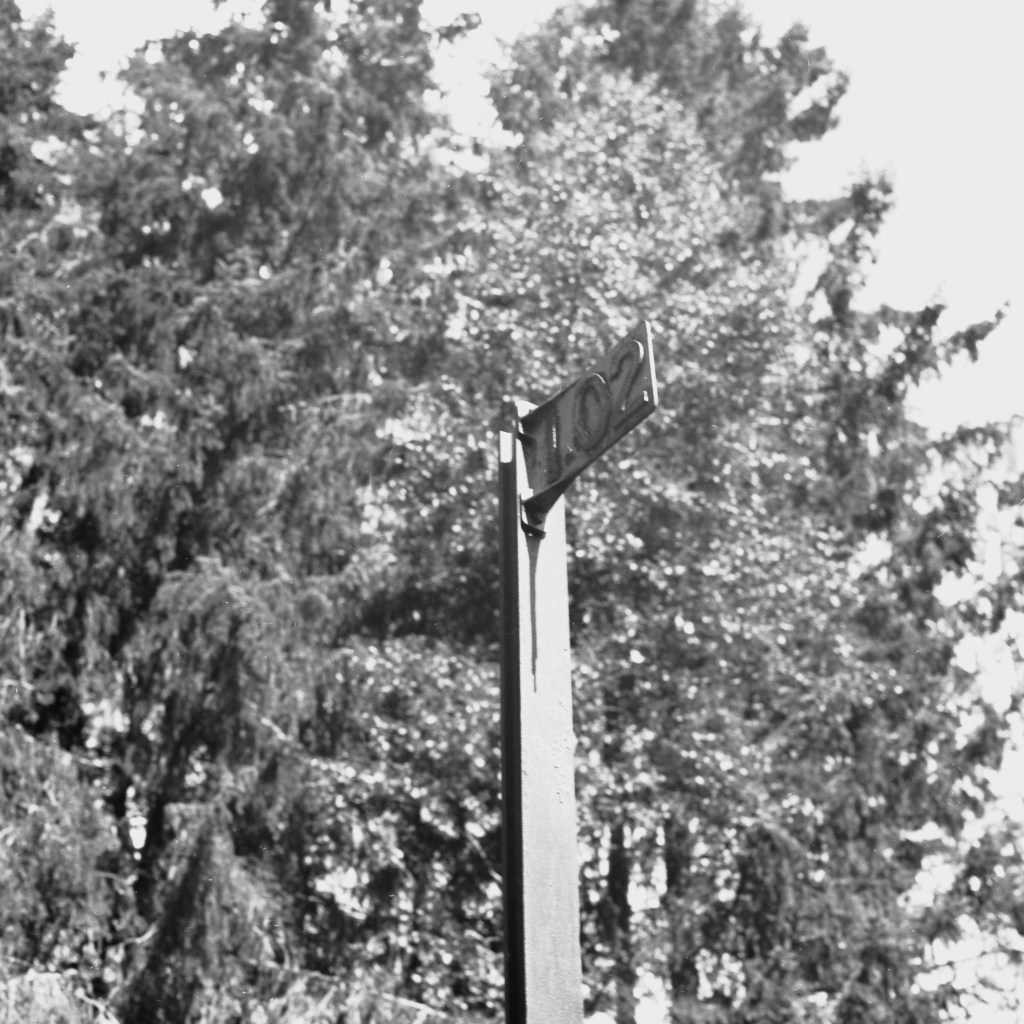
I also walked passed a few signs along the tracks. These old signs are quite interesting to me and they inspire me to take images. I made a little happy mistake on one if them when I was trying out different compositions on a sign. I was trying to figure out how I could get the sun out of the frame when I accidentally pressed the button on the Olympus. I actually like the image that came out very much.
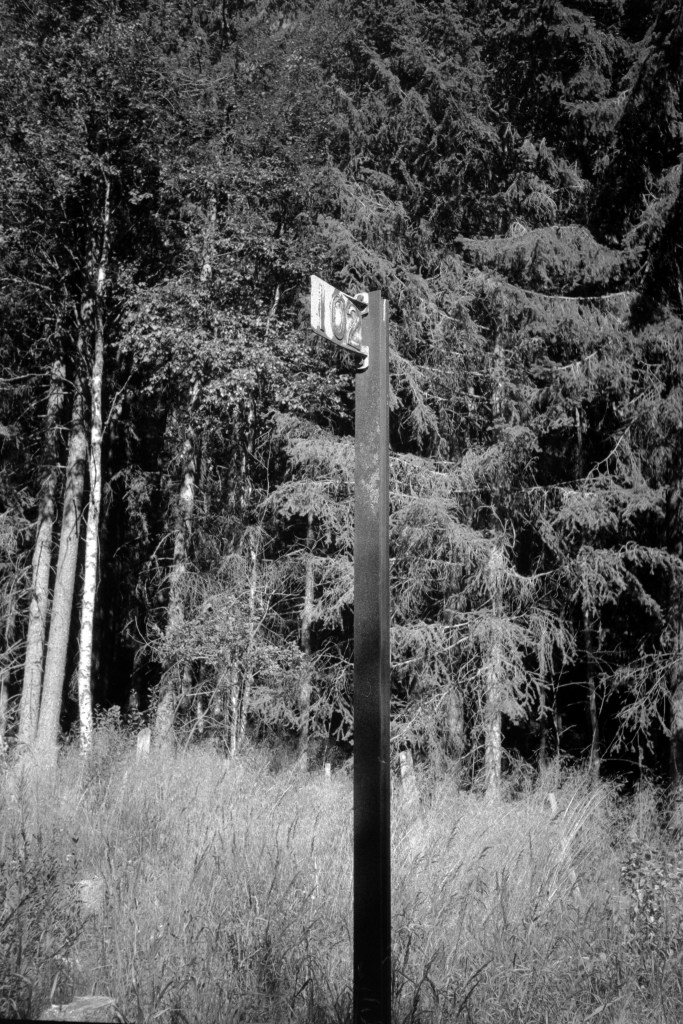
In all seriousness though, the signs around this portion of the line weren’t the most interesting. Most of them were either distance marking or speed markings, but I made a few shots anyway and there are a few I really like.

When developing these rolls, I had to do some guesswork. I wanted to used Adox FX39 II on this shoot because like the way it looks on slower films. Additionally, I wanted to know how it would work on a two-stop push with the Kentmere film. I found a time for the Kentmere 100 at box speed in FX39 II at 6 minutes 30 seconds at 20 degrees, but no time anywhere for the Ortho 80. My solution was to find times for FP4 plus and HP5 plus and see how they compared with other developers. I came to 8 minutes of development time with continuous agitation. This did give me very nice negatives that seemed correctly developed. However, there were no side markings on the film, So it couldn’t be judged that way. Anyway. If I am to use this film again, I would most likely stick with this development time.
 Cheap Camera Adventures